
Commercial Roofing for Hospitality Groups in Sunrise, FL
Hospitality Groups
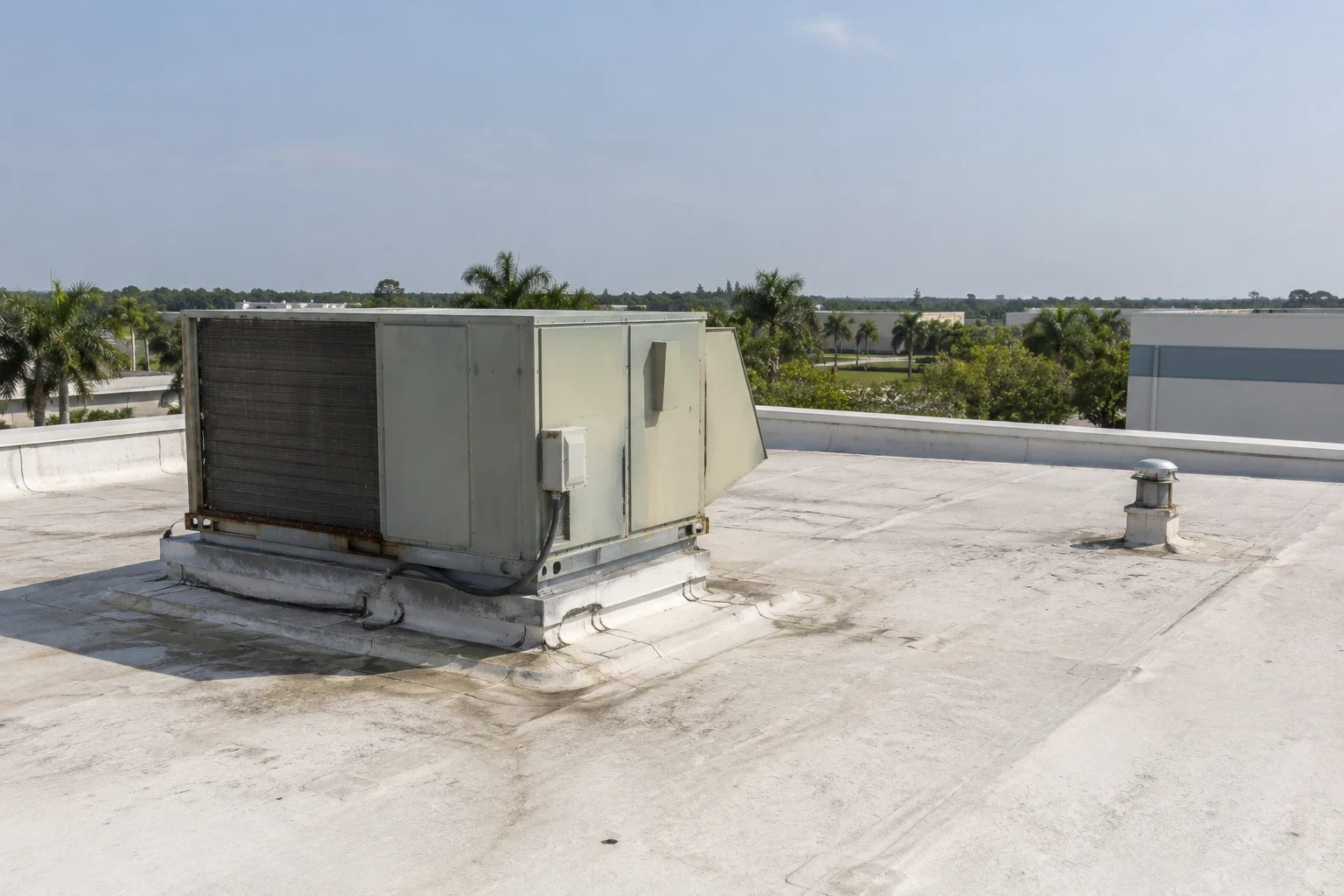
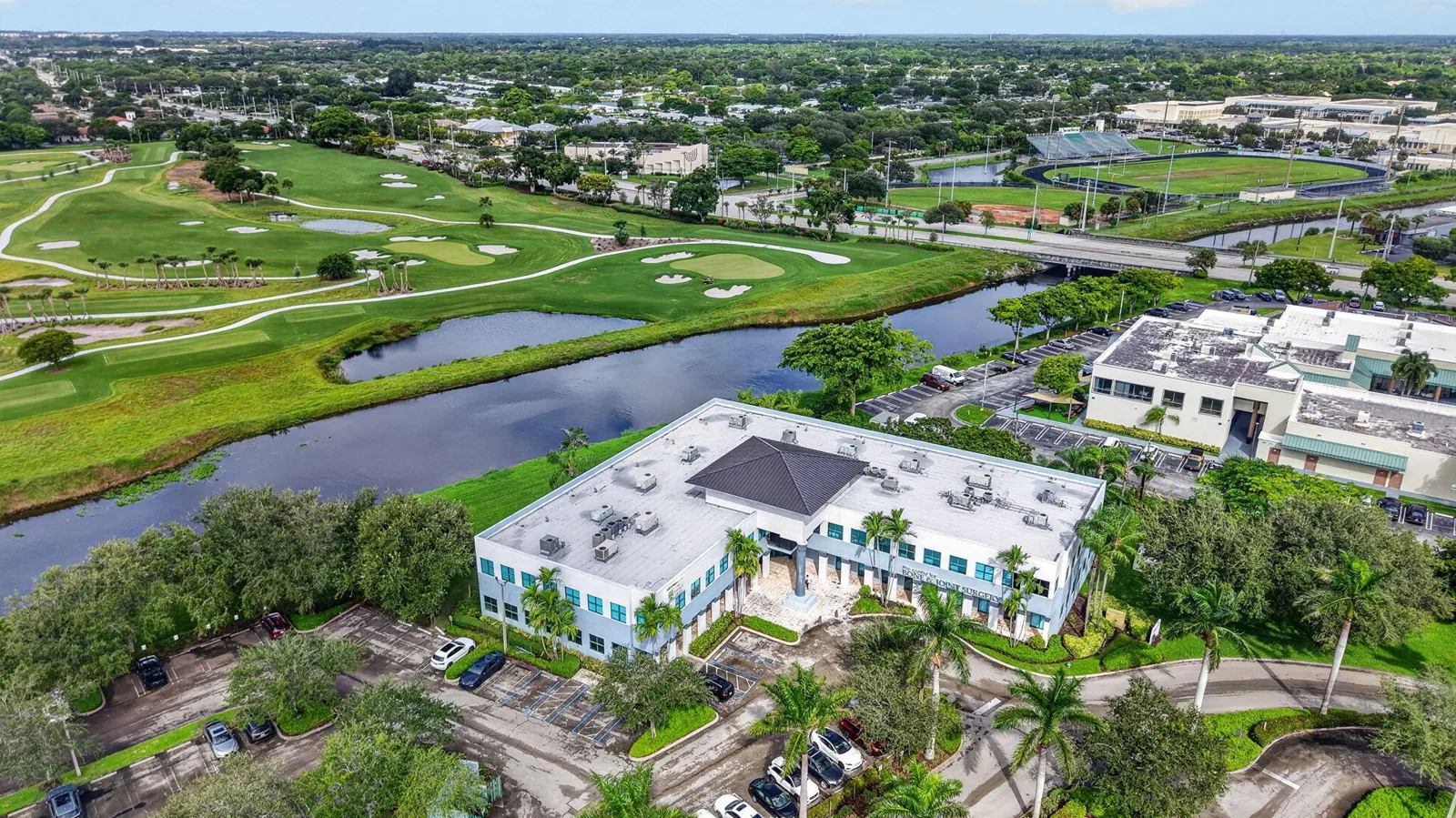
A hotel roof has to stay watertight while guest rooms, dining, meeting, and service operations continue below. In Sunrise, humid heat and a heavy seasonal rain pattern make drains, rooftop equipment, and wall transitions regular inspection concerns. We trace leak reports to the roof zone, then coordinate access and daily closure with the property team. The western Business and Entertainment District includes regional retail, an event arena, office space, and mixed-use development, bringing varied guest and event schedules to the surrounding market. A roof inspection establishes the hotel's assembly and repair boundary.
Industries We Serve in Sunrise, FL
Hospitality groups in Sunrise, FL need roof repairs planned around guests, kitchens, and building operations. We locate leaks and phase work by area.
Guest areas: Relate interior reports to roof details
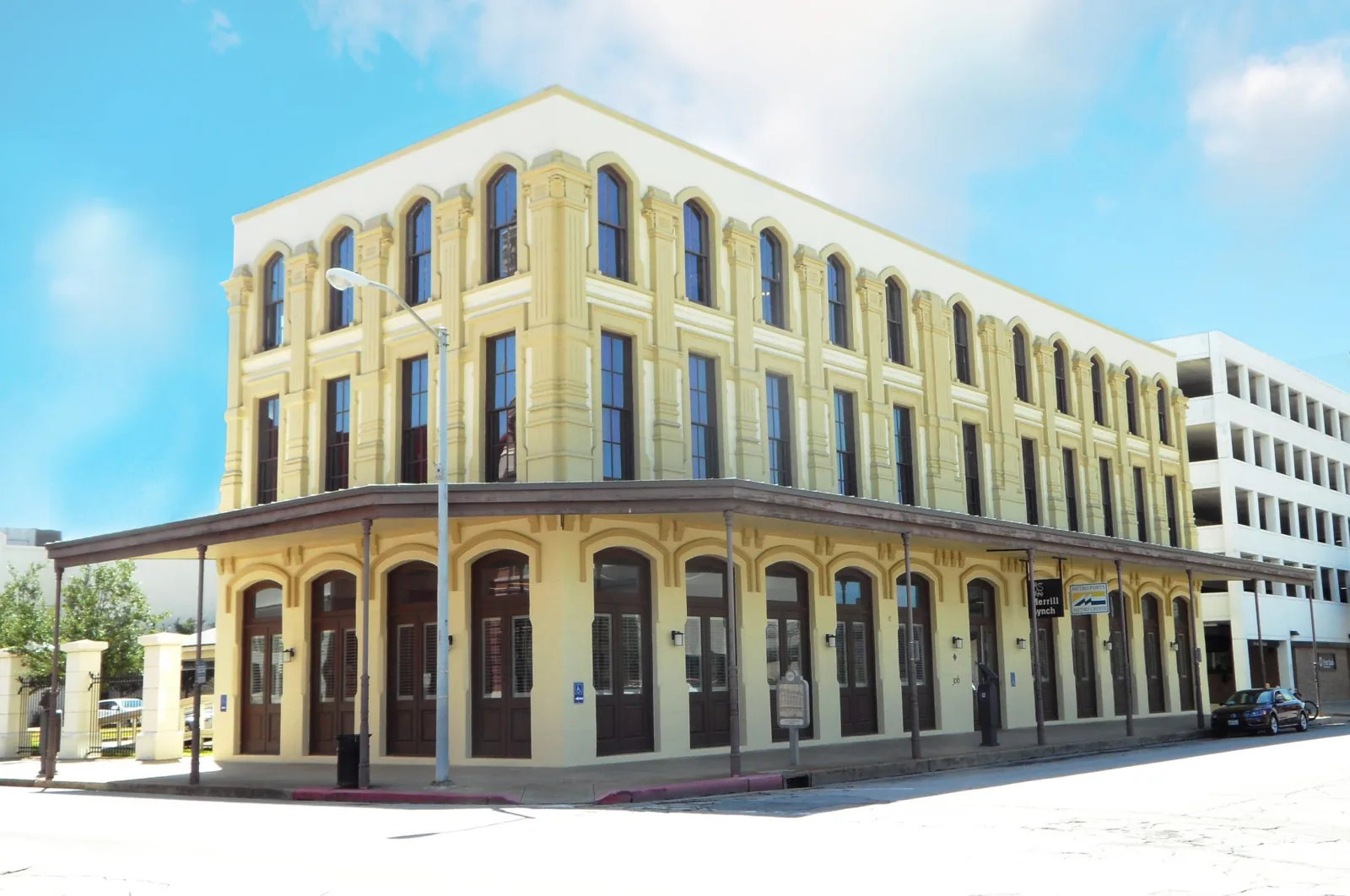
A ceiling mark above a guest room may be distant from the actual entry point. Water can follow a deck flute, insulation seam, or framing member before it appears indoors. We compare the reported floor, room, and time with drains, membrane seams, curbs, parapets, and prior repair locations. The building map identifies guest rooms and public areas beneath each roof section so staff can arrange temporary protection where it is needed.
Meeting rooms, kitchens, laundry, and back-of-house spaces can sit under different elevations or additions. We map each section separately and confirm the roof system before selecting a repair. A restaurant or banquet kitchen may have exhaust and refrigeration penetrations; a retail and restaurant chain roof plan may coordinate similar equipment with different customer hours. A hotel project adds overnight guest occupancy, room moves, and quiet periods to the access plan.
Water source: Distinguish roof entry from interior moisture
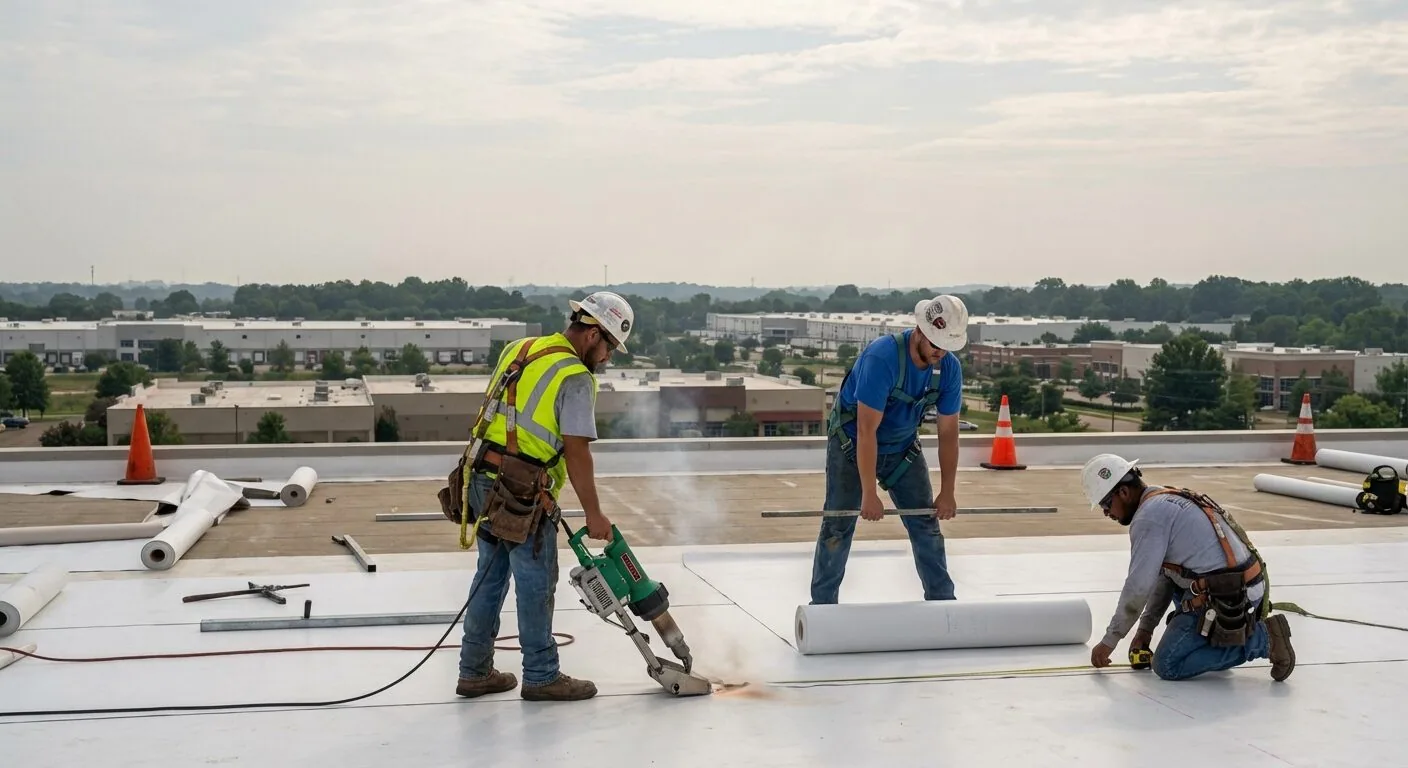
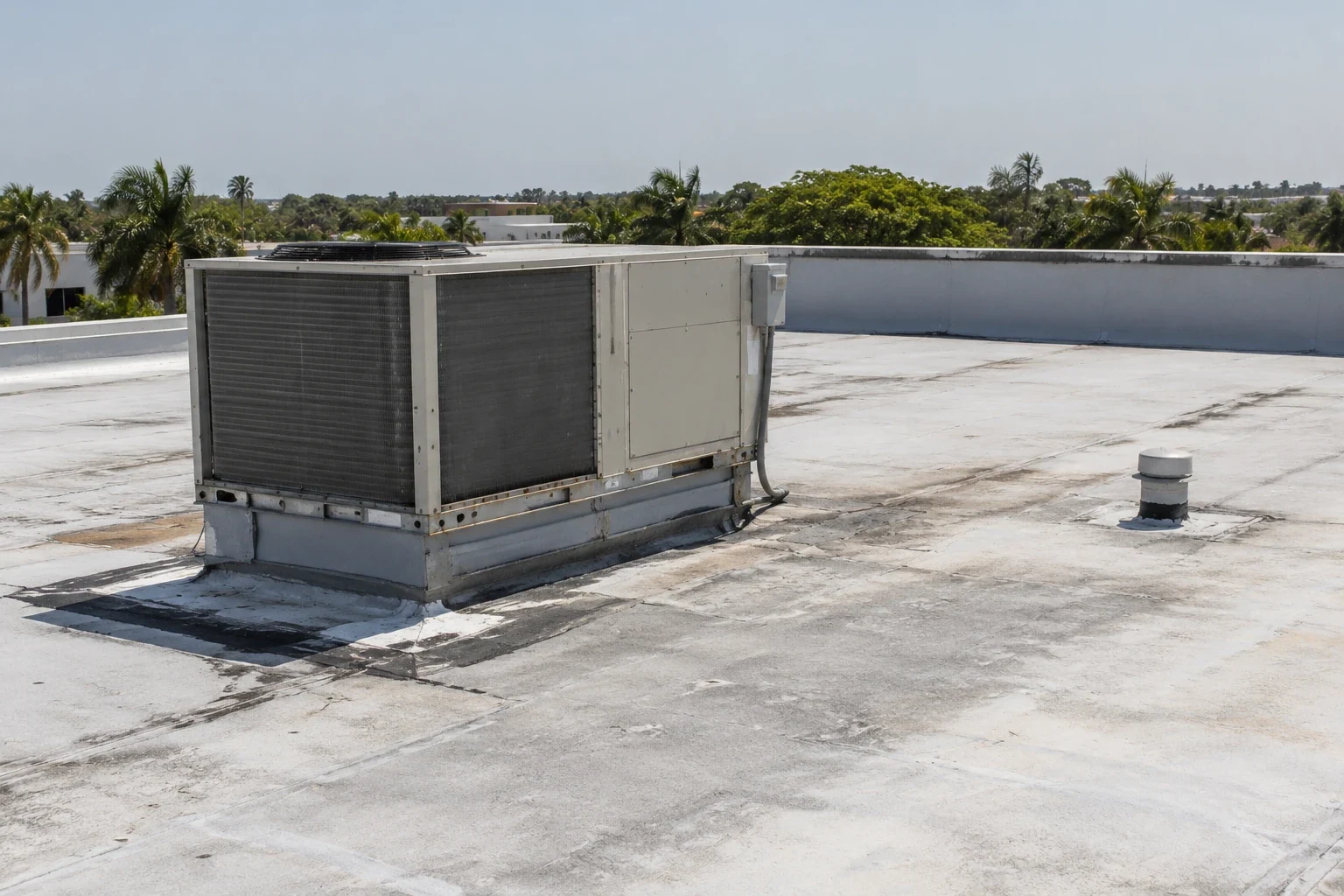
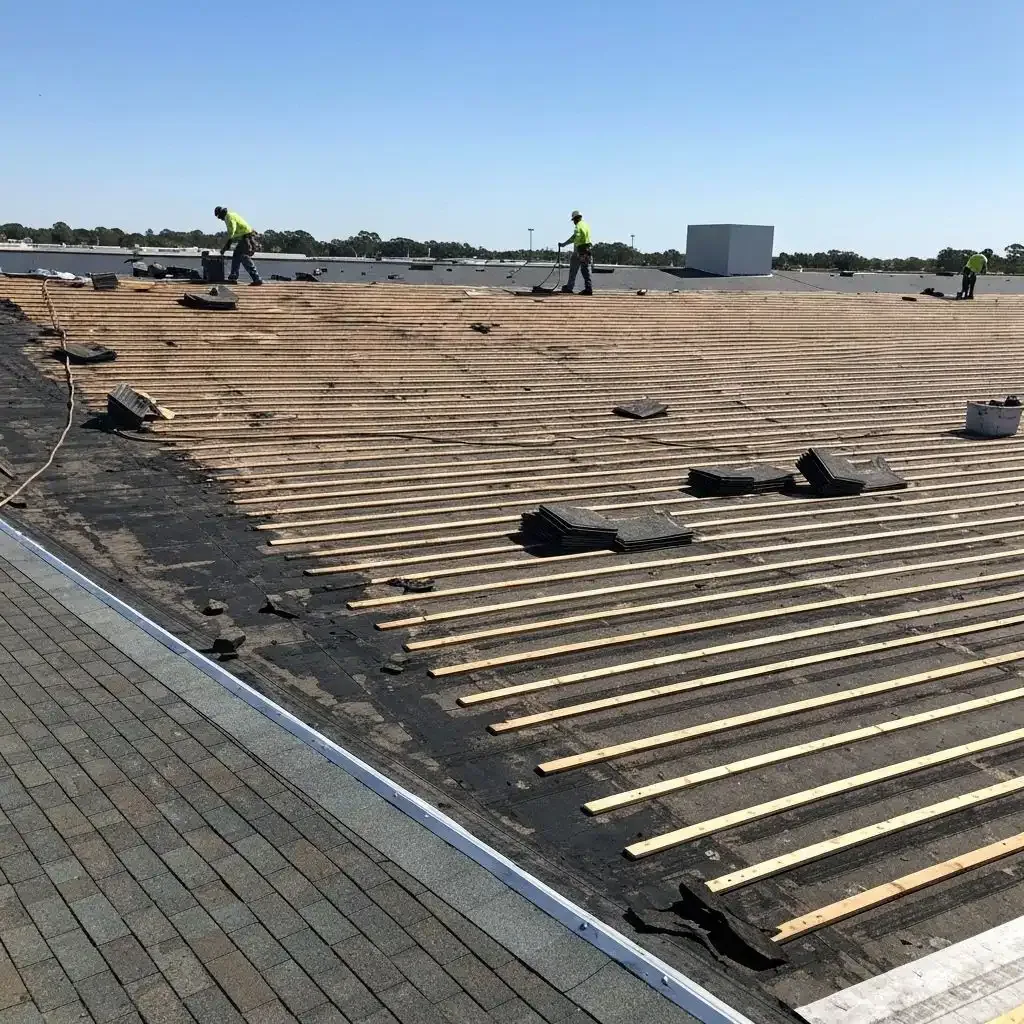
Water in a guest room can come from a roof opening, plumbing, or condensation; we inspect the roof and separate those paths before assigning repair scope. We inspect the roof above and upslope from the report, including nearby drains, seams, mechanical curbs, skylights, and wall transitions. If more than one room reports a leak, we compare their locations with the same drainage basin and test the roof where concealed moisture could affect quantity.
A test cut identifies membrane, insulation, deck, and the boundary of wet material. We agree on the opening and interior protection before removal, then close the area watertight that shift. Where active water threatens finished rooms, temporary protection helps limit damage while permanent repair is planned. The report lists which rooms or public spaces may be affected without including guest names. If plumbing or indoor humidity remains a possibility, we keep those investigations separate until the evidence identifies the water's origin.
Rain management: Keep outlets and roof edges ready
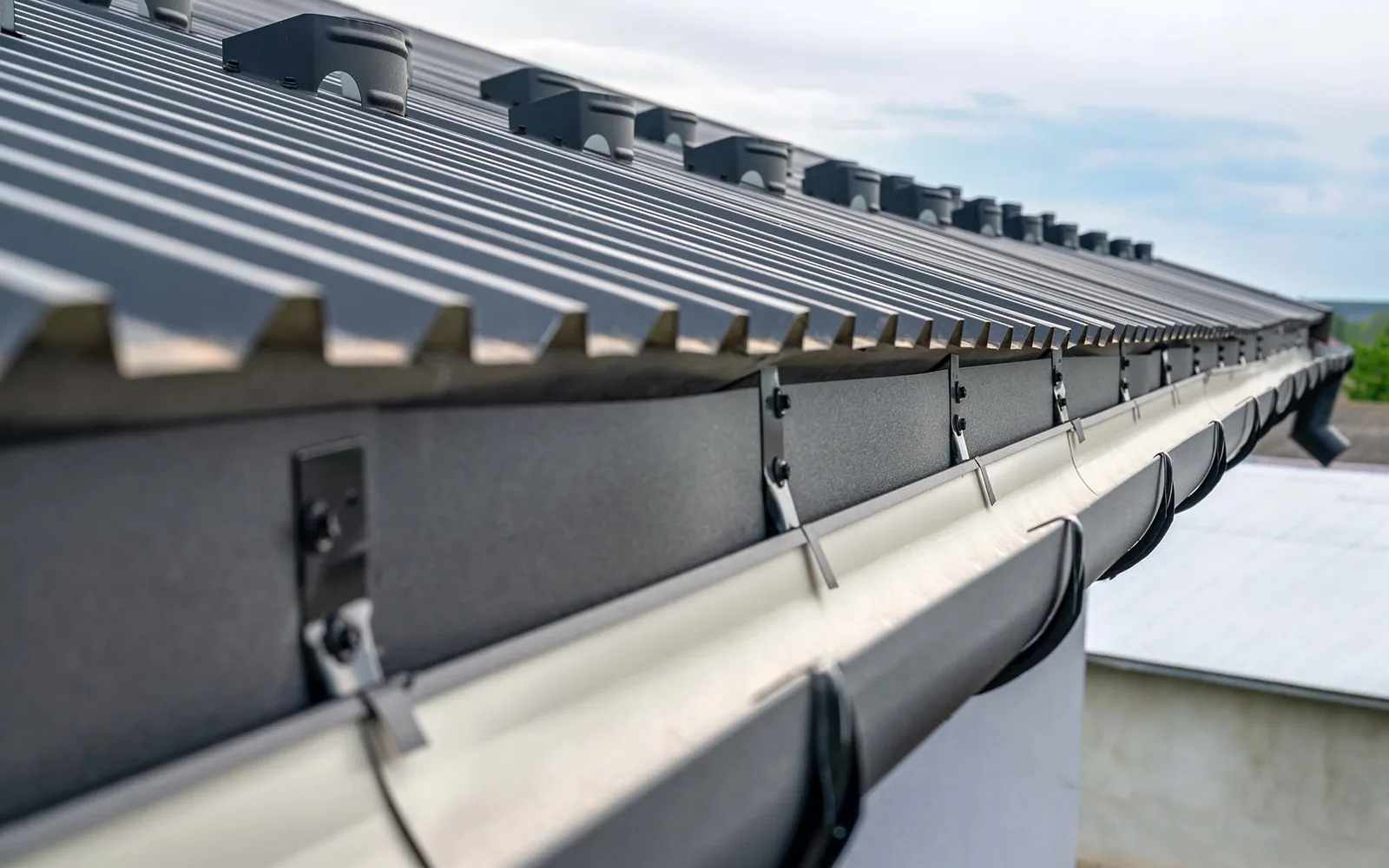
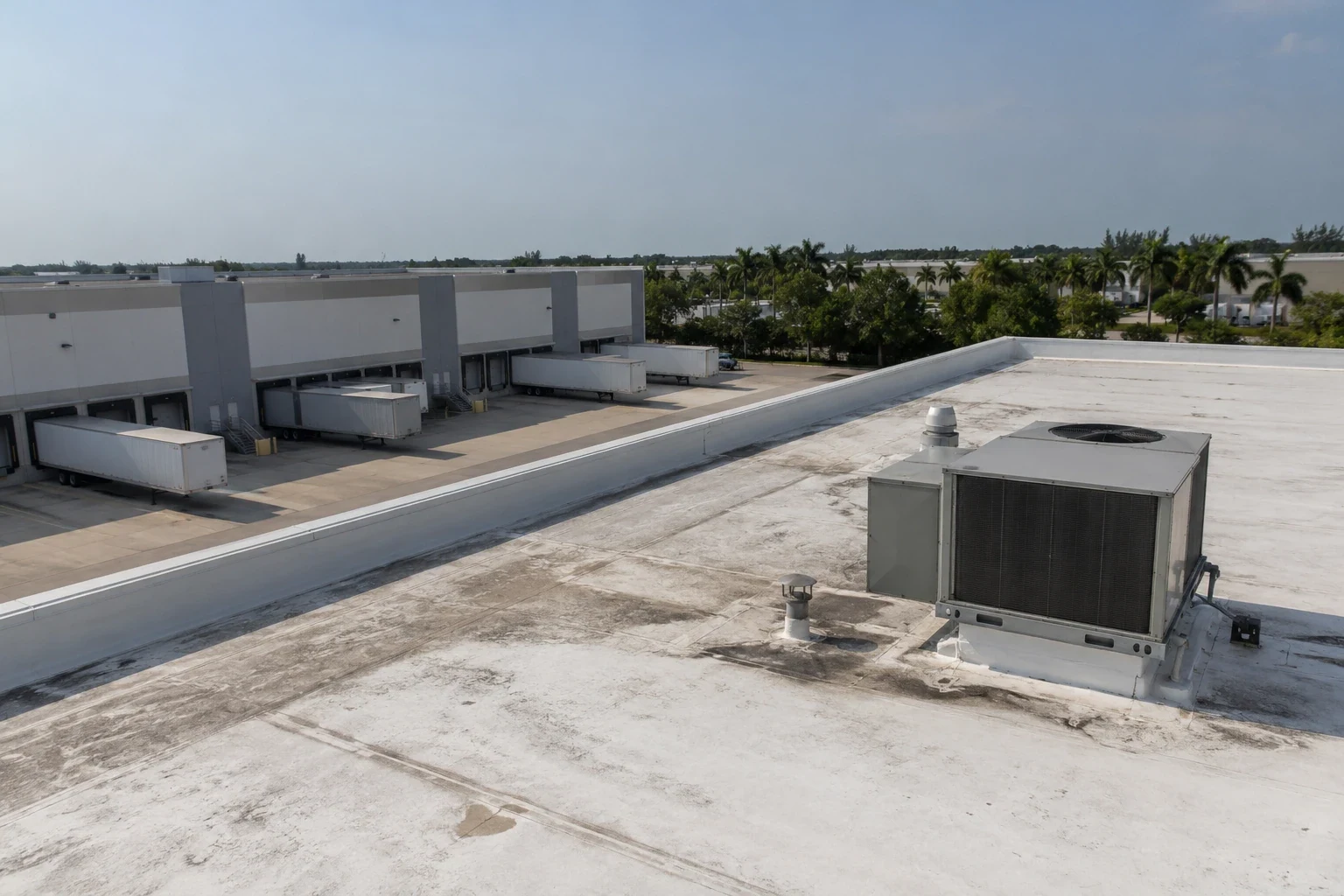
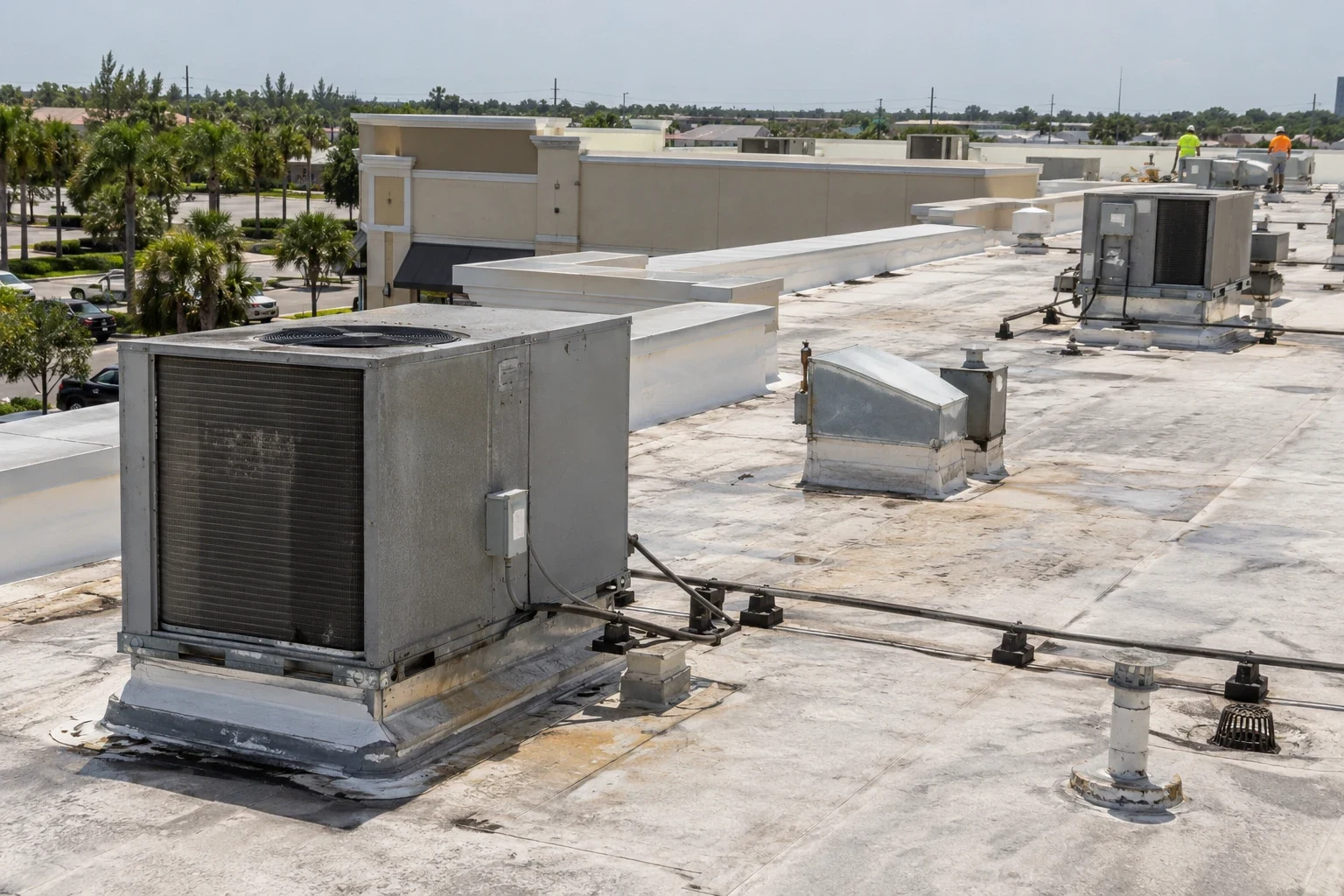
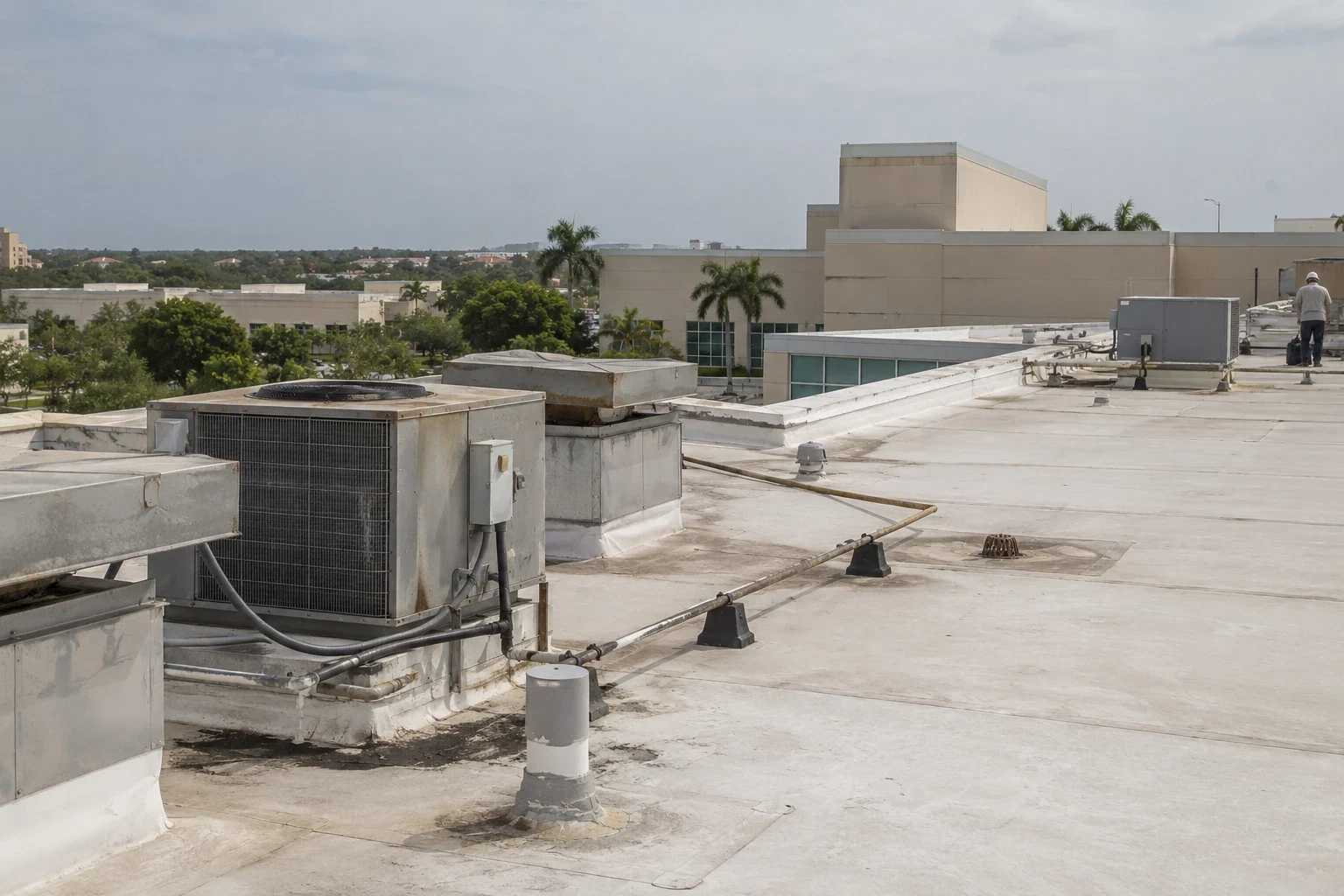
Fort Lauderdale's long climate record records a substantial share of normal rainfall during the South Florida rainy season. We inspect drain bowls, strainers, scuppers, overflow paths, and discharge connections before recurring storms. Water marks near parapets, equipment curbs, or skylight wells can identify a basin that retains water. If ponding remains after outlet service, we check the roof slope and insulation before proposing another coating layer.
A hotel can schedule maintenance around room occupancy and event activity, but the outlet and edge details still need to be reached. A drain and overflow inspection records components checked and any line needing separate access. We also note loose edge metal, sealant splits, and prior patches that deserve follow-up. A maintenance visit can revisit those items before heavy rain returns. The facilities team identifies roof hatches and any route that crosses guest or staff circulation.
Guest access: Set work hours, routes, and notices
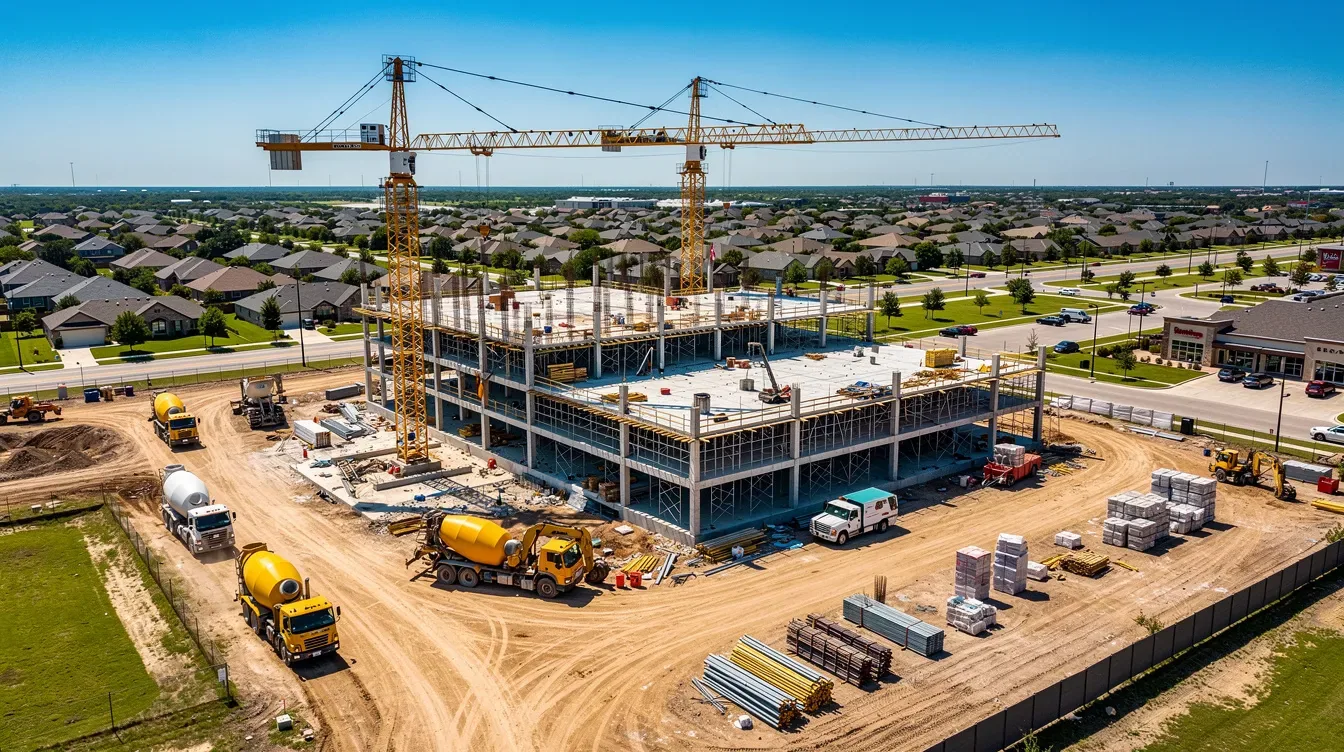
Roof work can introduce noise, odors, temporary equipment shutdowns, and restricted access around the active area. We coordinate staging, lift routes, deliveries, and work windows with the property manager before membrane is removed. If an opening sits above guest rooms or a public corridor, the plan identifies barriers, interior protection, and the contact who can authorize a change. Every work area is closed watertight at the end of the shift.
Event schedules and room turnover can create narrow windows for disruptive work. We identify quieter tasks and any process requiring ventilation isolation, then set a sequence by roof section. A phased occupied-building plan can move from one wing or level to another when the assembly allows. Property management teams may coordinate access across mixed-use assets; the hotel's own team confirms guest notices, room blocks, and service routes. Before mobilization, we confirm which rooms can be held out of service, where carts and lift controls can move, and who receives guest reports. Room release follows the interior check and roof closeout, not simply the crew leaving the roof. The night manager receives the same daily zone label, temporary condition, and contact number for active water before shift transfer.
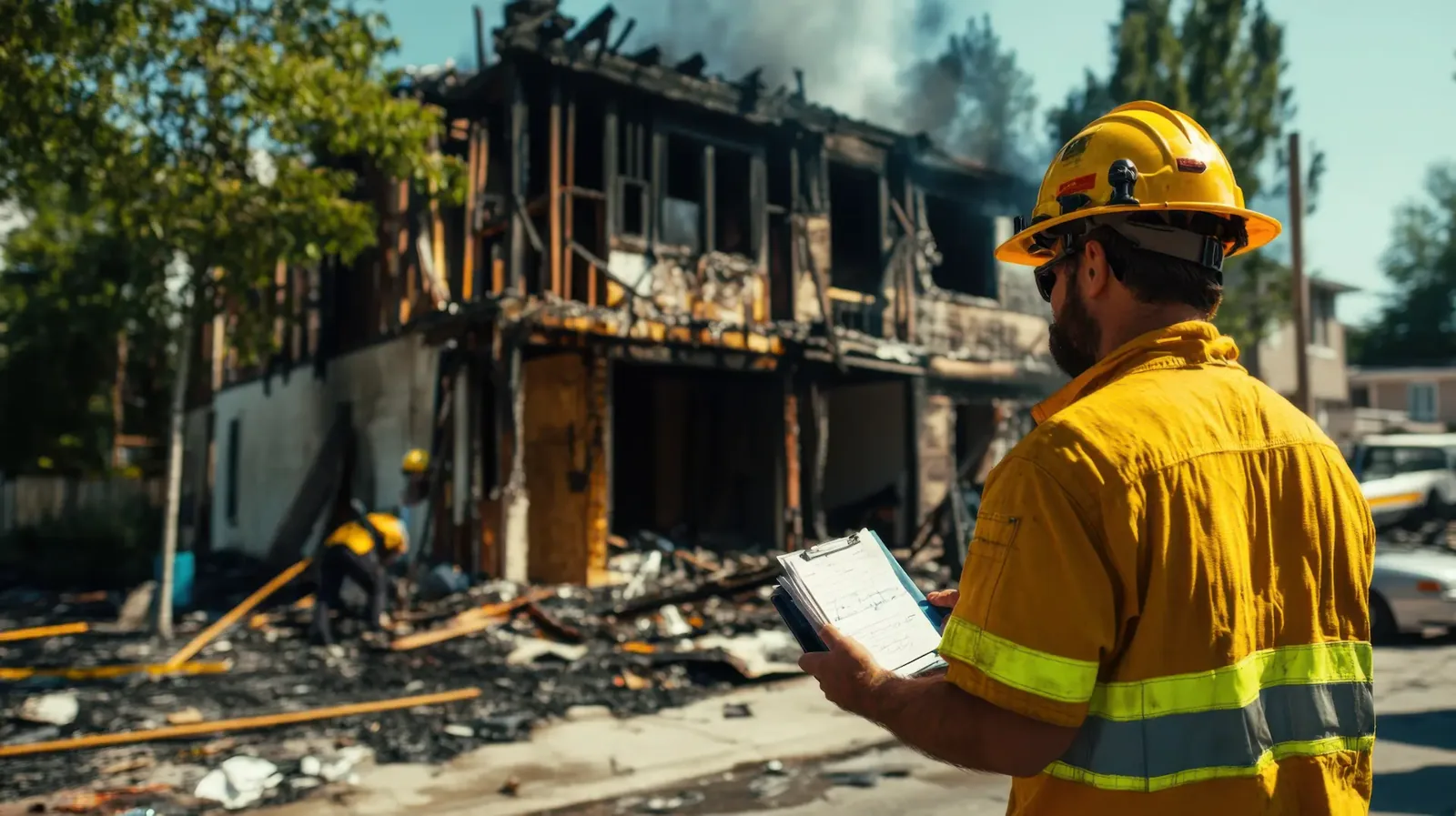
Storm response: Protect openings and document impact
South Florida storms can bring strong wind, flooding, hail, and occasional tornadoes, while tropical systems require preparation ahead of warnings. After safe access returns, we inspect perimeter metal, seams, equipment supports, drains, and wall flashings for movement or blockage. Temporary protection is recorded separately from permanent repair so staff can restore guest service while the full scope is reviewed. We compare the observed roof damage with the building's prior condition when records are available.
For a group with several properties, every site needs its own inspection date, zone map, images, and repair quantities. One hotel's damage should not be assigned to another location. If a leak is active, emergency roof response can secure the opening while follow-up inspection defines the permanent work. The western district's arena and retail activity may affect post-storm access and traffic, so we coordinate lift and delivery timing with the hotel contact. The on-site team can then match work status to guest relocations, service interruptions, and the next shift's room plan before reopening the affected area.
Capital decision: Compare repair with a phased project
A single puncture, open seam, or flashing failure may call for localized repair. Repeat leaks across separate sections, widespread wet insulation, weak attachment, or deck deterioration can require a larger capital review. We map tested conditions, identify inaccessible areas, and show the boundary of each confirmed failure. This lets ownership compare repairs, recover, coating, or replacement with the interruption each option would create.
Cost and timing depend on removal depth, equipment, guest protection, weather, room occupancy, and access. We list those drivers by roof section so proposals compare the same work and assumptions. A replacement plan can set dry-in milestones around operating requirements. For a hotel in Sunrise, share event dates, room availability, maintenance logs, equipment changes, and roof plans; we will build the scope around the building's actual conditions and guest schedule.
Frequently Asked Questions
Can roof repairs be scheduled around hotel guests?
We coordinate noise, access, ventilation changes, and room protection with the property team. The roof layout and weather window determine whether work can be phased by wing or section.
How do you find a leak above a guest room?
We use the room and timing to locate the roof zone, then inspect nearby seams, drains, curbs, and walls. Testing confirms whether moisture reached the insulation or deck.
What happens if a storm damages several properties?
Each hotel receives a separate inspection record with date, roof map, photographs, observed impact, and remaining work. Each hotel receives a separate inspection date, roof map, and set of findings.
Can a hotel roof be coated instead of replaced?
Only if the substrate, adhesion, moisture, drainage, and attachment are suitable. We inspect and test those conditions before comparing coating with repair or replacement.
What information helps plan hospitality roof work?
Provide room blocks, event dates, roof drawings, leak logs, equipment changes, and maintenance records. These details help us set access, noise, and dry-in requirements.
Set a roof sequence around guest operations
Share event dates, room availability, roof plans, equipment schedules, and leak records. We will inspect the assembly and document a phased scope for the property team.
Call 555-555-5555 or request a roof assessment.