Commercial Roof Recover in Sunrise, FL
Commercial Roof Recover
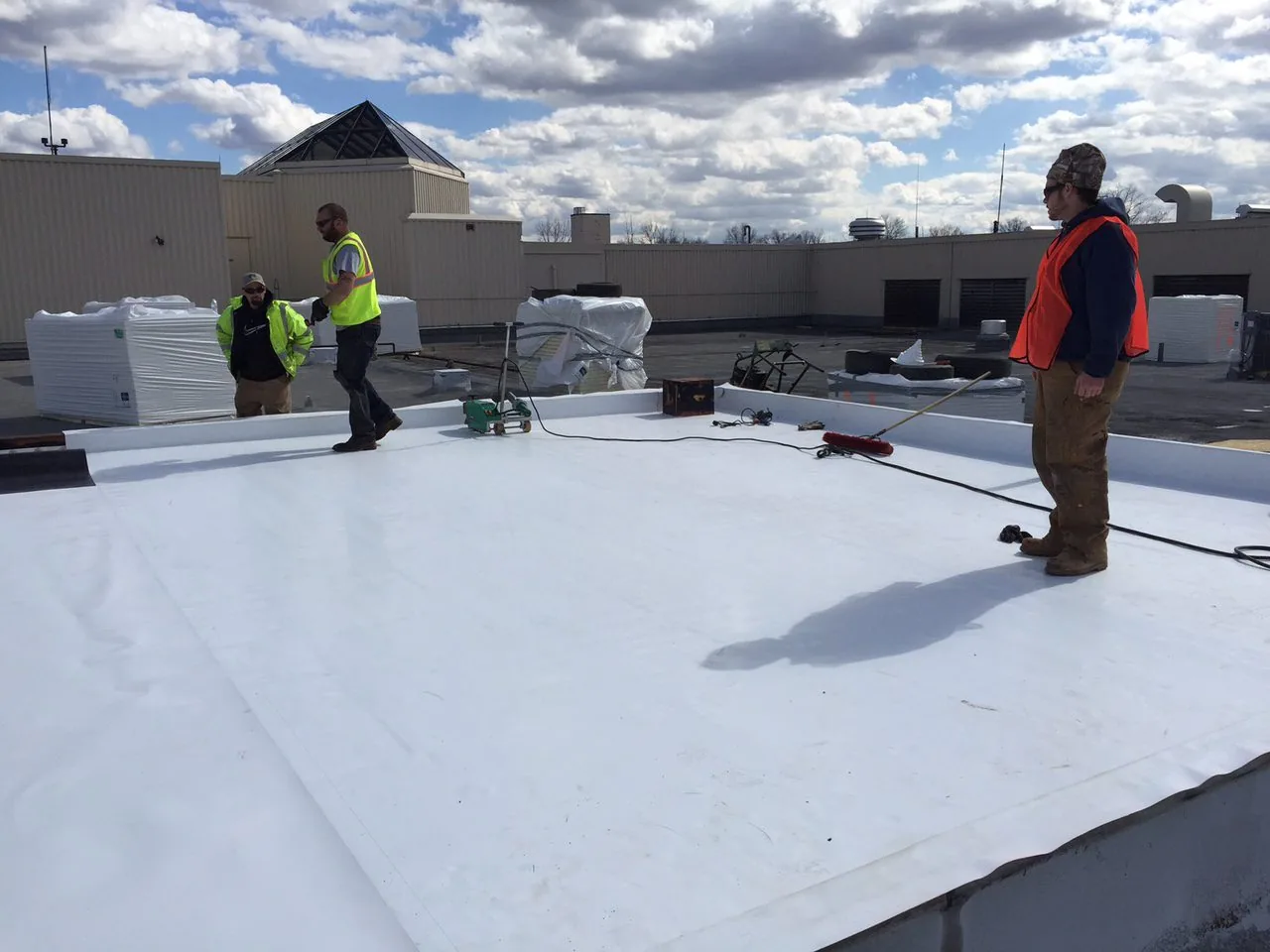
Office and flex roofs in Sunrise, FL can sometimes accept a new membrane without removing every existing layer, but only when the assembly is dry enough, attached well, and compatible with the proposed system. A recover adds weight and changes height at drains, curbs, edges, and doors. The decision depends on test results and roof geometry, not on surface appearance alone. Sawgrass International Corporate Park includes corporate offices and research, healthcare, and financial uses; Broward Lakes Business Park contains multi-tenant flex and office properties. Those property types can have different access and rooftop-equipment constraints. We map the existing layers, identify the wet boundary, and compare recover with selective or full tear-off. The written scope should show what remains below the new assembly, how it will be fastened, and what happens if test openings reveal concealed damage.
Commercial Roofing Services in Sunrise, FL
Evaluate a commercial roof recover in Sunrise, FL with moisture testing, attachment review, drainage checks, and a clear boundary for work over existing layers.
Layers: What stays in place?
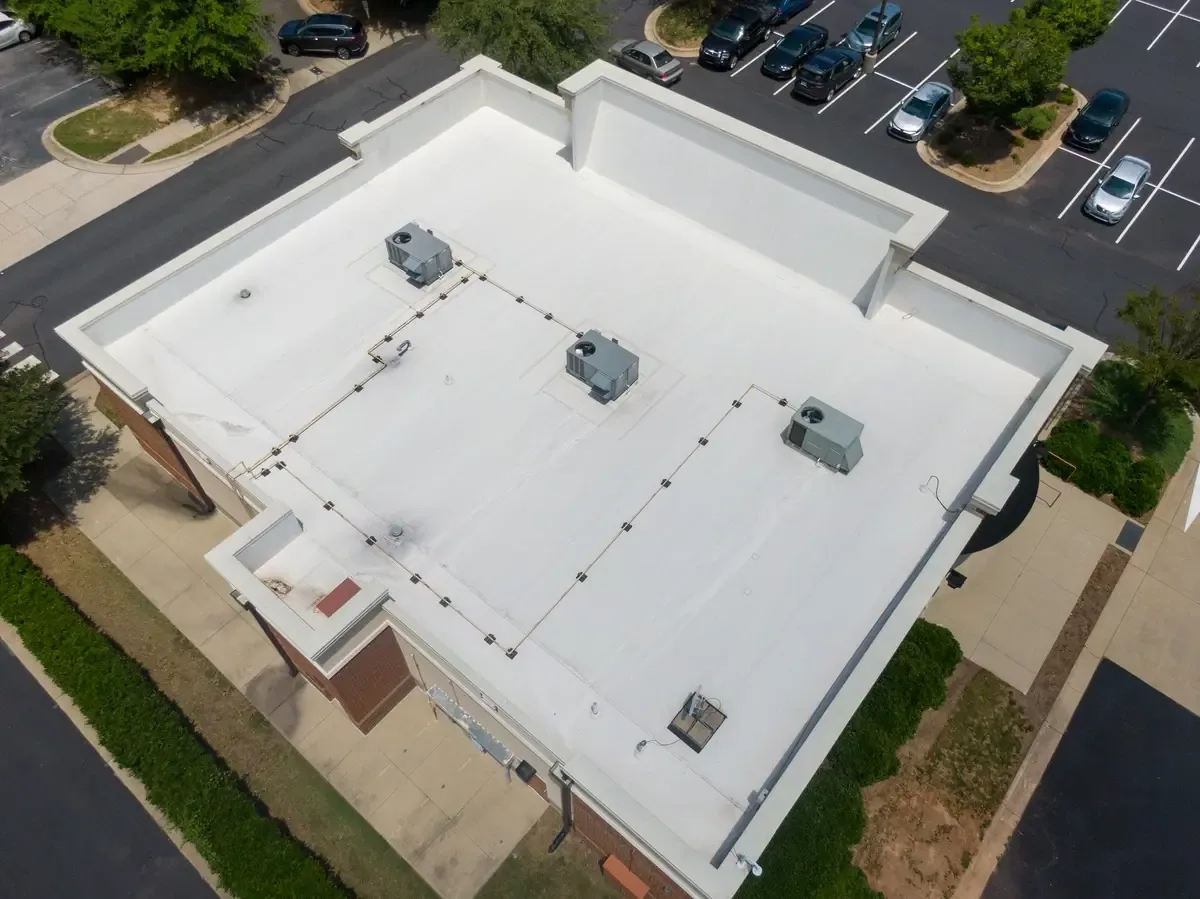
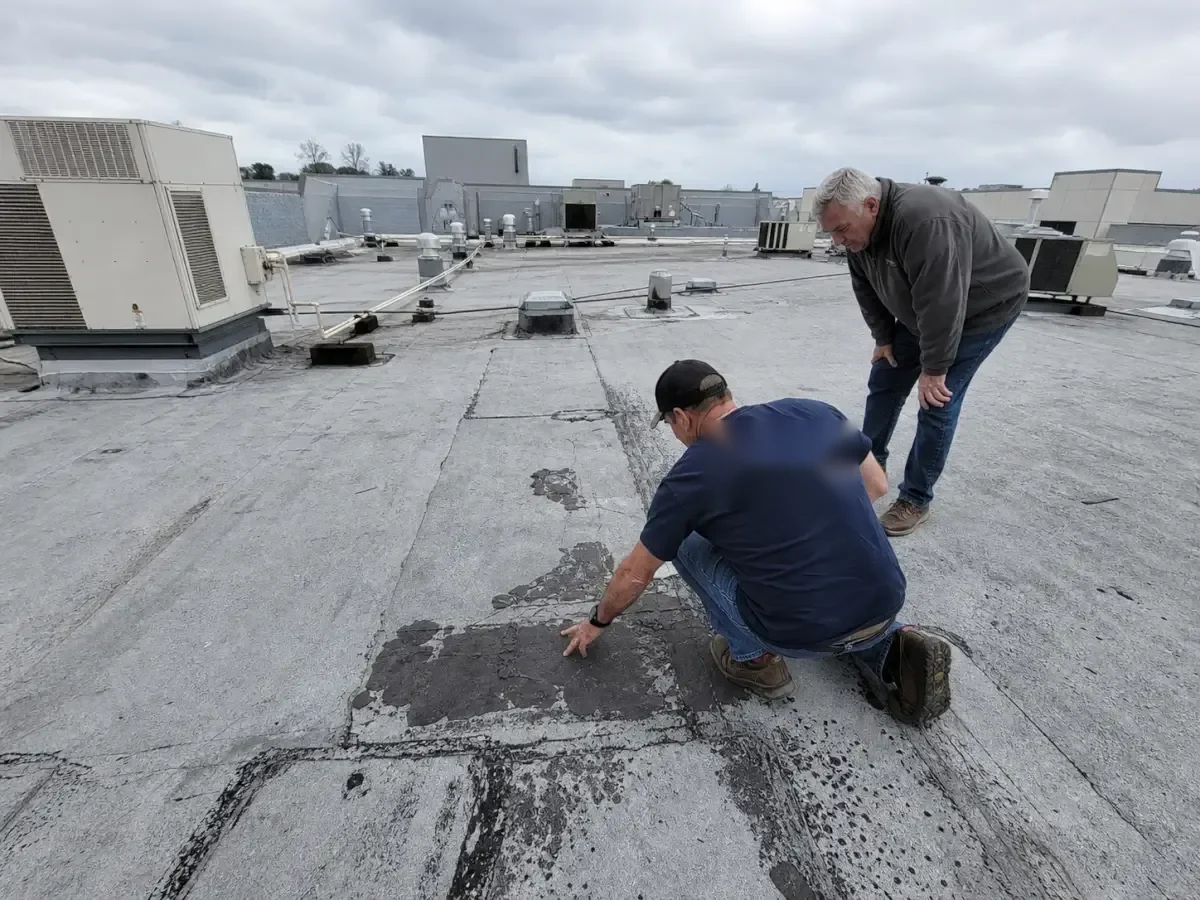
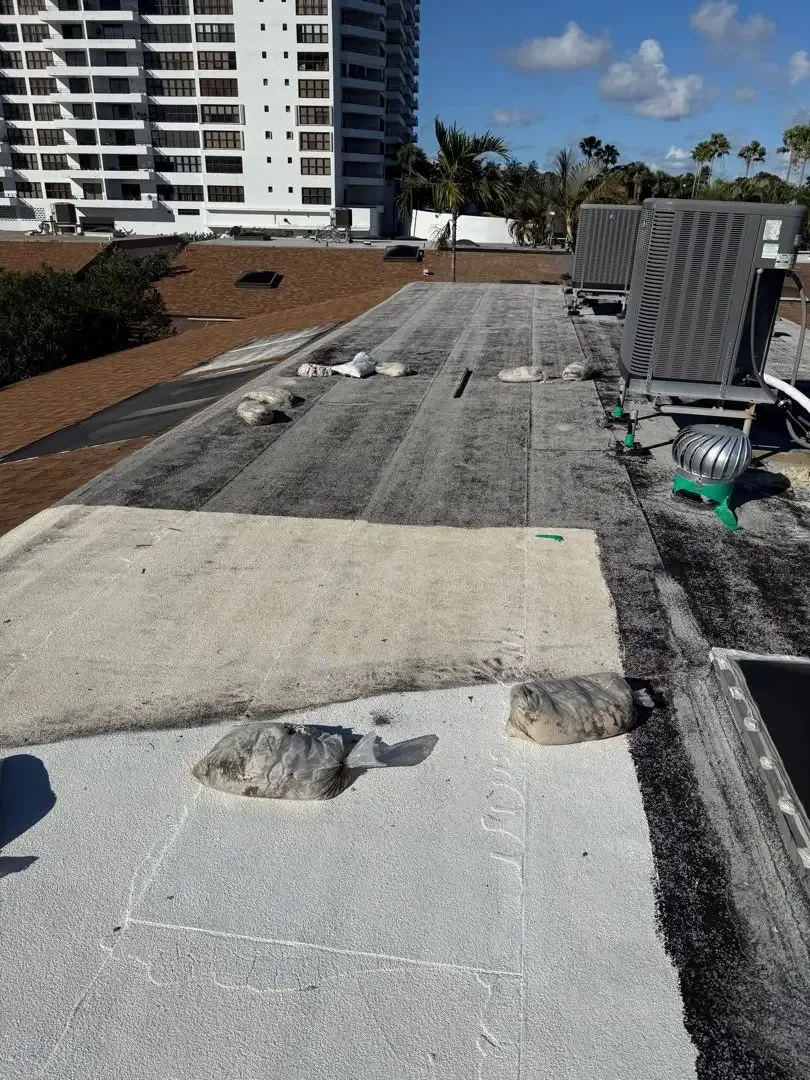
Recover work begins with a layer count. We look for old membranes, coatings, insulation, cover board, patches, and areas where prior repairs changed the surface. A new layer cannot correct saturated insulation or a weak deck attachment. Test cuts at representative zones reveal the assembly and help verify whether the existing substrate can carry the planned fasteners. If conditions vary across the roof, the proposal should state where each result applies and where more testing is required.
Sawgrass Technology Park spans 100 acres and includes a dozen office and technology buildings. We label inspection photos and test points by building and roof zone so the facility director can compare the correct records when evaluating a recover. A hands-on inspection can record accessible conditions, while infrared and core-cut testing can help locate and confirm moisture when appropriate. The report should tie each test point to the proposed work boundary. A useful test layout samples more than the visibly damaged area: representative field, perimeter, drain, and repair zones can show whether the assembly is consistent. If a core identifies wet insulation at one point, adjacent openings help locate where material returns to a dry condition. We mark that transition by roof zone and note any area that could not be tested. This keeps a localized removal decision tied to evidence instead of extending it across an entire building without confirmation.
Moisture: Confirm before covering
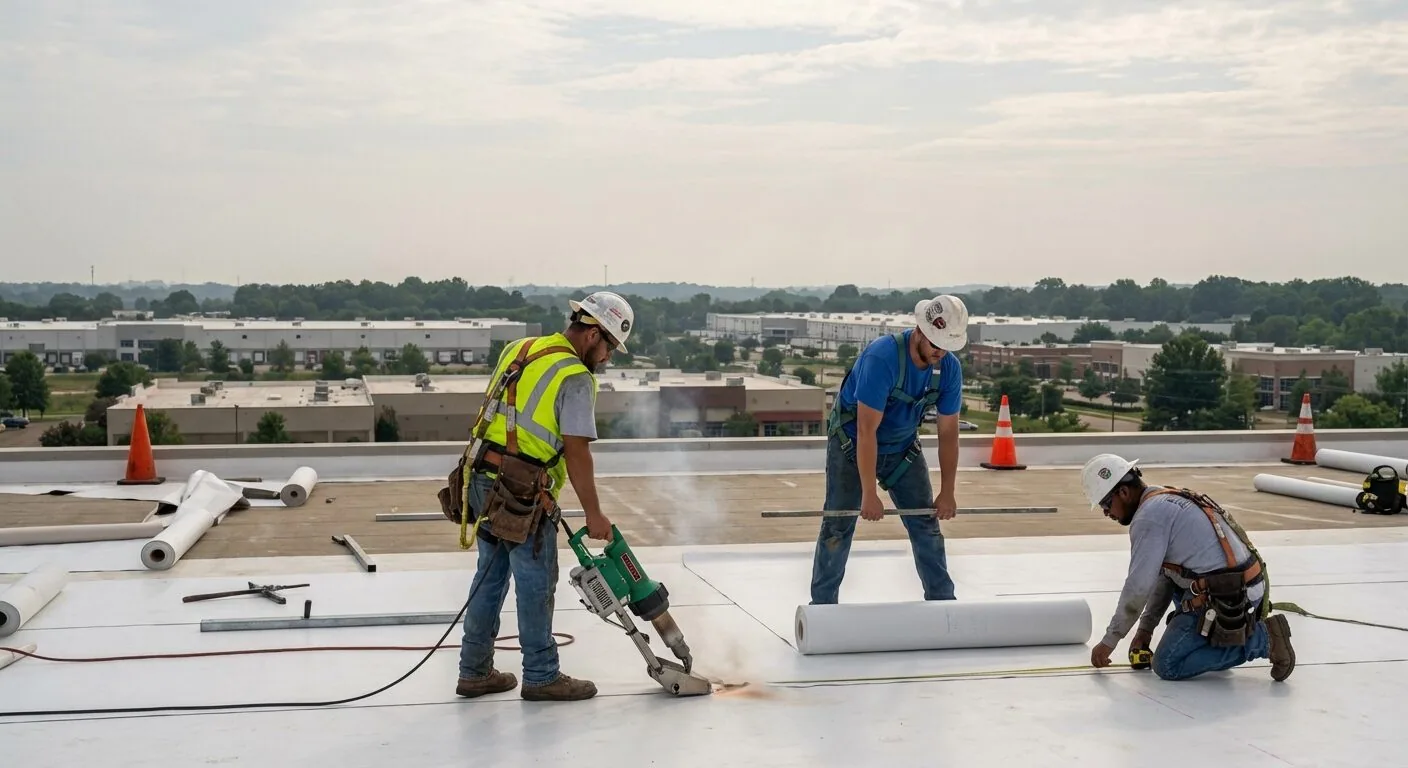
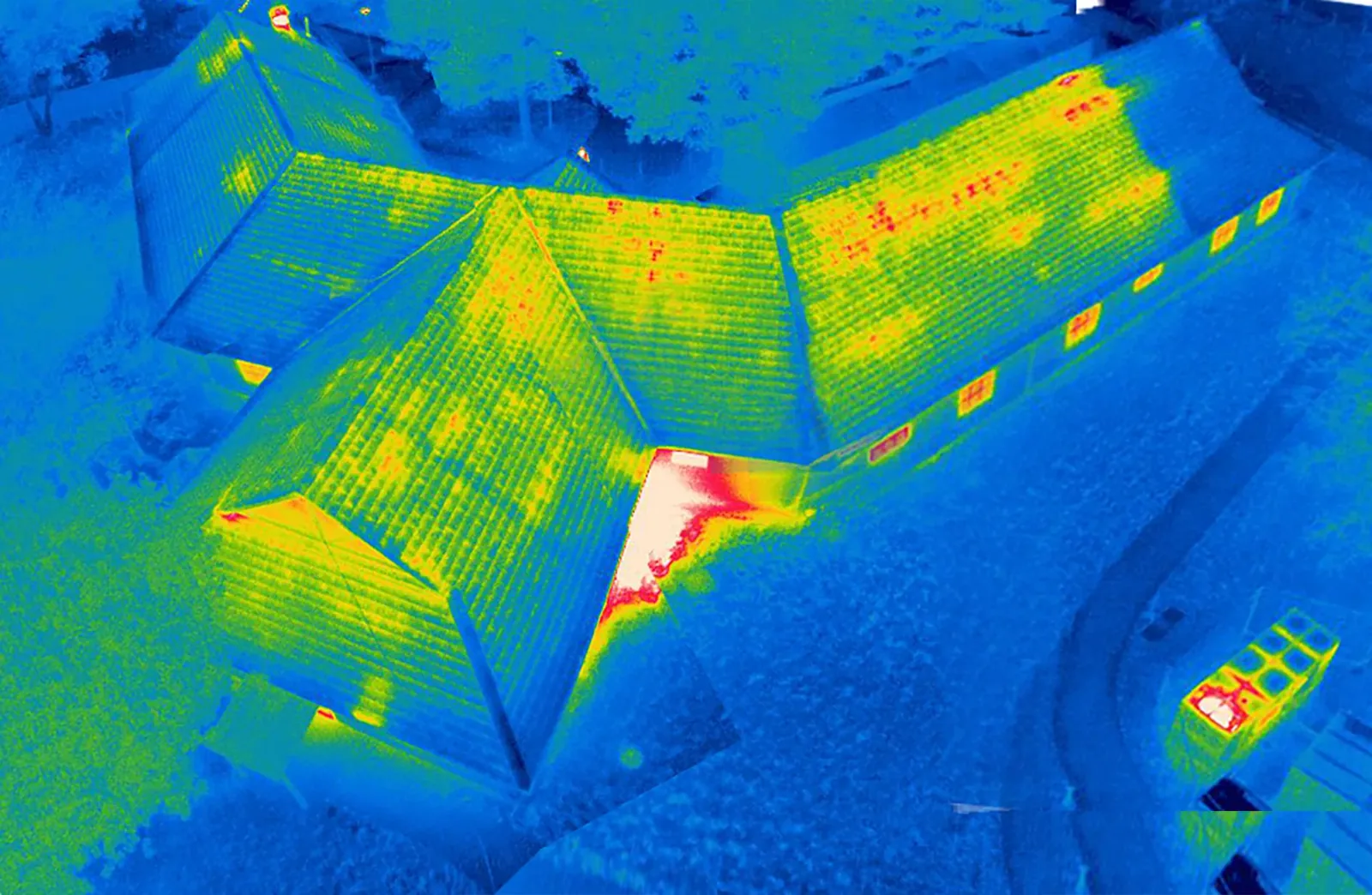
Trapped water remains a concern after a new membrane is installed. Moisture can travel sideways through insulation or collect around drains and penetrations, so a surface that appears sound does not establish a dry assembly. Infrared imaging can show temperature differences under suitable conditions; a core cut checks materials at a selected point. Neither method alone maps every concealed condition. We compare multiple evidence types with interior leak reports and roof details before recommending a recover zone.
Fort Lauderdale averages 60.95 inches of rain annually, including 37.49 inches during the South Florida rainy season. Before a Sunrise roof is covered, we check the drains and overflow paths and use test results to mark any wet insulation that needs removal. The climate makes those checks part of deciding which layers can stay. A condition report with mapped findings can separate confirmed moisture from areas left untested, and a targeted repair can address an isolated defect before the remaining field is considered.
Attachment: Check the new load path
A recover changes the assembly's dead load and fastening path. Existing layers may hide the deck, and a fastener that does not engage the supporting substrate cannot provide the intended attachment. We identify deck type where accessible, review pull-test or fastening requirements for the specified system, and document perimeter and corner conditions. The design should account for wind uplift and the applicable code criteria. Broward County provides energy-code guidance for the 2023 Florida Building Code and resources for High-Velocity Hurricane Zone examinations; project details still need to be evaluated for the actual building. We also check whether the proposed fastening pattern reaches the structural deck through the layers that remain, and whether perimeter and corner zones need a different attachment schedule. The specification should name the substrate assumption and how the crew will verify it in the field. That gives the facility director a concrete review point before material delivery and installation begin.
System compatibility matters at seams, penetrations, and transitions. A proposed membrane, cover board, adhesive, or mechanical fastener must suit the materials that remain. Coatings can affect adhesion and surface preparation, and a recover should not conceal a loose curb, open flashing, or damaged edge. When roof records are incomplete, a defined due-diligence survey and cover-board review can establish the information needed before selecting a new layer.
Geometry: Keep water moving
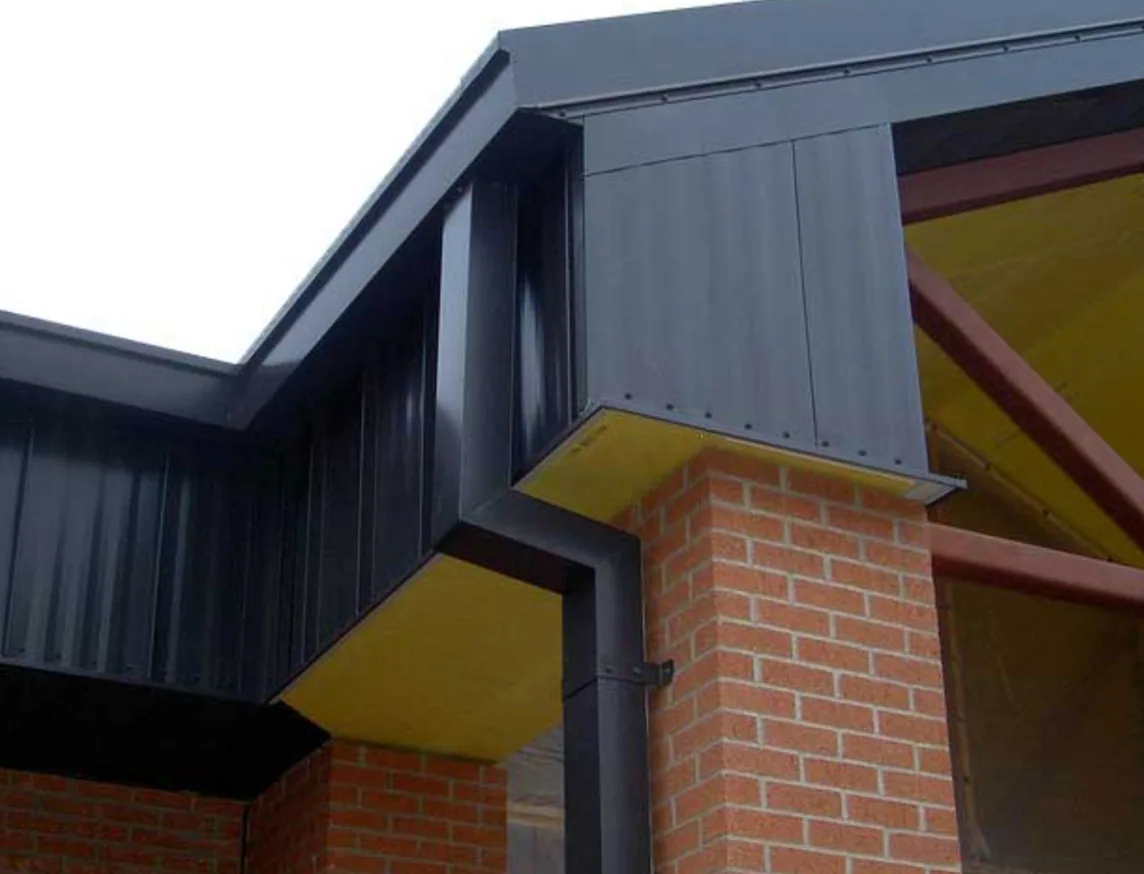
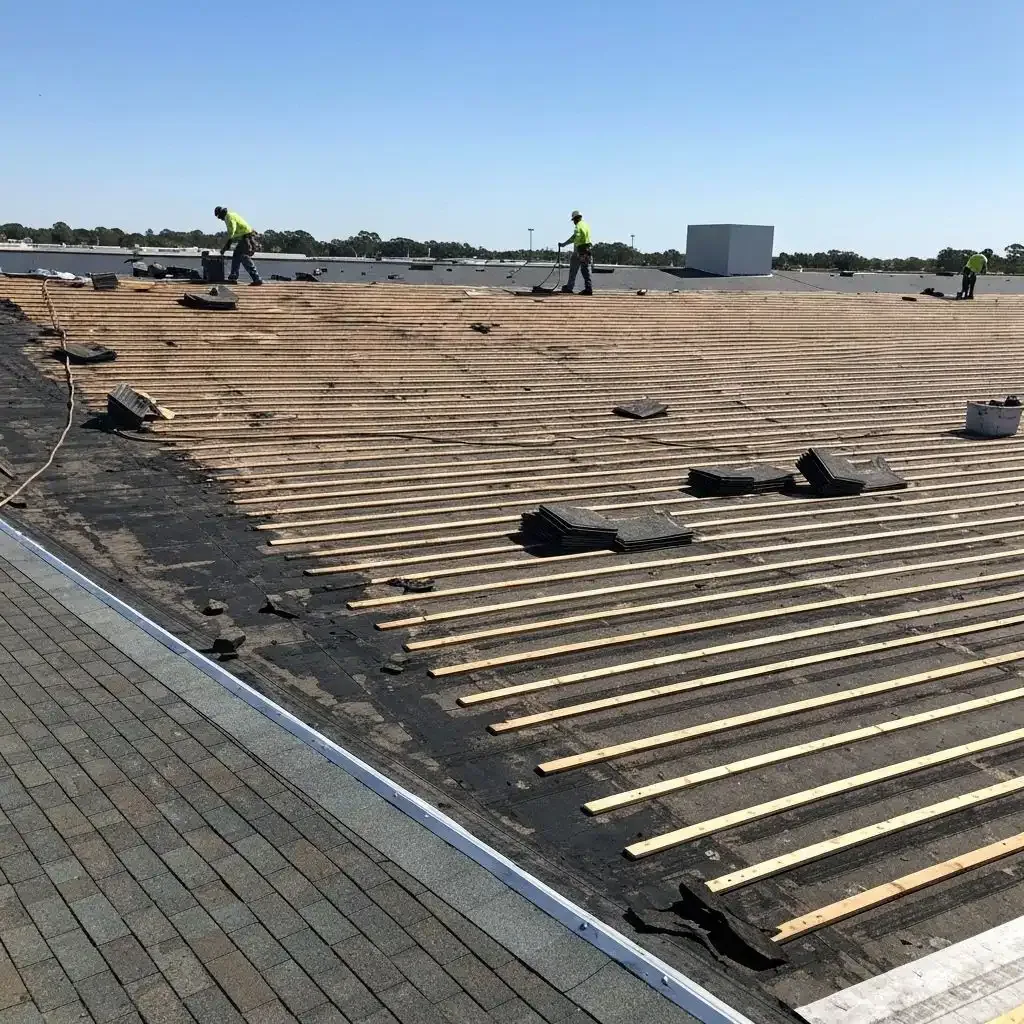
Added thickness can change how water reaches drains and scuppers. Door thresholds, equipment curbs, expansion joints, and parapet heights also need enough clearance after the new assembly is installed. We check existing slope, low points, overflow paths, and the height of each transition. A recover plan should show how the installer will address altered elevations rather than treating membrane coverage as the only scope.
Retail, arena, corporate, and mixed-use buildings occupy the Sawgrass Business and Entertainment District. Their roofs serve different operations, so we record outlet locations, tenant hours, and staging limits for the specific property before planning the overlay. A drainage detail review and perimeter inspection can identify conditions that should be resolved before new layers reduce access. If the assembly does not drain reliably, redesign or tear-off may be the stronger option.
Decision: Compare recover and removal
A recover can reduce tear-off and disposal, but the saved removal work does not outweigh unresolved moisture, failed attachment, or incompatible materials. We present the evidence supporting each option, identify the test limits, and state whether the work includes localized removal or a larger tear-off. The owner can then compare the assembly, drainage changes, schedule, and concealed-condition allowances on a consistent basis. We also identify changes in parapet height, door clearance, and equipment curb access that affect the finished roof elevation. If the new layer would leave a vulnerable transition, the scope should price that correction or compare removal instead. The route should leave a clean, documented test opening before the crew installs the final membrane.
For an occupied building, zone sequencing and daily dry-in remain important even when the existing roof stays in place. We identify access paths, roof equipment that needs protection, weather holds, and the person authorized to approve additional testing. Send the roof plan, repair history, leak zones, equipment constraints, and operating hours. A recover assessment must answer what remains, while a replacement comparison shows what removal would address. We can also map work around Sunrise facilities without carrying one property's conditions to another.
Frequently Asked Questions
Which findings rule out a recover?
Confirmed wet insulation, poor attachment, incompatible layers, or inadequate clearance can make an overlay unsuitable. We identify which condition controls and whether another test could narrow the removal boundary.
Can infrared testing prove the roof is dry?
No single image establishes that. Temperature patterns can help target investigation, while test cuts confirm materials at selected points. We state what was tested and what remains outside the evidence.
Will a new layer change drainage?
Added thickness can affect drains, scuppers, thresholds, curbs, and overflow height. We check those elevations and show how water is expected to move after installation.
How does a recover compare with tear-off?
The comparison should include the assembly left in place, attachment, moisture findings, drainage adjustments, disposal avoided, and any conditions that could expand removal. We lay out those boundaries before authorization.
What records help assess an overlay?
Provide the roof plan, prior repair notes, available assembly drawings, known leak zones, and equipment restrictions. Those records help us choose test locations and compare options by roof section.
Test the recover option
Share the roof plan, repair history, leak zones, equipment constraints, and operating hours. We will map the existing assembly and identify the evidence needed before choosing a new layer.
Call 555-555-5555 or request a roof assessment.