
Roof Damage Repair
Roof Damage Repair in Sunrise, FL
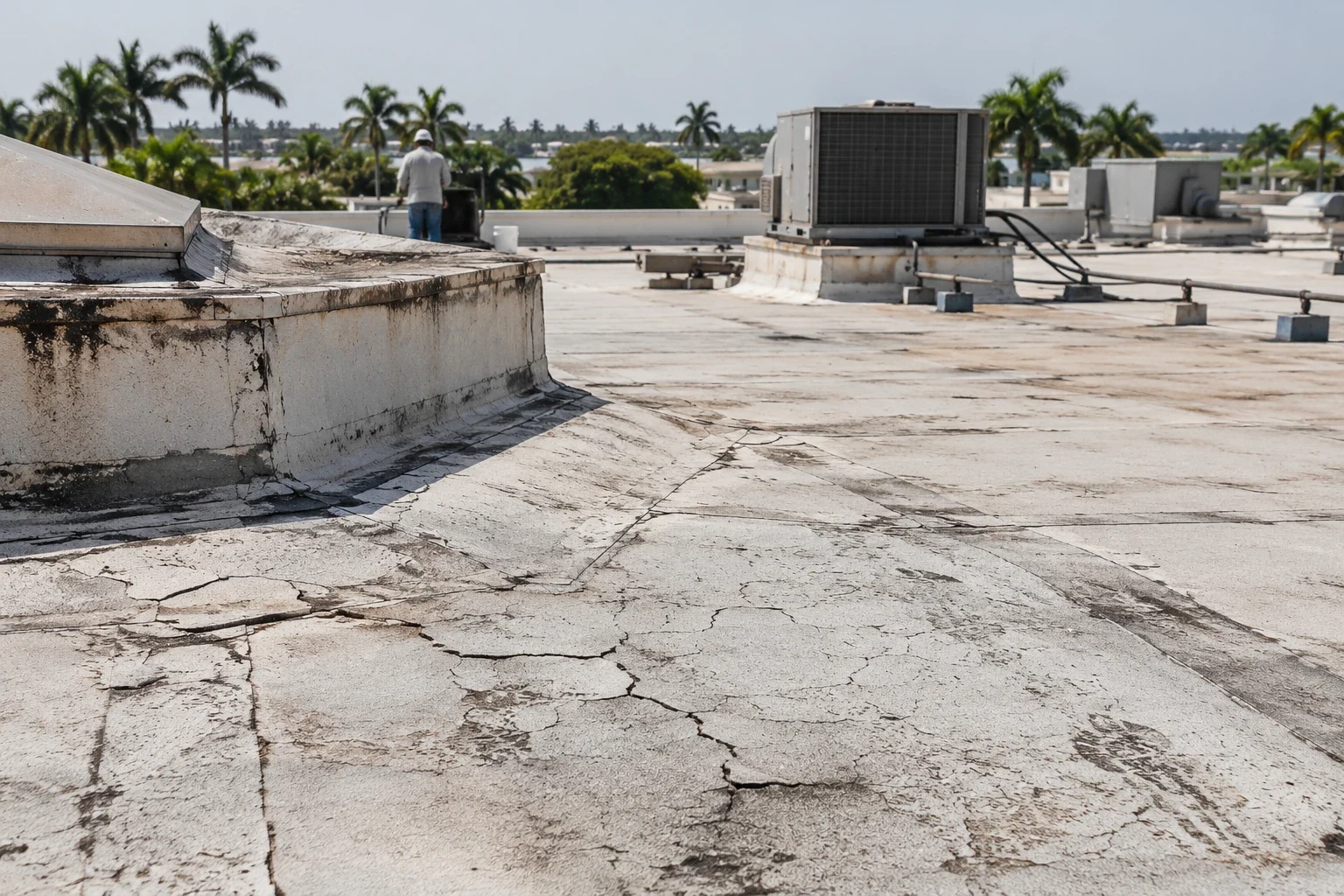
South Florida storms can leave a roof with loose edge metal, open seams, punctures, or water at interior ceilings. In Sunrise, FL, the repair decision starts with the affected roof zone and the physical path water or wind could have taken. We document what is visible, compare it with leak timing, and identify whether the membrane, flashing, insulation, or deck needs testing. Inspection findings set the repair scope, with storm timing guiding where crews check the roof.
Serving Sunrise and Central Broward County
Trace commercial roof damage in Sunrise, FL after wind, hail, heat, fire, or ponding, with repairs tied to confirmed assembly conditions.
Wind and hail: Inspect the perimeter first
Wind pressure can stress corners, perimeters, fasteners, and transitions where a membrane meets a wall or curb. Hail may mark soft metal or damage a surface, but a mark alone does not show whether the assembly is leaking. We photograph the detail, inspect adjacent laps and penetrations, and record any opening that needs temporary protection. We assess edge and corner details in wind damage repair and document surface and seam conditions in a hail assessment, separating visible impact from a repairable failure.
All Roof Damage Repair
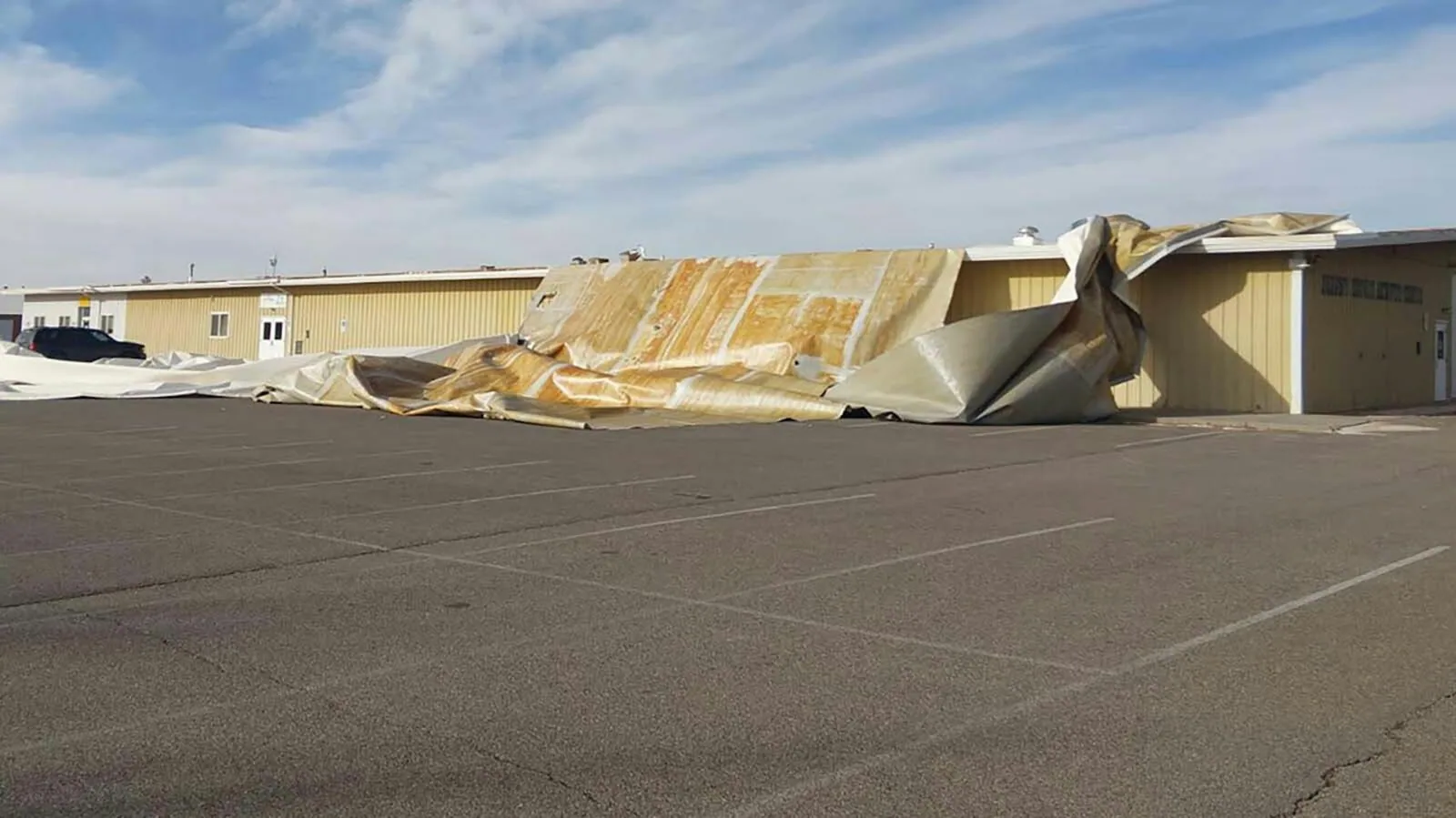
Commercial Wind Damage Roof Repair
Commercial roof wind damage inspection and repair in Sunrise, FL. We check perimeter attachment, seams, penetrations, drainage, and exposed roof areas.
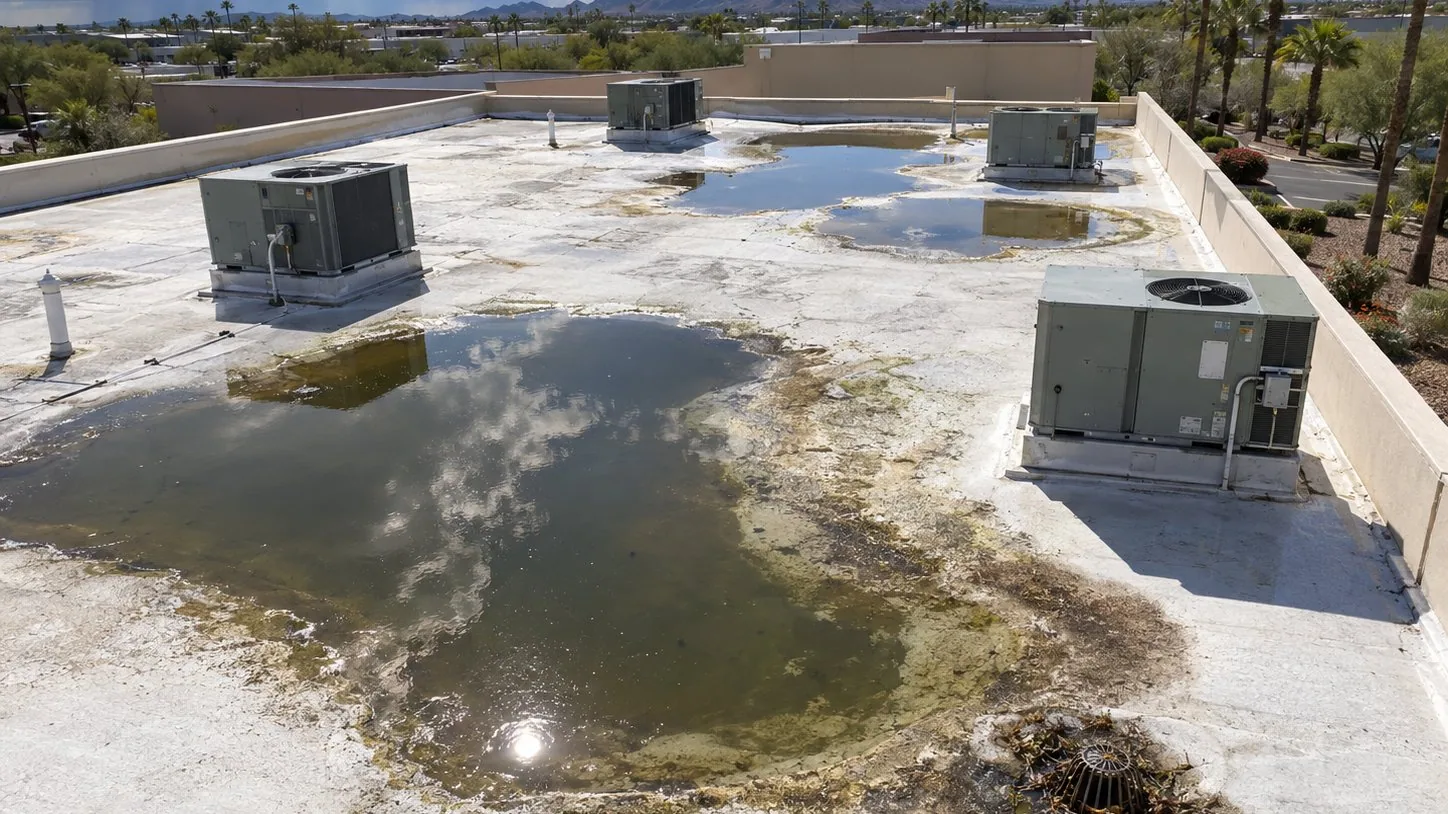
Commercial Ponding Water Roof Repair
Sunrise commercial roof drainage repair for standing water, blocked outlets, low areas, and moisture below the membrane. Inspection-led repair scopes.
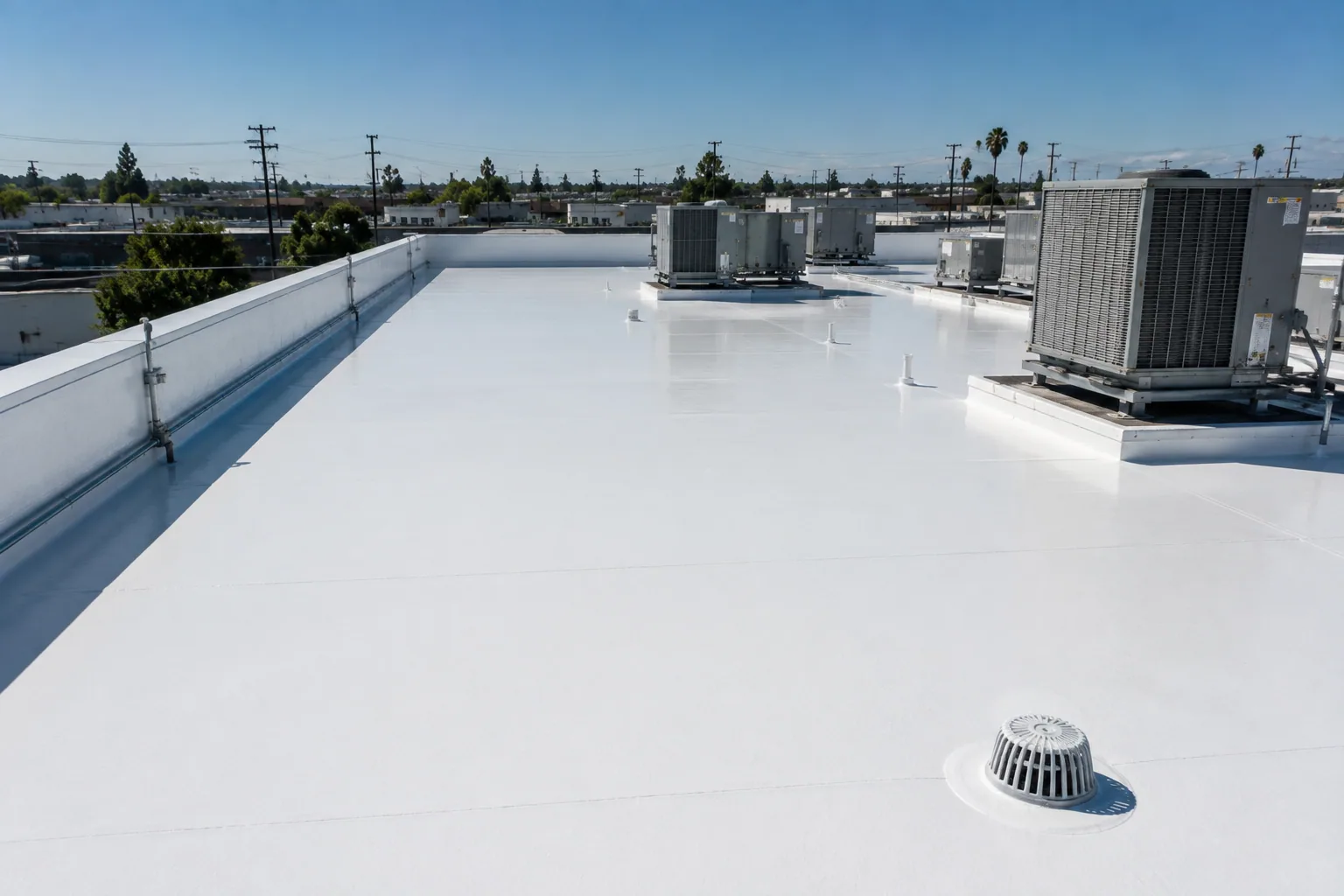
Commercial Roof Flashing Failure Repair
Commercial roof flashing repair in Sunrise, FL. We inspect curbs, walls, penetrations, termination bars, and metal transitions before scoping work.
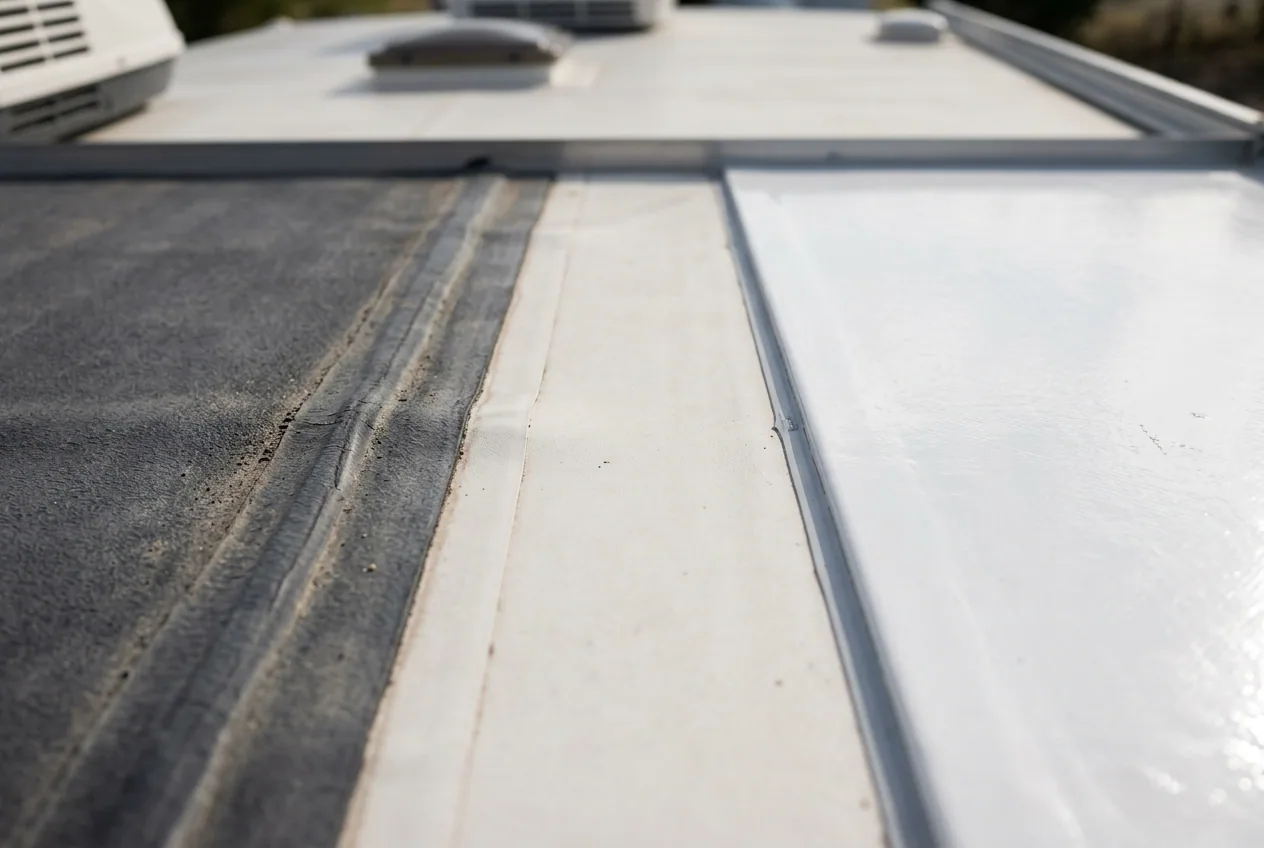
Commercial Roof Seam Failure Repair
Sunrise commercial roof seam repair for open laps, failed welds, and adhesive separation. We inspect the membrane and confirm the repair boundary.
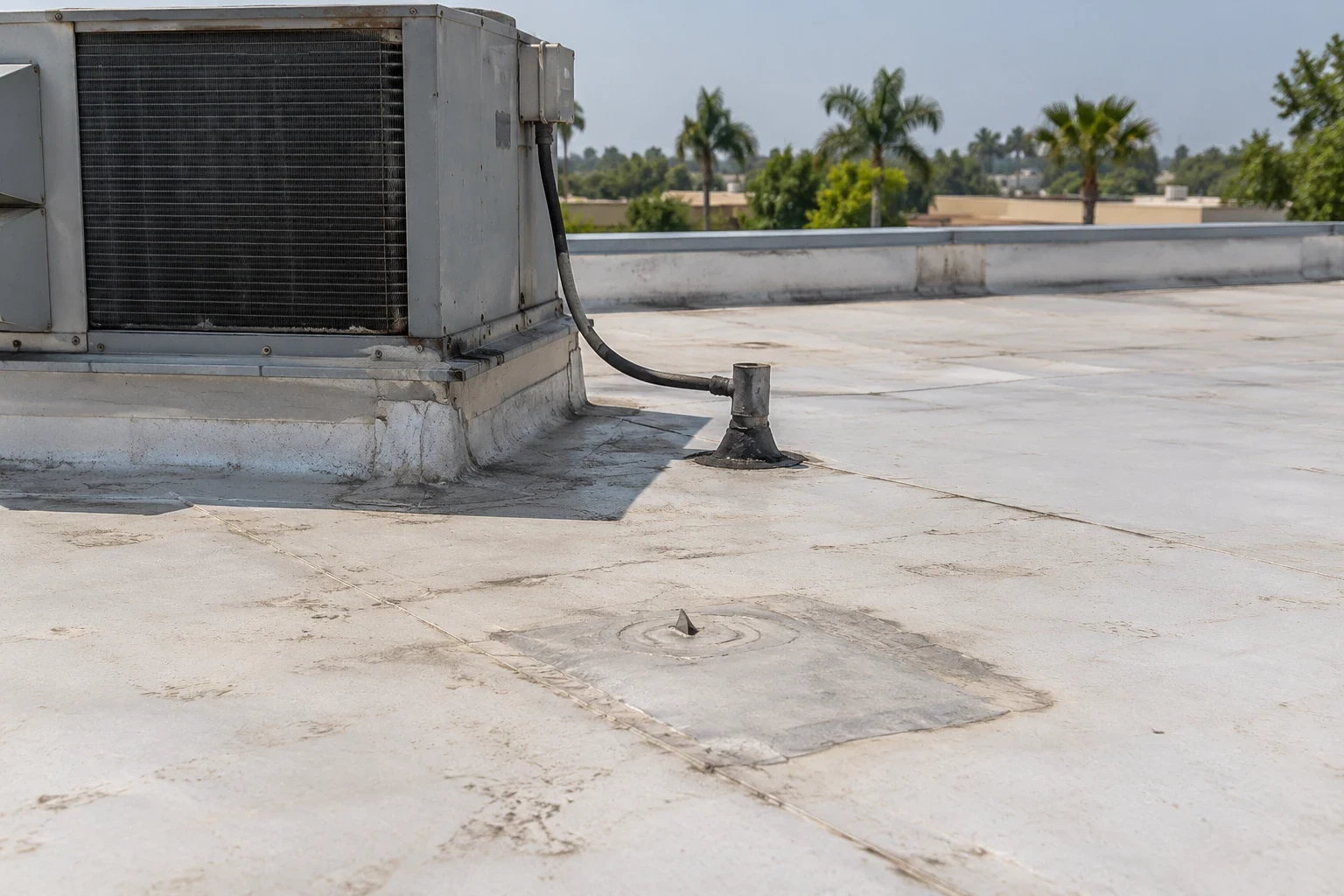
Commercial Roof Membrane Puncture Repair
Commercial roof puncture repair in Sunrise, FL. We locate cuts and foot-traffic damage, inspect insulation and deck, and document a compatible repair.
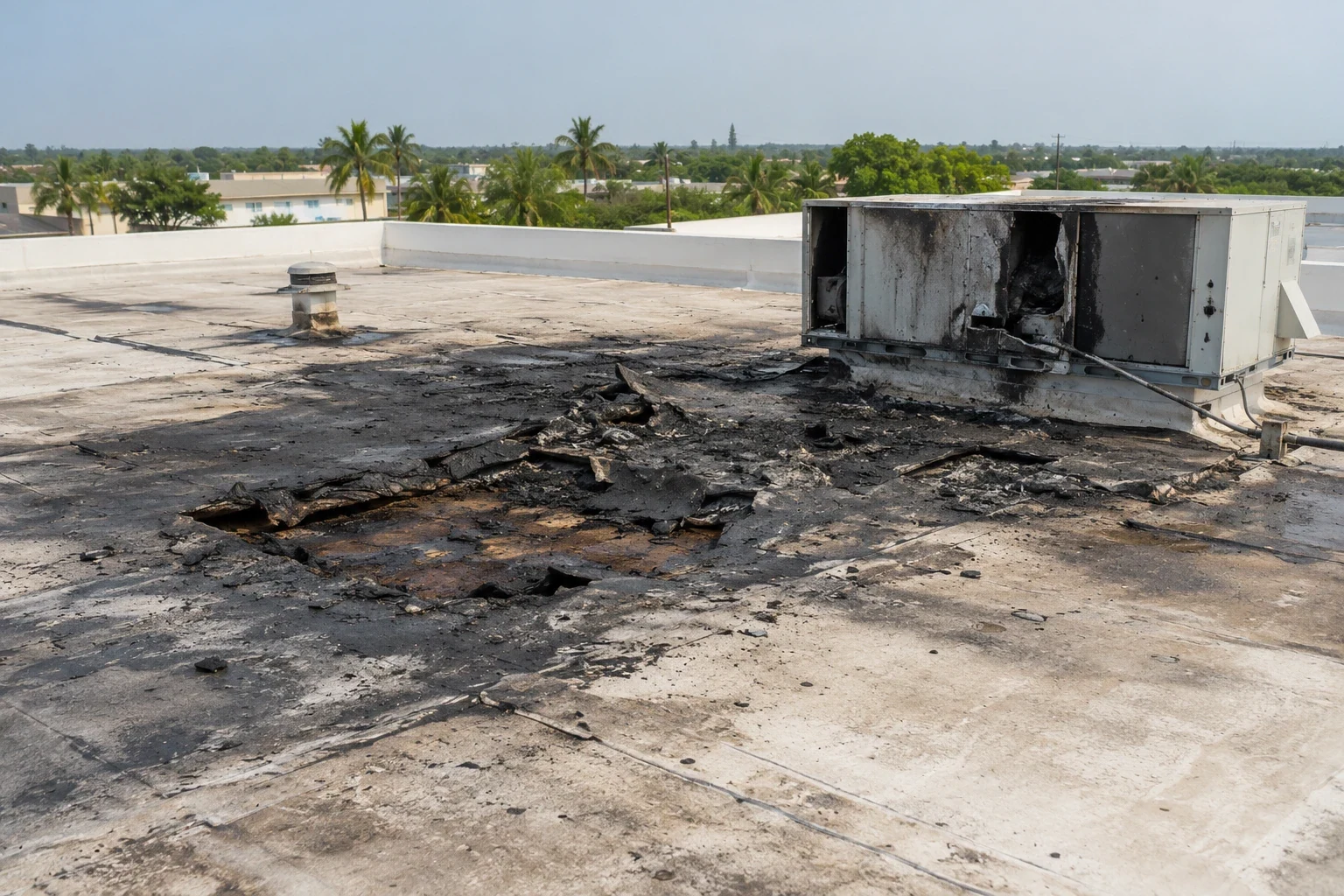
Commercial Fire Damage Roof Repair
Commercial fire roof inspection and repair in Sunrise, FL. We document heat impact, suppression water, damaged membrane, and safe repair boundaries.
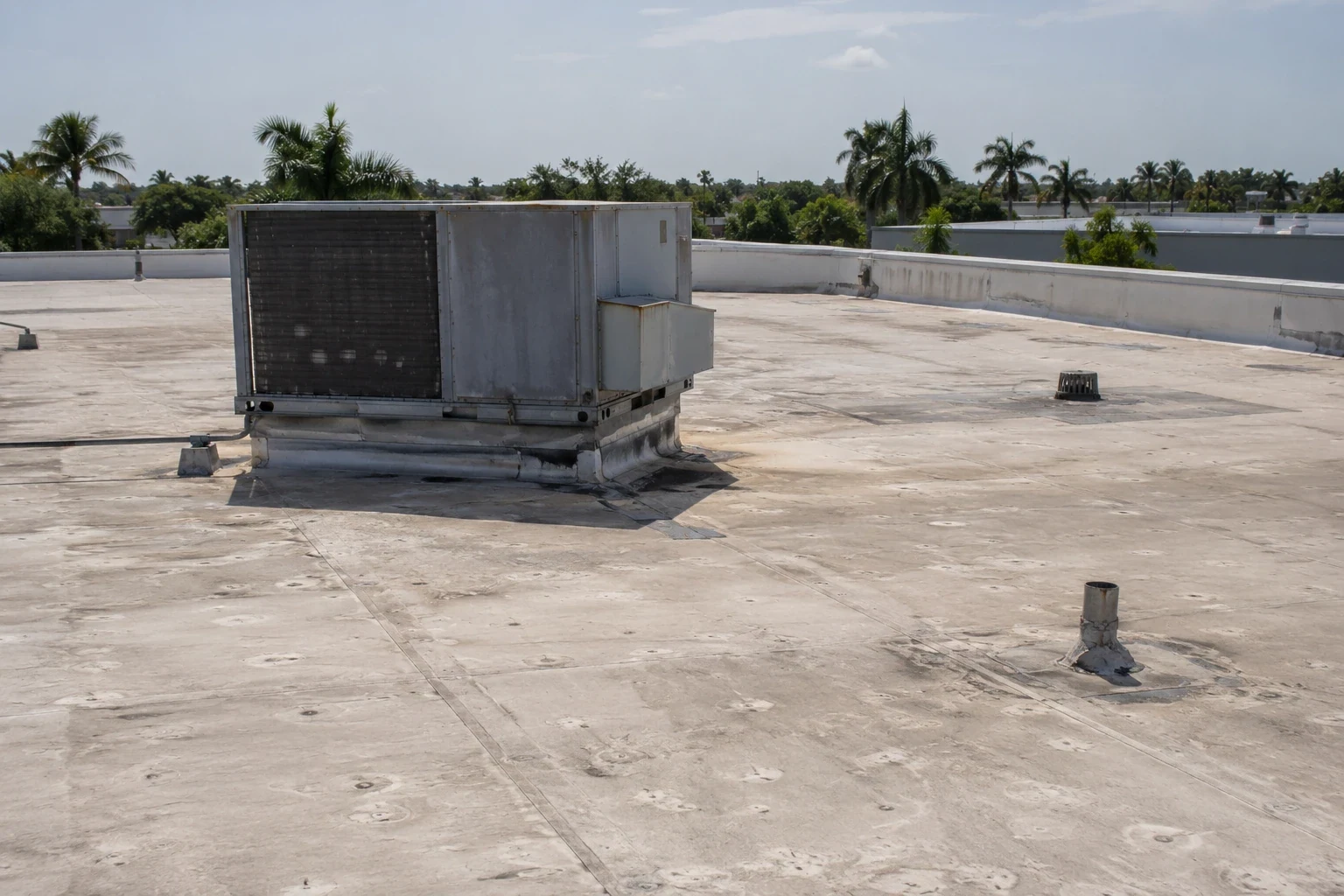
Commercial Hail Damage Roof Repair
Sunrise commercial hail damage inspections document impact marks, membrane condition, rooftop equipment, drains, and repair areas before work begins.
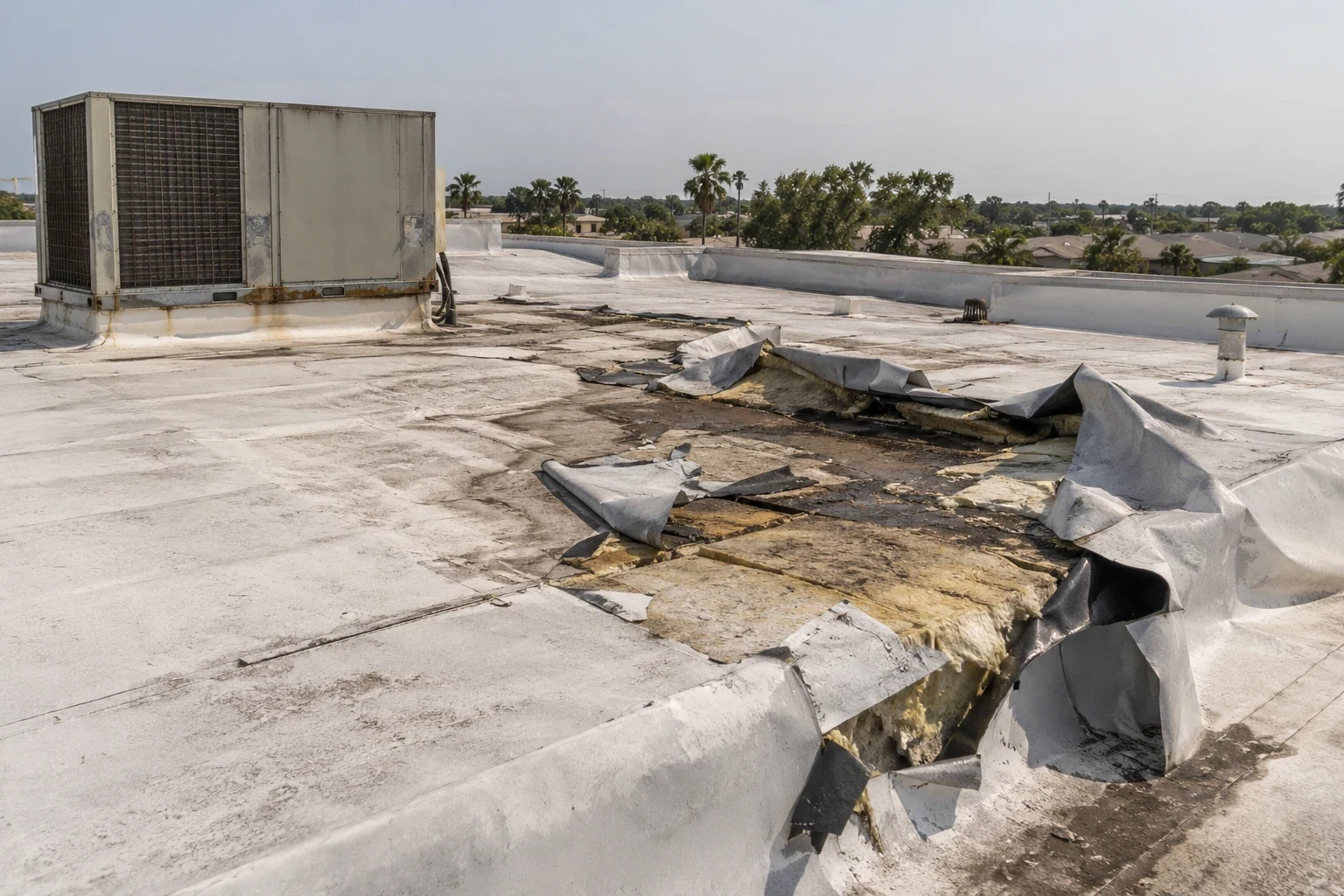
Commercial Hurricane Damage Roof Repair
Hurricane roof inspection and repair in Sunrise, FL. We assess edges, openings, drains, and equipment after safe access returns, with a mapped repair boundary.
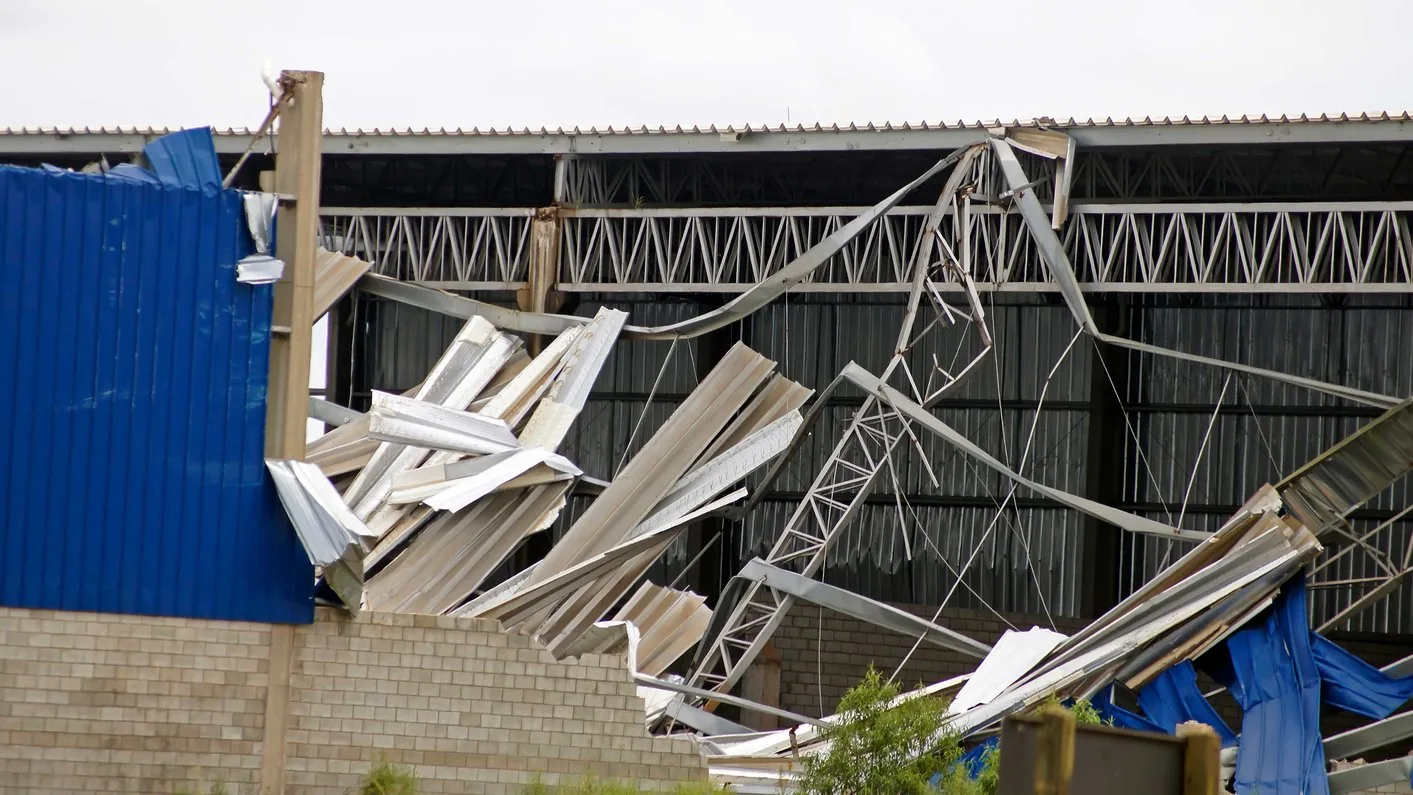
Commercial Tornado Damage Roof Repair
Commercial tornado roof damage inspection in Sunrise, FL. We map openings, displaced materials, impact, and water exposure after safe access returns.
Commercial Roof Heat and UV Damage Repair
Commercial heat and UV roof repair in Sunrise, FL. We inspect membrane aging, seams, coatings, attachment, and moisture before selecting repairs.
Water entry: Trace the moisture path
An interior stain can sit below a drain, seam, curb, or flashing defect that is several feet away. We compare the location and timing of the report with roof conditions, check whether water has travelled beneath the membrane, and draw a wet boundary from test results where needed. Ponding-water correction, flashing repair, and seam work address different failure points and should not be combined under a generic patch description.
Other failure modes: Verify before removal
Membrane punctures, heat-related aging, fire exposure, and tornado damage call for different checks. We inspect the surface and substrate, determine whether adhesion or attachment remains sound, and note the extent of material that cannot be reused. The repair file distinguishes immediate weather protection from permanent work. A puncture repair may stay local when surrounding layers are sound; heat and UV conditions can require a broader membrane review. We also assess fire-related roof damage and tornado damage by the affected roof zone.
Response: Protect the building, preserve evidence
When water is active, the first work is to protect the interior and make the roof safe to inspect. Emergency response is available at any hour, including weekends and holidays. We record temporary measures and return to define the permanent repair once conditions permit. South Florida's May-through-August severe-weather peak includes thunderstorm wind, hail, flooding, and occasional tornadoes; tropical systems are an additional seasonal concern. A Sunrise facility director can use a claim documentation review to keep photos, observed conditions, and repair scope organized.
Repair boundary: Close what testing confirms
Send the roof plan, leak locations, storm date, prior repairs, access limits, and operating hours. We will identify which details can be inspected, whether a test cut is warranted, and where the repair boundary should sit. Findings are separated from concealed conditions so the owner can approve a defined next step.
Frequently Asked Questions
What happens during an urgent roof response?
We address immediate water entry and protect exposed areas, then document the roof condition for a permanent scope. We compare the ceiling mark with seams, drains, curbs, and the roof zone above it before locating the opening.
Does hail damage always require membrane replacement?
Surface marks must be checked against the membrane, seams, flashings, and underlying layers. Repair or replacement depends on the condition confirmed at the property.
Can you separate temporary protection from permanent repair?
Yes. We identify the immediate measure, then define lasting work after the assembly and affected boundary can be inspected.
What information helps with a storm-related repair?
Share the reported timing, roof plan, leak locations, earlier repairs, access rules, and any interior impacts. Photos and inspection findings keep observed damage distinct from assumptions.
Document the affected roof zone
Send the roof plan, leak reports, event timing, and access limits. We will inspect the affected details, protect active openings, and define the permanent repair evidence.
Call 555-555-5555 or request a roof assessment.