Data Center Roofing in Sunrise, FL
Data Center Roofing
Data center roofing in Sunrise, FL has to account for cooling equipment, electrical pathways, controlled access, and the consequence of water near critical operations. We document the roof assembly, drainage, penetrations, and service routes before proposing repairs. A roof leak may begin well away from the room where a sensor or ceiling mark appears, so the survey follows seams, curbs, and roof zones rather than stopping at the first visible symptom. Sawgrass Technology Park’s office and research setting makes building-specific equipment maps essential before roof access or service is scheduled. For data-center work, we map cooling equipment, electrical pathways, access routes, and roof zones at the property being inspected. A commercial inspection can map the condition before an outage window or capital project is selected.
Property Types We Roof in Sunrise, FL
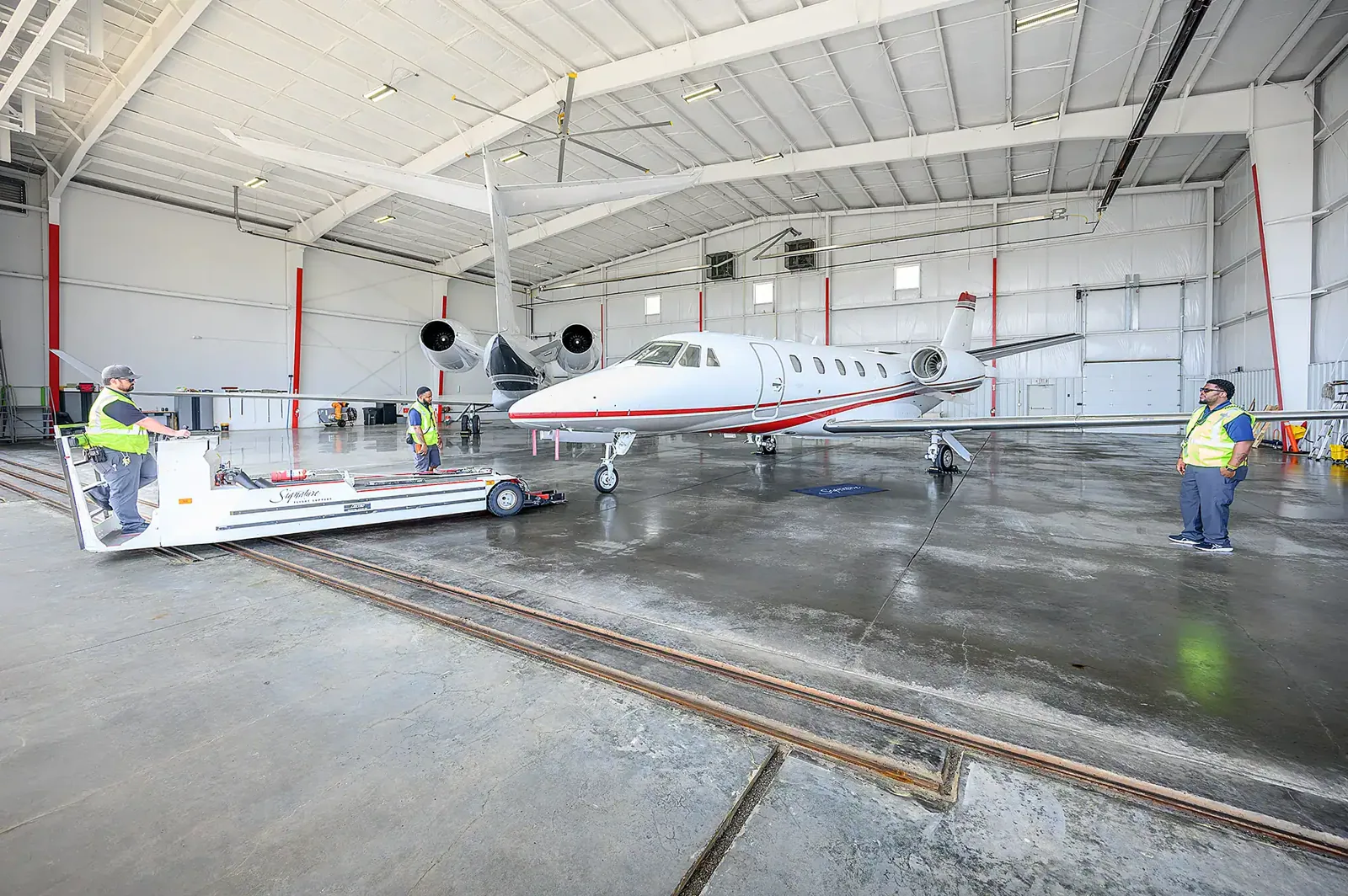
Data center roof inspections in Sunrise protect equipment access, cooling systems, and drainage through mapped work zones and verified assembly details.
Access control: Coordinate the route before roof entry
Data facilities may require escort, badging, sign-in, and approved tools even when the roof itself is not a restricted room. We coordinate the access route, work area, equipment shutdown authority, and contact for a weather hold before arrival. No roof opening begins until the temporary protection and daily closeout can be handled inside the approved window.
A roof survey can be planned in zones so maintenance does not walk through an active electrical or cooling service area. We identify safe paths, ladder or hatch requirements, and locations where a second person must remain in contact. The record lists any area not entered, so an inaccessible condition is not mistaken for a clean inspection. A drone inspection may provide surface context when direct access is limited, but it does not test attachment, seam integrity, or hidden moisture. The final scope must distinguish visual observations from hands-on findings.
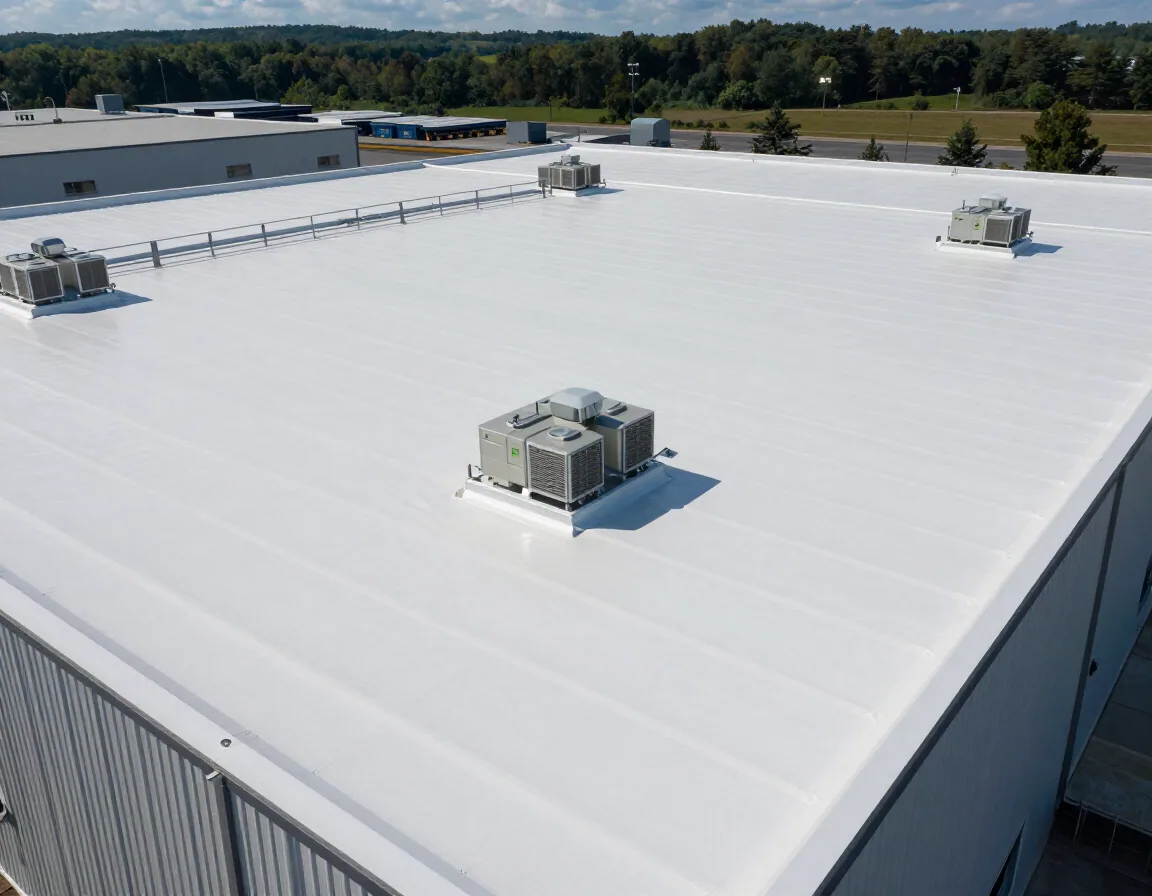
Cooling systems: Inspect curbs and service penetrations
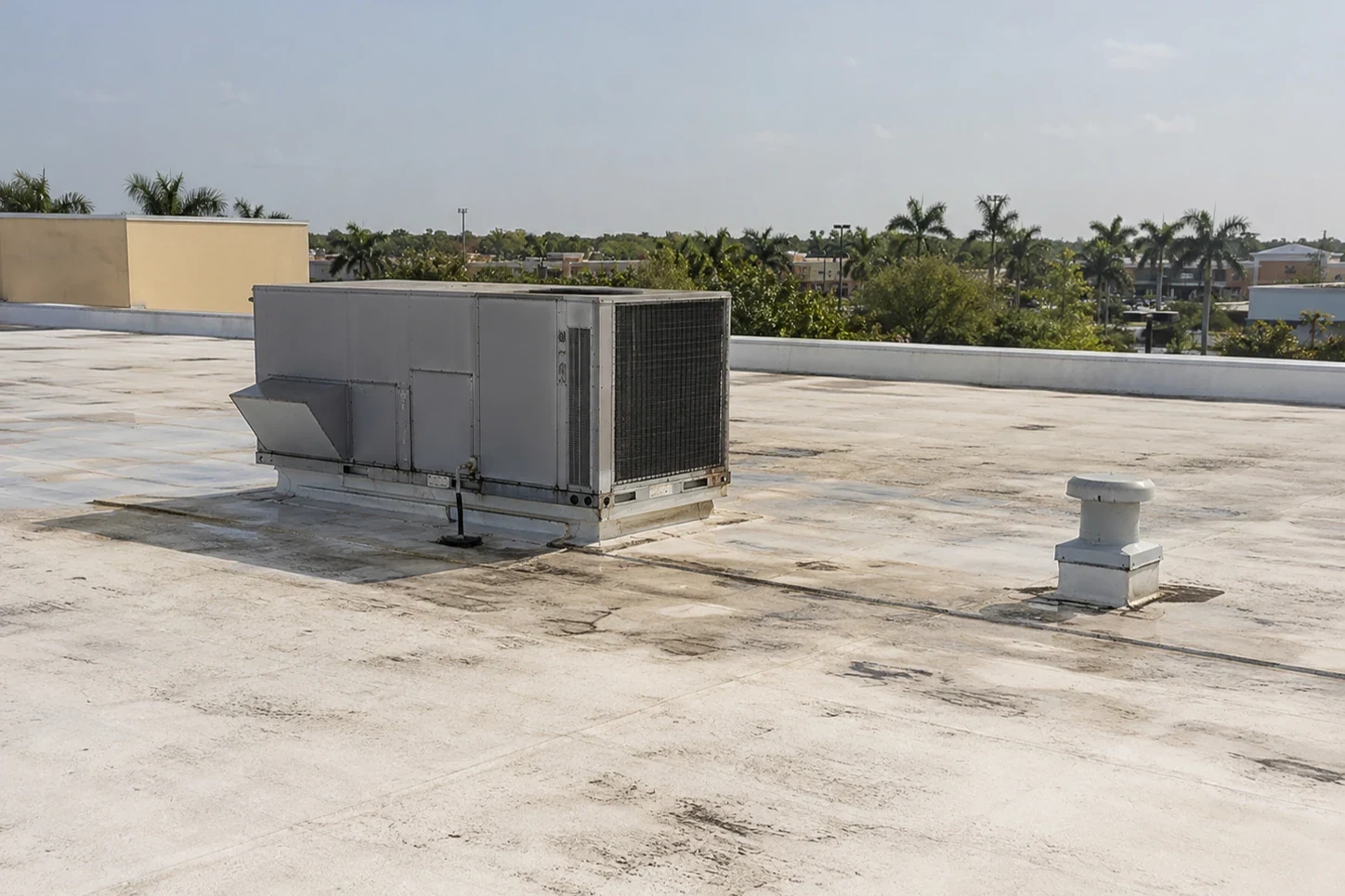
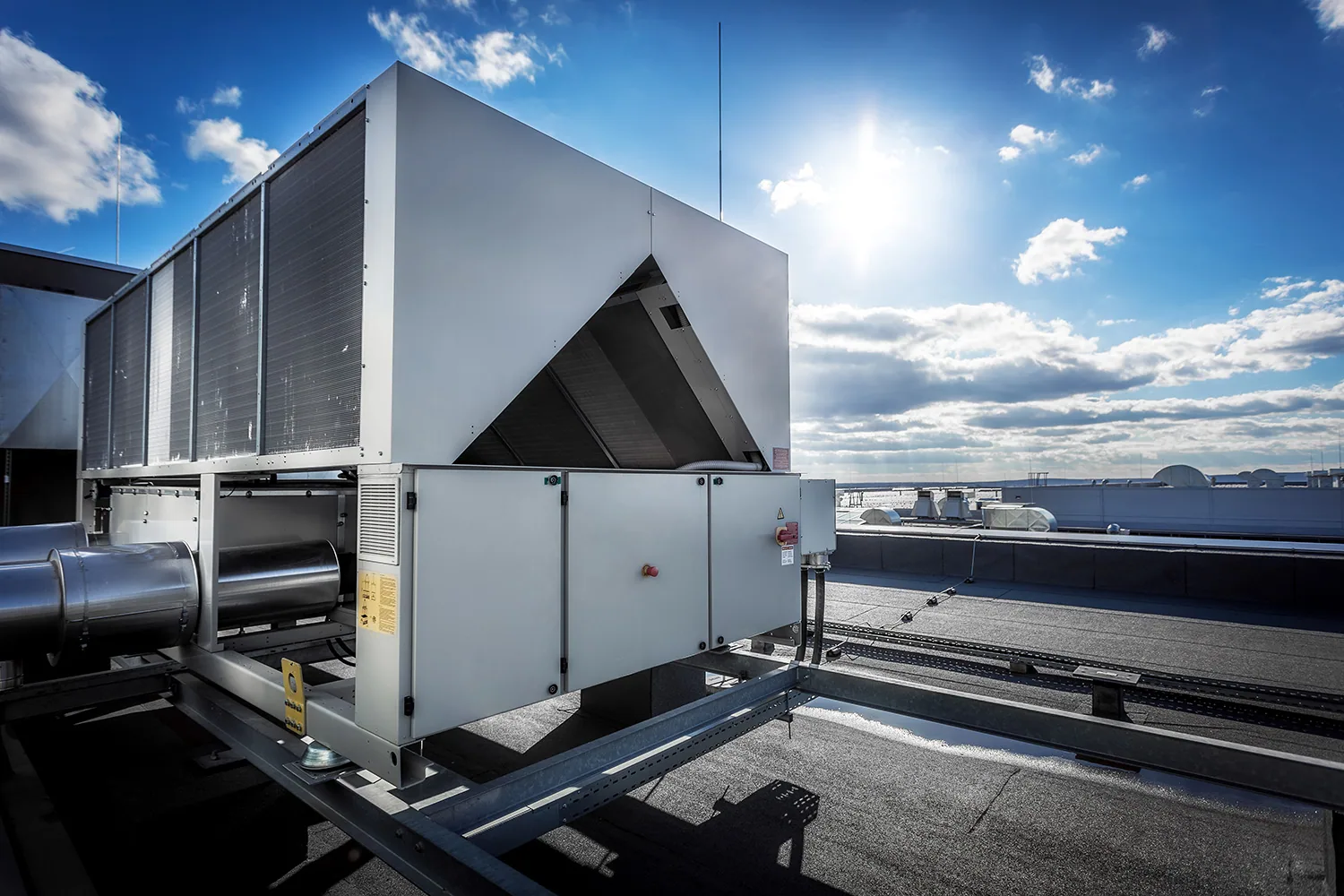
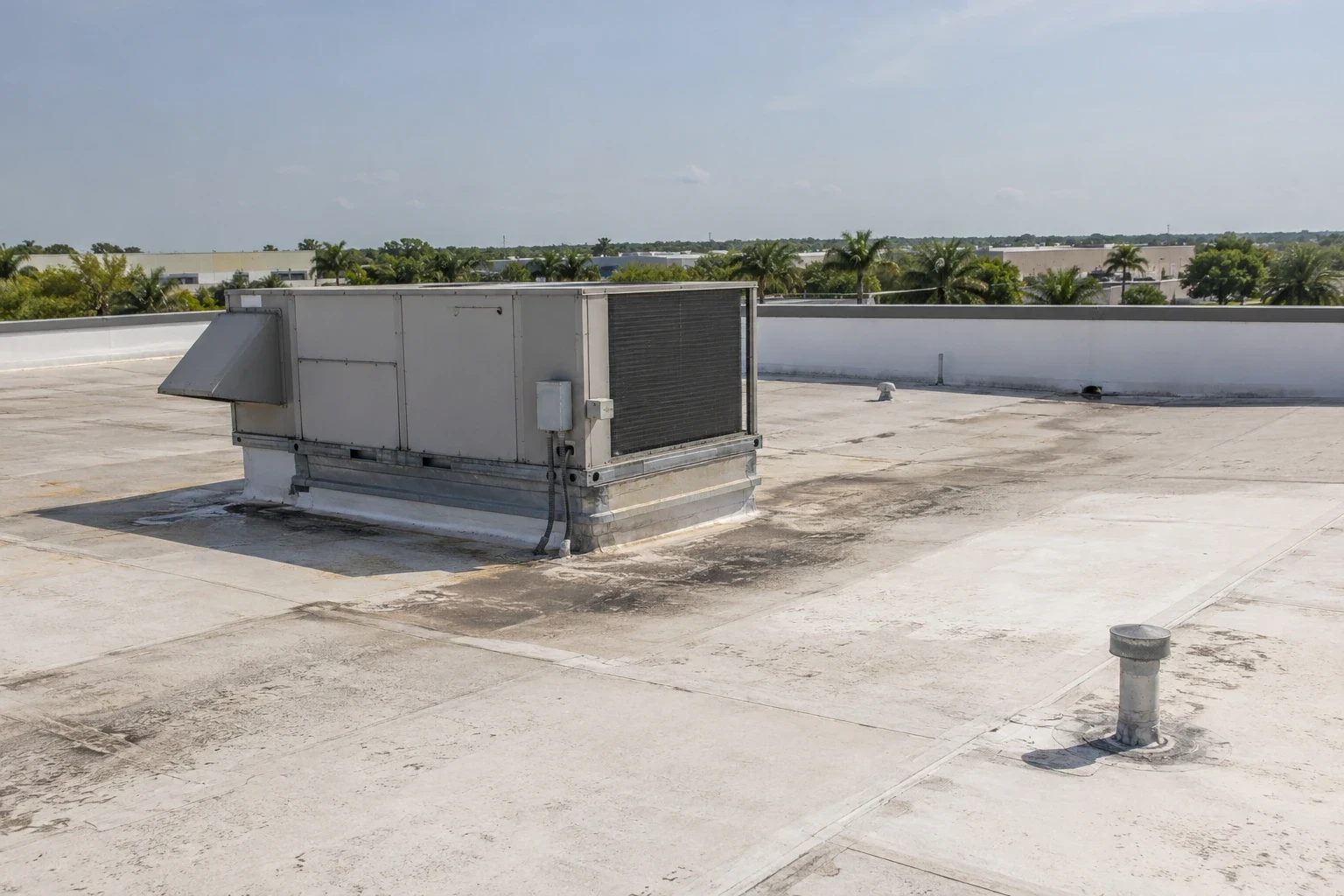
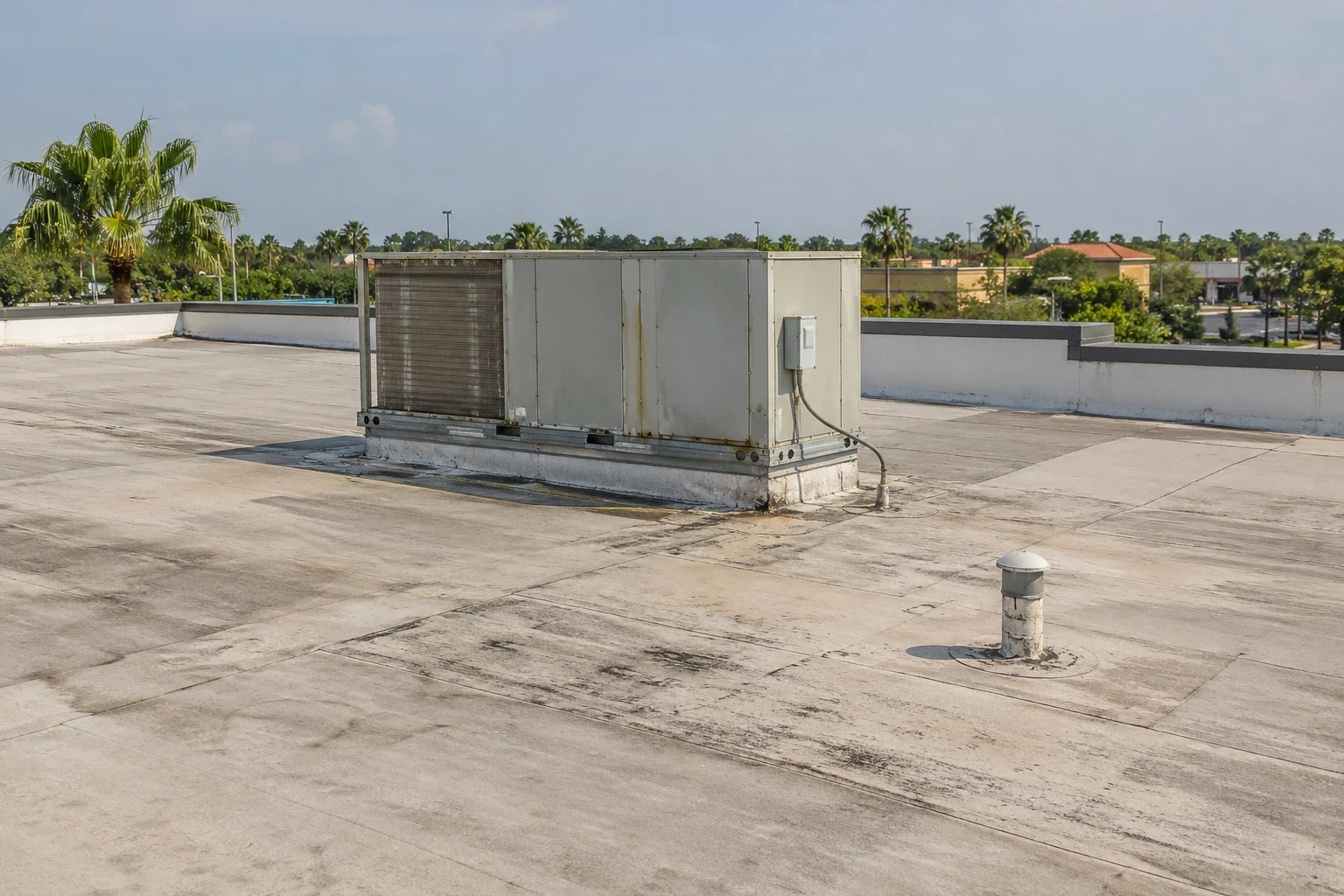
Cooling towers, condensers, refrigerant lines, exhaust, and electrical conduits add penetrations and service traffic. We examine curbs, pitch pockets, supports, flashing, and membrane wear around maintenance paths. Vibration or repeated component replacement can stress an old seal. If equipment contractors will move a unit, the roofing sequence should state who restores each curb and who checks the finished membrane tie-in.
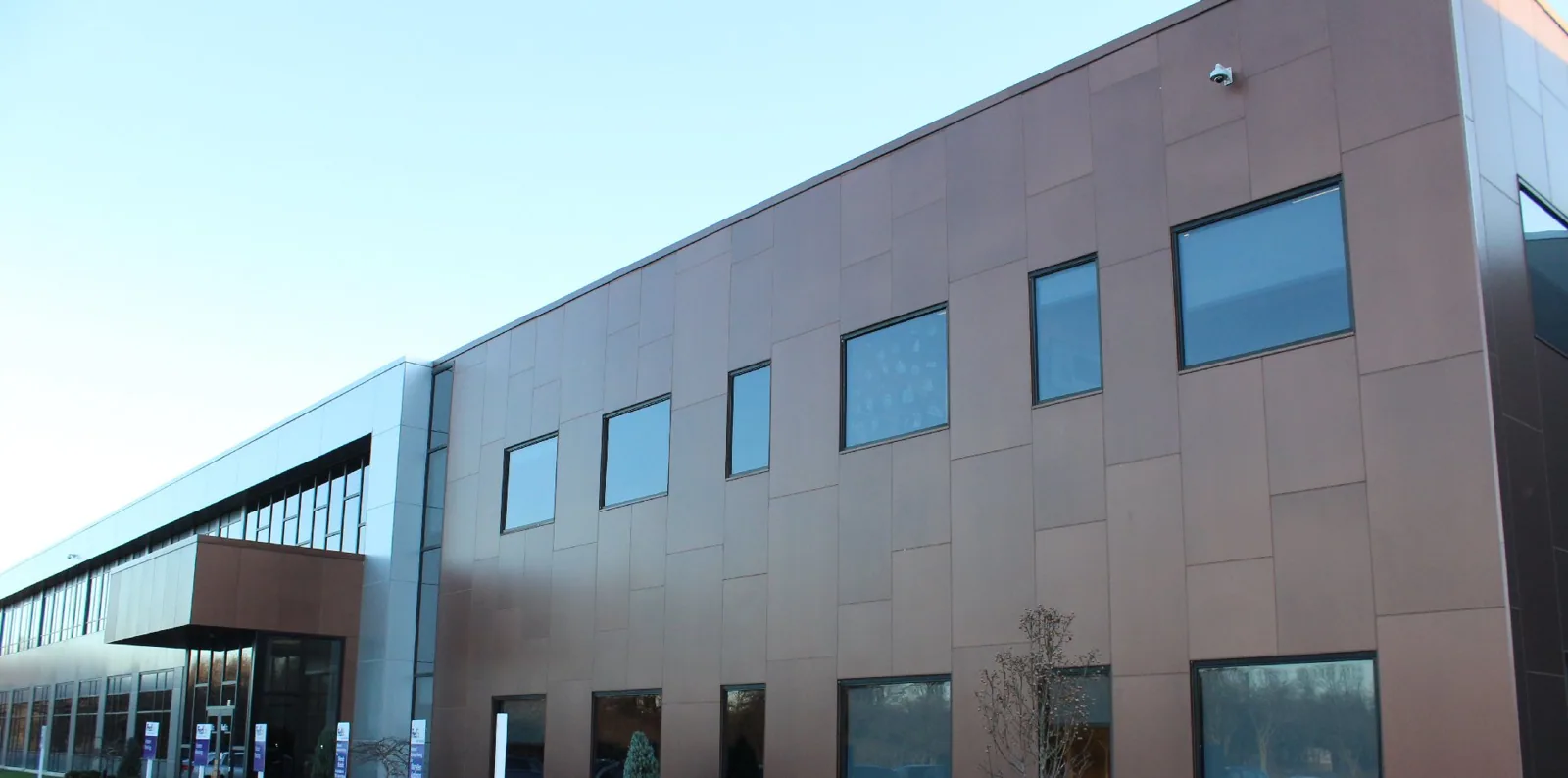
Sunrise Commerce Park includes manufacturing, distribution, offices, and multi-tenant buildings, while Sawgrass Technology Park includes corporate office and research-oriented space. Those campuses include distinct office, distribution, manufacturing, and research uses. For a data facility, we map cooling equipment, electrical zones, roof access, and membrane details from the building plan and field inspection. A curb and support review can document movement or damaged flashing. The owner receives a list of roofing tasks and mechanical work that remains separate, with access and shutdown responsibilities assigned before a leak repair or replacement begins.
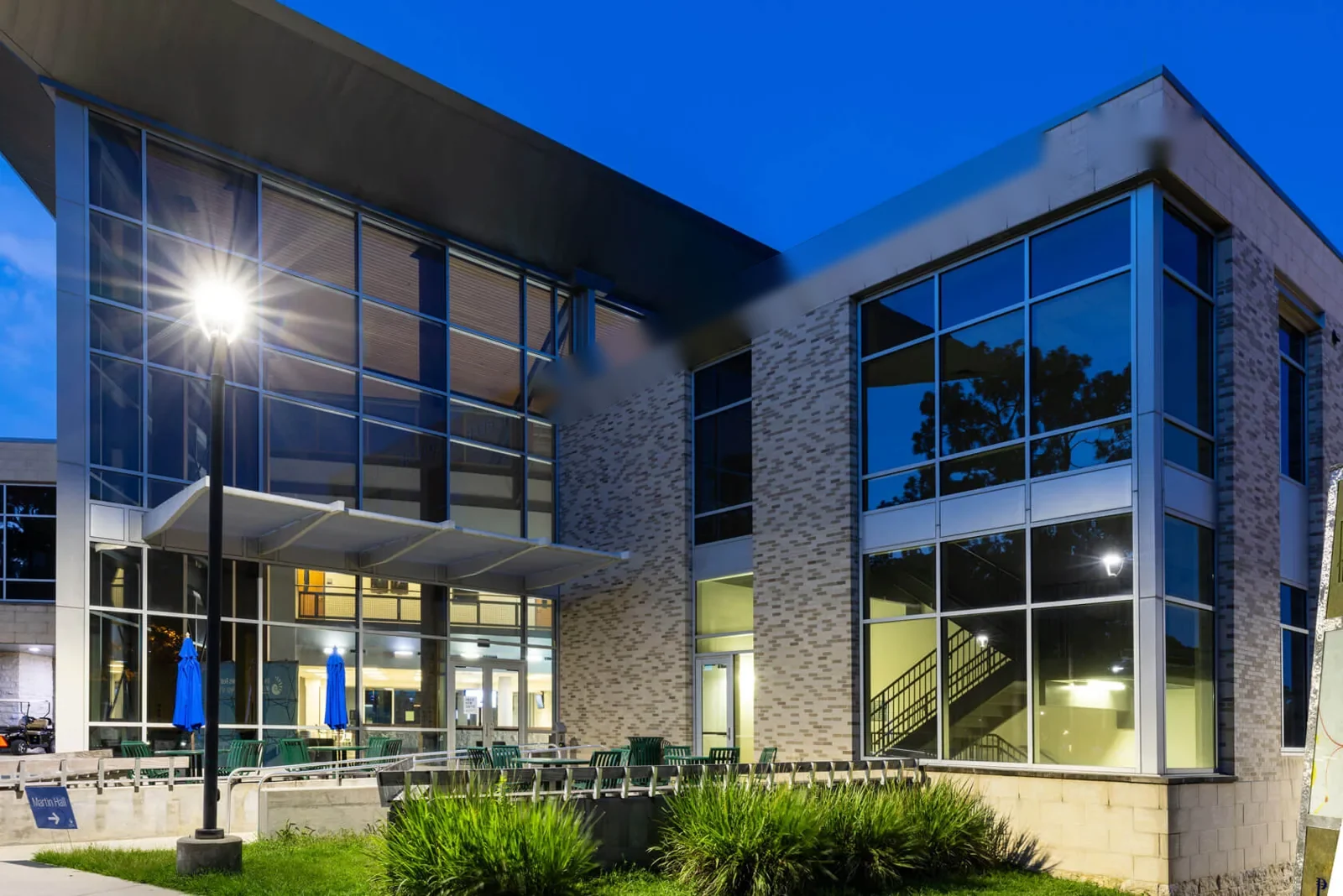
Drainage: Check every basin and overflow route
Large roofs can have multiple slopes and drain basins, each serving a different group of equipment or rooms. We trace the water path to primary drains and overflow outlets, look for standing water or debris, and inspect membrane details where water approaches a curb. If the reported moisture sits near a cooling line, drainage and equipment flashing both belong in the test area. A roof map should show which drains serve which section so follow-up work reaches the correct basin.
Fort Lauderdale's climate normal records 37.49 inches of rain during the South Florida rainy season. That seasonal concentration makes roof drainage a maintenance item before repeated storm periods, especially where equipment or conduit can obstruct the flow path. A drain inspection can clear an outlet and document the condition; if a low area remains after drainage is open, the owner may need a separate slope or insulation investigation. We retain photos of overflow paths and any access limitation to help the next inspection verify the same locations.
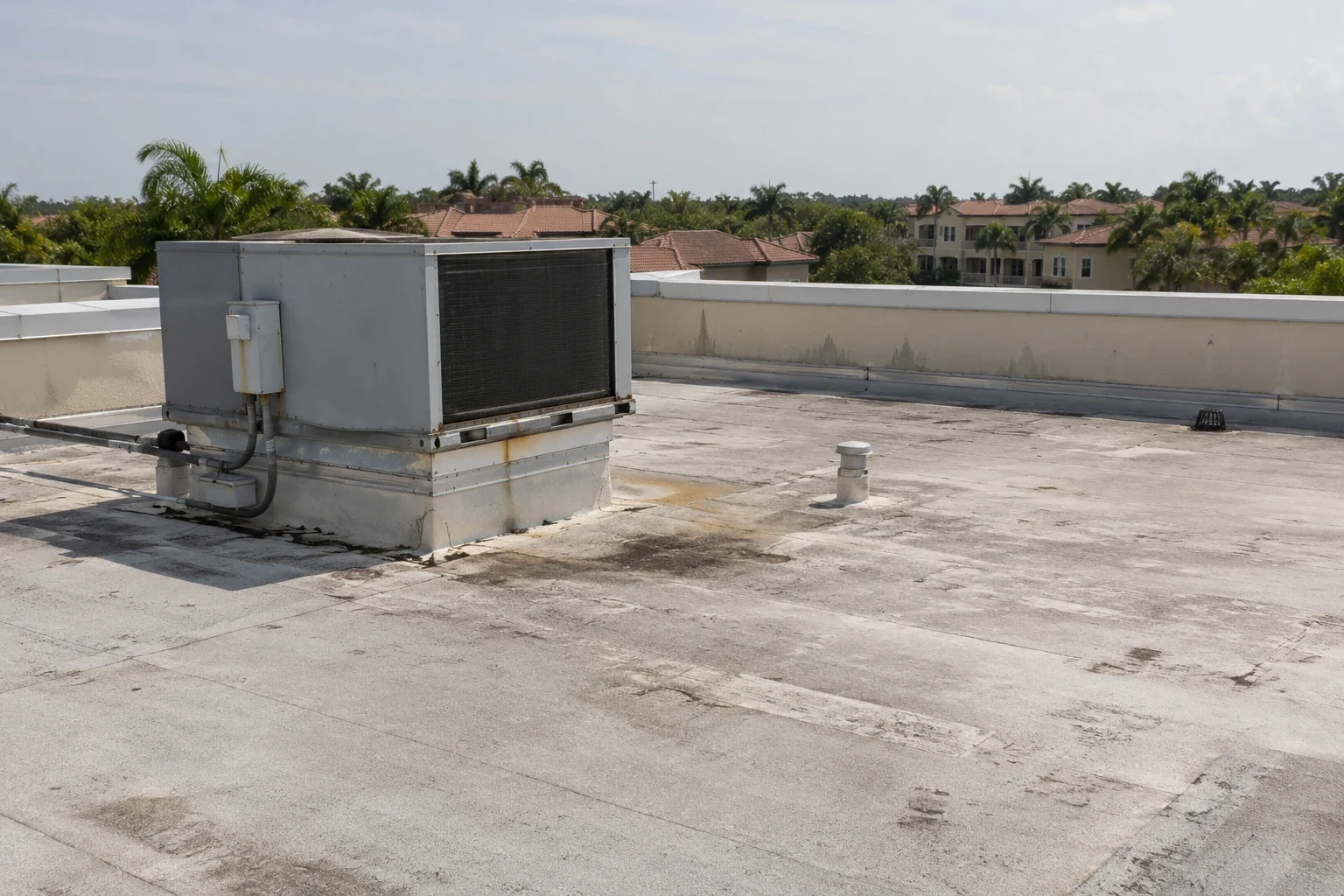
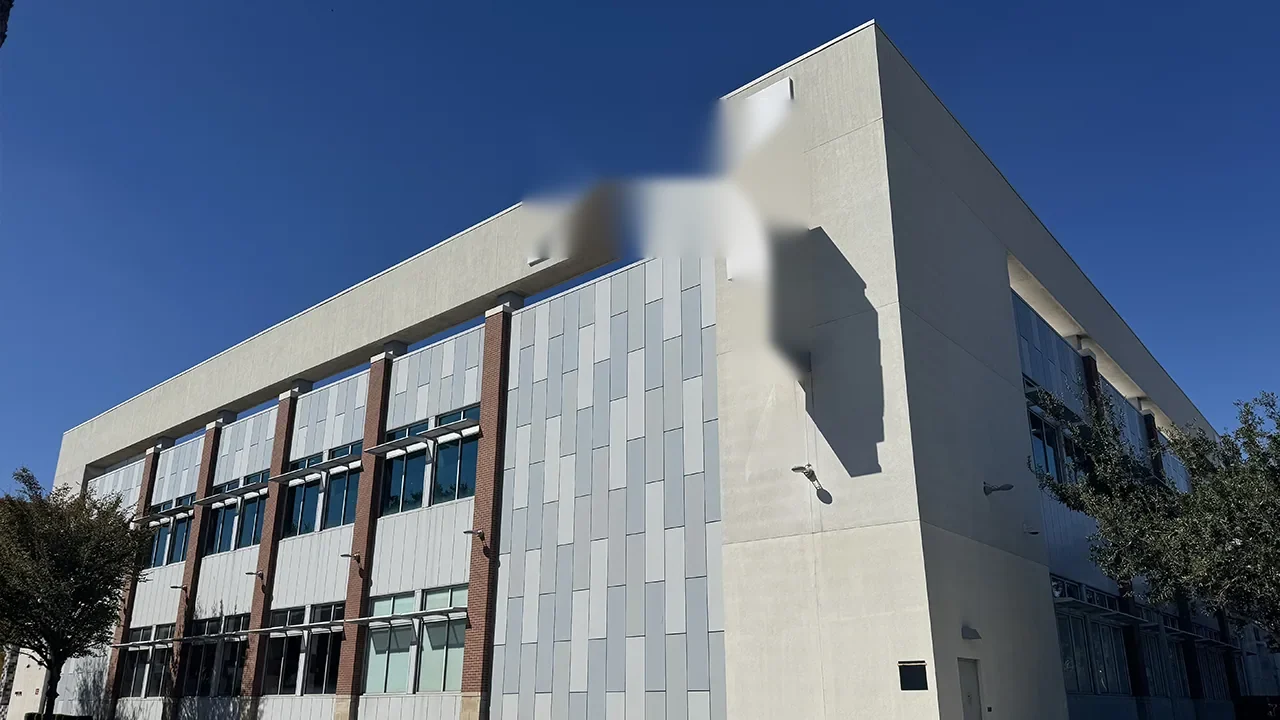
Assembly choice: Verify layers before renewal
A data center roof may be TPO, PVC, EPDM, built-up, metal, or another specified assembly. We inspect insulation, attachment, air-control layers, and remaining capacity as separate parts of the assembly. We review plans and visible details, then use a test opening when concealed layers affect the decision. That evidence can separate a seam repair from wet insulation removal or a broader roof replacement. Any work over electrical or cooling spaces needs a dry-in method and a defined interior protection plan.
Sunrise's commercial inventory includes corporate offices, technology uses, research, and light industry. A commercial office roof assessment may share access questions, while manufacturing roof planning can involve exhaust and process equipment. For systems, TPO membrane repairs and EPDM roof work require different seam and material checks; the team identifies the existing sheet before recommending either option.
Work window: Keep openings small and closure defined
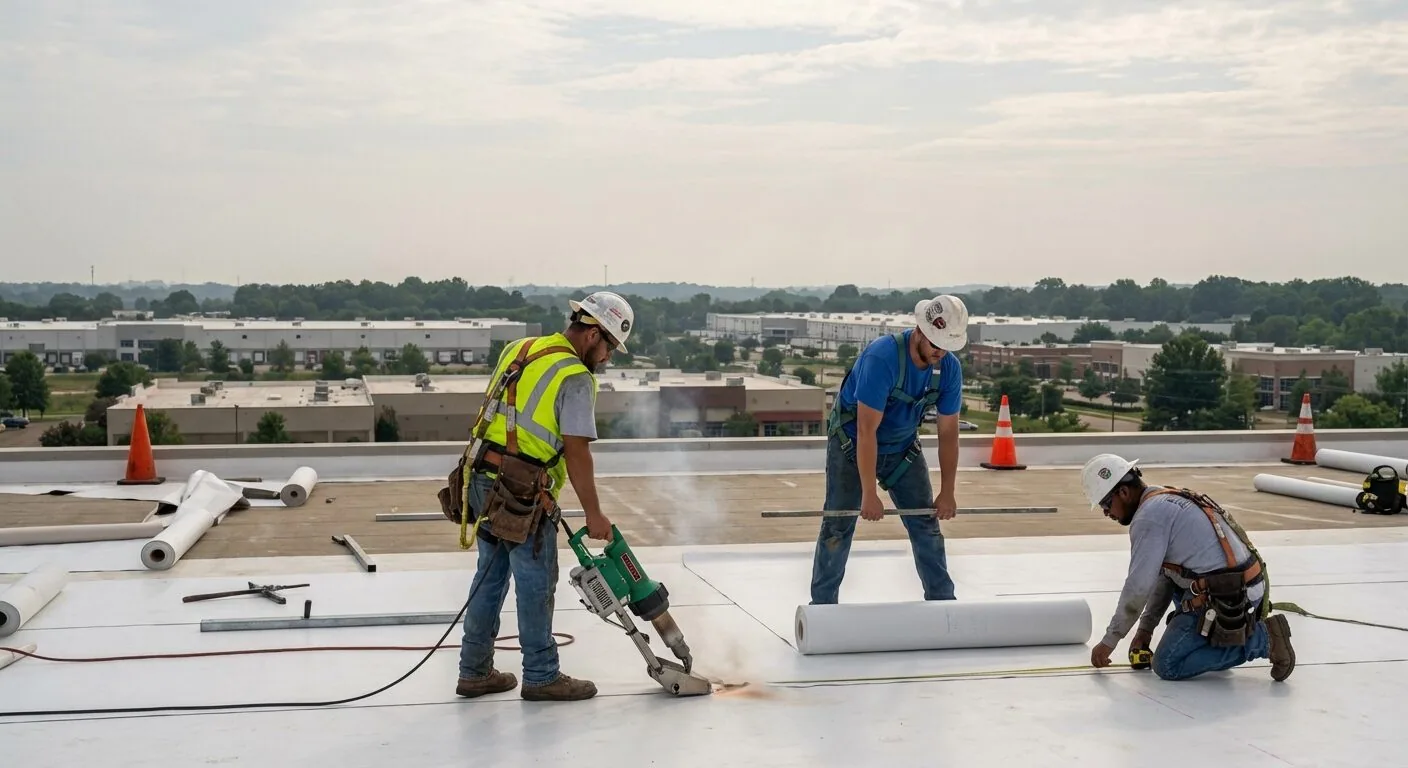
Repair work near mission-critical equipment is planned with a clear daily opening limit. We identify the portion of membrane to remove, the temporary dry-in, the approved weather response, and the person who can authorize an adjustment if the deck differs from the test area. Materials and debris need a controlled route that does not cross a secure electrical or cooling yard. The operator confirms any monitoring procedure for the room below before the crew starts.
South Florida storms can change during the day, so a schedule should include a stop point before rain threatens an exposed section. If the job is phased, each roof area receives a start, closure, and release record. A proposal separates roofing, mechanical, electrical, and monitoring tasks that require different trades. For a data center roof project in Sunrise, provide roof drawings, access rules, equipment shutdown limits, leak history, and any outage windows. We can then size the inspection and work boundary to the facility's actual operating controls.
Closeout: Keep the condition record precise
The completed file should contain the zone map, membrane identification where confirmed, seams or penetrations repaired, drain and overflow observations, test locations, photographs, and any unresolved finding. It should state whether observations came from direct inspection, a remote image, or an opened assembly. That distinction matters when the next project team reviews a prior roof condition or plans equipment replacement.
Each data facility needs a record associated with its own building and roof map, even if other technology properties share a campus name. Sawgrass Technology Park contains a dozen office and technology buildings across 100 acres. We label each inspected structure on its roof map and keep access notes with the facility record, so photos and repair history stay with the correct building. A multi-building roof program can consolidate condition reporting while keeping each building's assembly and work history distinct.
Frequently Asked Questions
Can you inspect a data center roof without disrupting operations?
We coordinate access, roof zones, equipment clearance, and any operator-defined work window before the visit. Visual and hands-on tasks are distinguished, and any inaccessible area is recorded. If a repair needs an outage or mechanical change, that requirement is identified before the work is scheduled.
How do you protect cooling equipment during roof repairs?
The work plan identifies intakes, condensers, refrigerant lines, and service routes, then states how each area will be protected. We coordinate shutdown authority with the operator and equipment contractor. Roofing and mechanical responsibilities are listed separately so the completed curb detail has a clear owner.
What if the water appears far from the roof leak?
We map the interior report and inspect the roof zone above and around it. Water can travel along insulation, deck, or framing before it reaches the ceiling. Drain basins, penetrations, seams, and cooling equipment are tested as needed to locate the moisture path.
Does a drone survey prove the membrane is watertight?
No. Images can show surface context, but they do not test membrane seams, attachment, or concealed layers. We use direct inspection and targeted testing when those conditions affect the repair boundary, and label remote observations accordingly.
What records should a data center retain after roof work?
Keep the roof-zone drawing, confirmed assembly information, repaired details, test openings, drainage checks, photographs, and any access or shutdown conditions. The record should identify the building and the location of each finding so later inspections can compare the same roof section.
Plan the roof scope around data operations
Provide roof plans, equipment and intake locations, access rules, leak reports, and approved work windows. We will map the assembly and define a controlled repair or inspection sequence.
Call 555-555-5555 or request a roof assessment.