Commercial Roofing for Manufacturers in Sunrise, FL
Manufacturers
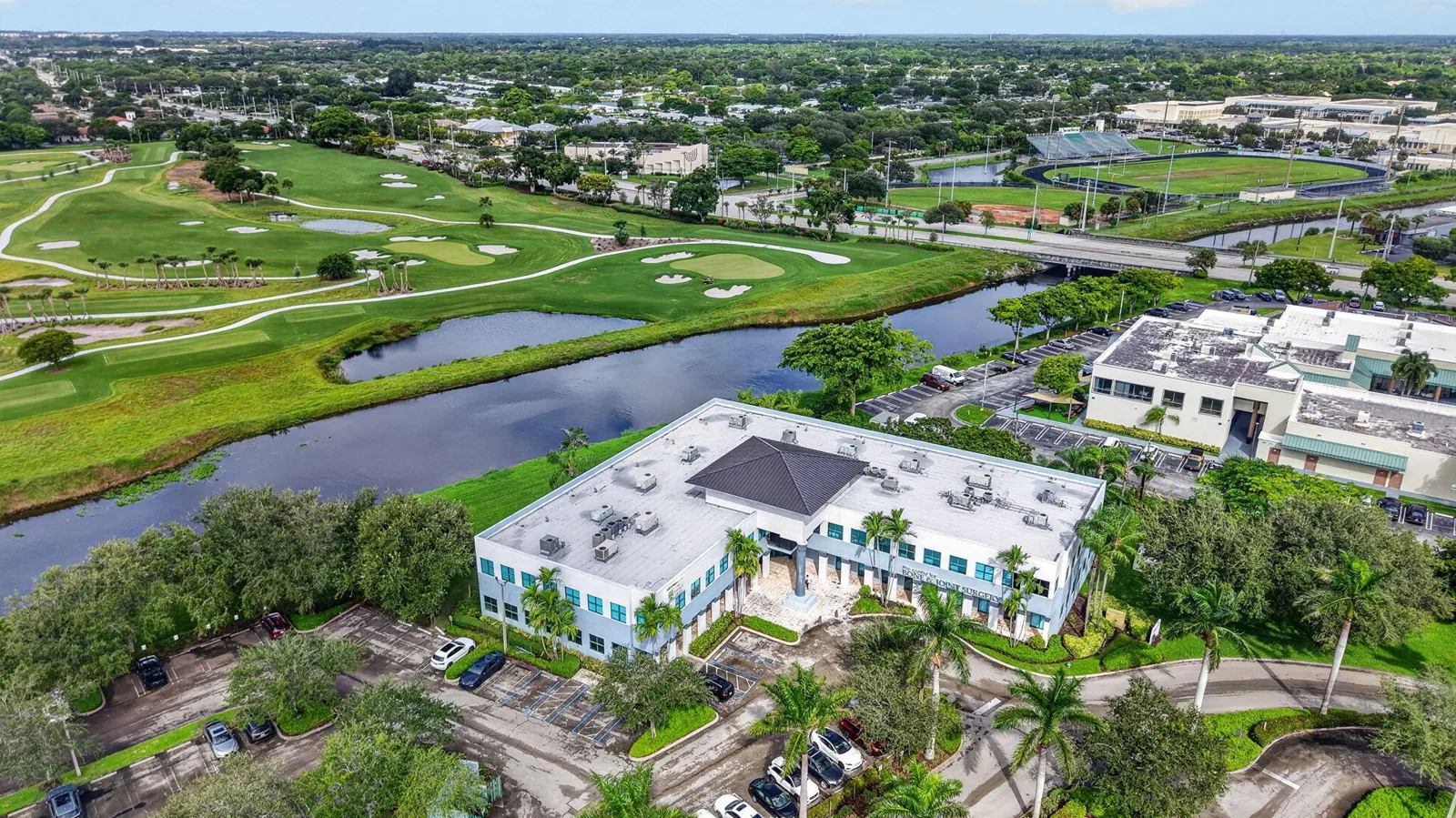
A production roof carries more than membrane: exhaust, make-up air, process lines, electrical supports, and service paths can all interrupt its drainage plane. In Sunrise, FL, hot humid conditions and heavy wet-season rain make those details a recurring maintenance concern. We identify the roof zones above production, storage, and office areas, then compare leaks with equipment locations and work history. Sunrise Commerce Park includes manufacturing, distribution, office, and multi-tenant facilities; Sawgrass International Corporate Park includes technology manufacturing and research uses. A roof inspection verifies the assembly and controls needed for access.
Industries We Serve in Sunrise, FL
Manufacturers in Sunrise, FL need roof repairs coordinated with production, exhaust, and loading. We inspect penetrations and define controlled work zones.
Process map: Locate penetrations and roof interfaces
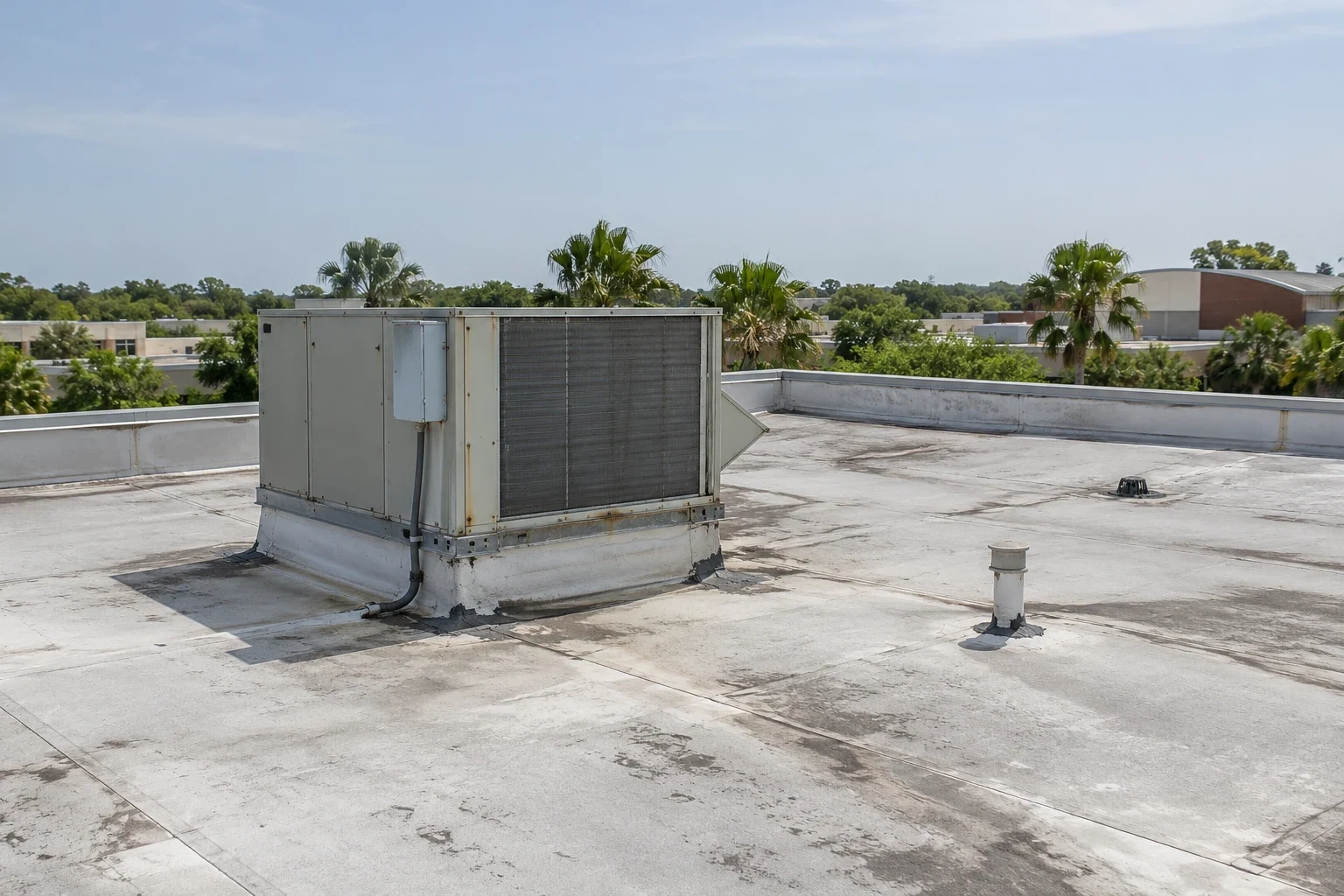
Exhaust stacks, duct curbs, piping, supports, and abandoned equipment can create different failure points. We map each penetration, note whether it remains active, and check flashing or fasteners for movement. A replacement process line may leave a curb, opening, or patch that no longer matches the current roof layer. We compare equipment plans with field conditions and identify which trade must disconnect or support an item before roofing can proceed.
Production buildings may combine office roofs, shop areas, loading bays, and additions built at different times. We verify the membrane, attachment, insulation, and deck section by section. Sunrise's business parks span manufacturing, distribution, research, healthcare, and corporate uses, but the facility drawing and roof inspection determine what exists at a plant. For a related logistics operation, access may focus on vehicle circulation; general contractor coordination can set trade sequencing when mechanical work and roof repair overlap.
Active leak: Protect production before expanding the opening
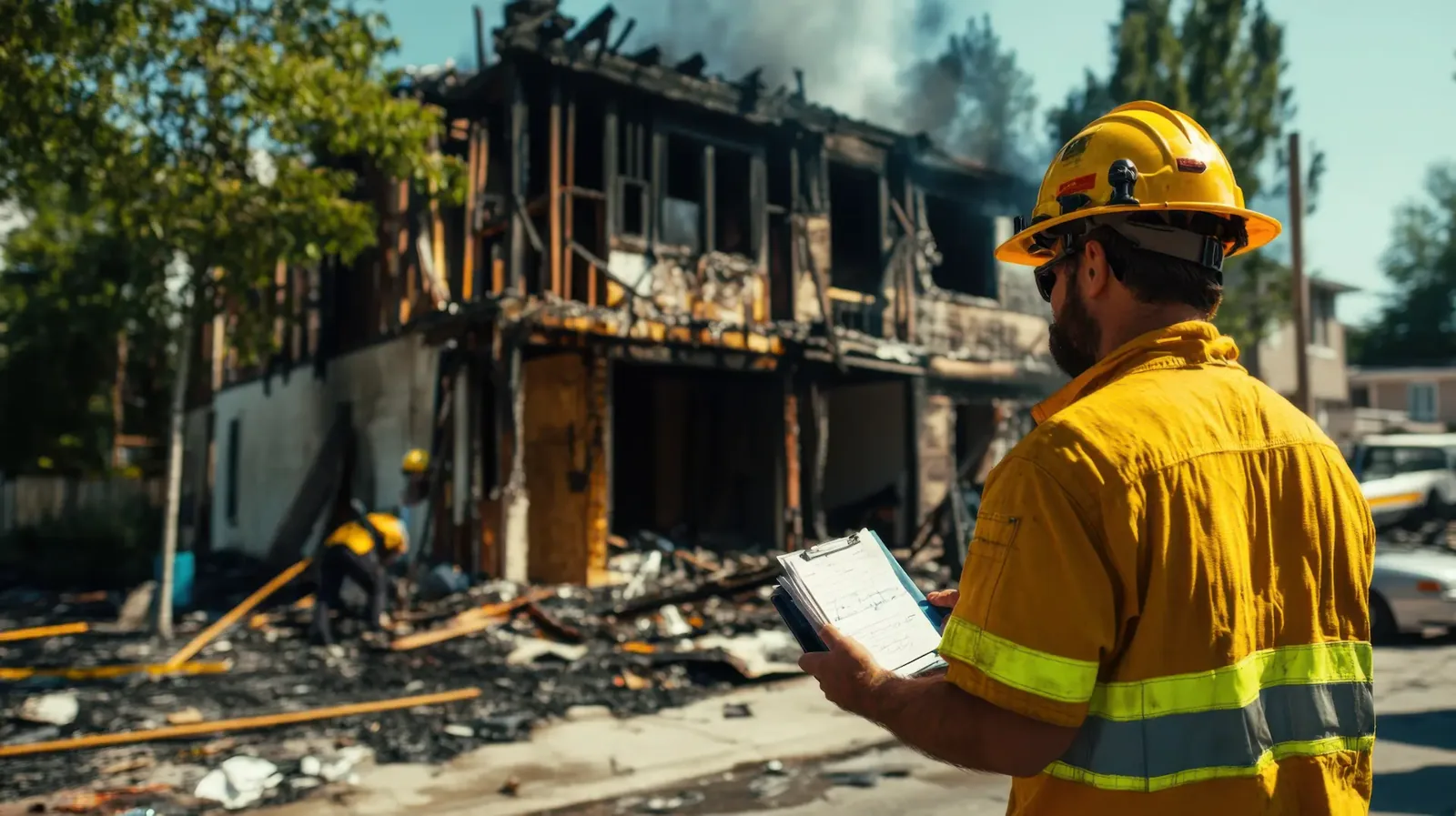
Water above a control room, production line, or stored material needs immediate attention, but the ceiling mark alone does not define the repair. We inspect the roof above and upslope, checking seams, curbs, drains, wall transitions, and previous patches. Temporary protection can limit further exposure while the roof entry point is located. The incident record states which area was protected, what was visible, and which conditions remain untested.
A test cut may be needed to confirm whether insulation is wet and how far the moisture extends. We state the test location, opening size, and repair plan before cutting, then restore the roof the same shift or include it in the authorized work. If production equipment below cannot move, the facility identifies containment and timing needs in advance. Emergency roof service protects an active opening; permanent leak repair follows the field evidence and confirmed material.
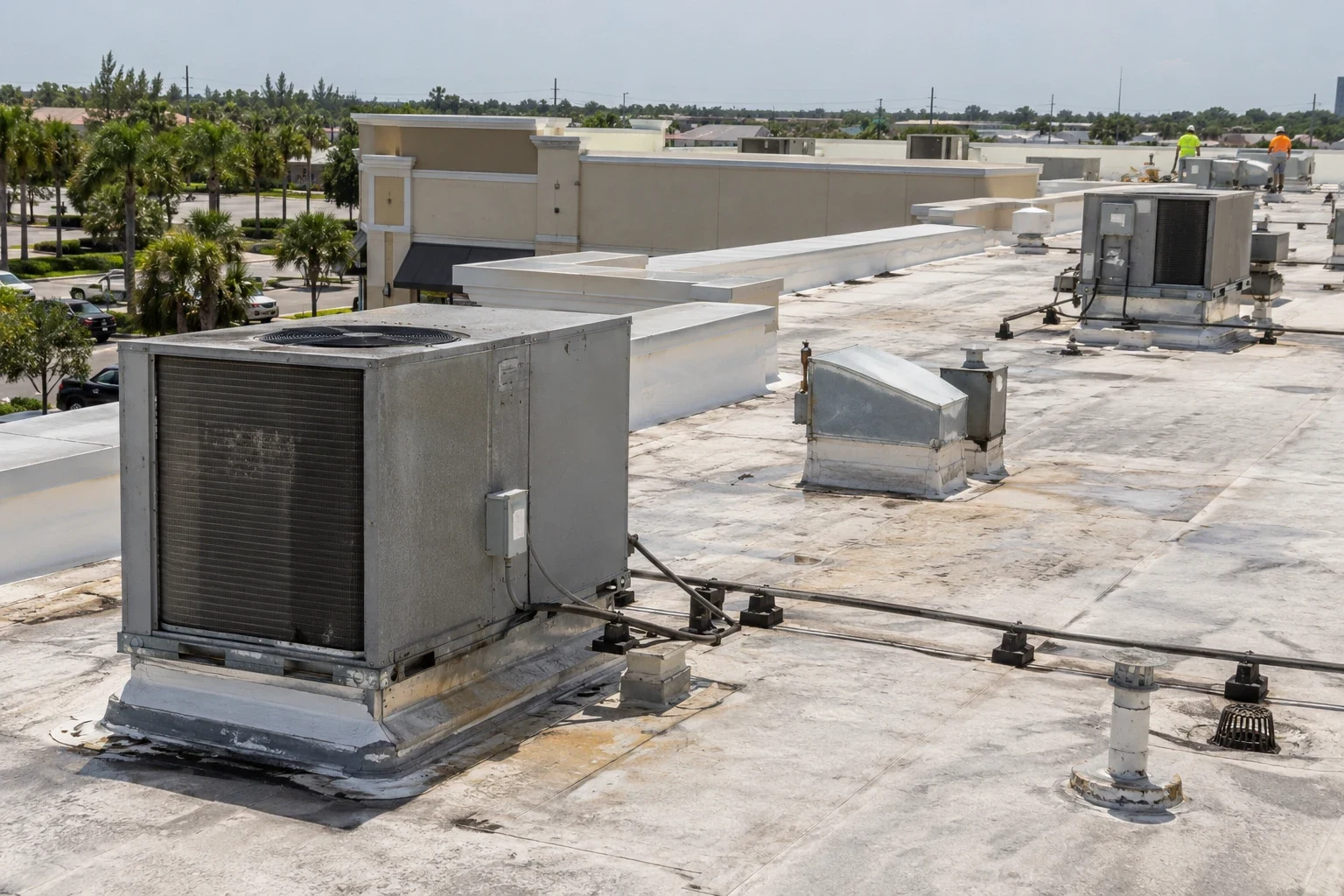
Drainage: Keep discharge clear around equipment
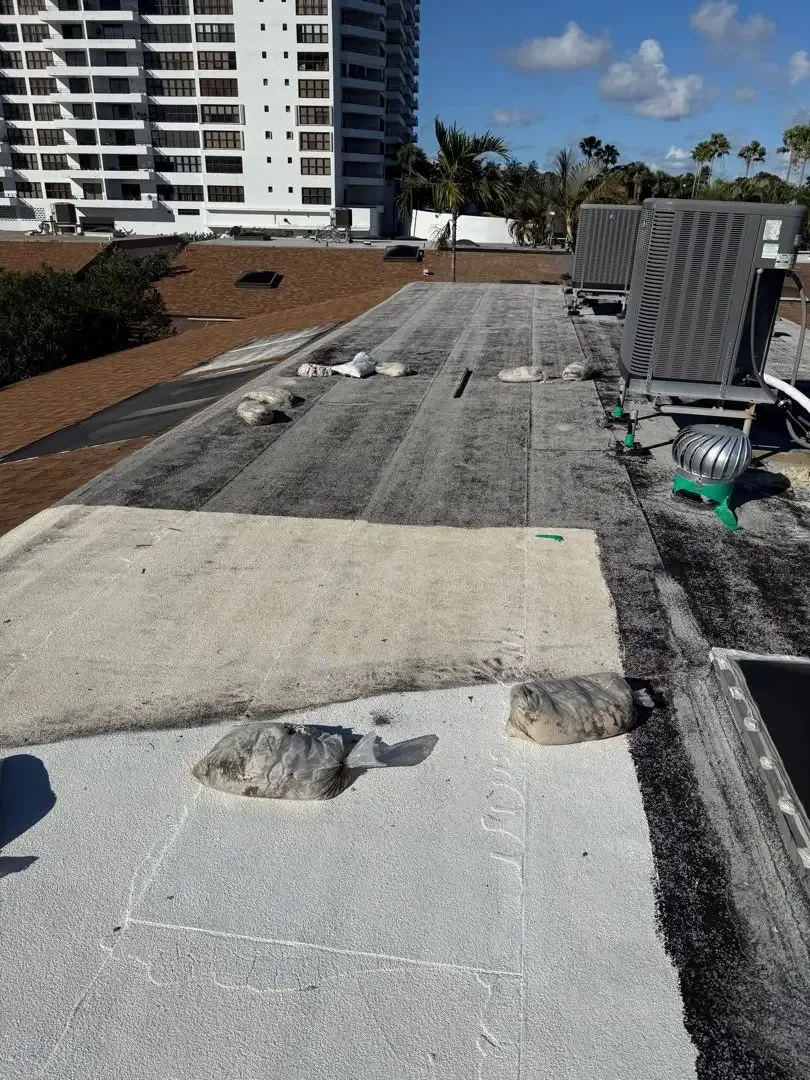
Curbs and equipment supports can interrupt flow and create low pockets where debris collects. We trace water from the high point to drains, scuppers, gutters, or downspouts, then check strainers, overflow details, and discharge. Ponding after the outlet clears may indicate a depressed deck or compressed insulation. We distinguish a maintenance obstruction from a roof condition that needs testing before any coating or overlay is proposed.
South Florida's rainy season concentrates much of the area's normal rainfall into a shorter period. Plants can schedule an outlet and edge review before repeated storms, then record the roof zone, equipment obstruction, and any item requiring shutdown or another trade. A drain inspection captures the accessible path; a maintenance program can track what remains due. If production runs through the day, we coordinate roof access with forklift routes, loading doors, and mechanical service windows.
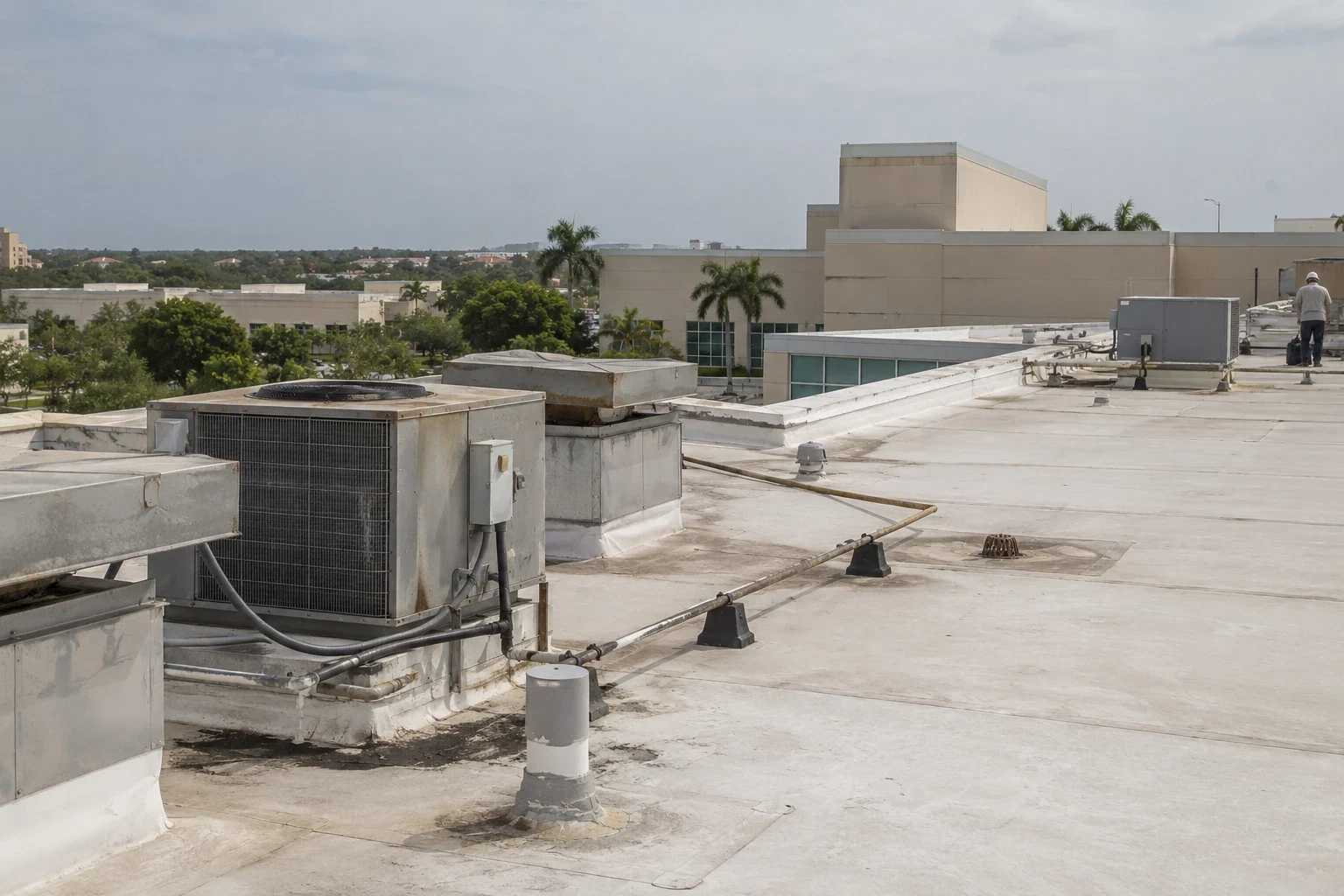
System detail: Match repair to the verified assembly
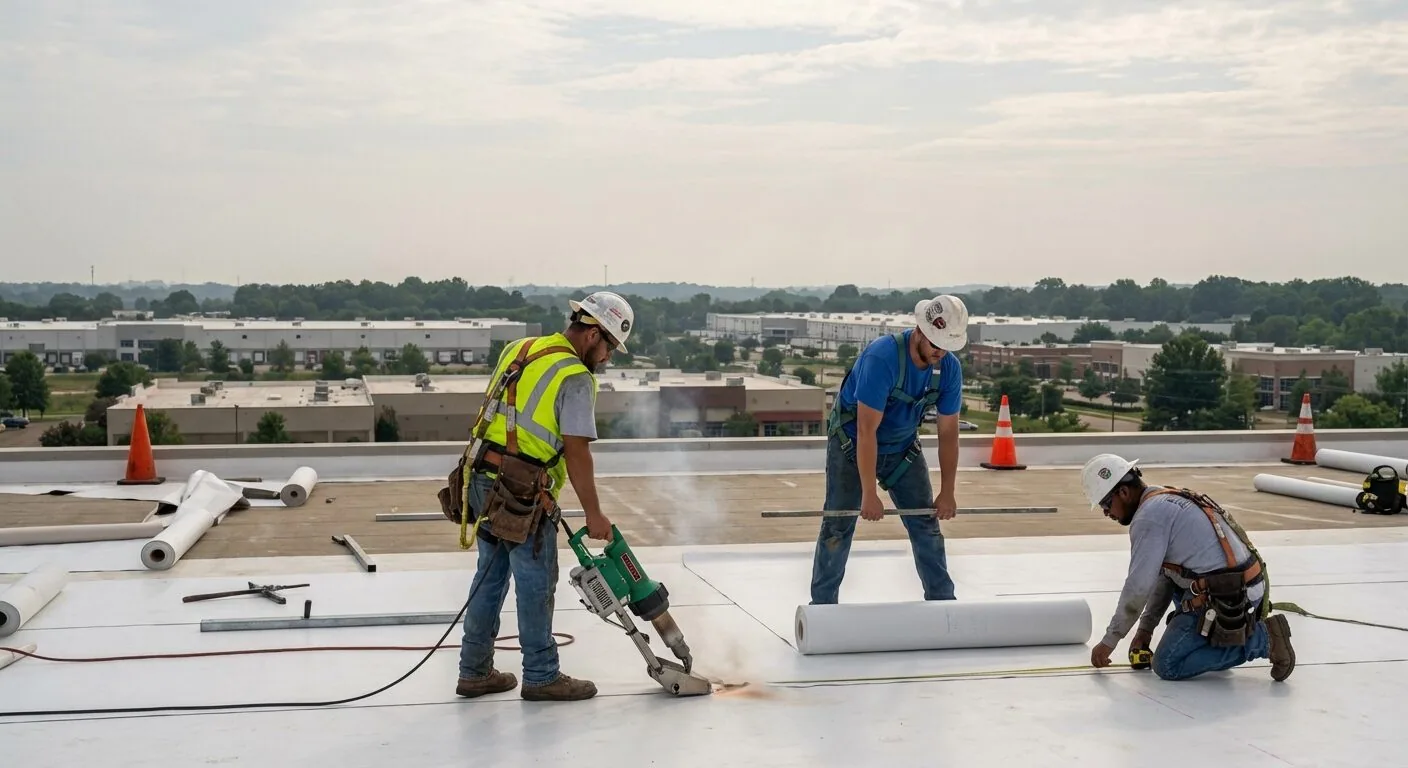
TPO, PVC, EPDM, modified bitumen, built-up roofs, and metal panels require different seam and flashing methods. We confirm the system and previous repair products before choosing a compatible patch. Heat-welded single-ply seams need sound welds and suitable substrate; metal panel work considers clips, fasteners, and thermal movement. If a coating is present, adhesion testing and preparation help determine whether another layer can bond.
A plant may have more than one roof system because of additions or equipment projects. We map those transitions and keep the estimate separated by section. For a TPO roof, testing identifies the correct weld detail when that membrane is found. Warehouse roofs may share wide-span drainage concerns, while manufacturing facilities add process exhaust and shutdown coordination. Product selection follows the roof test, not a facility label. We note where one system ends and another begins so the repair plan does not carry an incompatible patch across a transition. Where washdown or corrosive exhaust is reported, we document the affected detail and confirm exposure with the process contact before selecting compatible preparation and flashing materials. The closeout records cleaning limits and any follow-up inspection date for each affected zone.
Work window: Coordinate shutdowns and shift changes
Before roof removal, we agree on production windows, equipment isolation, exhaust controls, material staging, and access routes. The work plan identifies any ventilation change or noise that could affect process conditions. We keep drains clear of debris and close the roof watertight at each shift boundary. If a test finds deteriorated deck or wet insulation beyond the expected area, the crew documents it and obtains approval before extending the opening.
Large projects can be phased by roof section, department, or elevation when the assembly permits. Each phase lists the area below, protection, expected interruption, and return-to-service point. Staging should not block fire lanes, loading, or service access. A phased roof sequence can keep unaffected production areas operating while the active zone is repaired. Facilities staff supply shift calendars and equipment constraints so the sequence accounts for the plant's actual process, not a generic workday. Before mobilization, we also verify who can isolate each unit, approve a temporary shutdown, and release the roof hatch to the crew.
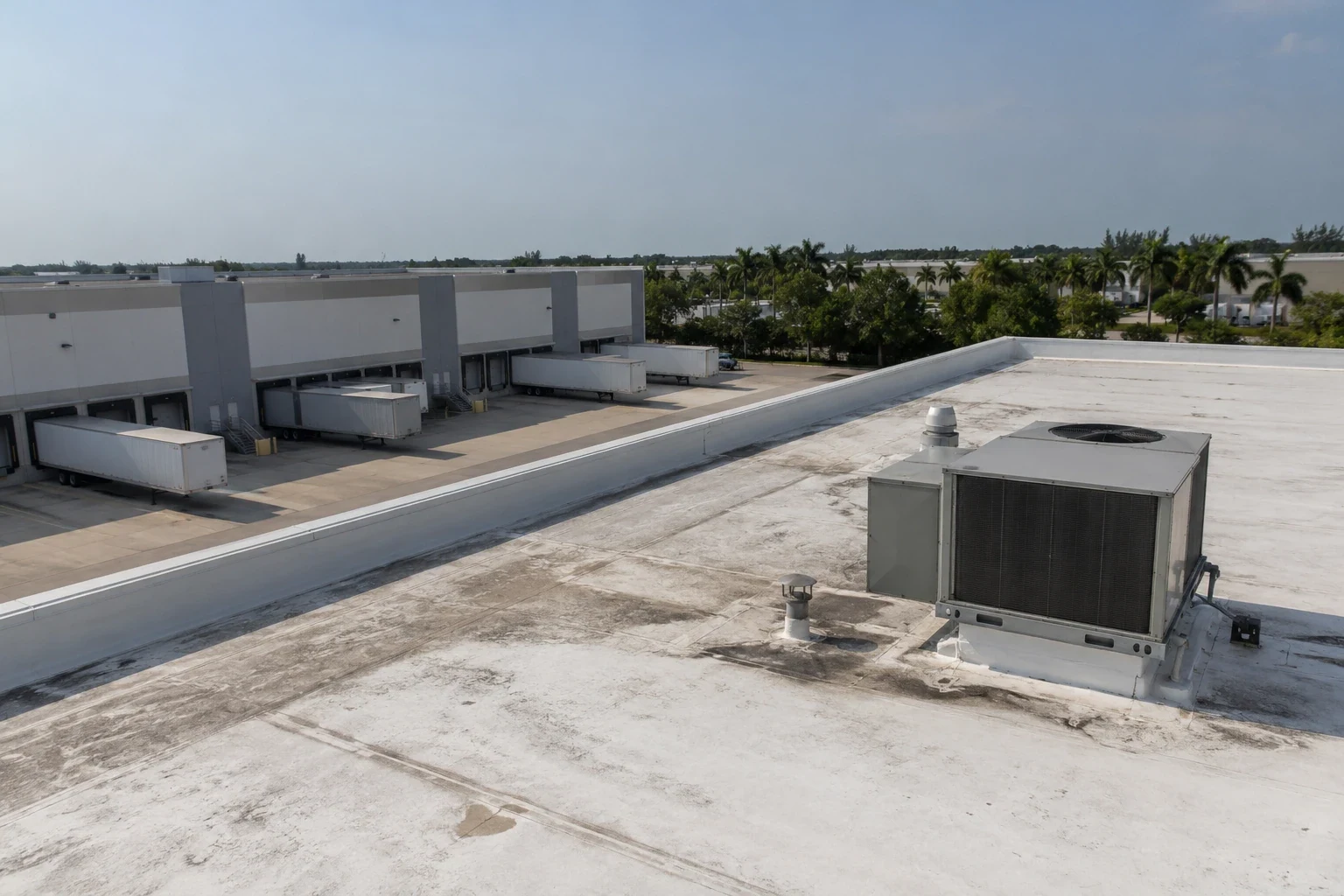
Capital scope: Compare a repair with a broader project
A single curb leak or seam split may require a localized repair. When seam or curb failures appear in multiple production zones, or testing finds continuous moisture or weak deck attachment, the recommendation may shift to section replacement. We map confirmed areas and distinguish them from inaccessible or untested sections. That record lets the plant compare repair, restoration, recover, and replacement against the production interruption and material removal each option requires.
Cost and timing depend on roof access, removal depth, equipment support, weather windows, disposal, and protection below. We list those drivers by zone and show where additional testing could change quantity. Sunrise's industrial and technology parks contain multi-building employment areas, but the capital decision belongs to the specific roof's condition and process needs. Share roof drawings, process equipment plans, leak dates, maintenance history, and shutdown calendar; we will return a scope that facilities, operations, and procurement can review together.
Frequently Asked Questions
Can roof repairs happen while production continues?
Often a repair can be phased, but equipment shutdowns, noise, access, and the size of the roof opening set the workable window. We define protection and daily dry-in before the shift starts.
How do you handle abandoned process equipment on the roof?
We map the curb or penetration and confirm whether the equipment remains active. The facility and mechanical contractor decide removal; roofing closes the opening with a compatible detail after the assembly is checked.
What should a manufacturer provide before inspection?
Share roof plans, equipment schedules, leak dates, process restrictions, access rules, and shift hours. These details help select test locations and identify shutdown approvals.
When is a coating unsuitable for an industrial roof?
Wet insulation, poor adhesion, incompatible prior repairs, weak attachment, or unresolved drainage can rule it out. We test the substrate and details before proposing a coating.
How is roof work documented for plant maintenance?
The record identifies roof zones, material confirmed, penetrations, test results, photos, repairs, and remaining concerns. It also notes which equipment or areas were not accessible.
Plan the roof scope with operations
Share the roof plan, equipment list, production schedule, leak log, and access controls. We will inspect the assembly and define a work boundary that operations can review.
Call 555-555-5555 or request a roof assessment.