
Commercial Roofing Services
Commercial Roofing Services in Sunrise, FL
Facility directors in Sunrise, FL need a roof decision tied to the assembly and the building schedule. We inspect low-slope and metal roofs, trace active leaks, and identify whether a defect stops at a flashing or continues through insulation and cover board. That distinction sets the repair boundary. Offices in Sawgrass International Corporate Park, distribution buildings in Sunrise Commerce Park, and retail properties in the western Business and Entertainment District bring different equipment, access, and occupancy constraints. We map the reported roof zone, then trace the condition to its membrane seam, transition, drain, or equipment base.
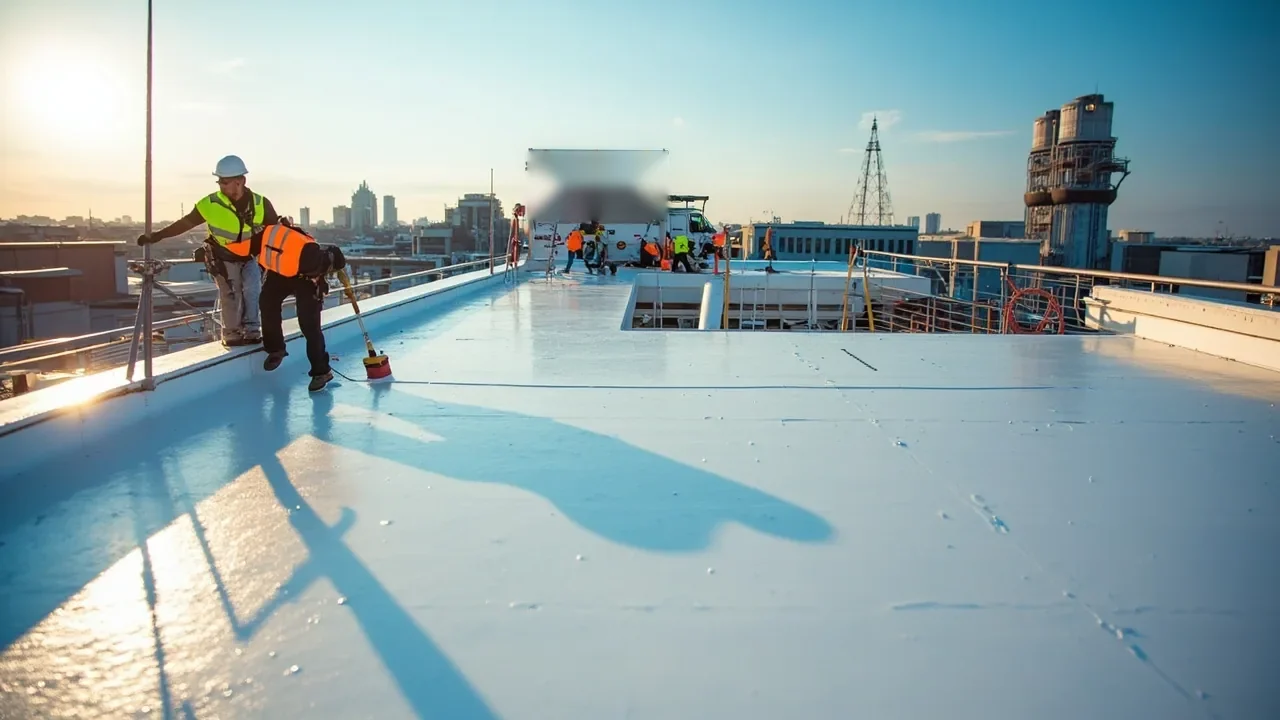
Serving Sunrise and Central Broward County
Commercial roof service in Sunrise, FL, from leak tracing and drainage repair to replacement, maintenance, coatings, and storm response.
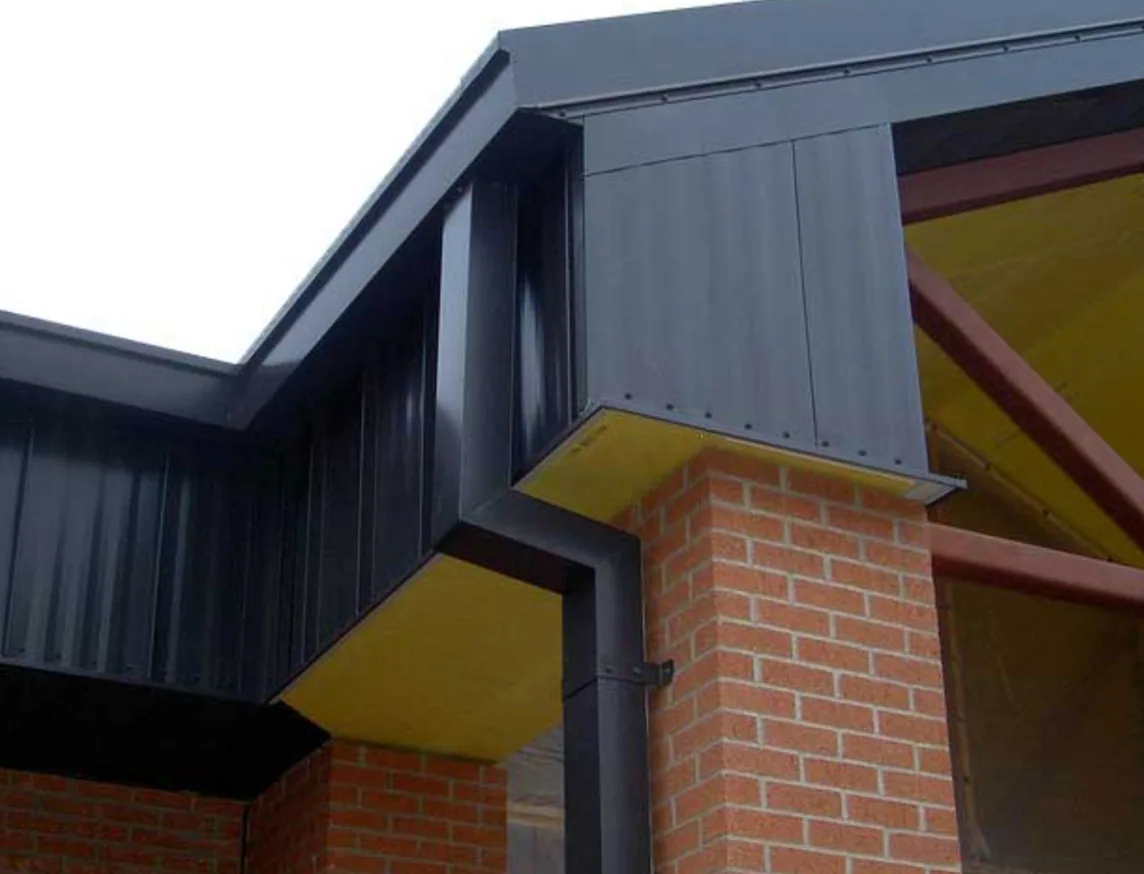
Diagnosis: Find the failed layer
Water can travel from a failed lap, drain, curb, or perimeter detail before it appears indoors. We compare the interior report with roof conditions, inspect seams and penetrations, and record the route that can be confirmed. A hands-on roof inspection can pair with a drone survey where access or roof size makes an overhead view useful. Infrared patterns can help narrow a suspected wet area; selected moisture testing may then establish what lies beneath the membrane.
All Commercial Roofing Services
Commercial Roof Replacement
Replace a commercial roof in Sunrise, FL with a mapped tear-off, moisture boundary, drainage review, and work sequence planned around facility operations.
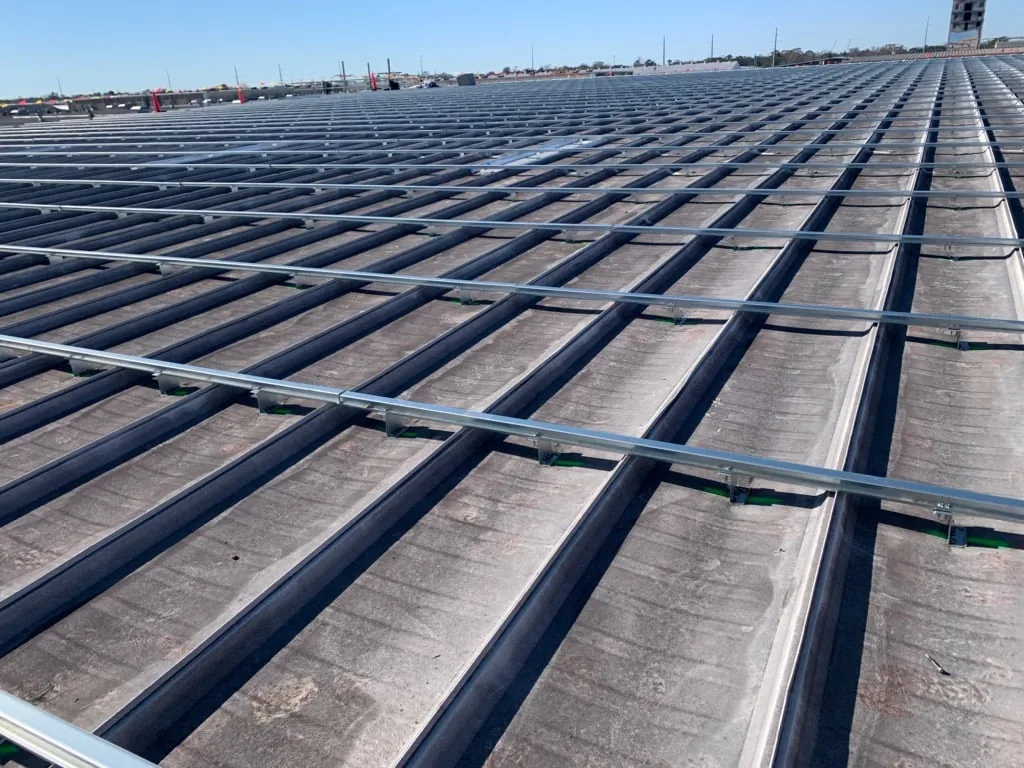
Commercial Roof Recover
Evaluate a commercial roof recover in Sunrise, FL with moisture testing, attachment review, drainage checks, and a clear boundary for work over existing layers.
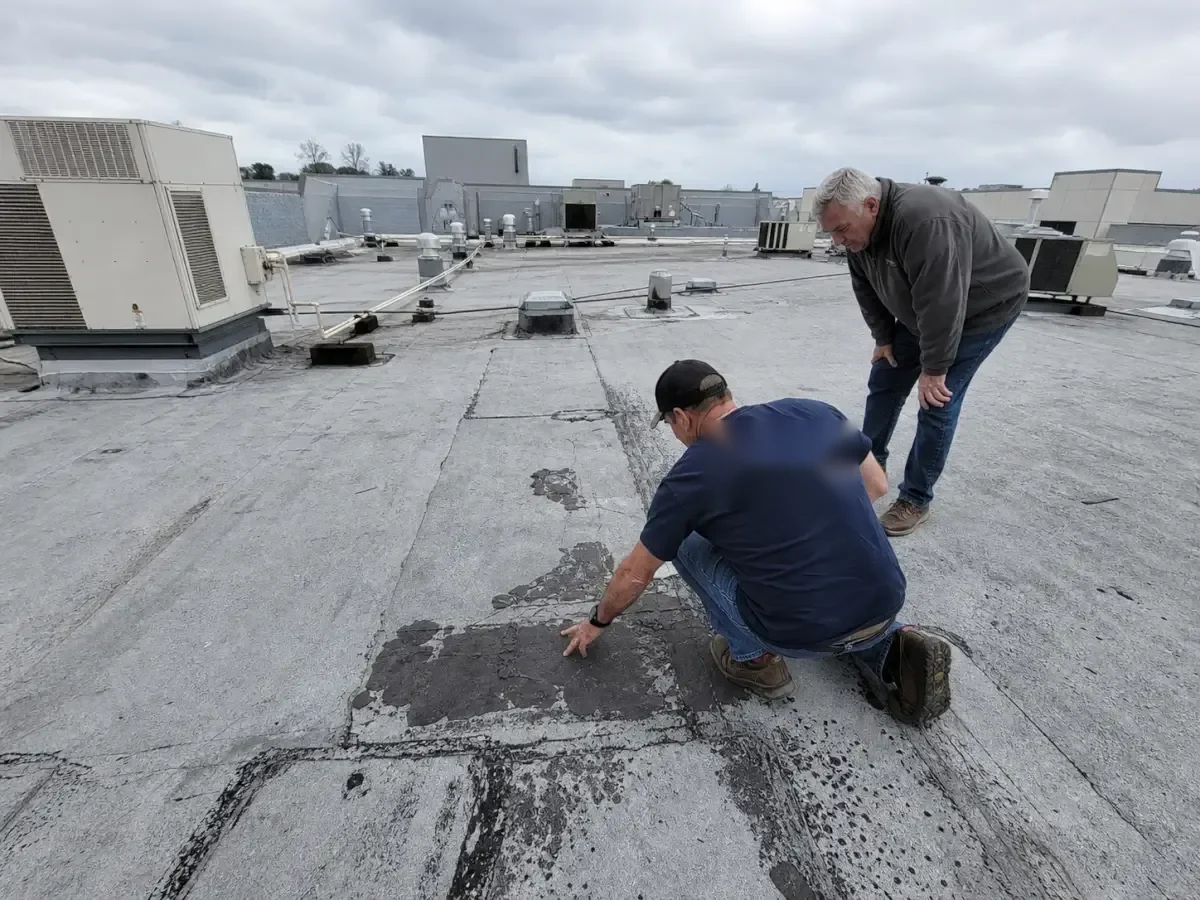
Commercial Roof Repair
Repair commercial roof seams, flashing, and membrane details in Sunrise, FL with a mapped defect, compatible materials, and a defined approval boundary.
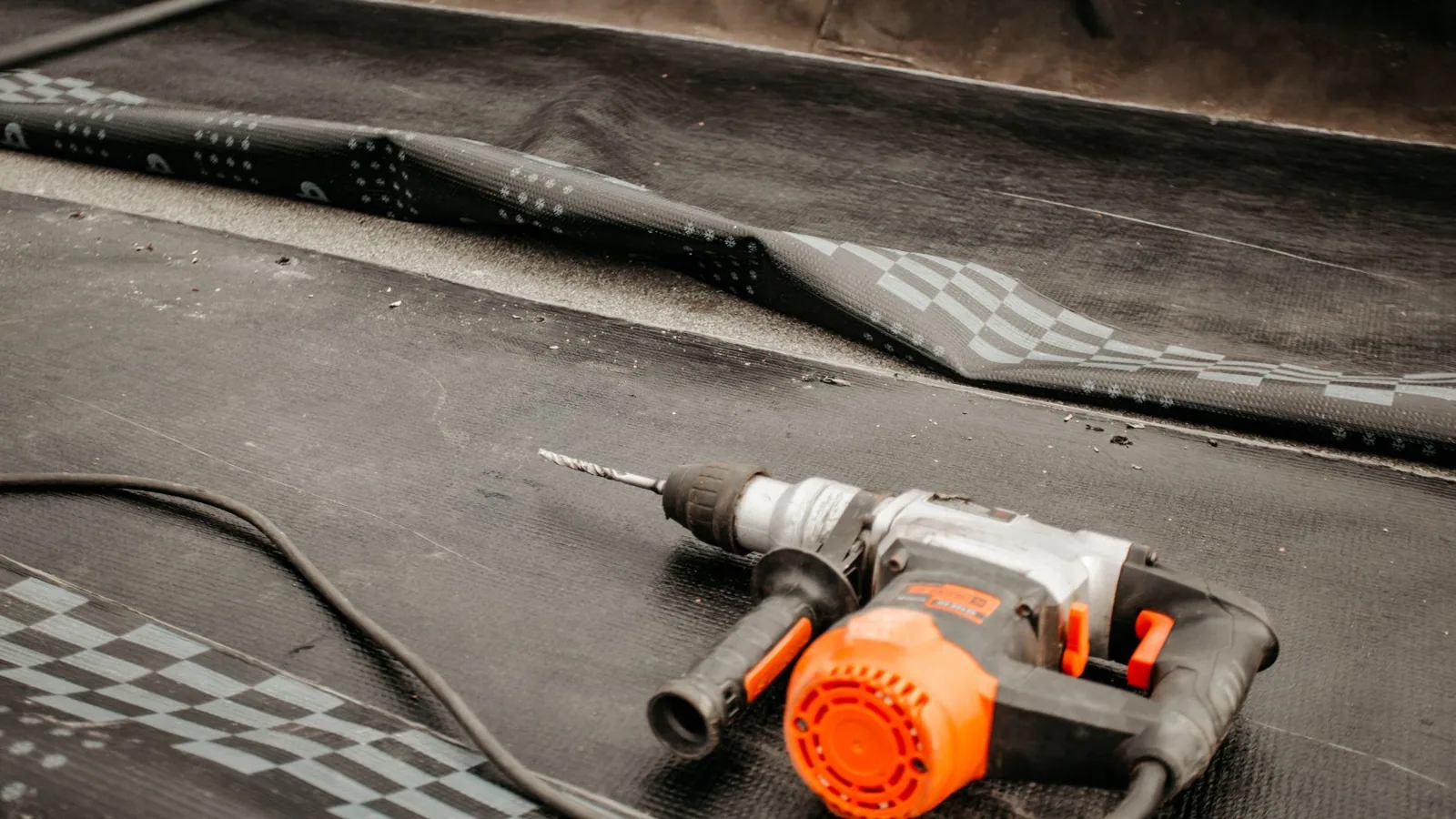
Commercial Roof Leak Repair
Trace and repair commercial roof leaks in Sunrise, FL by matching interior evidence to roof details, moisture paths, and a documented repair boundary.
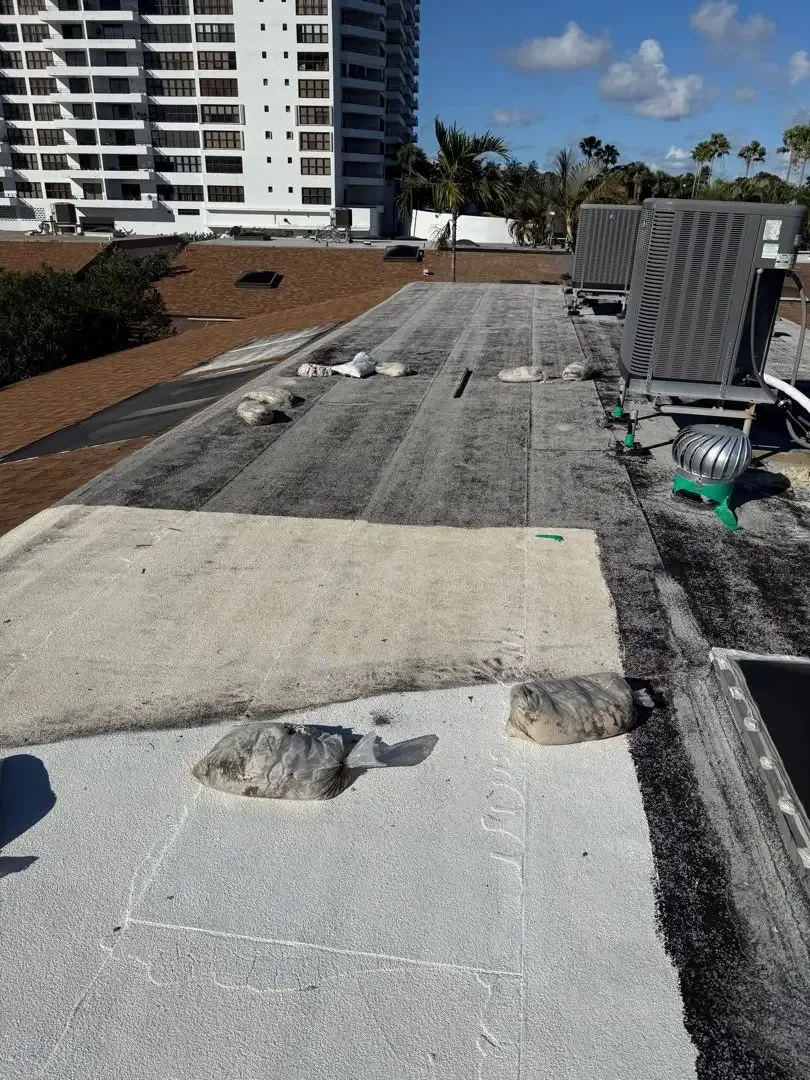
Emergency Commercial Roof Repair
Get emergency commercial roof repair in Sunrise, FL with around-the-clock response, safe temporary cover, interior protection, and a documented follow-up scope.
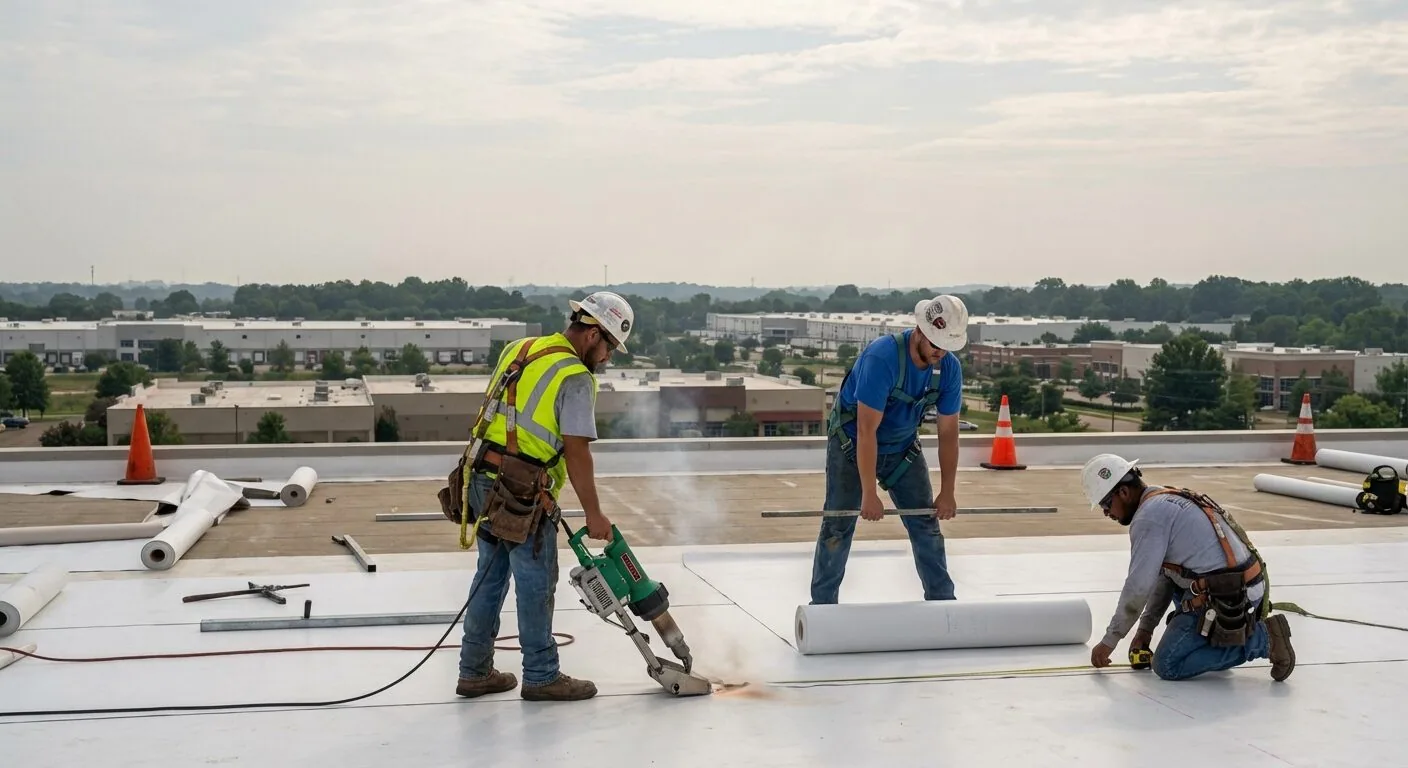
Commercial Roof Inspection
Inspect commercial roofs in Sunrise, FL with zone maps, assembly observations, drainage findings, and clear limits on testing and recommended work.
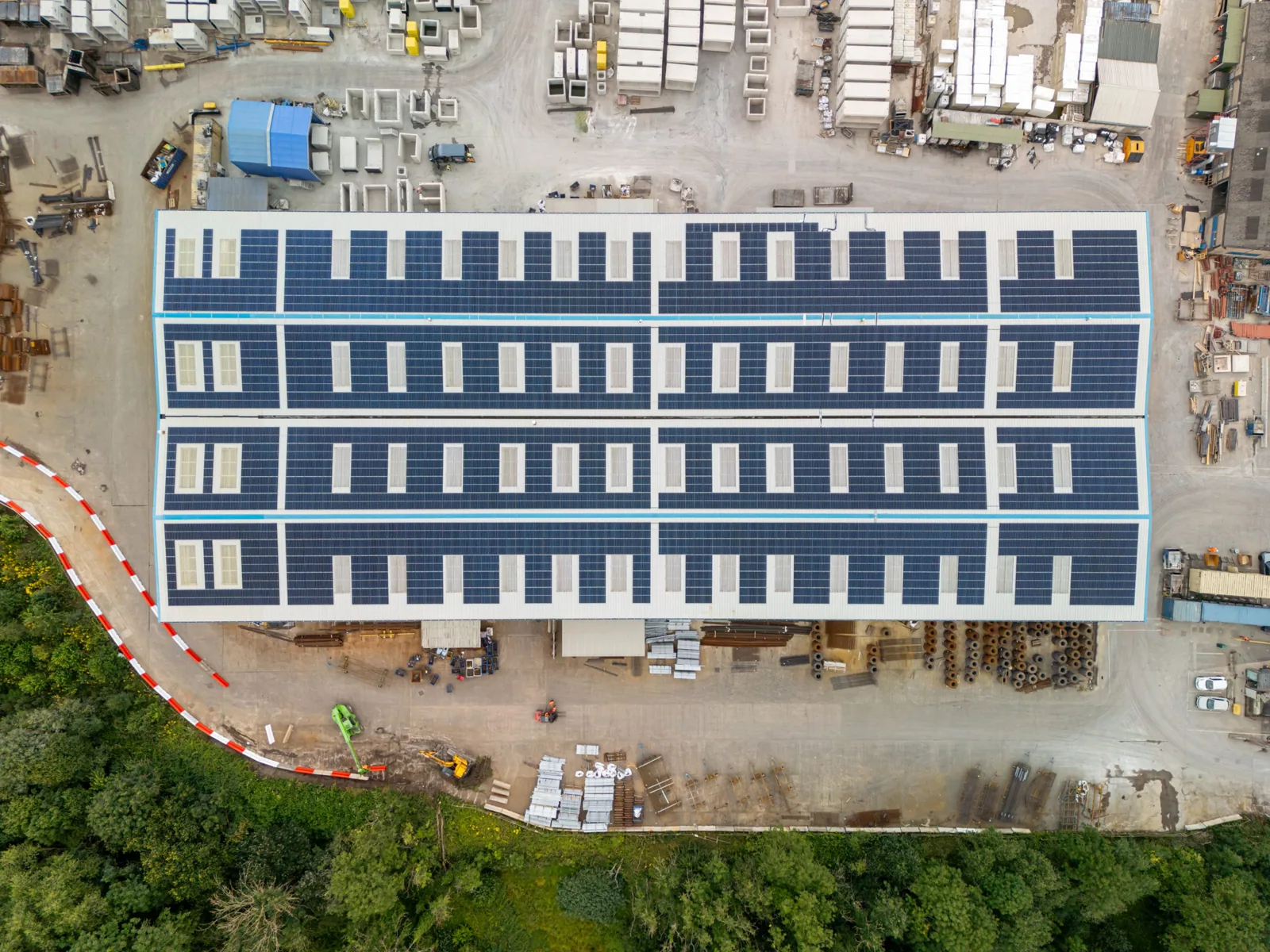
Commercial Drone Roof Inspection
Capture commercial roof conditions in Sunrise, FL with drone imaging for broad or hard-to-access areas, then map visible findings for hands-on follow-up.
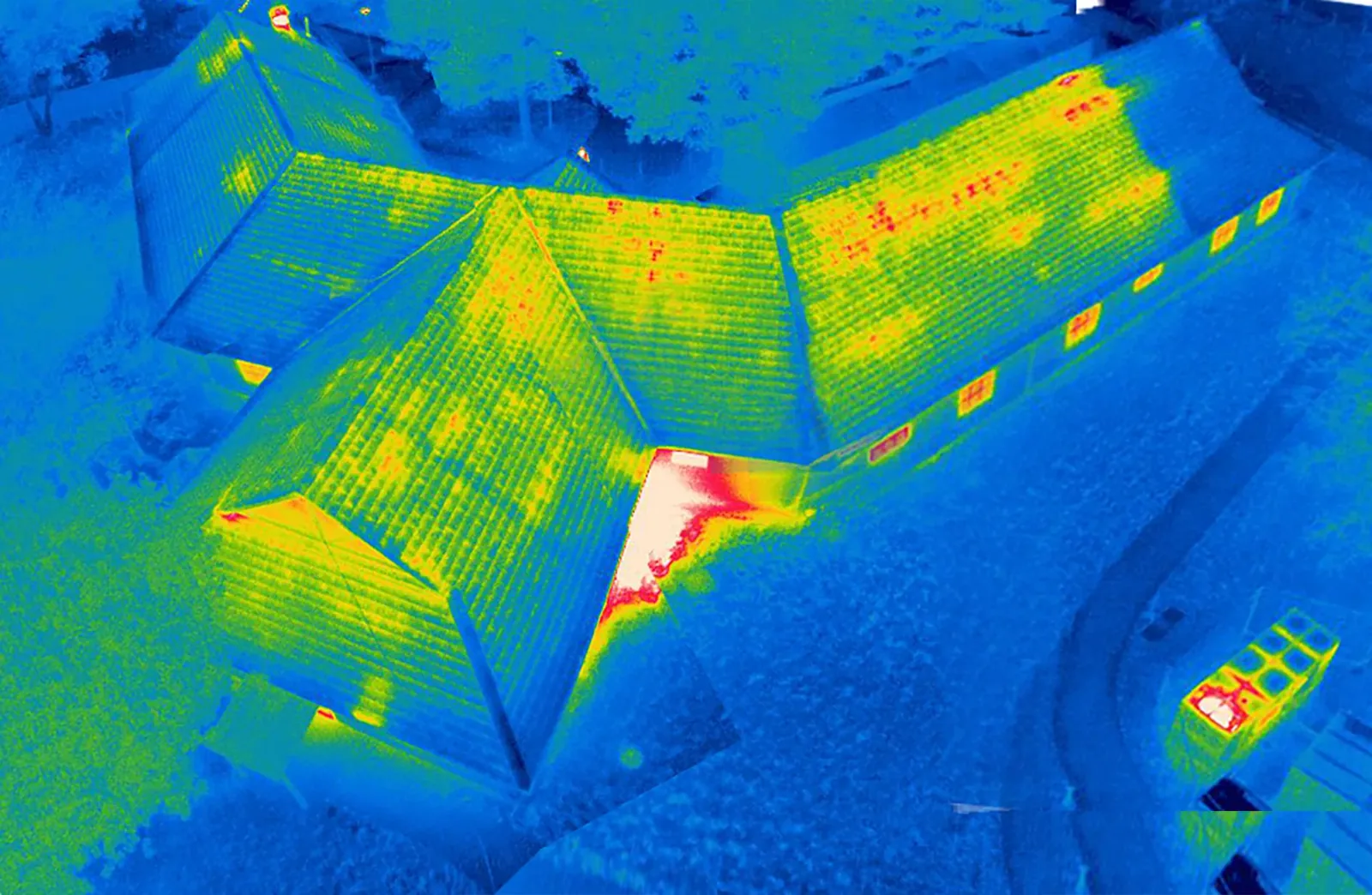
Commercial Roof Moisture Survey
Use infrared and selective core-cut surveys in Sunrise, FL to map suspected roof moisture, verify assembly layers, and define repair boundaries from evidence.
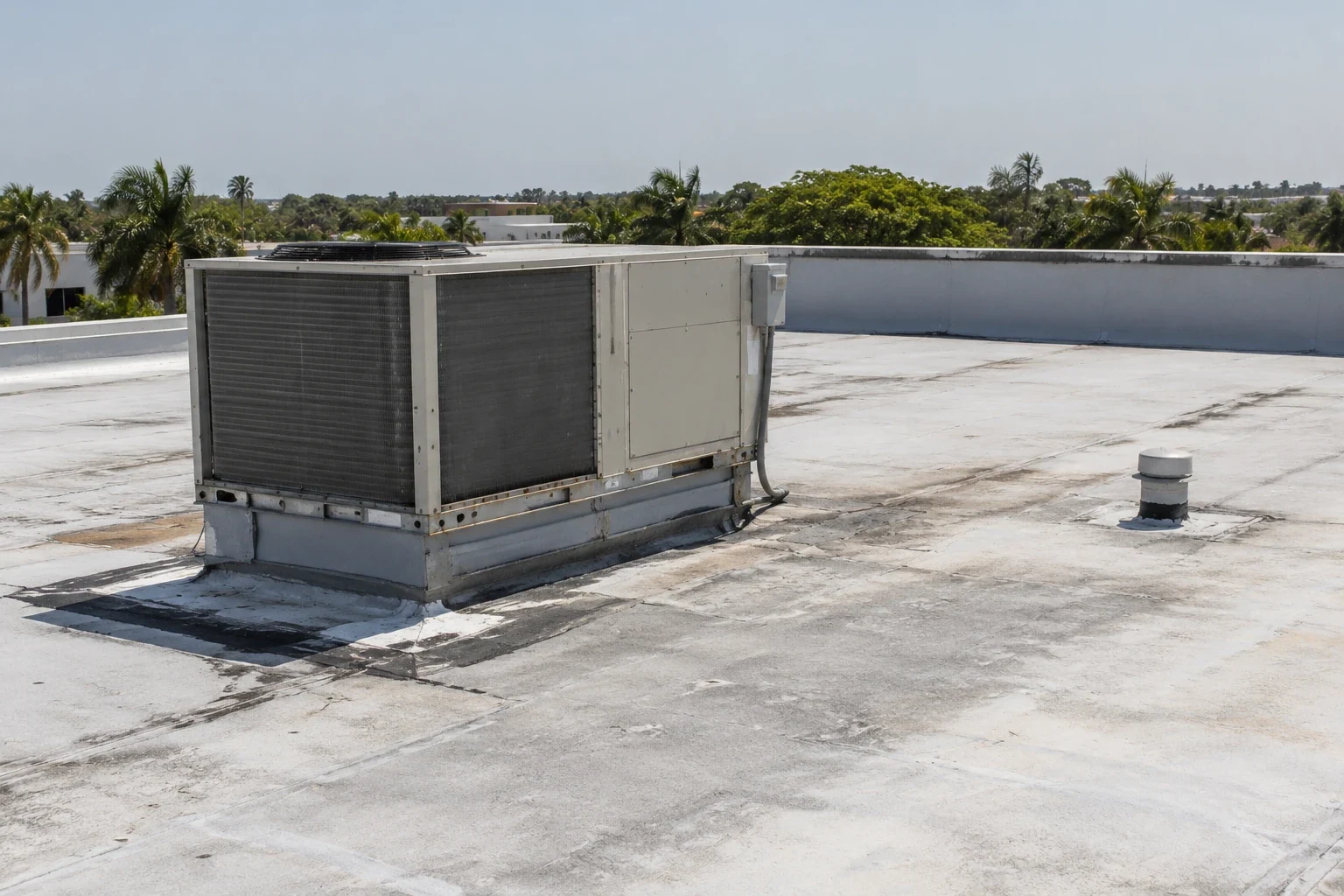
Commercial Roof Maintenance
Plan commercial roof maintenance in Sunrise, FL with mapped drains, seams, equipment curbs, and prioritized work tied to the building’s operating schedule.
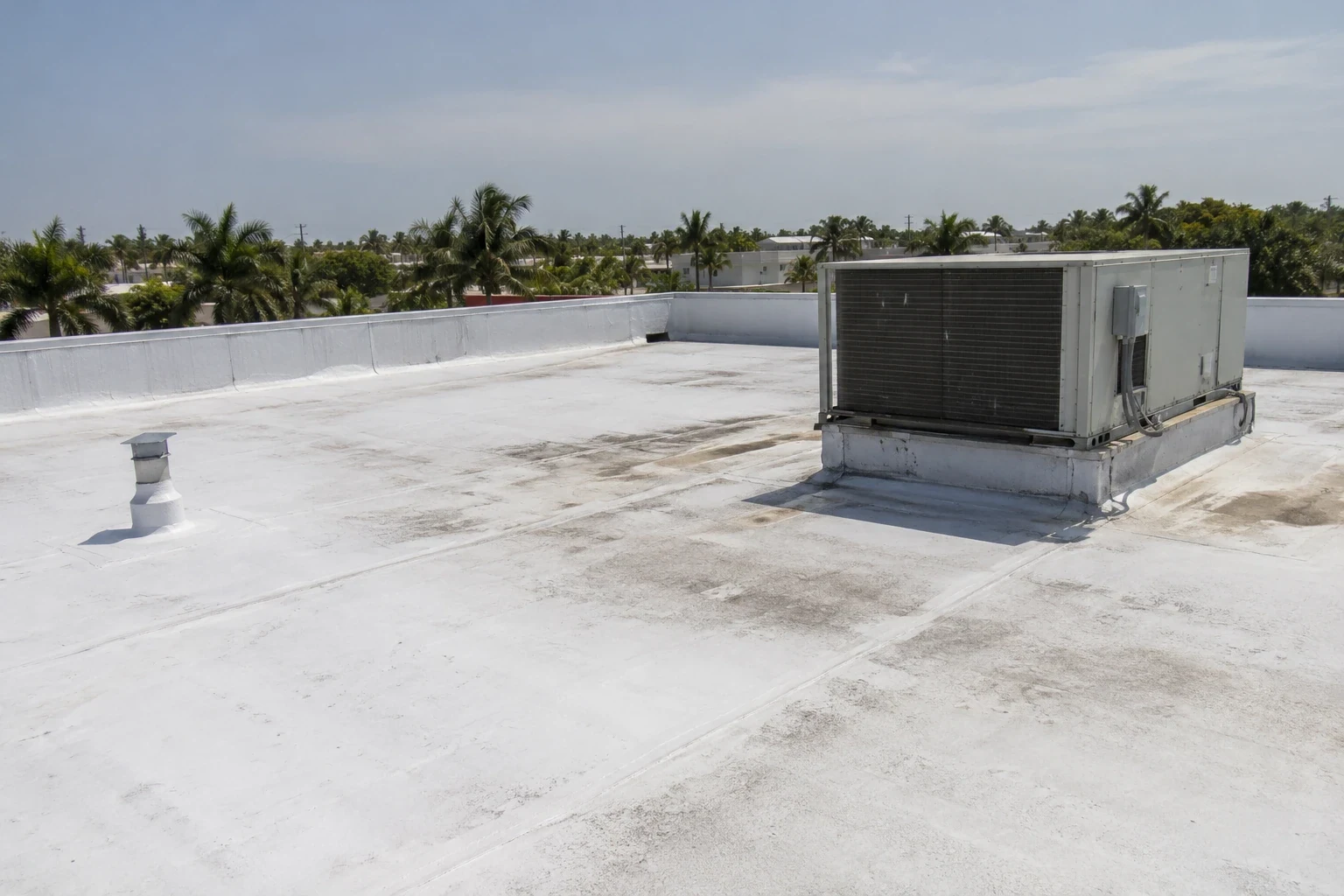
Commercial Roof Coating
Restore a sound commercial roof in Sunrise, FL with coating eligibility checks, drainage review, compatible preparation, and a defined application plan.
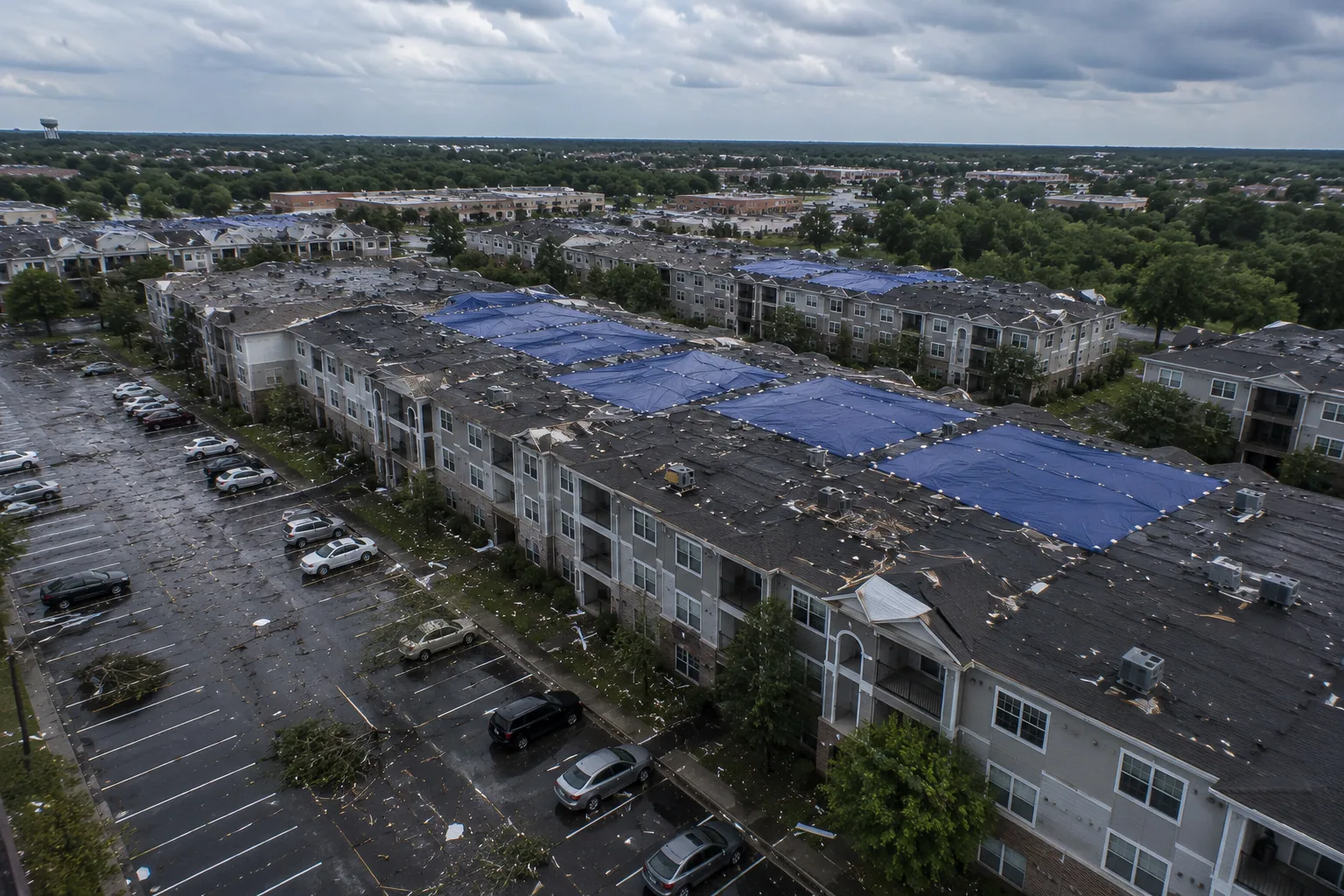
Storm Damage Roof Repair
Assess storm damage to commercial roofs in Sunrise, FL with safe access, mapped findings, temporary protection, and repairs tied to visible conditions.
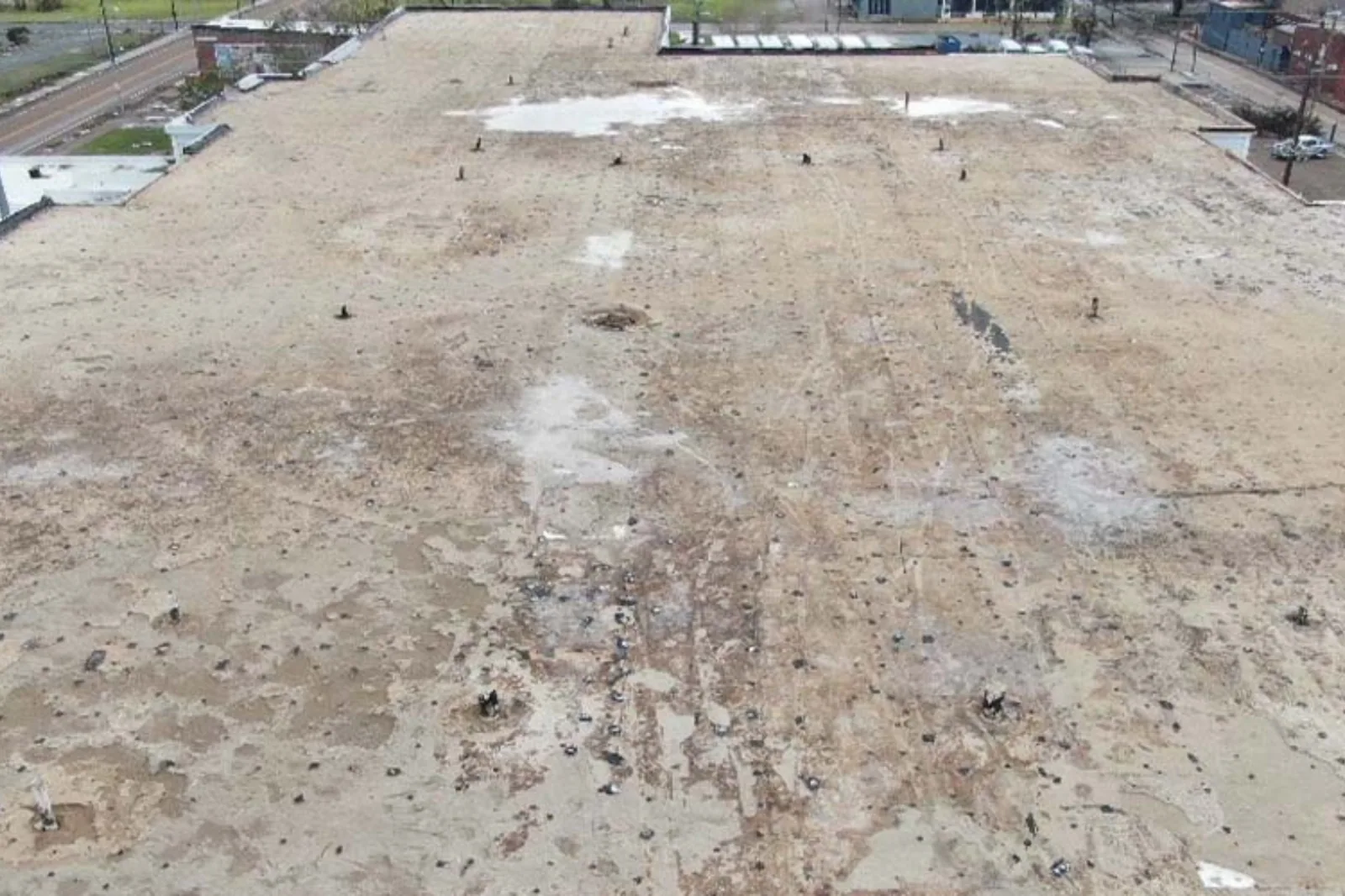
Commercial Roof Insurance Claim Assistance
Document Sunrise, FL roof damage with dated photos, mapped findings, repair scopes, and separation between observed conditions and coverage decisions.
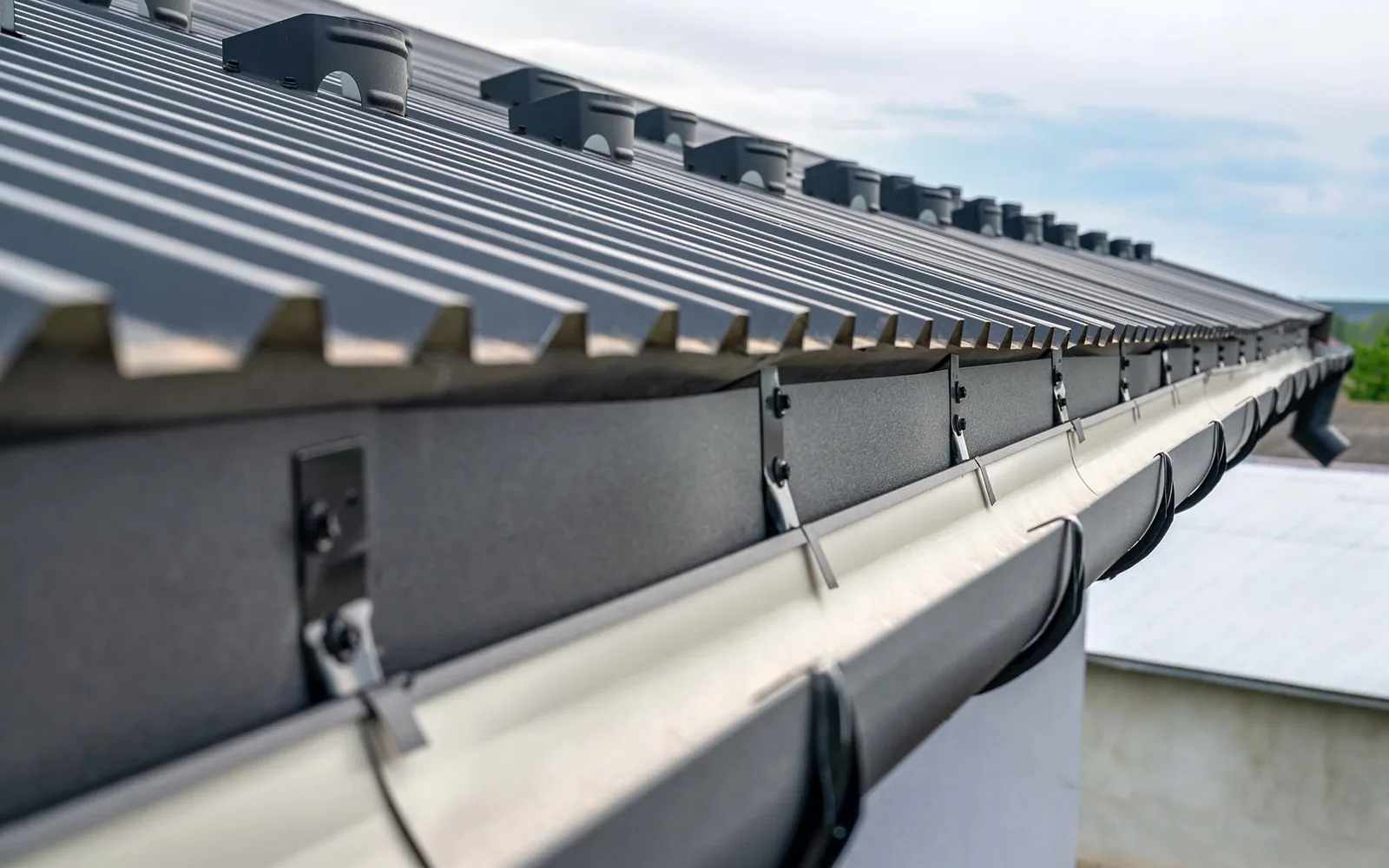
Commercial Roof Drains and Scuppers
Correct commercial roof drainage in Sunrise, FL by mapping low points, checking drains and scuppers, and tying outlet work to the assembly and overflow path.
Commercial Roof Edge Metal and Gutters
Repair commercial roof coping, edge metal, gutters, and downspouts in Sunrise, FL with attachment checks, drainage review, and defined transitions.
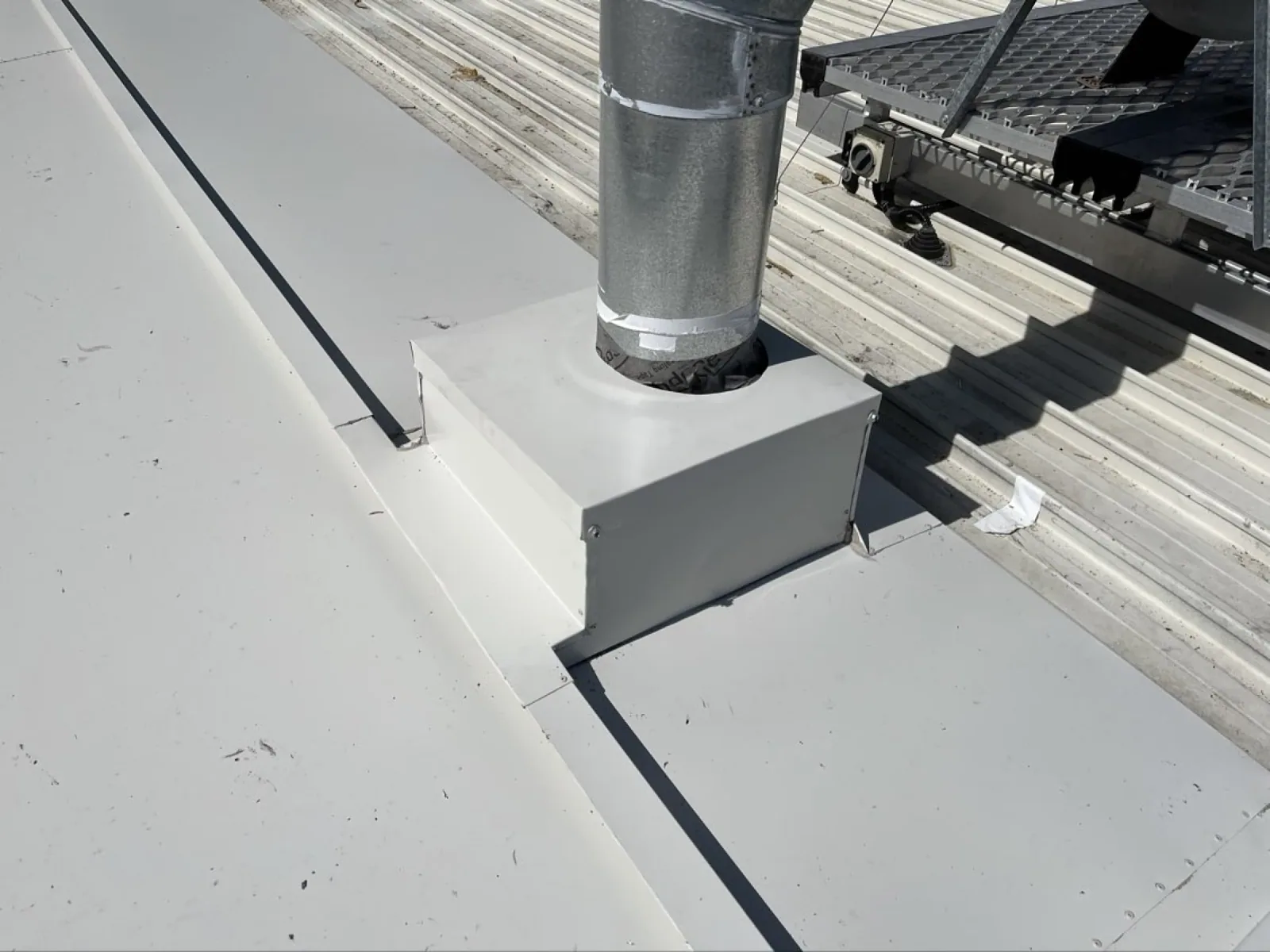
Skylight and Roof Penetration Flashing
Repair skylight curbs, pipe boots, equipment penetrations, and membrane transitions on commercial roofs in Sunrise, FL with mapped findings.
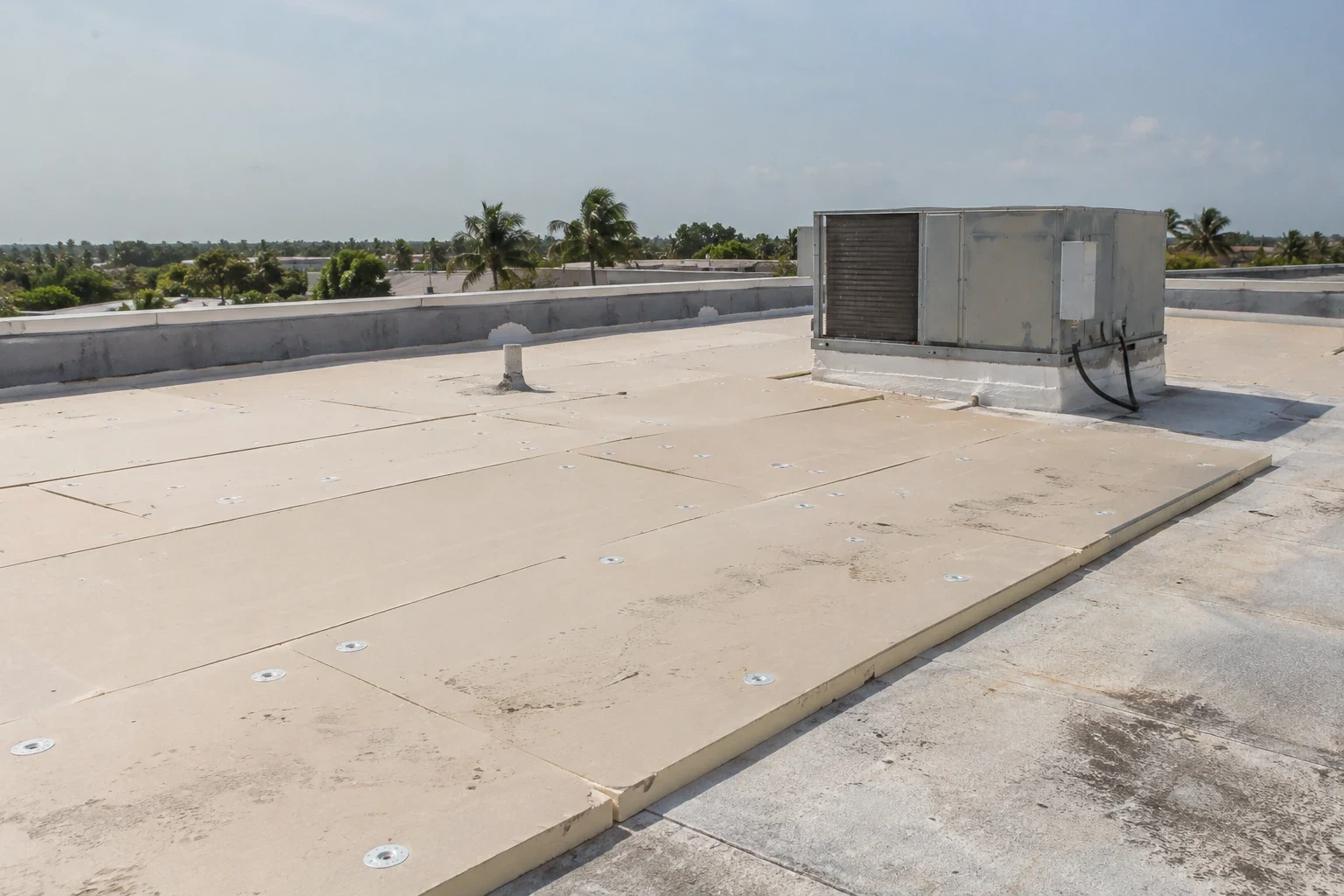
Commercial Roof Insulation and Cover Board
Plan commercial roof insulation, tapered systems, and cover board in Sunrise, FL with assembly checks, drainage coordination, and a clear installation sequence.
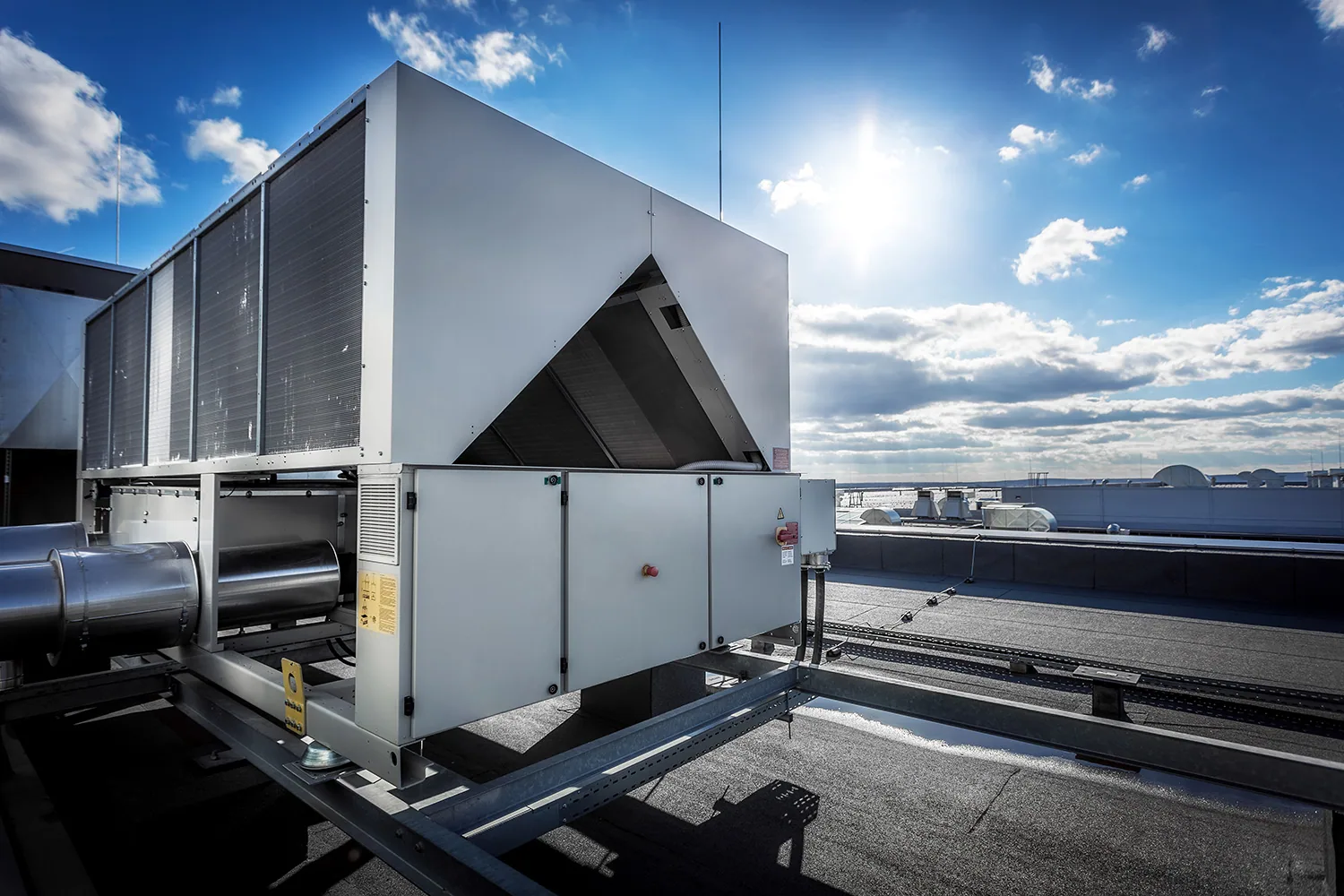
Rooftop Equipment Curbs and Supports
Inspect and repair rooftop unit curbs, pipe supports, and equipment bases in Sunrise, FL with mapped flashing, attachment, and clearance details.
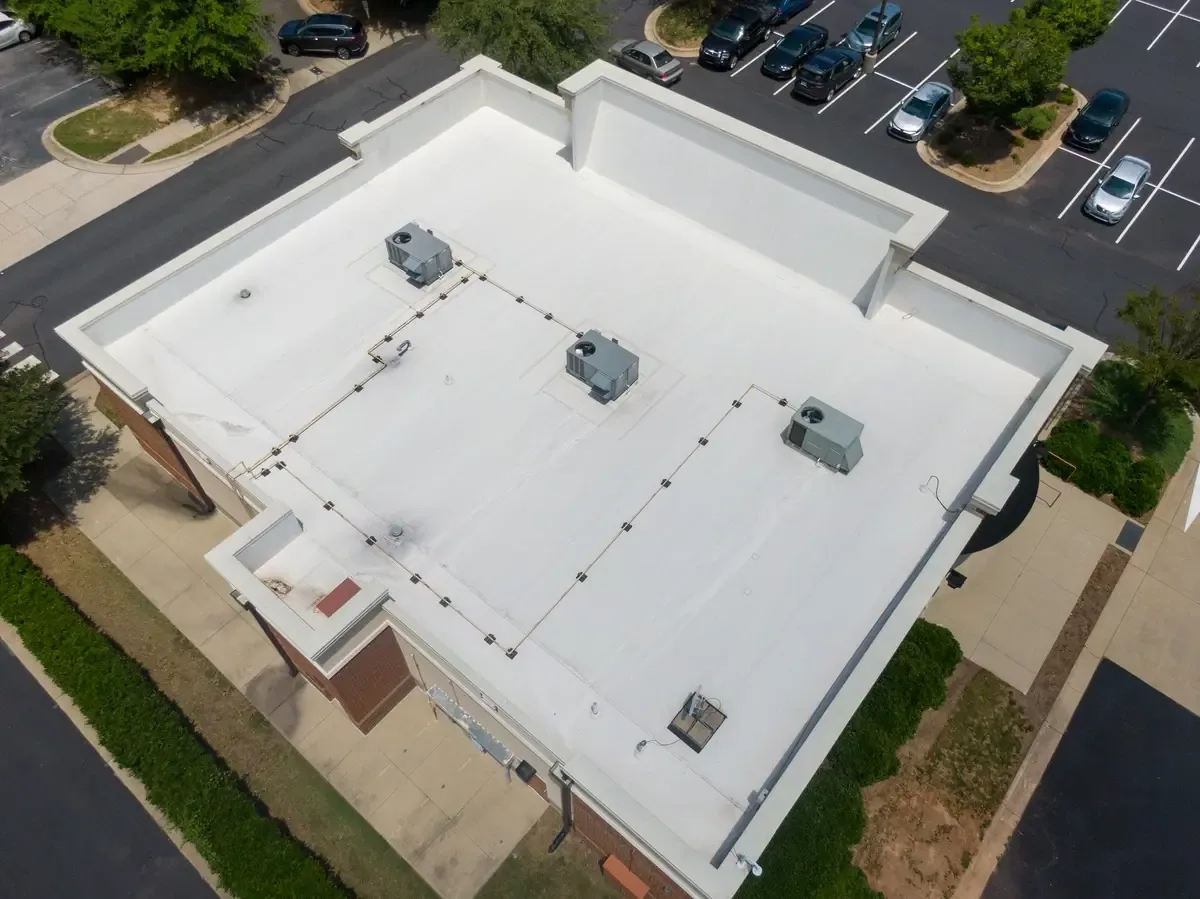
Cool Roof Installation
Evaluate reflective commercial roofing in Sunrise, FL with assembly condition, drainage, rooftop equipment, and energy-code details planned together.
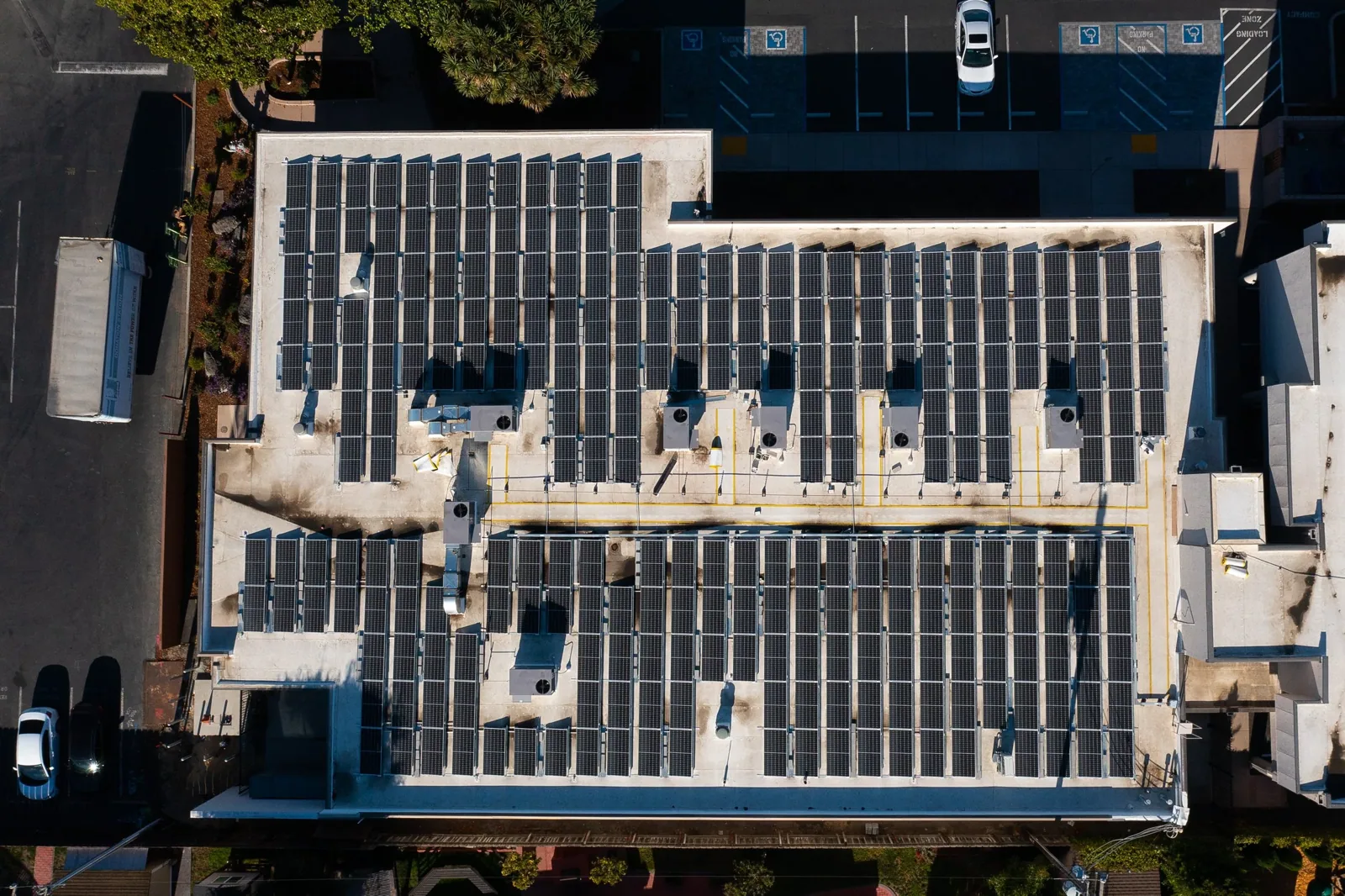
Solar-Ready Commercial Roofing
Prepare a commercial roof for a future or existing solar array in Sunrise, FL with condition, drainage, attachment, and service-access planning.
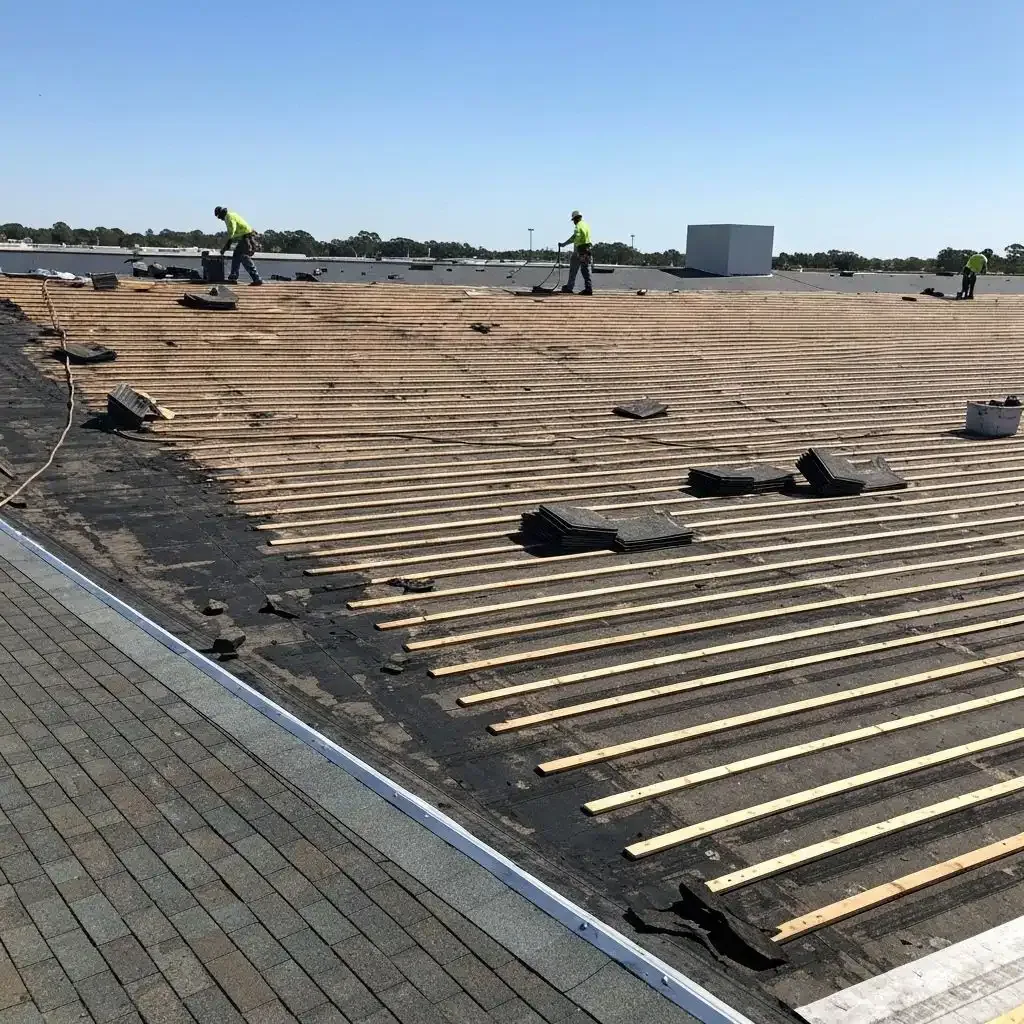
Occupied-Building Reroofing
Reroof occupied commercial buildings in Sunrise, FL with phased work zones, interior protection, weather closures, and access plans for tenants and staff.
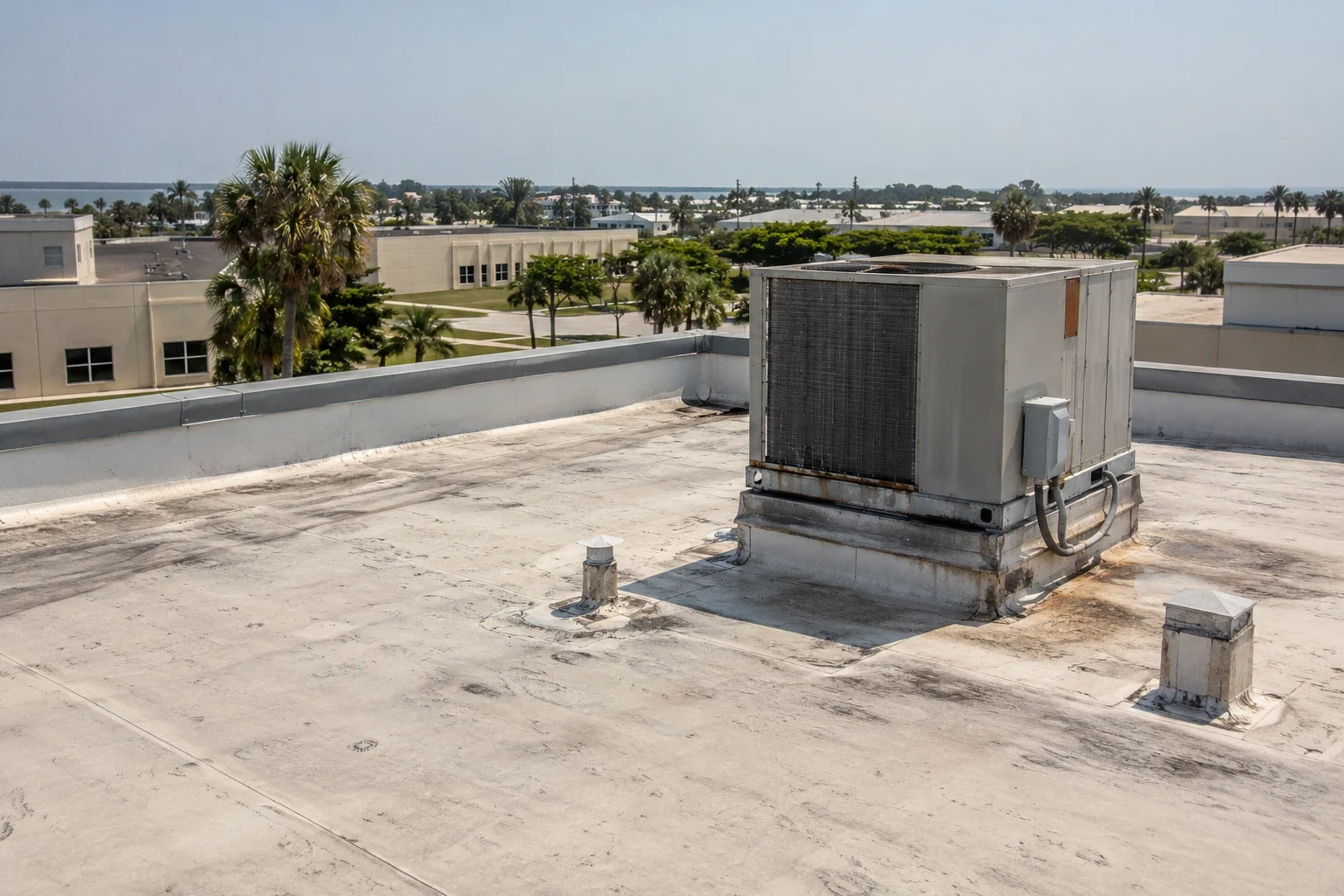
Military Installation Roofing
Plan military installation roof repair and replacement in the Sunrise, FL region with controlled access, escorts, UFC coordination, and mission-aware phasing.
Repair: Set a measured boundary
A local repair fits when the defect is defined, the substrate is sound, and the existing membrane accepts a compatible tie-in. We document the affected zone and note adjacent conditions that remain outside the work. We repair drain bowls, scuppers, coping, and equipment curbs with compatible details that restore the water-control plane. An owner can request leak tracing and repair, drainage correction, and perimeter metal work.
Renewal: Compare the assembly options
Repeated failures, broad wet insulation, weak attachment, or deck concerns can move the decision beyond a repair. We compare removal with a recover only after checking moisture, deck capacity, roof height, drainage, and transitions. Sunrise's heat, humidity, and concentrated rainy-season demand make slope and outlet performance part of that review. A replacement plan identifies layers, fastening, flashing, and weather protection; a coating evaluation is appropriate only when the existing assembly is a suitable base.
Coordination: Keep operations in the sequence
Roof work on an occupied office, a healthcare property, or a distribution floor has to account for equipment, delivery windows, sensitive interiors, and access control. We divide work into roof zones, set daily dry-in limits, and record any concealed condition before covering it. When reroofing changes insulation, drainage, edge details, or equipment transitions, we coordinate the roof scope with the design and permit teams before construction. For planned upkeep, a maintenance visit records drains, seams, flashing, and prior repairs before the next weather cycle.
Next step: Define the roof question
Share the roof plan, assembly records, leak locations, access restrictions, equipment constraints, and operating hours. We will map the affected zones, identify what can be confirmed visually, and state whether a test cut or broader review is needed. A written scope separates observed work from concealed-condition allowances and gives the facility director a clear approval point.
Frequently Asked Questions
What should be recorded before pricing a repair?
We record the roof zone, failed detail, surrounding membrane, drainage path, and any test result that changes the boundary. The written scope identifies confirmed work separately from concealed conditions.
When is replacement more practical than another repair?
Repeated defects across separate zones, widespread moisture, unstable attachment, or a compromised deck can make another isolated patch a poor fit. Inspection and testing show how far the condition extends.
Can roofing work continue while a Sunrise building stays open?
Occupied work is phased by roof zone and operating need. We coordinate access, interior protection, delivery timing, and the end-of-shift weather-tight condition with the facility contact.
How do rainy-season conditions affect the schedule?
South Florida's wet season concentrates drainage demand and brings frequent storms. We plan daily opening limits, secure materials, and preserve a defined dry-in point as conditions change.
Set the inspection scope
Send roof plans, leak locations, assembly records, equipment constraints, and operating hours. We will define the inspection route and the evidence needed for a repair or renewal decision.
Call 555-555-5555 or request a roof assessment.