Commercial Roof Asset Management in Sunrise, FL
Commercial Roof Asset Management
A roof becomes easier to manage when its assembly, condition, repairs, and open decisions stay attached to the building record. We help Sunrise facility teams map roof sections, identify systems where confirmed, and keep inspection findings separate from planned work. The city's business parks include offices, distribution, manufacturing, healthcare, and research uses, so equipment, access, and operating constraints vary from asset to asset. A condition report gives each roof a current field reference; the asset record carries that information forward to maintenance and budgeting.
Roofing Capabilities in Sunrise, FL
Roof asset management in Sunrise, FL. Track assemblies, inspections, repairs, drainage, warranties, and capital decisions by building and roof zone.
Asset register: Give each roof its own identity
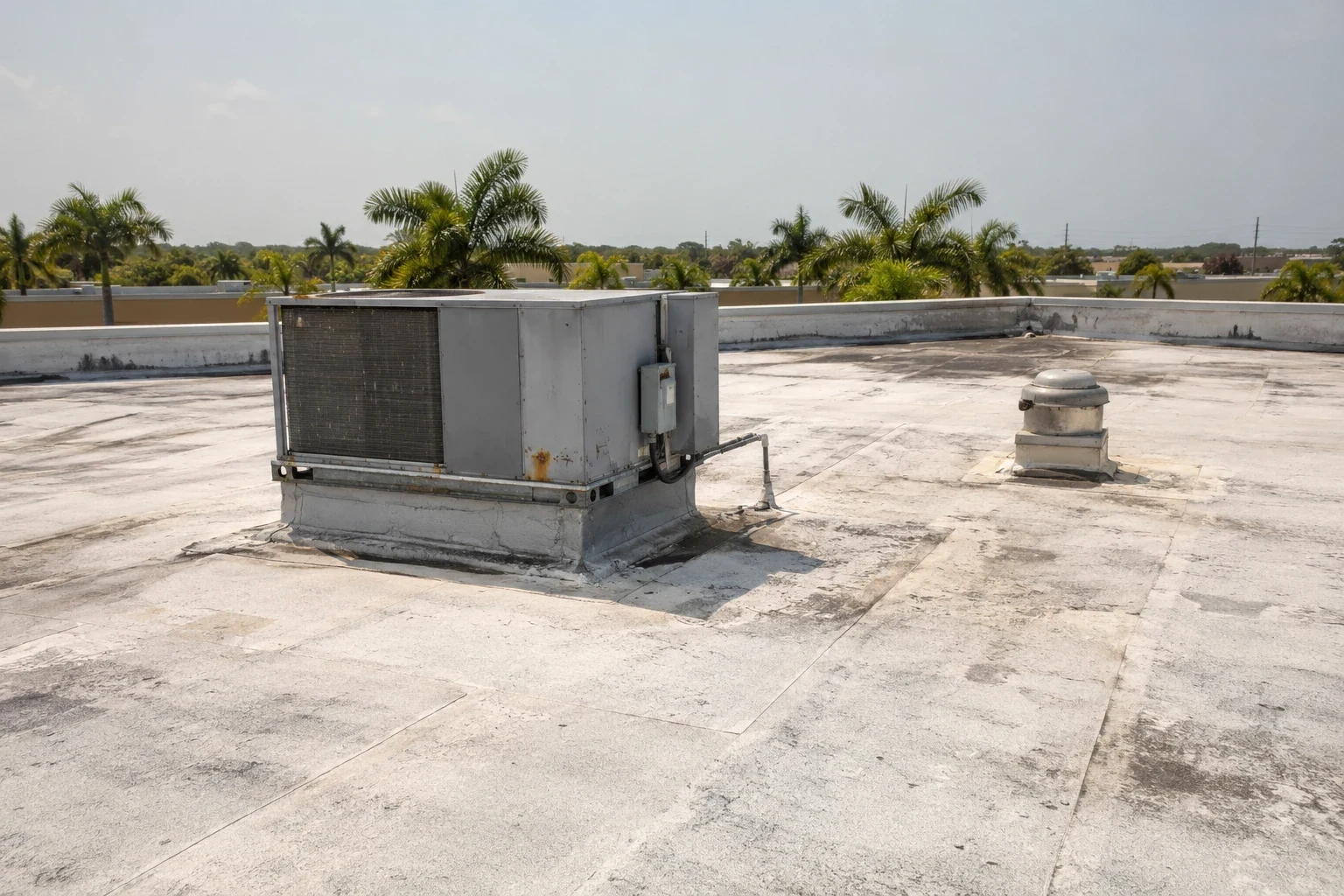
A portfolio register starts with a stable building identifier, address, roof drawing, and section labels that match the property team's records. We add membrane and insulation details when inspection or reliable documents confirm them, then record drains, curbs, penetrations, access points, and equipment. Unknown conditions stay marked as unknown rather than being filled in from a neighboring building. This keeps a shared portfolio file useful when a facility changes managers or a contractor returns after several years.
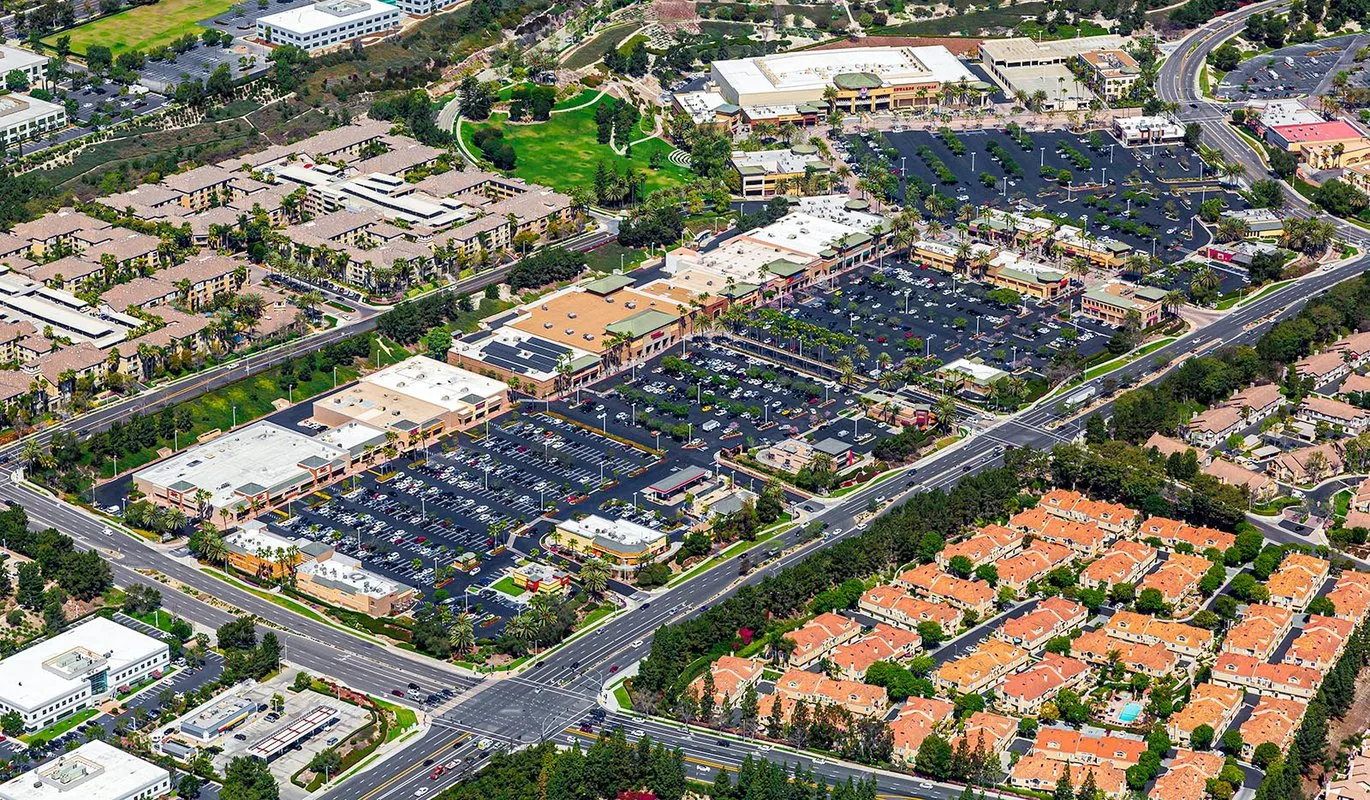
Sunrise's commercial stock includes Sawgrass International Corporate Park, Sunrise Commerce Park, Broward Lakes Business Park, and Sawgrass Technology Park. Their range of office, research, flex, industrial, and distribution uses makes separate roof identities practical. A building identifier should connect roof zones to the facility's work order and contact record, while an organized multi-site program can compare findings without treating roofs as interchangeable. We confirm how each site's map relates to entrances and mechanical areas before using it for scheduling.
For each roof, the register identifies the plan, invoice, or field inspection supporting its assembly entry and when that information was added. We label whether an assembly detail comes from project records or direct inspection, then list any field check needed to complete the roof map.
Access data is part of the asset record as well: roof hatch location, escort requirements, equipment shutdown contacts, and hours that restrict lifts or deliveries. A roof can be in good condition yet difficult to inspect if the route is unknown. Keeping those details with the drawing helps a later visit reach the intended area without delaying the facility team or crossing an active service route.
Condition history: Preserve changes between visits
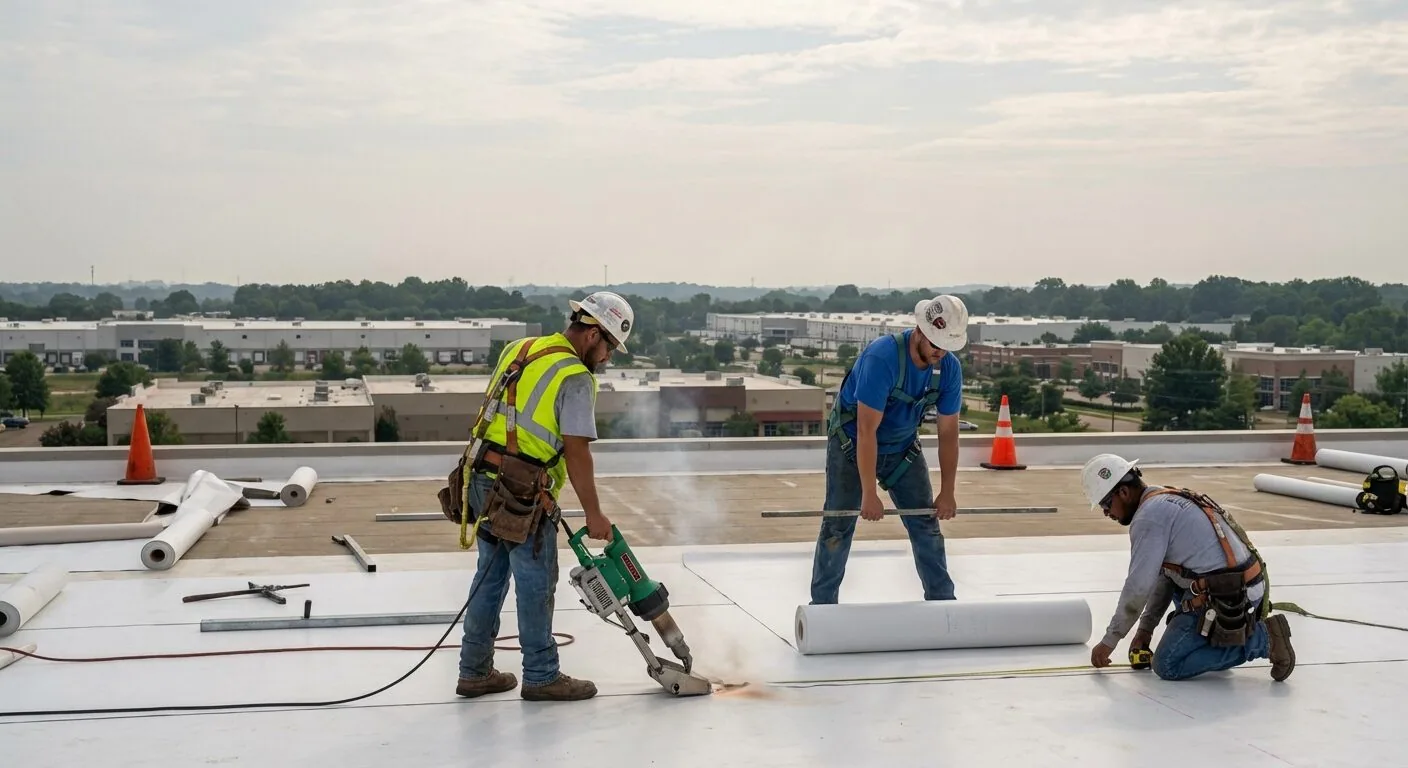
Every inspection should add observations without erasing what was present before. We record date, roof zone, weather at the time of access, conditions observed, testing performed, repairs made, and areas that could not be reached. Photographs use the same labels as the drawing so a later reviewer can distinguish a new opening from an earlier patch. If a surface changes, the record notes whether the change affects waterproofing, drainage, attachment, or only appearance.
A roof inspection can update the assembly map and flag the next test or repair. Routine maintenance revisits drains, flashings, edge details, and prior repair points. In a portfolio that includes office space in Sawgrass International Corporate Park and industrial uses in Sunrise Commerce Park, the visit sequence may differ; the history remains organized in common fields. That lets a facilities director review conditions by date and zone while preserving the evidence behind each recommendation.
Risk order: Sort work by condition and consequence
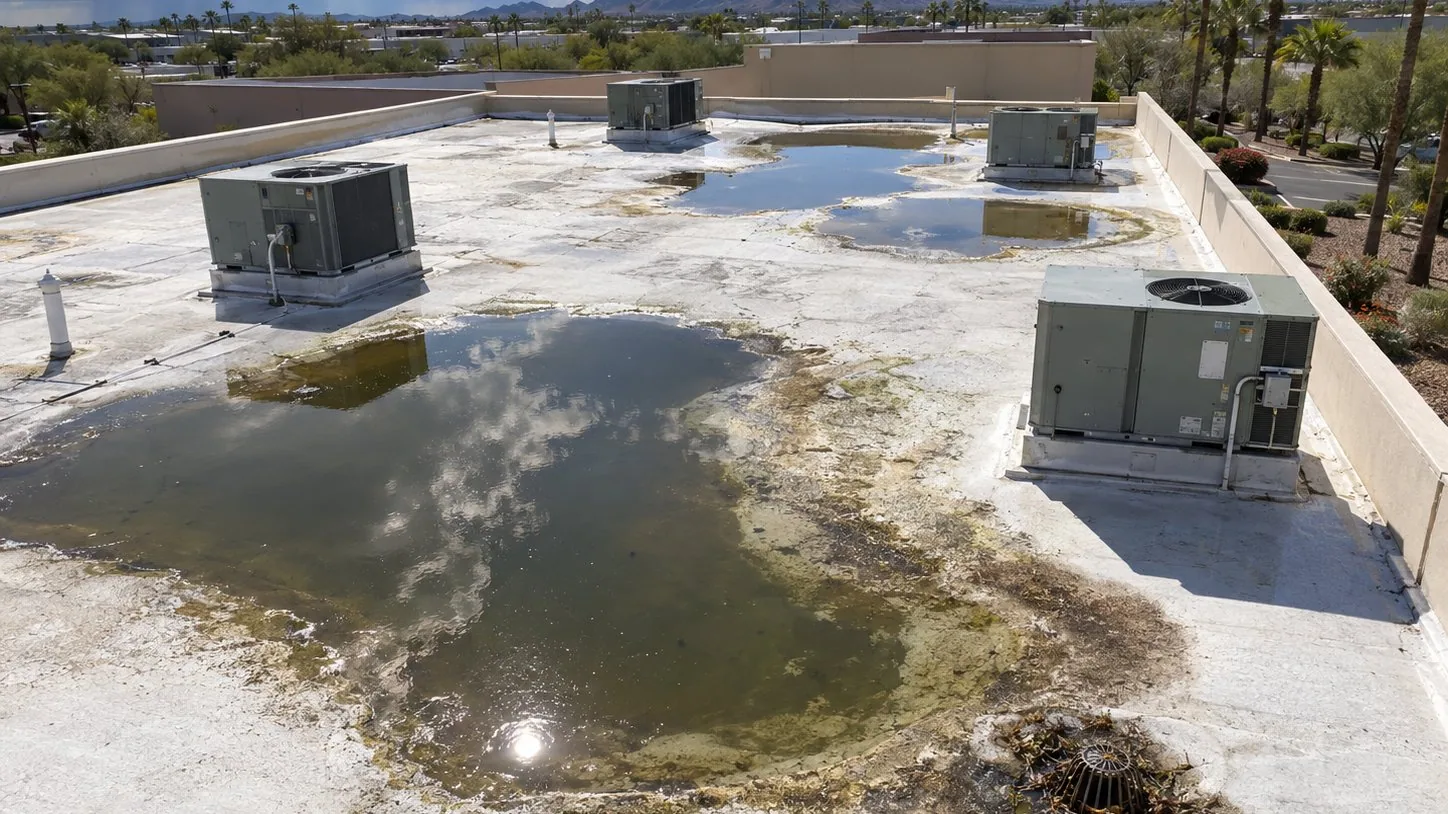
A roof register can help separate active leaks, open transitions, blocked drainage, widespread moisture, and routine aging. We identify the evidence and note the building consequence, such as an occupied room below a leak or equipment exposed to water. The order should reflect observed condition and operational impact, not the size of a property or a generic score. If further testing is needed, that action appears separately from confirmed repair work.
Sunrise's western Business and Entertainment District combines retail, corporate offices, an arena, and mixed-use development. A facility schedule there may place public access and event dates beside roof risks, while an industrial building may prioritize production equipment and receiving access. We identify those constraints with the asset contact. A drainage repair review or emergency response can address an immediate condition, while the condition log shows which roofs need planned follow-up and what remains untested.
Priorities are revisited when a leak returns, equipment changes, a tenant modifies operations, or testing exposes a different wet boundary. We update the action list with the date and reason instead of leaving old urgency labels in place. This allows the facilities director to see whether a recommendation remains current.
Capital link: Connect findings to a funding decision
Budget planning is more useful when each proposed project has a measured area, repair history, test result, and stated assumption. We identify the work that is supported now and the information that could change it. We list a local repair and any broader restoration or replacement option as separate scopes, each tied to observed roof conditions. Unit areas and quantities remain tied to roof sections, not copied from another asset's scope.
A capital planning review can translate condition reports into near-term repair priorities and future investigation needs. Cost and timing depend on access, removal depth, wet insulation, deck repair, equipment, and weather windows. The asset history provides the context for those choices, including when a detail was last repaired and whether the same issue returned. We can identify a useful planning range of tasks without inventing a service life or promising that a roof will remain leak-free.
Handoff: Keep the record usable for the next manager
A durable roof file has a current roof plan, a list of known assemblies, dated photos, inspection reports, repair invoices, warranty documents, and open action items. We organize the field information so staff can find a prior drain repair or test cut without searching narrative reports alone. The record also identifies who can authorize access and where key building or safety controls affect inspection.
For a property in Sunrise, share existing drawings, service logs, coating records, warranty information, and building identifiers. We will update the roof map, separate confirmed condition from assumptions, and leave an action list the facilities team can use. If assets move between owners or managers, the next inspection can begin from the documented state instead of reconstructing the history from ceiling stains and old work orders.
When several teams use the file, the naming convention should be consistent across the drawing, photographs, work order, and invoice. We confirm those labels with the site contact before the report is finalized. Clear identifiers reduce the chance that a repair history gets attached to the wrong section or building.
The file can also include an annual review date and the person responsible for confirming that contacts and access instructions remain current.
At the annual review, compare completed work with the prior action list and close items only when photographs, invoices, or field checks support the update. New leaks, tenant changes, and equipment projects can alter access or priority. A dated revision keeps the capital plan tied to current roof evidence.
Frequently Asked Questions
What belongs in a commercial roof asset record?
Keep the building and roof-zone map, assembly details where confirmed, dated inspections, repairs, test results, photos, warranty documents, and open maintenance items.
Can one roof record format cover several buildings?
Common fields help compare records while each roof keeps its own assembly, condition, access limits, and repair history. We inspect each property before setting its action list.
How do asset records support maintenance?
The history shows which drains, transitions, seams, and prior patches should be revisited. A new inspection can compare the same zone and note what changed.
Should untested roof areas appear in the register?
Yes. We label them as untested or inaccessible so they are not mistaken for confirmed dry or damaged areas.
What should I provide for an asset review?
Share roof plans, work orders, leak logs, repair records, system documents, warranty files, equipment changes, and each building's access contact.
Build a roof record around each building
Share roof drawings, inspection files, repair logs, warranty documents, and asset identifiers. We will map sections and establish a condition history facilities can maintain.
Call 555-555-5555 or request a roof assessment.