Commercial Roofing for Public Agencies in Sunrise, FL
Public Agencies
A municipal roof project has to keep public routes open while giving facilities and procurement a scope they can review. In Sunrise, humidity, heat, heavy wet-season rain, and tropical weather make drains, edge details, and rooftop openings recurring inspection points. We identify the asset, map roof zones, and record tested conditions separately from allowances. The Sawgrass Business and Entertainment District includes retail, offices, an arena, and mixed-use buildings; Davie's redevelopment area includes commercial and industrial land. Public facilities share the region but not necessarily the same roof system, access rules, or approval path. A roof inspection establishes a building-specific record.
Industries We Serve in Sunrise, FL
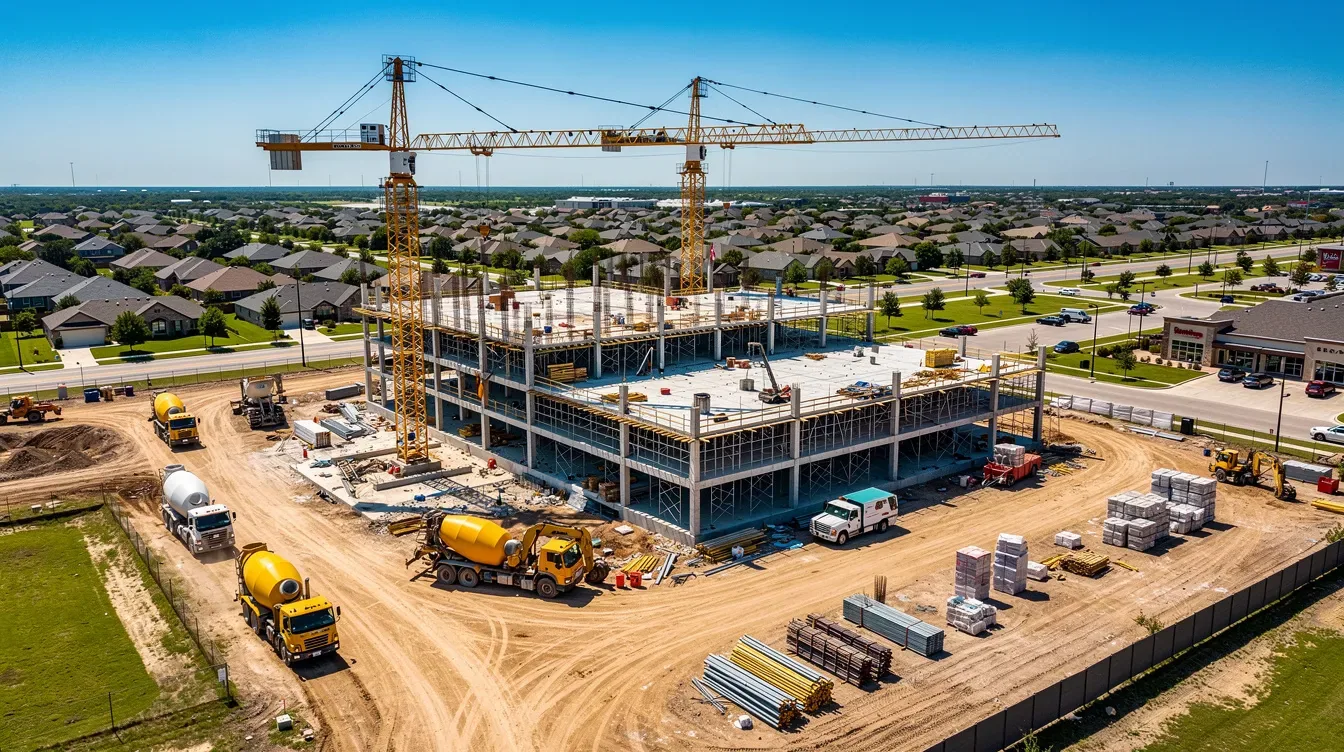
Public agencies in Sunrise, FL need roof scopes tied to access, procurement, and service continuity. We document conditions by facility and zone.
Procurement file: Make quantities and assumptions visible
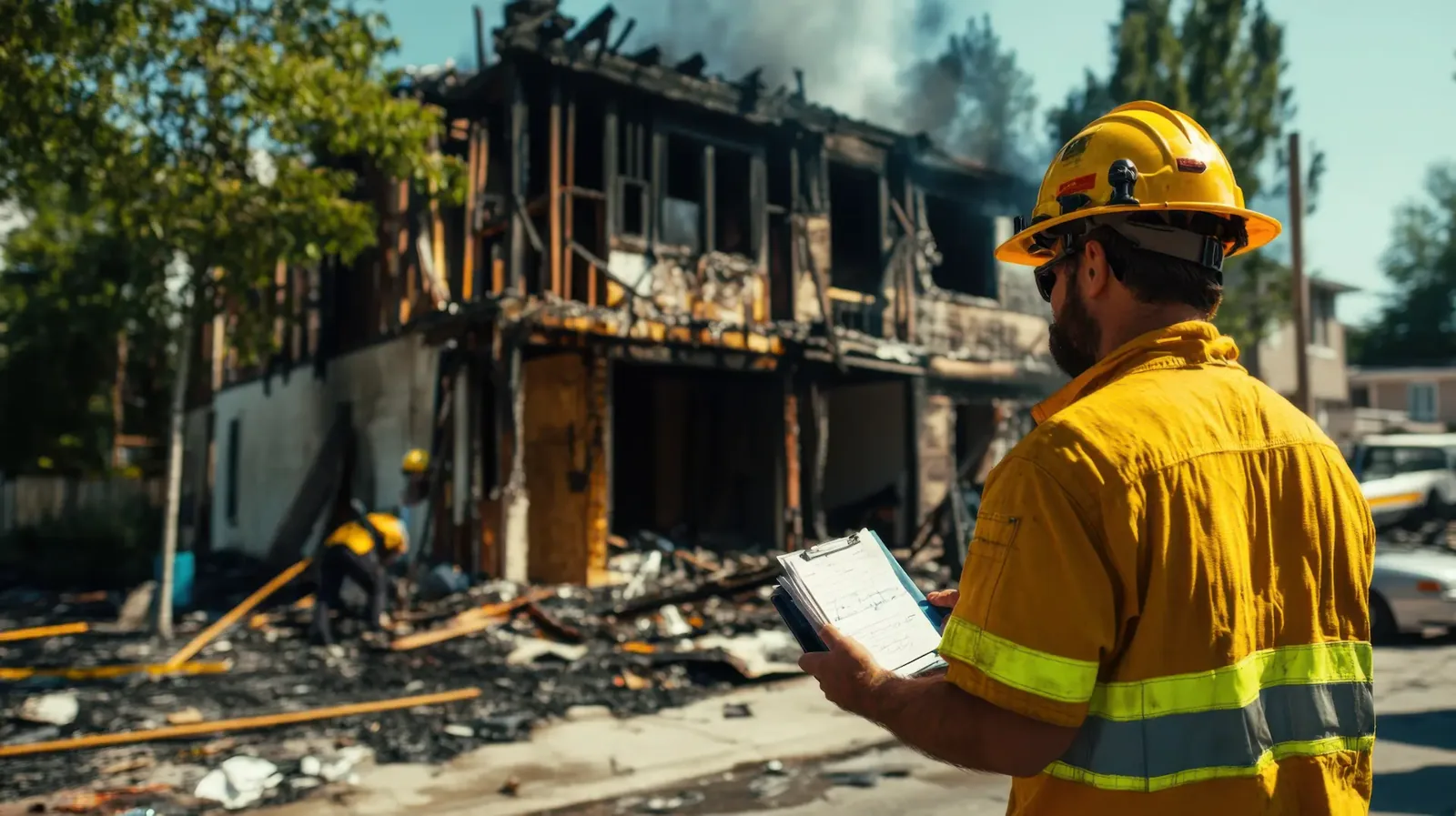
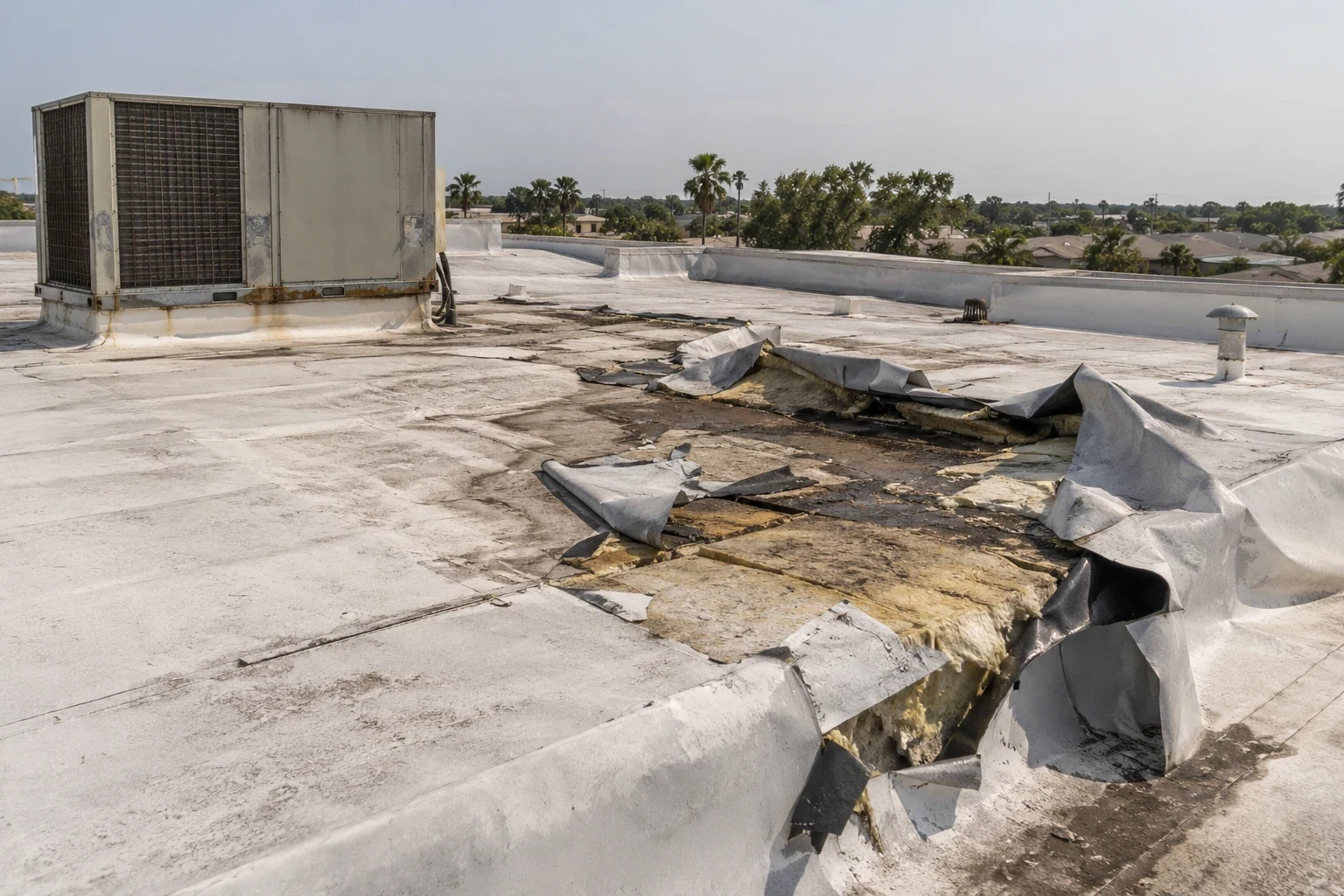
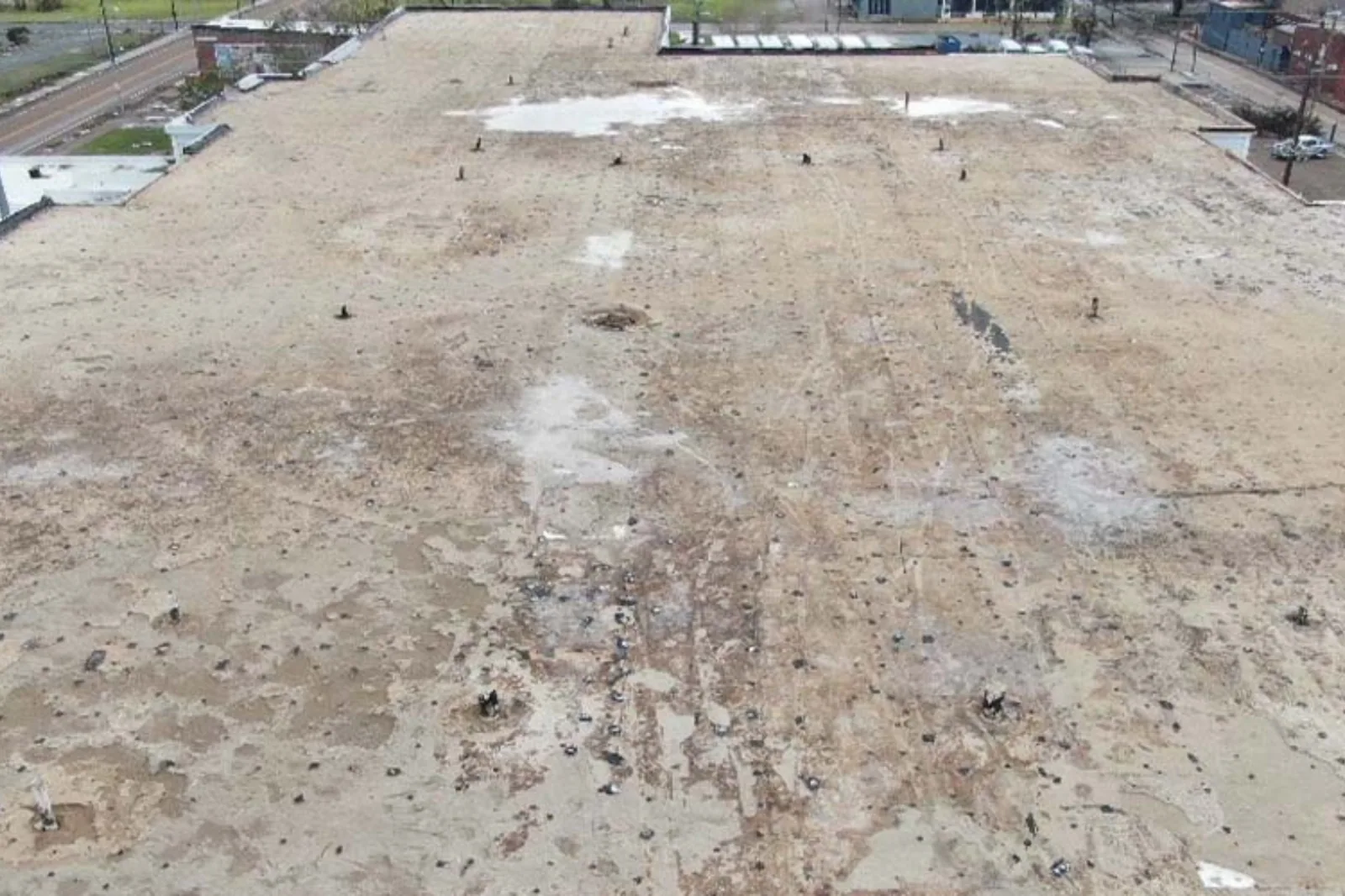
A public scope should show what was observed, where it was found, and what work the observation supports. We label the roof section, membrane if confirmed, drains, penetrations, test locations, photographs, repair quantities, and areas that could not be reached. Any concealed-condition allowance is shown separately from tested work. This allows reviewers to compare proposals against the same roof map and identify whether additional testing could change cost or schedule.
Florida's eighth-edition building code took effect statewide at the end of 2023. Project design and permit review still depend on the work and facility conditions. We document the proposed roof assembly and interface details so the owner and design team can confirm applicable requirements with the authority having jurisdiction. Broward County also provides commercial energy-code resources and materials related to High-Velocity Hurricane Zone examinations. The specification should state the actual repair, attachment, or replacement detail, not rely on a generic roof description.
Asset register: Keep each building's history separate
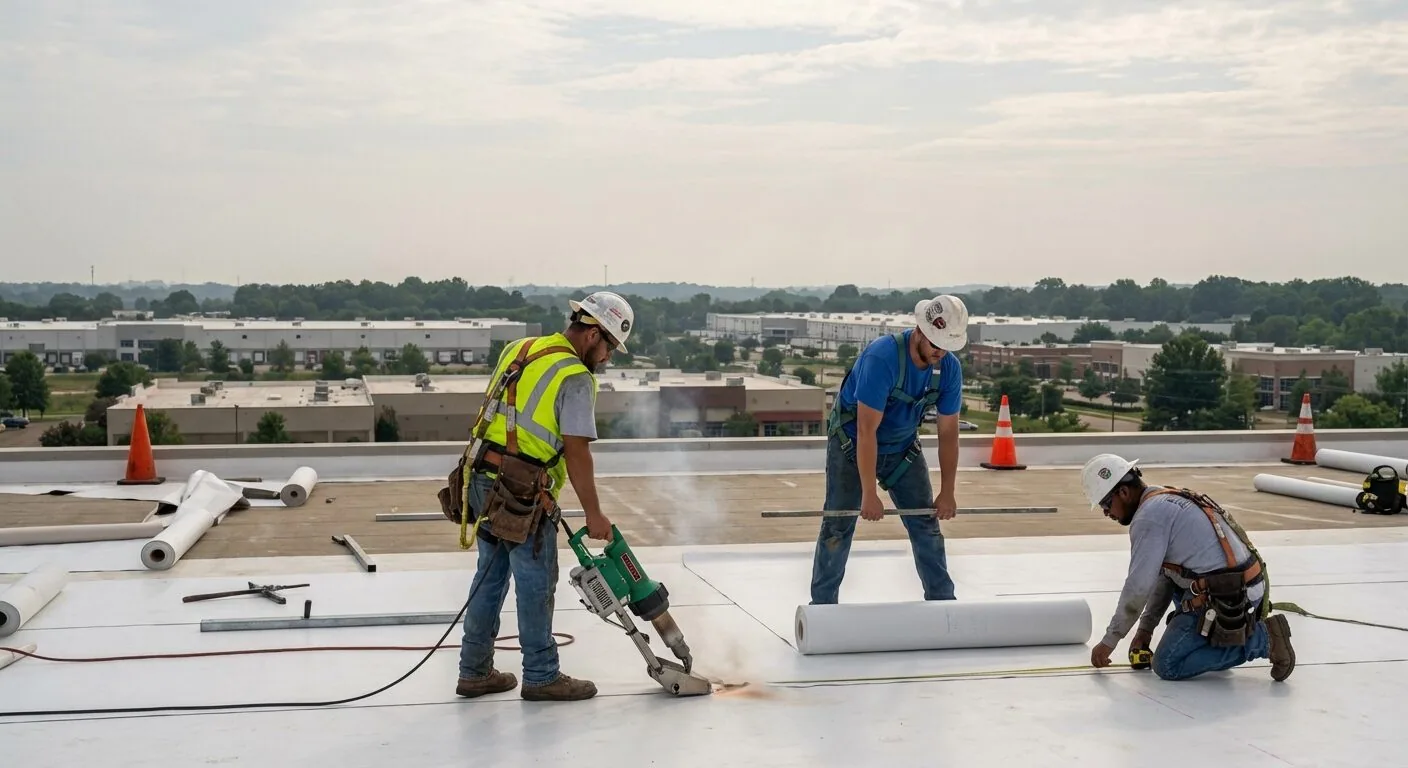
An agency may maintain offices, public counters, operations buildings, storage, and service facilities across a broad area. Each asset needs its own roof map and repair history. We record roof-zone labels, test results, material found, drains, mechanical items, and deferred work. The record can link to the agency's work order while keeping building access and department contact information current. That lets staff revisit a known seam or low area without treating all properties as one roof.
Sunrise's business parks include corporate offices, manufacturing, distribution, technology, healthcare, and flex properties. The City's GIS also maps interstates, toll roads, major roads, and distinct commercial and industrial areas. Those settings can affect staging and access, but the site plan and facility contact determine the route for a public building. A school district roof program may coordinate campuses and calendars, while healthcare assets can require clinical access controls. Each facility keeps its own approvals and history. The register can group items by safety, active leakage, preventive work, and capital planning while retaining the supporting photographs for every action.
Emergency response: Protect the service area after a storm
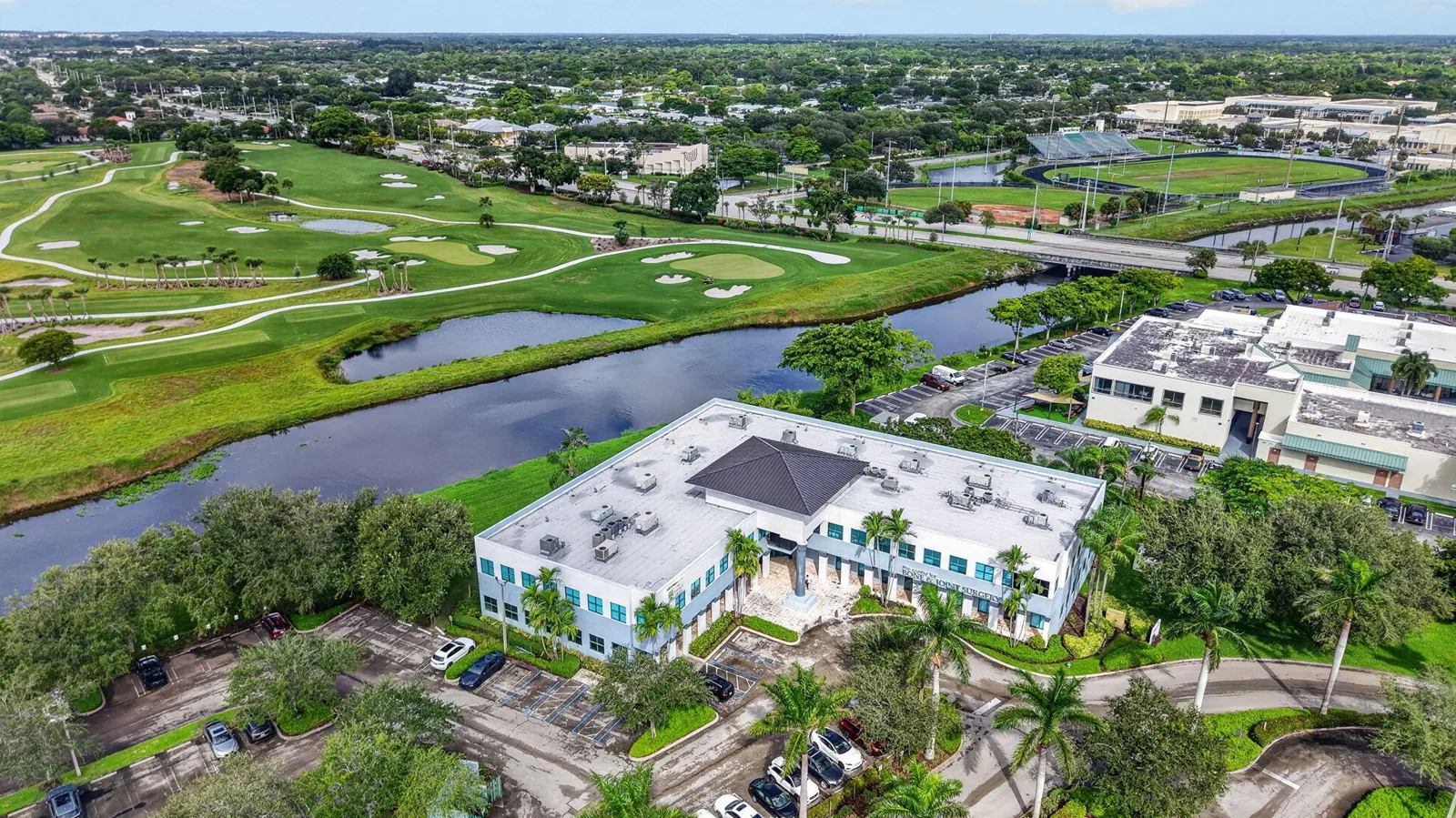
When water enters a public building, the immediate task is to protect occupants, equipment, and public service while locating the roof opening. We check the roof above and upslope from the interior report, then inspect seams, curbs, drain basins, and wall transitions. We list temporary cover separately from permanent repair. The crew records the protected area, remaining exposure, and return visit needed to define a tested repair boundary.
South Florida storm hazards include damaging thunderstorm wind, flooding, hail, and occasional tornadoes; tropical systems can affect the region during the season. After conditions permit access, we inspect edges, coping, attachment, drains, and rooftop equipment for displacement. A storm damage review documents visible impact; claim documentation can organize photographs and repair findings. The report identifies observed conditions without assigning damage beyond the roof evidence.
Drainage control: Inspect outlets before repeated rain
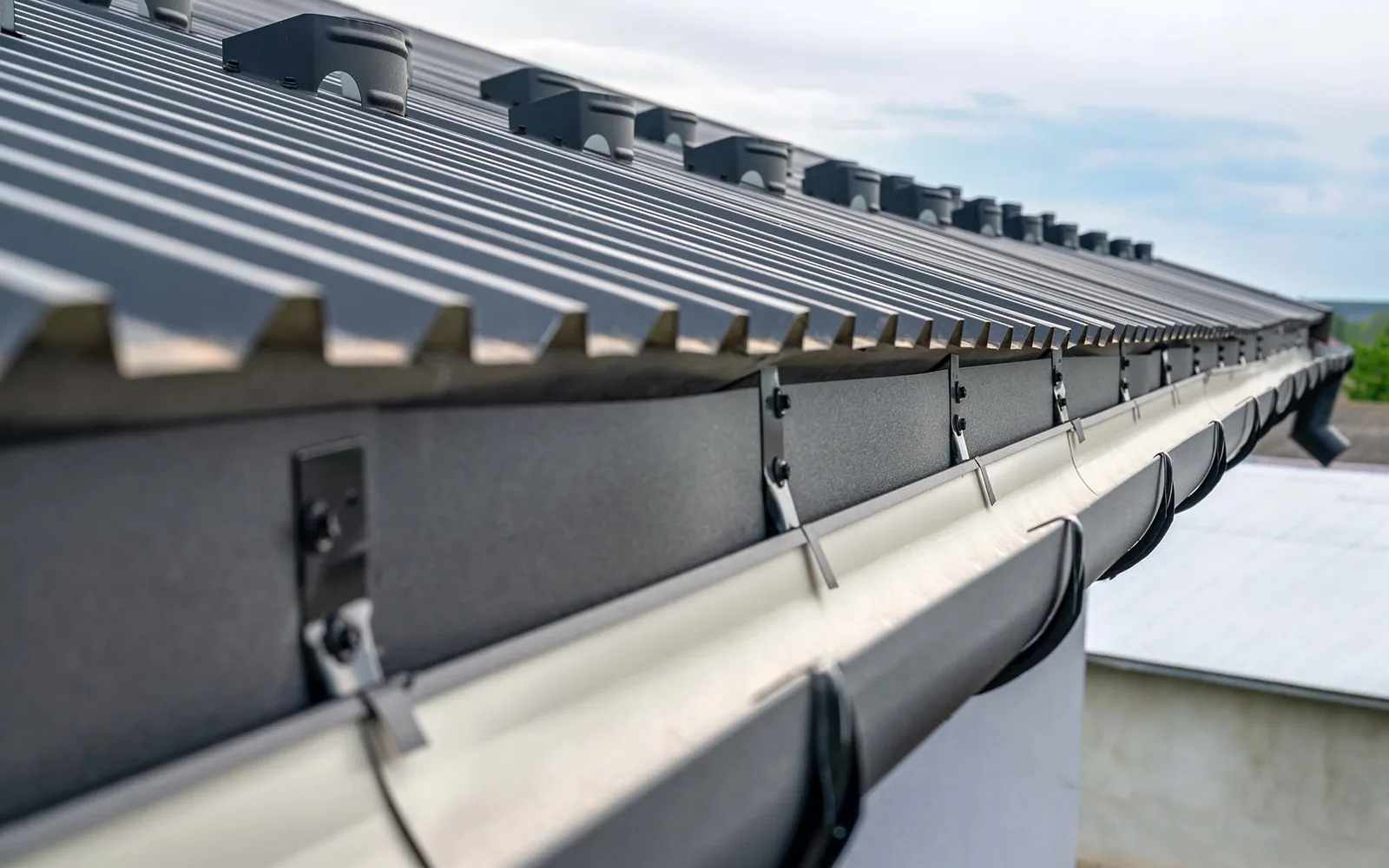
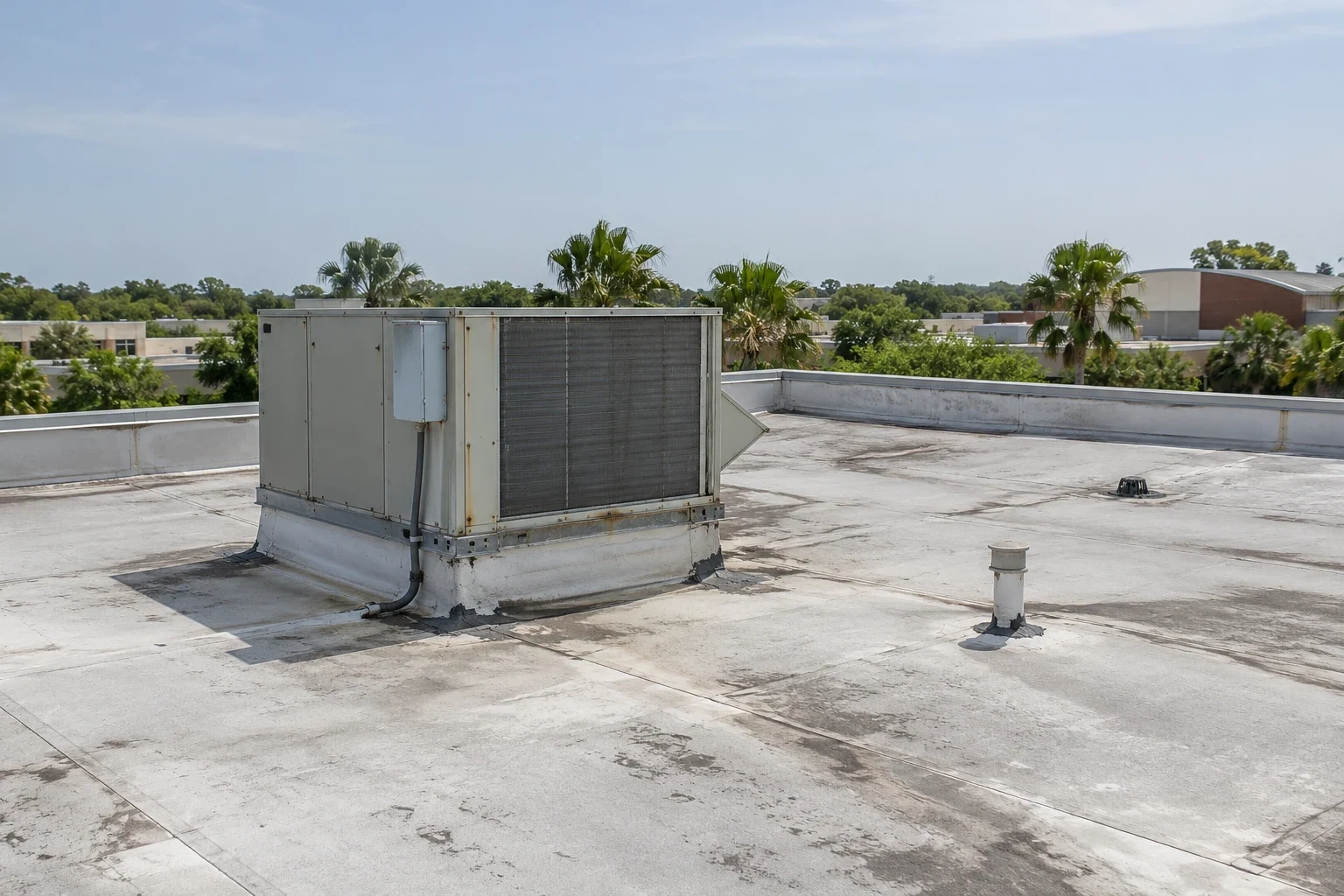
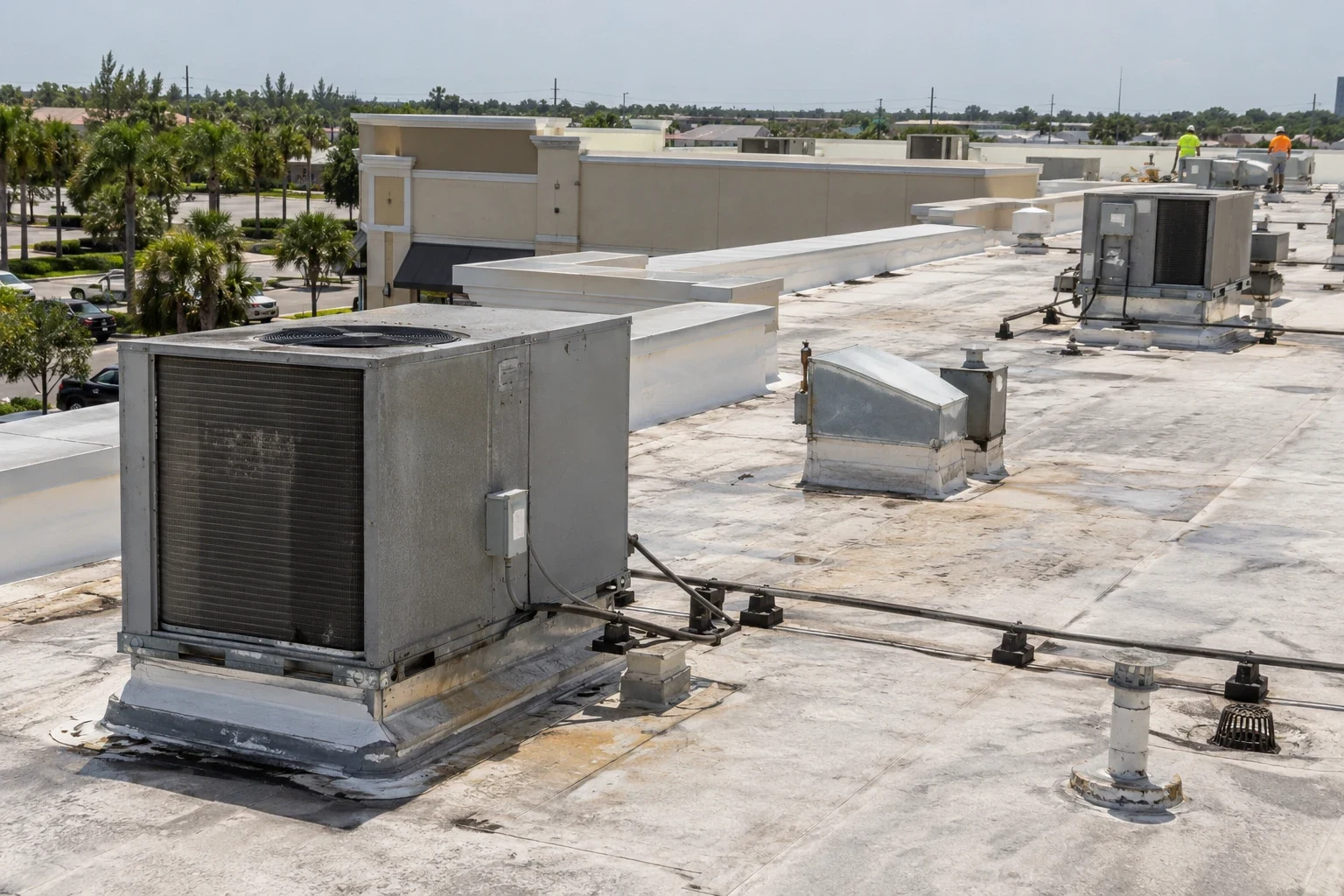
Public facilities can have internal drains, scuppers, gutters, and overflow routes hidden from ground view. We check accessible strainers, bowls, discharge, and staining near parapets or mechanical curbs. If flow remains restricted after the roof opening clears, we check the drain line below. Where ponding remains, the slope, insulation, and deck may need review before a coating or recover is considered.
South Florida's wet season concentrates drainage demand into several months. We schedule outlet checks ahead of that period and list each bowl, scupper, and overflow path reached. Facilities can plan drain inspections before those recurring storms, then document which outlets were reached and what remains. A drain and overflow inspection creates a component record; scheduled maintenance can revisit unresolved items. The public contact also confirms which rooftops, hatches, or areas require escorts, so inspection can be completed without interrupting public counters or operations.
Occupied phasing: Keep public entrances and routes available
Material staging, lift placement, and noise can affect entrances, parking, sidewalks, or emergency access. Before removal starts, we identify the work zone and the public route beneath it, then agree on barriers and daily dry-in. If a test exposes additional wet insulation or deck damage, work stops at the confirmed limit until the authorized contact reviews the change. Each shift record states which portion is open, covered, or complete.
A phased project can move between buildings or roof sections if weather and assembly allow. The plan identifies deliveries, access restrictions, noisy tasks, and when a public area returns to use. A phased reroof sequence can help facilities plan around meetings or service hours. For properties in Sunrise, send the roof drawing, access rules, department schedule, and prior repair record so the field scope reflects the actual facility.
Capital path: Compare repair with restoration or replacement
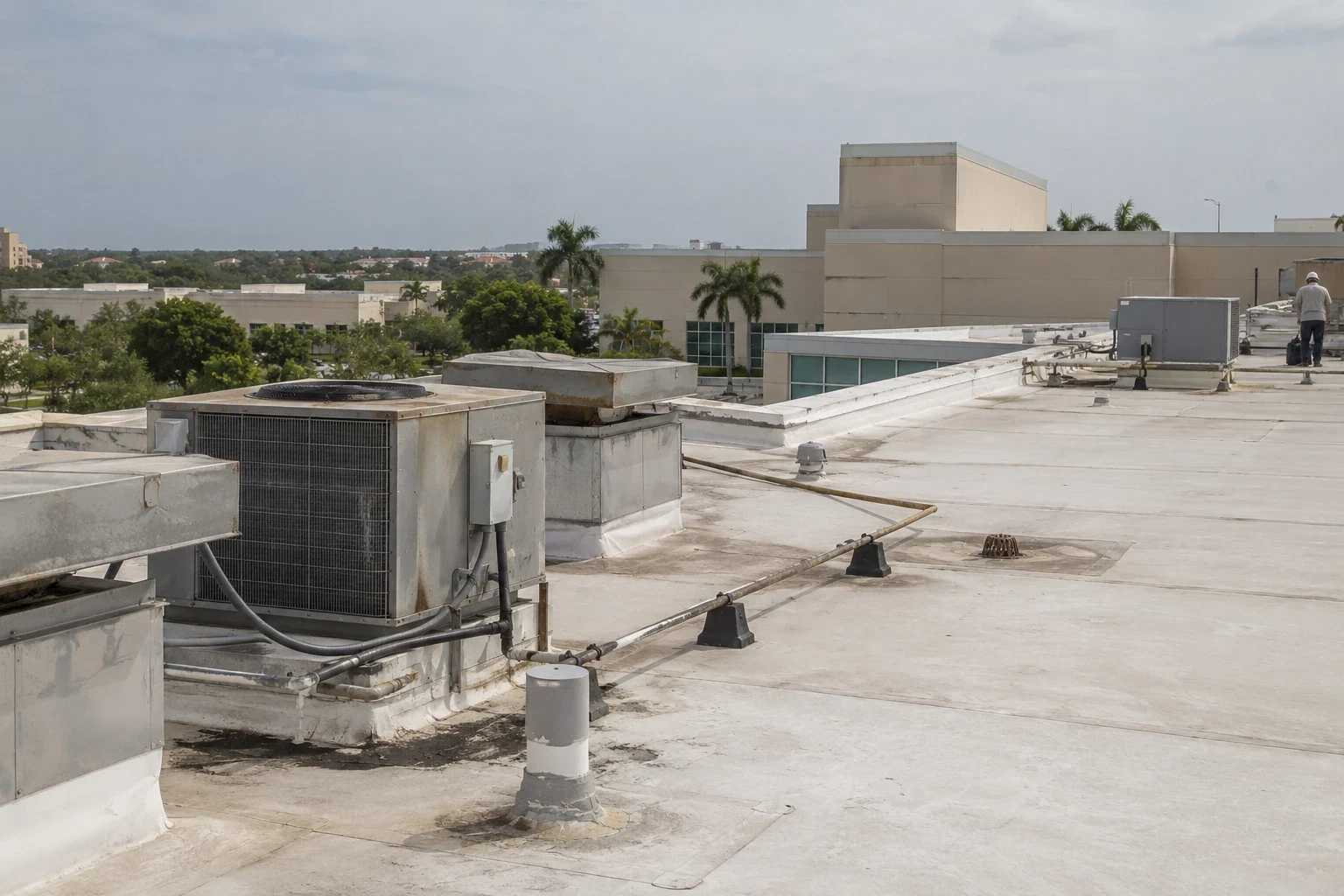
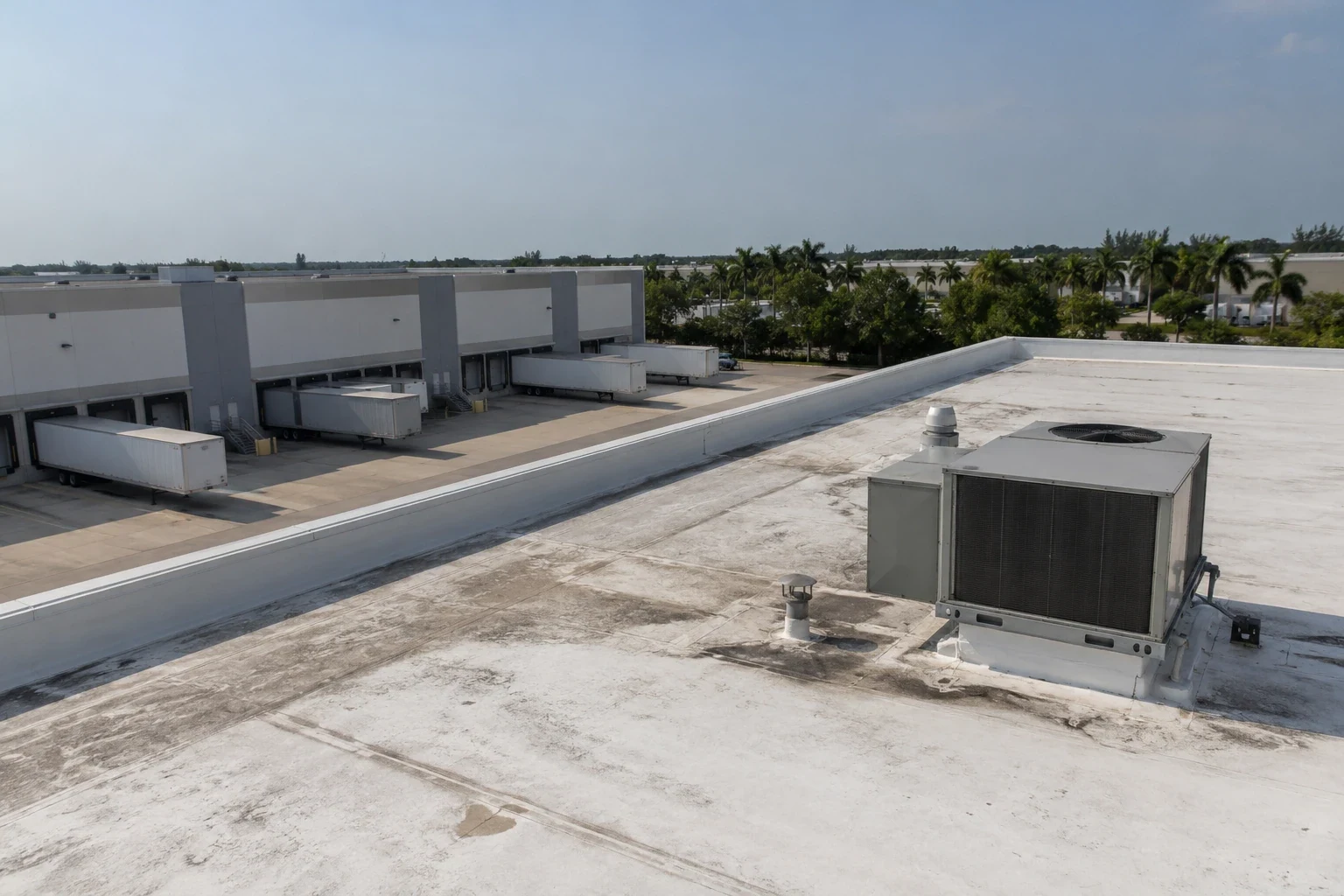
A localized flashing failure, seam split, or puncture may call for a focused repair. Repeated leaks, widespread wet insulation, weak attachment, or deck deterioration can support a broader project. We identify the boundary of confirmed damage and list the sections that were not tested. That makes the alternatives reviewable: local repair, coating, recover, or replacement with known assumptions for each choice.
Schedule and cost depend on access, removal depth, equipment, disposal, weather windows, and public protection. We identify those drivers by roof zone and record any additional test that could alter quantity. Public capital schedules often require coordination between facilities, procurement, design, and site operations; our report provides the roof evidence and work sequence those groups need to review. The owner can then authorize a defined task instead of an open-ended roof allowance. If bid documents separate base work from unit-price repairs, our findings identify the measured area and the condition that would trigger each additional quantity. A sequence can also separate urgent leak control from the later design and procurement period. That lets the agency protect an occupied room promptly without treating temporary cover as a completed capital repair. We can also document the date of the follow-up inspection and whether the repair remained dry after the next rain, keeping response and verification in the same roof-zone record.
Frequently Asked Questions
What should an agency request in a roof proposal?
Ask for the building and roof-zone map, materials confirmed, photographs, test results, quantities, inaccessible areas, and separately identified allowances. That makes proposals comparable against the same evidence.
How do you handle unknown conditions in a public bid?
We identify where testing stopped and which concealed areas remain uncertain. If a test changes the quantity, we document the result and review the revised scope with the authorized contact.
Does the 2023 Florida Building Code apply to Sunrise projects?
The eighth edition took effect statewide. The authority having jurisdiction and project design team confirm the applicable requirements for the specific repair or replacement.
Can an agency roof remain accessible during repairs?
Often work can be phased by section or building, subject to access, weather, noise, and the size of the opening. We agree on public routes and a watertight closeout each day.
What records help after storm damage?
Keep dated photographs, roof-zone locations, temporary protection, observed damage, test results, repairs, and follow-up items. We separate visible roof effects from conditions that require further testing.
Make the facility scope reviewable
Share roof drawings, asset identifiers, procurement timing, access controls, leak records, and department hours. We will inspect the building and document quantities, assumptions, and next steps.
Call 555-555-5555 or request a roof assessment.