
Commercial Roofing in Lauderdale Lakes Town Center, Lauderdale Lakes, FL
Lauderdale Lakes Town Center, Lauderdale Lakes
Lauderdale Lakes Town Center is a redevelopment district planned to transform an aging suburban strip-mall area into a mixed-use community center. Roof work in that setting has to keep the building dry while public-facing entrances, parking, and tenant operations remain usable. We start by identifying the roof assembly, the active leak or maintenance question, and the path from staging to the work zone. The district’s street-facing uses and integrated parking concept make access planning part of the roof scope, while field inspection determines what the membrane and drainage plane need. A commercial roof inspection establishes those conditions before repair or replacement is priced.
Service Areas in Sunrise, FL
Roof inspection and repair for Lauderdale Lakes Town Center, with work planned around mixed-use access, street-facing businesses, drainage, and occupied space.
Access and occupancy: Protect the public route
A storefront repair can be technically small and still affect the entrance, customer path, or parking area below. We confirm the roof hatch or ladder point, material route, lift location, tenant hours, and any entrance that needs temporary protection. Town Center’s plan places street-facing activity alongside parking behind buildings or on the street, so the work sequence should not assume every delivery or lift can use the same side.
Lauderdale Lakes also includes a commercial-industrial park and State Road 7 business corridor. Town Center’s retail and mixed-use setting calls for a different access and staging plan than a warehouse or industrial project. When a portfolio also includes Sunrise properties, separate access records keep the Town Center roof map distinct from work in Sunrise. For active customers, a phased reroof sequence can separate roof zones and pedestrian routes.
Water entry: Trace the wet boundary
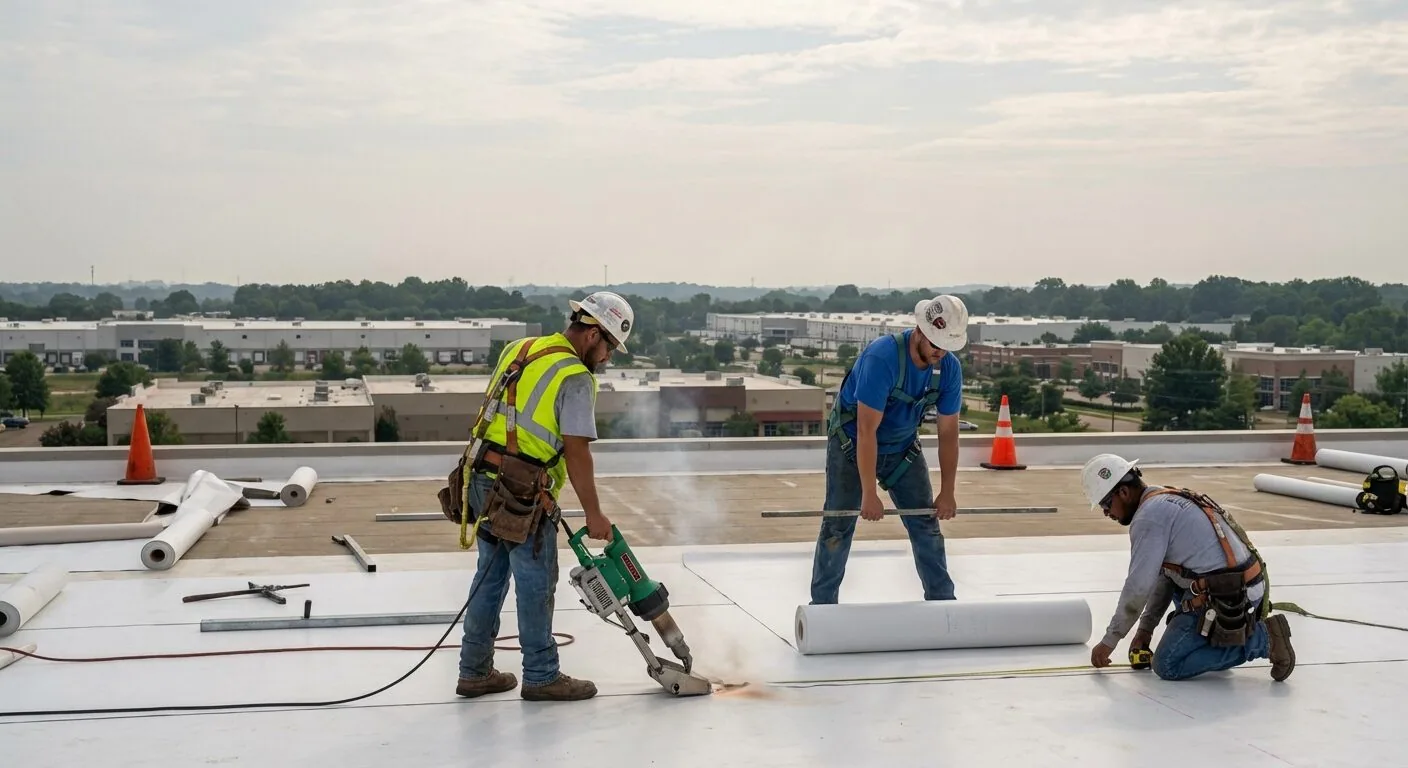
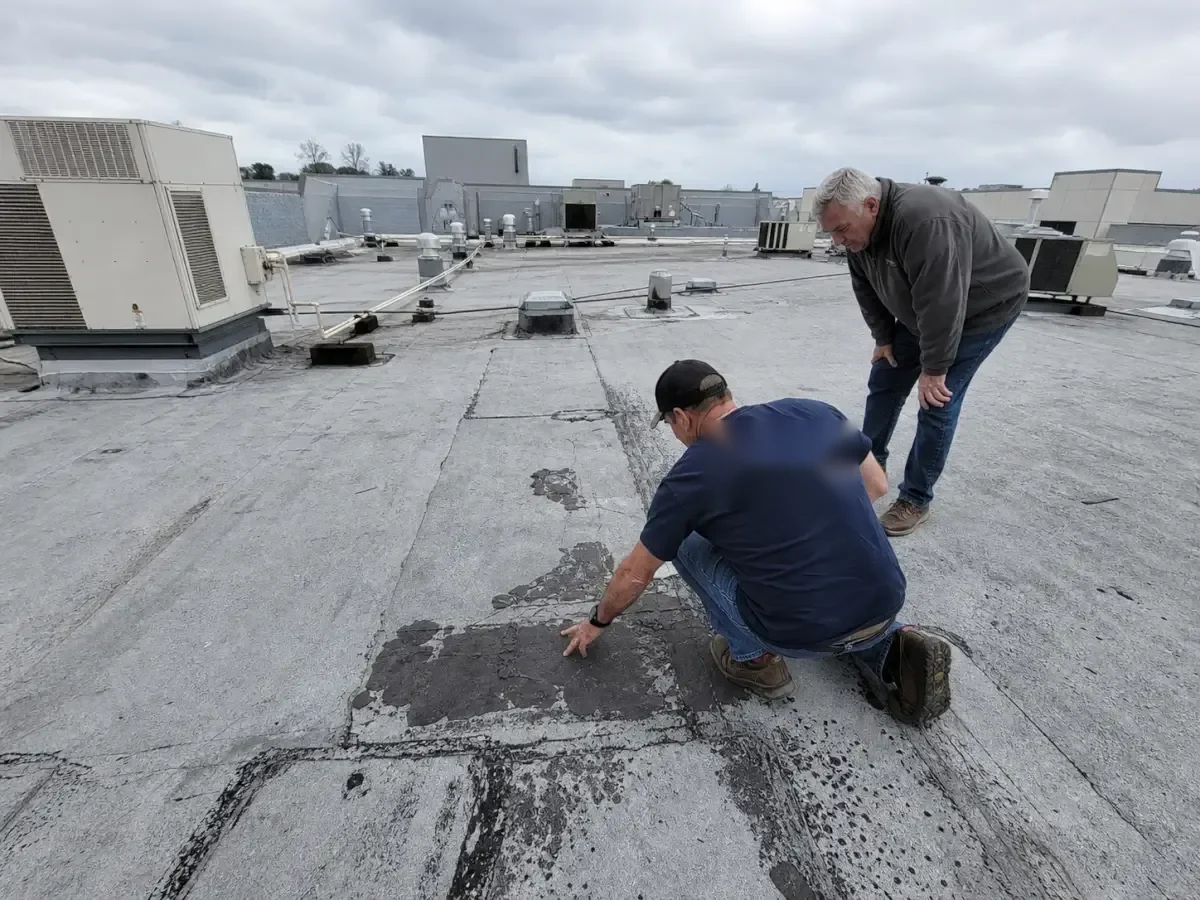
At a mixed-use property, an interior leak can show up in a retail suite, a shared corridor, or a room used by building staff. We record the time, location, and activity below, then map the likely roof zone rather than treating the ceiling mark as the entry point. The field walk checks laps, penetrations, curbs, wall transitions, edge metal, drains, and previous patches. Water can travel through insulation or along a deck before becoming visible indoors, so a repair scope follows the observed path and the evidence from any opening.
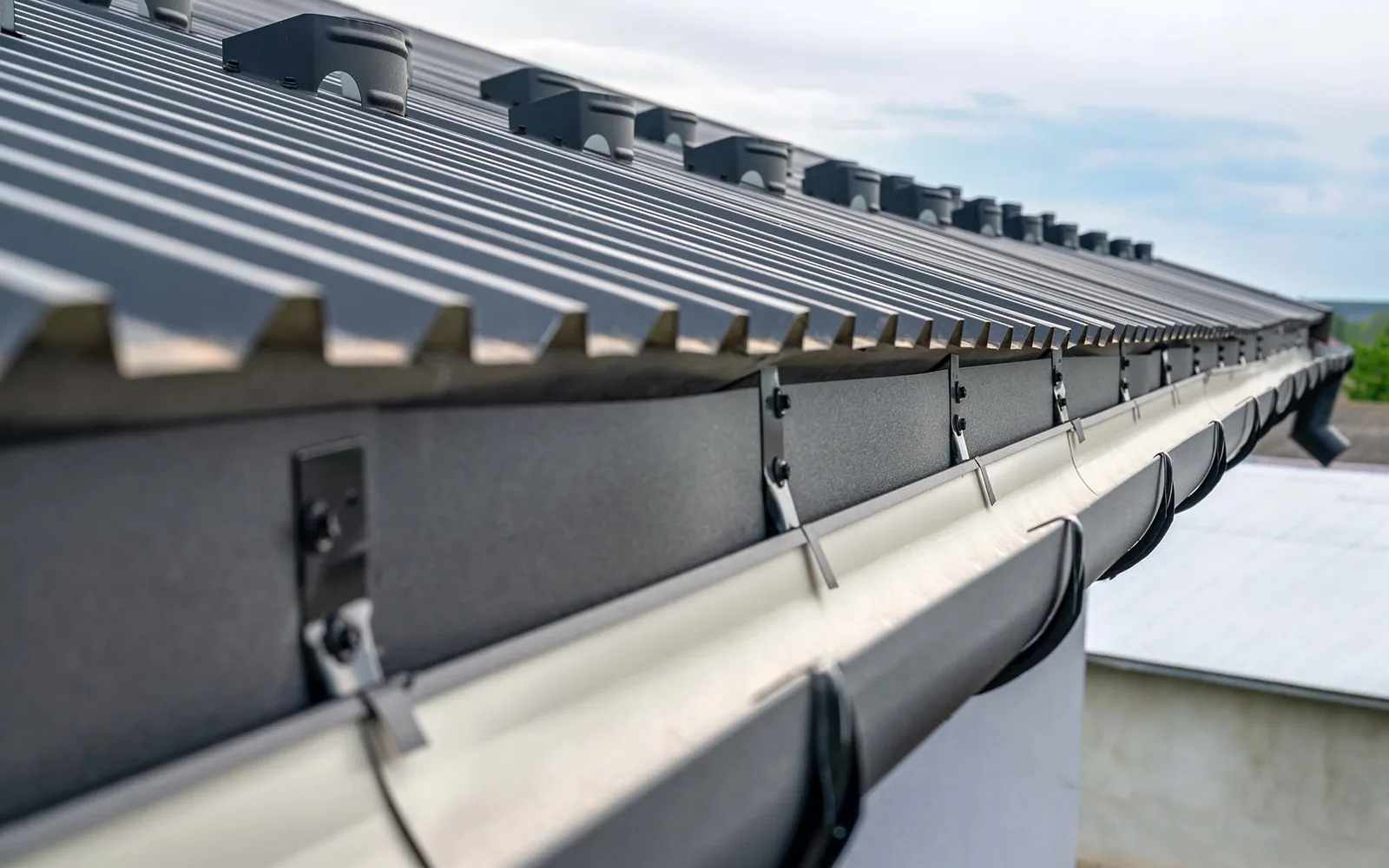
South Florida’s humid climate and concentrated wet season place repeated demand on drainage and flashing. South Florida severe-weather activity peaks from May through August, bringing lightning, damaging winds, flooding, hail, and occasional tornadoes. Before that period, we check Town Center roof low points, outlet bowls, overflow routes, and membrane laps so the drainage path is ready for heavy rain. If debris or a blocked bowl is involved, a drain and scupper review can separate an outlet problem from a seam failure. If moisture may extend beneath the sheet, an infrared moisture survey or test cut can help define the wet area before removal expands.
Repair boundary: Stop at verified material
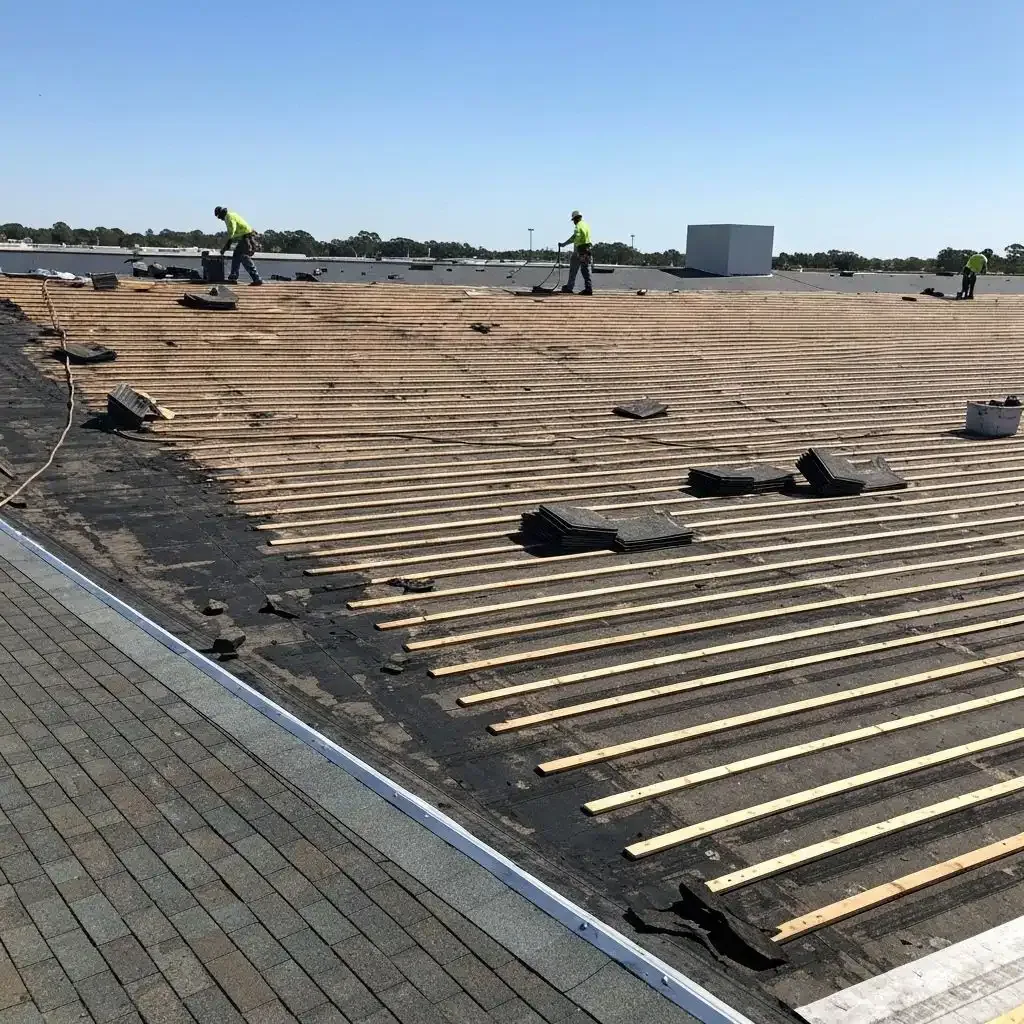
A focused repair is appropriate when the defect is limited and the adjacent membrane, insulation, and substrate can accept the work. We expose the failed lap or flashing, check the supporting surface, and follow the moisture evidence into nearby roof details. When a test cut finds wet insulation, the repair boundary should account for the saturated layer and its connection to the entry path, not just the visible ceiling stain. Photographs show what was removed and where new material ties into the existing assembly. The owner reviews additional exposure before the crew extends beyond the approved work area.
Repeated water entry, broad wet insulation, loose attachment, or a damaged deck can call for more than another patch. A commercial repair assessment can document isolated defects; a recover review checks moisture, deck capacity, roof height, and drainage before existing layers are retained. If a larger scope is needed, we compare a new membrane, insulation, cover board, edge details, and equipment transitions as a single assembly. We map each building separately and keep its roof-zone findings and repair decision tied to that structure.
Weather and materials: Close the roof each shift
Heat, humidity, intense sun, thunderstorms, and hurricane exposure put different stresses on a roof assembly. A repair detail can open during a period of high rain risk, so the crew defines the day’s removal area and the point where the roof will be watertight before leaving. We protect the drainage plane from loose debris, keep temporary seals compatible with the planned permanent work, and check that runoff still reaches an intended outlet. The 2023 Florida Building Code applies statewide; a project’s permit and design requirements are confirmed for the actual scope.
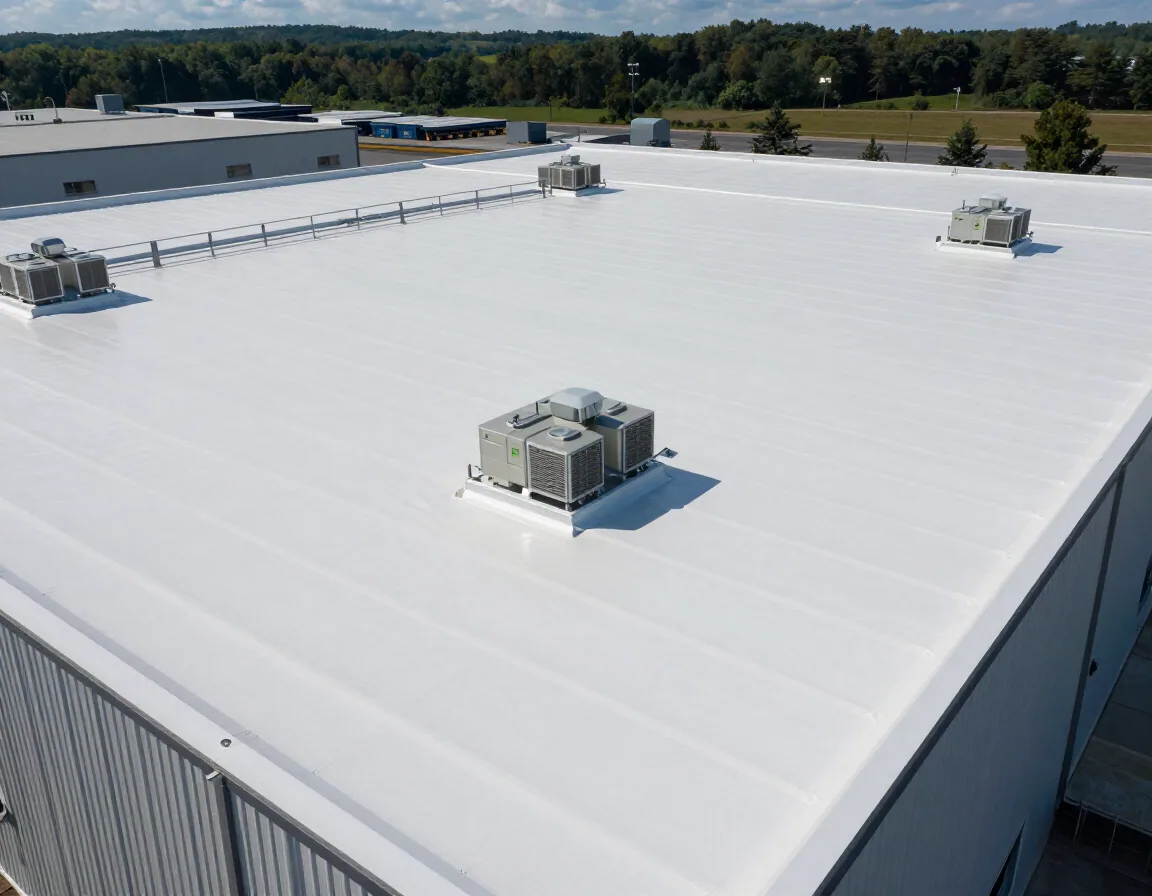
Material choice depends on the existing membrane, roof slope, attachment, and transitions, not simply on a district label. A coating may restore a suitable surface, while saturated insulation or unstable attachment may require removal and replacement. On a retail property, deliveries, customer access, and weather closure can shape timing as much as the square footage opened. For a TPO assembly or modified-bitumen roof, we inspect seams, layers, and edge details before choosing material. The estimate identifies what must be tested before final material quantities are set.
Record and next step: Keep each building legible
A useful closeout records the building, roof zone, observed defect, repair performed, materials used, photographs, and any area left inaccessible. At a district intended to support retail and street-facing activity, the maintenance record should also show the access path and any temporary customer or tenant protection used. That information helps the next visit start from a known condition instead of repeating the same search. A roof condition report can separate completed repairs from open questions and recommend which zones need another review after weather exposure.
Owners with several Lauderdale Lakes properties can keep Town Center notes separate from a citywide Lauderdale Lakes roof record. If the district later adds mixed-use development, a new building still needs its own membrane, drain, and equipment map. Share available roof drawings, repair history, leak locations, access rules, tenant hours, and any scheduled façade or site work before the inspection. We will use those details to test a defined roof question, protect the space below, and return a written scope that identifies both observed conditions and items needing confirmation.
Frequently Asked Questions
Can roofing work proceed while Town Center businesses remain open?
Yes, when access, protection below, and daily closure points are agreed before removal. We divide the roof into work zones, coordinate deliveries and lift placement with the site contact, and maintain the entrances that need to stay available. If noise, debris, or a temporary opening affects a tenant, the sequence identifies the time and protection required.
How do you tell whether a storefront leak needs a patch or a larger repair?
The exposed assembly decides the boundary. We compare the interior report with seams, penetrations, drains, and wall transitions, then open a test area if concealed moisture may change the scope. Sound adjacent material can support a localized repair; wet insulation, loose attachment, or damaged deck can require a wider correction.
Will roof drainage be checked during a leak inspection?
Yes. We inspect drain bowls, scuppers, overflow routes, slope, and marks showing where water has remained. A clear outlet does not rule out a membrane opening, so we compare drainage evidence with the wet path and roof details before selecting a repair.
What should the property manager provide before the site visit?
Send roof plans and prior repair records if available, plus the affected suite or room, when the water appeared, building hours, access instructions, and any planned work near the roof. That lets us map a starting zone and protect the correct tenant area.
When does a recover stop being a reasonable option?
A recover needs a dry, stable assembly with enough deck capacity and workable drainage and transition heights. We verify those conditions through records and field testing. Broad wet insulation, unstable attachment, or a compromised deck can make removal and replacement the more supportable path.
Set a defined roof inspection
Share the roof plan, leak locations, repair history, access route, tenant hours, and any active site work. We will map the Town Center roof zones and report what can be repaired, what needs testing, and what should remain protected.
Call 555-555-5555 or request a roof assessment.