
Solar-Ready Commercial Roofing in Sunrise, FL
Solar-Ready Commercial Roofing
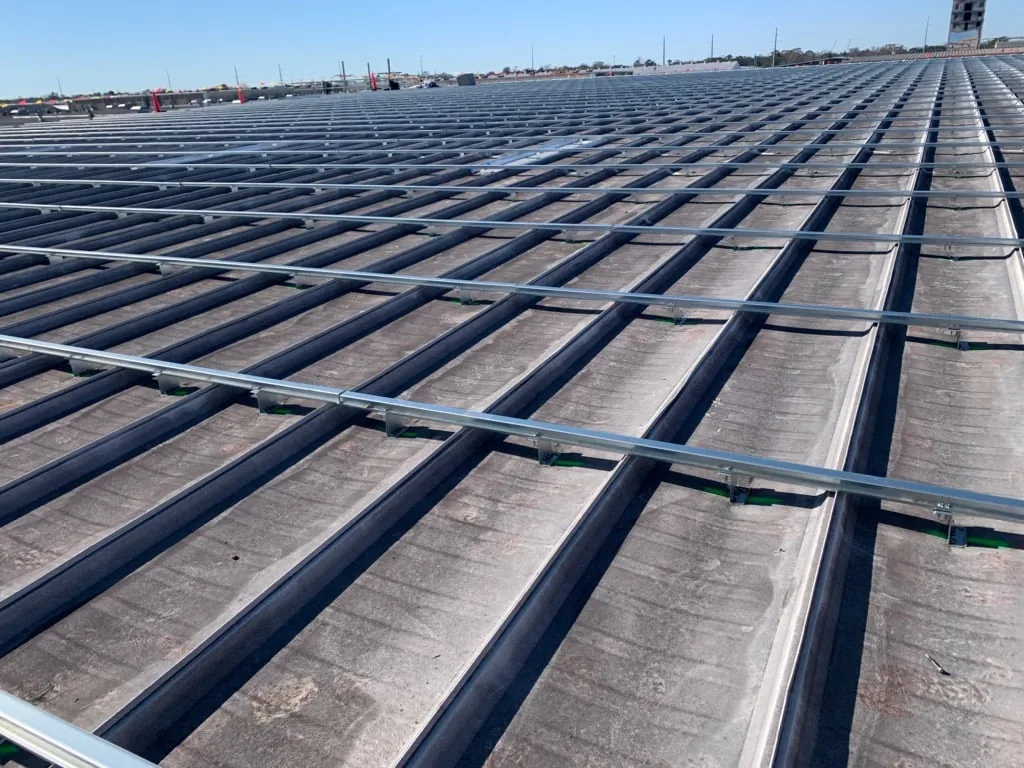
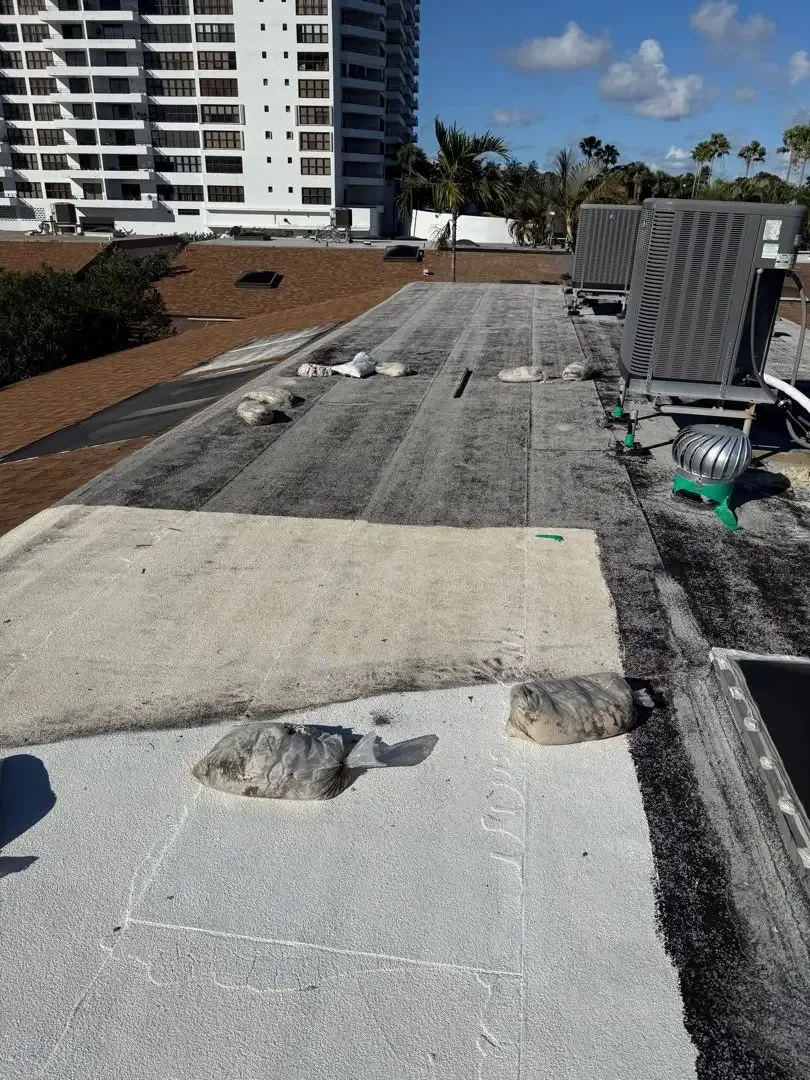
Solar equipment adds weight, penetrations, wiring routes, and service traffic to a roof that must still shed water and remain repairable. In Sunrise, FL, we assess the existing membrane, deck, drainage, edges, and access before an owner commits to array placement or a reroof schedule. A roof that leaks today should not be covered with new equipment; a roof with limited remaining service life may need replacement planning first. Sunrise Commerce Park includes manufacturing, distribution, office, and multi-tenant buildings, while Sawgrass Technology Park includes multiple office and technology buildings. The actual roof and proposed array layout must be reviewed at each property. Our roof inspection maps current conditions; a recover evaluation can identify whether the existing assembly is a viable base. We coordinate roofing questions with the solar designer and the professional responsible for structural review. The roof scope preserves waterproofing and future service access.
Commercial Roofing Services in Sunrise, FL
Prepare a commercial roof for a future or existing solar array in Sunrise, FL with condition, drainage, attachment, and service-access planning.
Roof life: Schedule solar and roofing together
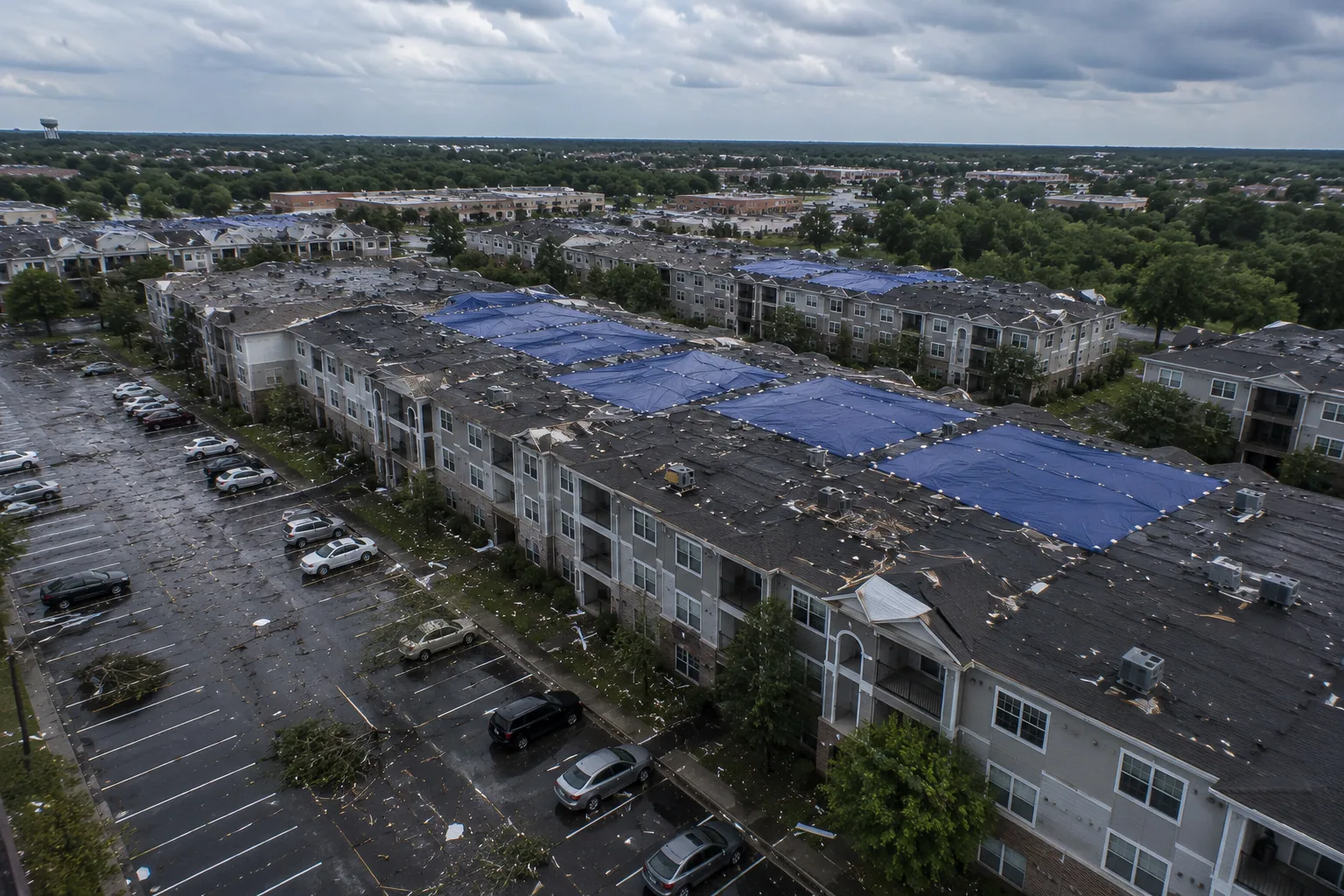
Solar panels can make later membrane repairs slower and more expensive because access beneath and between rows becomes limited. Before installation, we review repair history, seam condition, flashing, drains, moisture findings, and the remaining service life of the roof system. If a replacement is likely during the array's planned operating period, complete that work first or coordinate a written removal-and-reset plan. The owner should understand who protects the roof, who responds to a leak, and how equipment can be moved for future work.
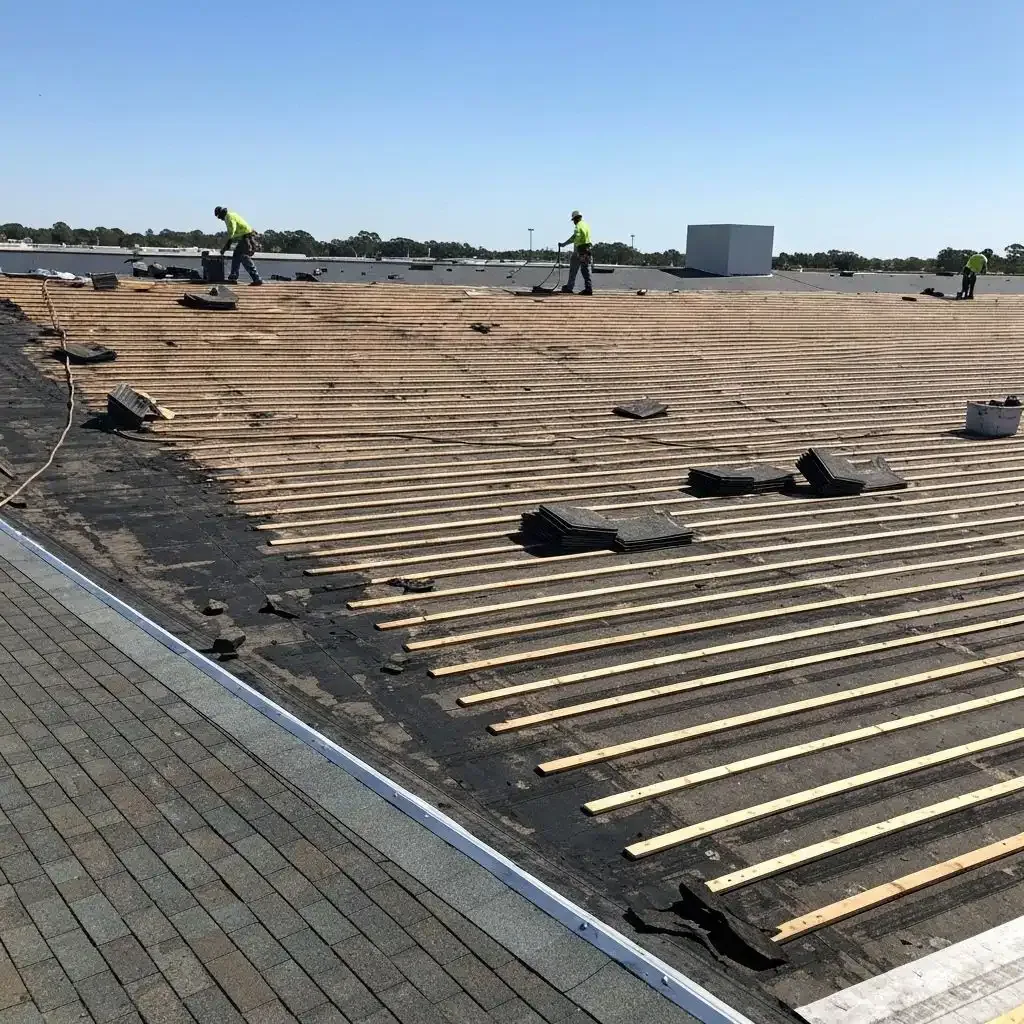
We select a coating or recover only when inspection supports the assembly. Compatibility, attachment, wet areas, and weak zones must be checked before solar work starts. A replacement assessment can compare the roof timeline with the project sequence, while a condition report can preserve the pre-installation baseline. If installation proceeds over a sound roof, the documents should identify existing conditions so a later leak investigation can distinguish old defects from new work.
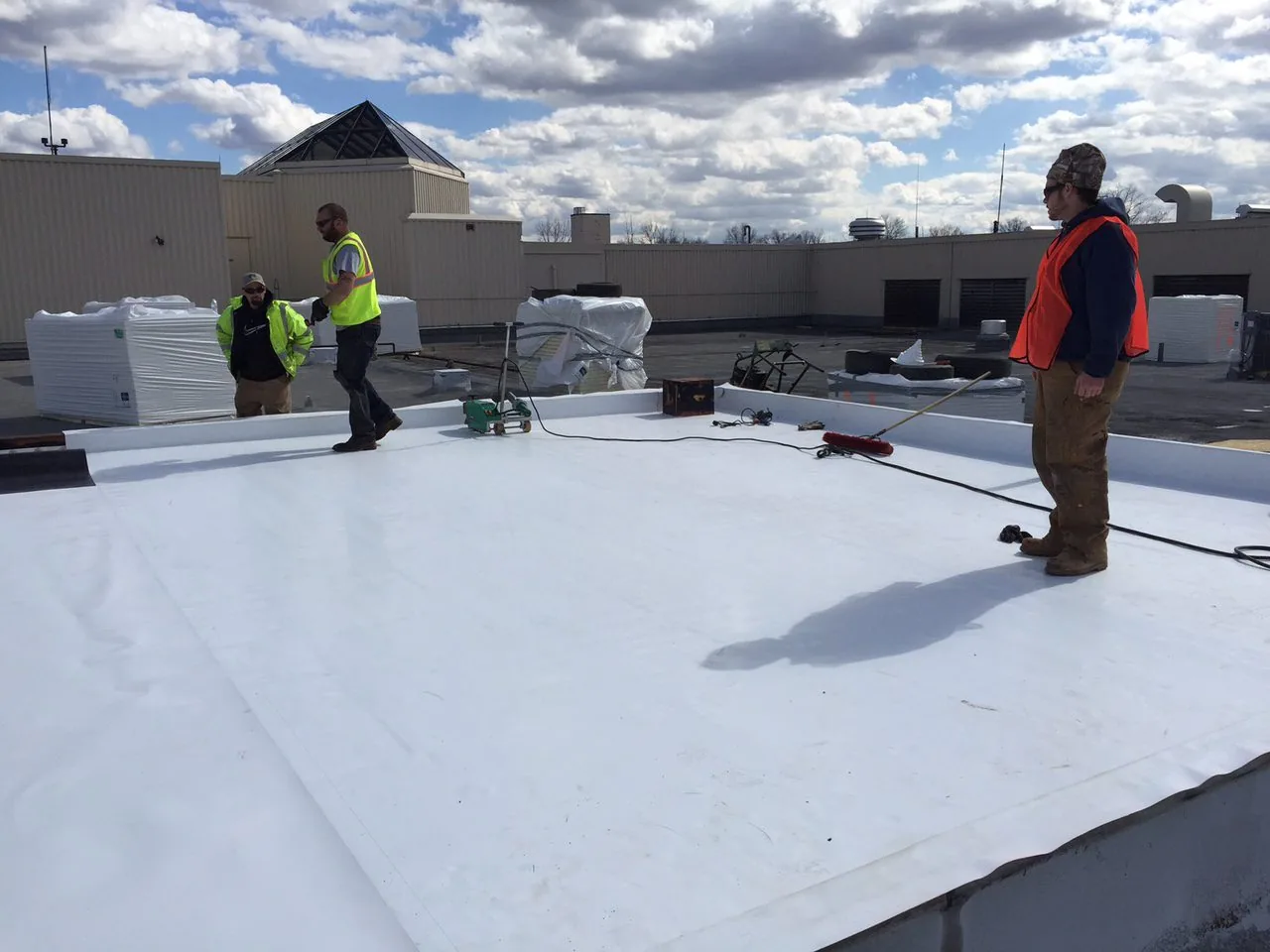
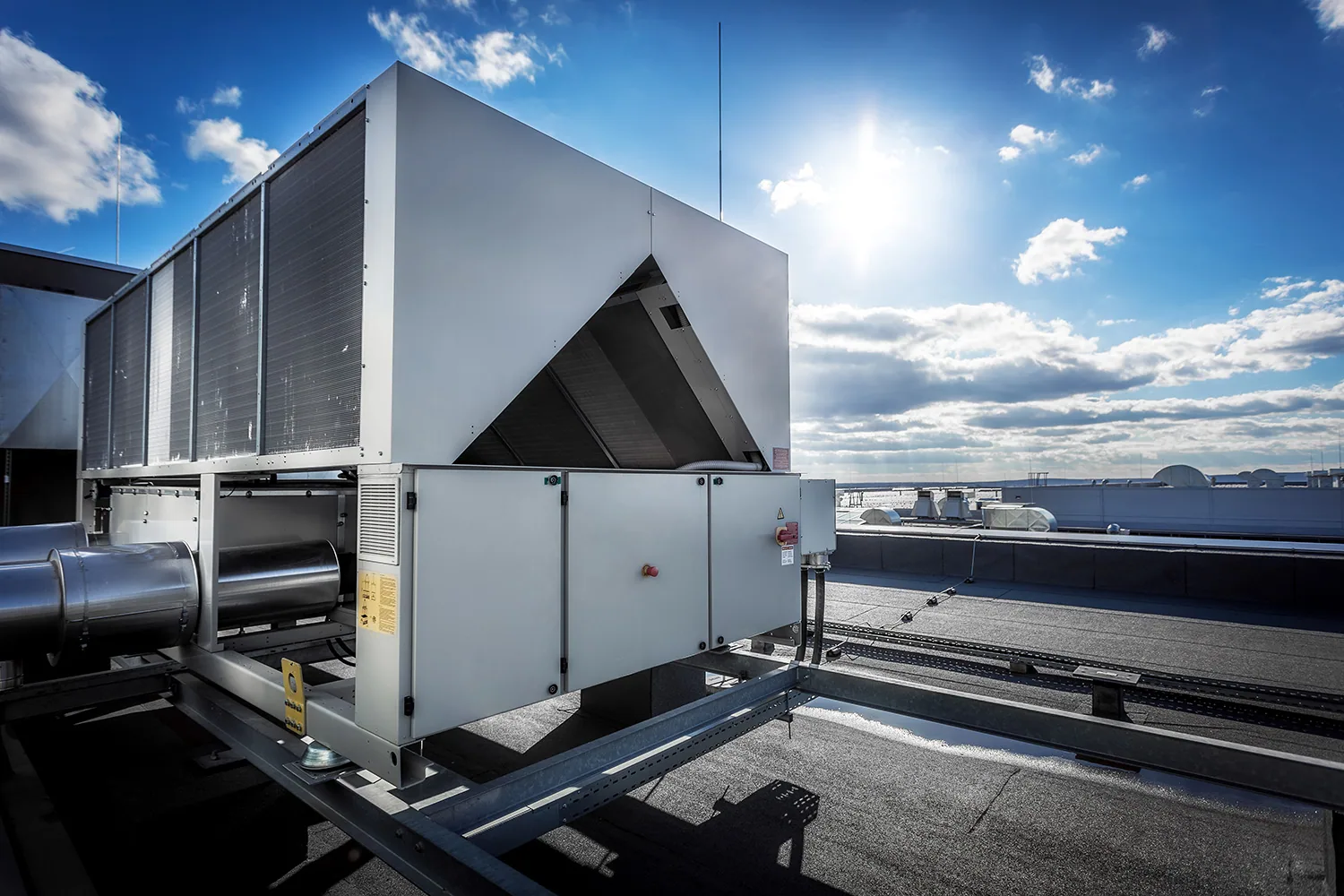
Load and attachment: Assign the right design review
Array weight, wind forces, attachment method, equipment locations, and the condition of the roof deck all affect project design. The solar contractor and qualified structural professional should establish the system's loads and connection details. Roofing review verifies membrane compatibility, flashing transitions, and whether proposed fasteners or ballast affect the waterproofing. A structural engineer reviews deck and attachment capacity for the proposed array; we document the roof assembly, condition, and penetrations for that design review.
The roof plan should show panel fields, access lanes, service clearances, pathways for wiring, and locations of disconnects or inverters. Any penetration needs a detail that can be inspected and repaired without relying on exposed caulk alone. If equipment bases or supports must be added, curb and support service can coordinate the roof interface. For older assemblies, insulation and cover-board planning may be needed to address substrate, attachment, and final roof height before array layout is fixed.
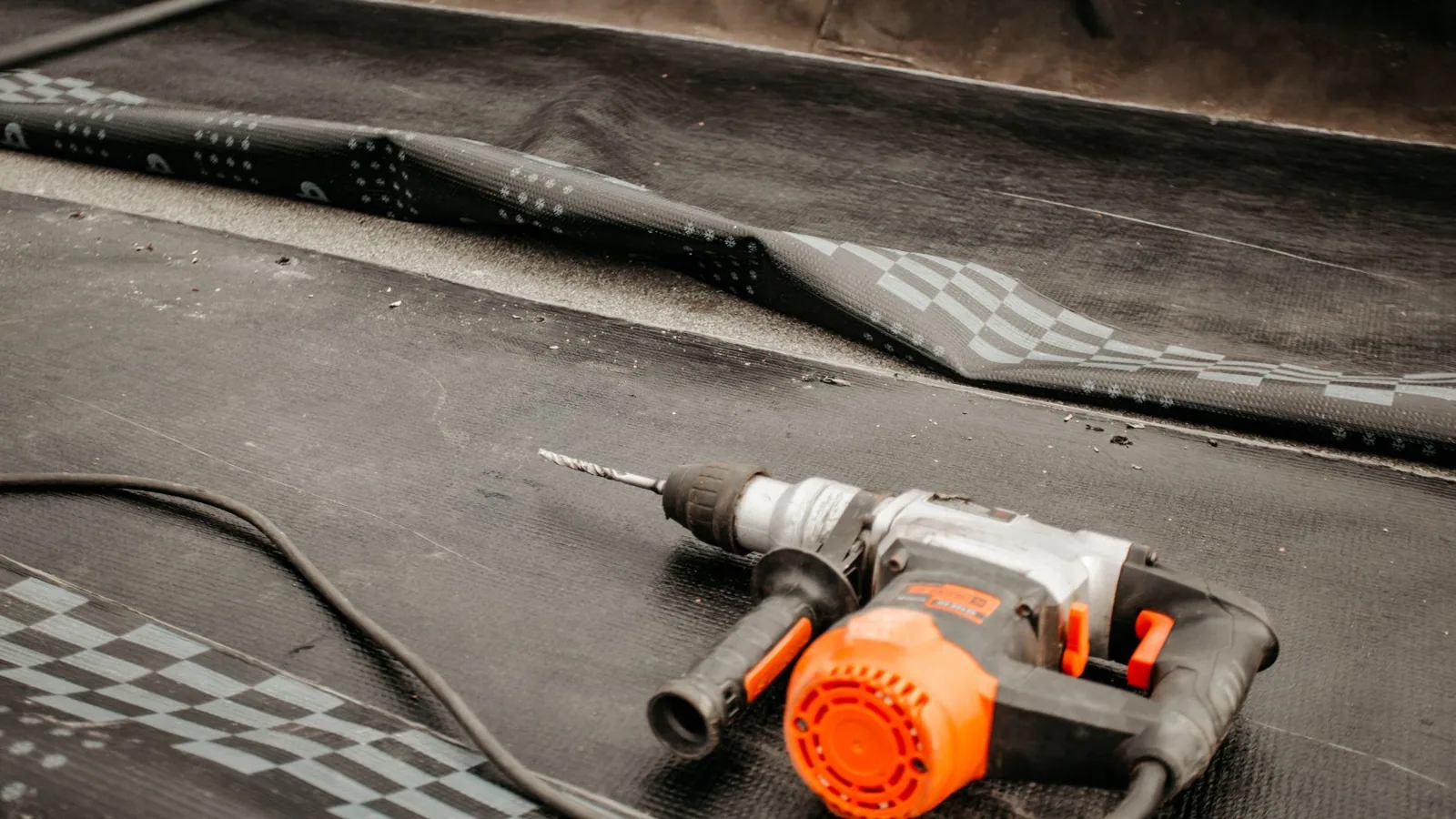
Drainage: Preserve water paths under the array
Panel rows, ballast blocks, wiring trays, and walk pads can collect debris or obstruct access to roof outlets. We review the drainage plane and mark primary drains, scuppers, overflows, low points, and any route that a solar component could interrupt. The design should leave room to clean strainers, inspect flashing, and move water to the intended discharge without routing runoff against a curb or parapet. Where an existing low area holds water, correct or evaluate it before equipment limits future access.
Fort Lauderdale averages 60.95 inches of rain each year, including 37.49 inches during South Florida’s rainy season. In Sunrise, array spacing and walk paths must leave drains and overflows reachable through the wet season. A drainage assessment can verify outlet access and condition before panels are set. The installer should also provide a roof layout that shows panel boundaries and equipment clearances, not only an electrical diagram. We record the roof conditions that remain reachable after installation.
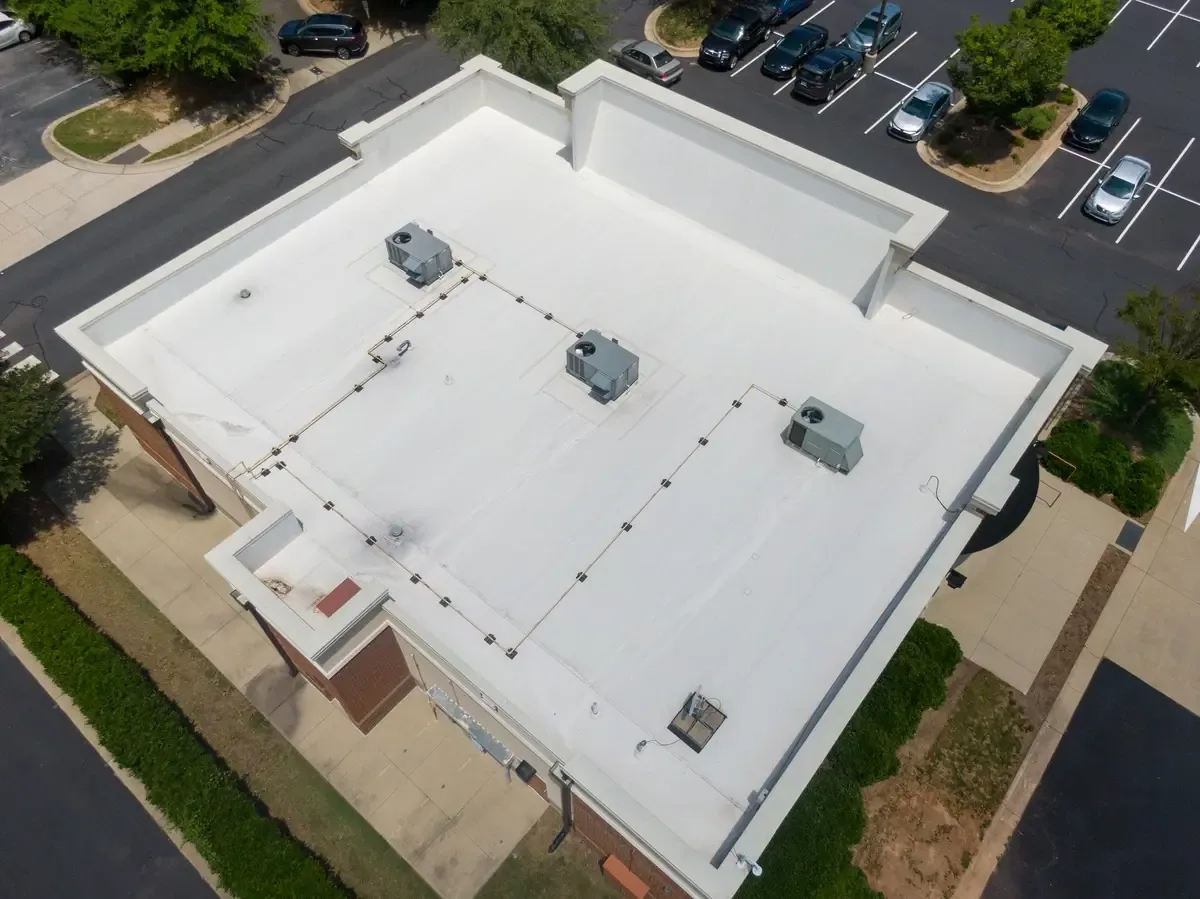
Weather and access: Make the roof serviceable
South Florida's tropical cyclone peak runs from August through October. Before array installation, the project team should identify how panels, rails, wiring, and loose materials will be secured when severe weather threatens. The roof details still need to be inspected after installation, and a response plan should show where crews may walk and which areas require fall protection or an escort. A narrow walkway between equipment rows can become a maintenance bottleneck if it is not included in the design.
Sawgrass Technology Park is a multi-building office and technology campus; Sunrise Commerce Park has manufacturing and distribution operations as well as office and multi-tenant properties. Access schedules and building contacts can differ across a portfolio. A roof asset record can retain array drawings, roof zones, warranties, and maintenance history for each structure. Where work must proceed in phases, an installation plan should identify the area closed each day, weather protection, and the person responsible for accepting the roof before the solar crew follows.
Coordination: Resolve permits, warranties, and scope
The project team should confirm the applicable building-code, electrical, fire-access, and structural requirements before installation. For an array alteration, the project team reviews Florida’s 2023 Building Code and the applicable Broward County energy-code and High-Velocity Hurricane Zone provisions with the responsible designers and permitting authorities. We define the membrane, flashing, and perimeter work, then coordinate those roof details with the project’s electrical and structural design.
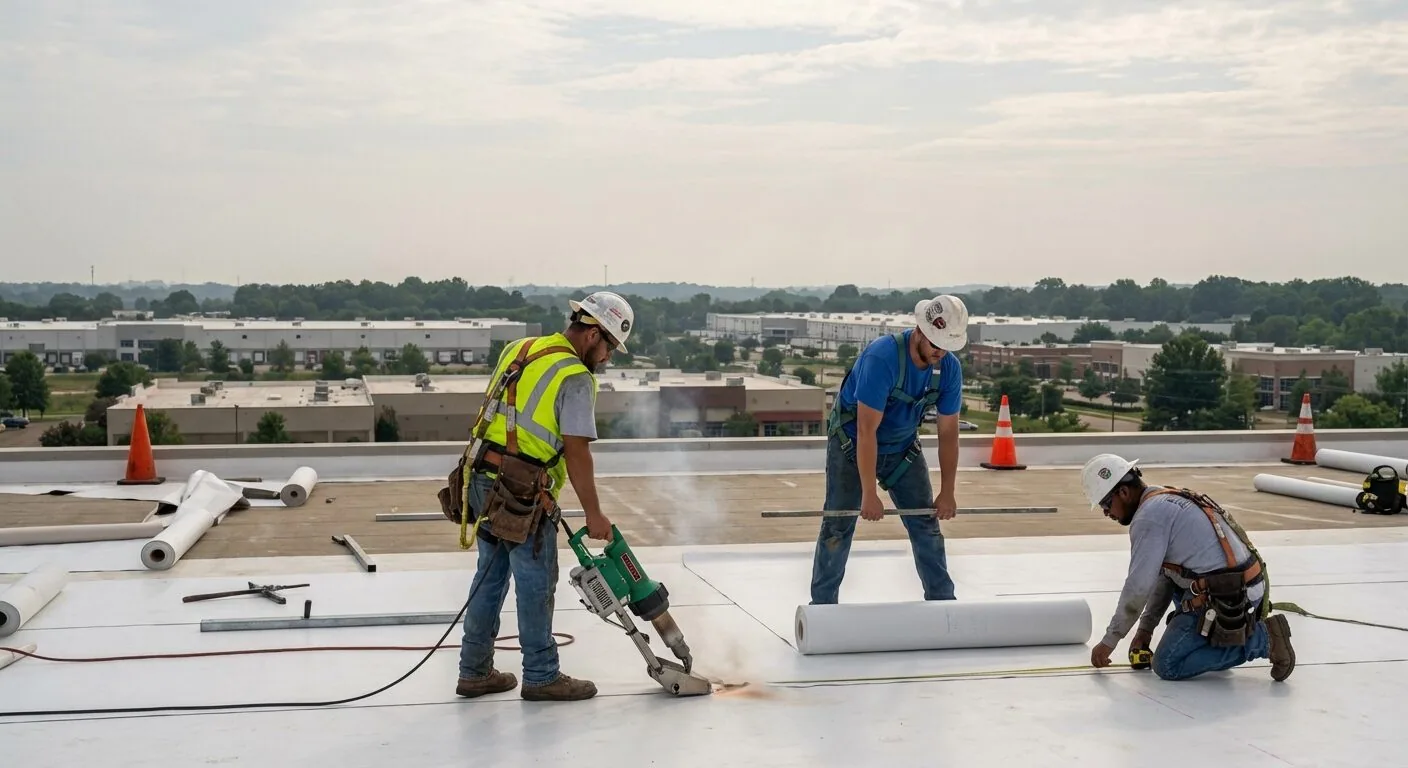
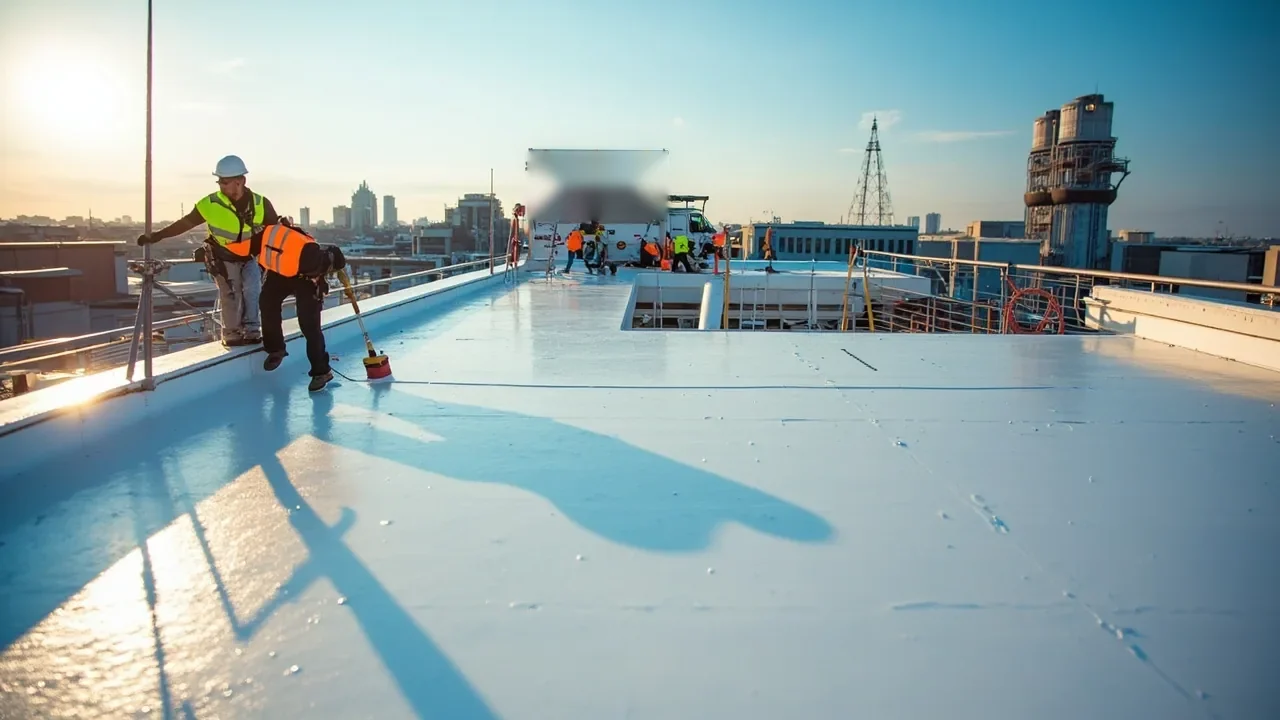
Warranty responsibilities also need to be clear. The roof manufacturer, solar supplier, installer, property manager, and roofing contractor may each control a different part of the system. Before drilling, bonding, or placing ballast, confirm written approval for the method and document the approved locations. A TPO system review can confirm membrane-specific transition considerations, and coating restoration service can assess a separate existing surface if solar is not part of the approved scope. For a Sunrise Commerce Park project, identify the structure, access contact, array sequence, and records owner before work begins.
Closeout: Keep a usable roof record after installation
Before panels are energized, the owner should receive final array drawings, attachment locations, penetrations, walk paths, drain access, and roofing work completed. Photograph membrane transitions and repaired areas before equipment obscures them. Record the roof manufacturer, membrane type, installation date, and any approved attachment method with the building's maintenance file. If part of the roof could not be inspected after installation, mark that area clearly for the next service visit.
After installation, we check accessible roof interfaces against the approved plan and list roofing items separately from electrical work. A Sunrise roof review starts with the current building plan and access rules. Send roof records, leak history, panel layout, attachment drawings, structural review status, and maintenance responsibilities so the roof and solar scope can be coordinated before installation.
Frequently Asked Questions
Should we install solar before replacing an aging roof?
Coordinate the roof-life decision first. If the membrane may need replacement during the planned solar service period, reroofing before the array can avoid costly removal and reset. Inspection, repair history, and moisture testing help establish the roofing scope.
Can a roofer approve whether the roof supports solar panels?
No. A qualified structural professional evaluates the building and proposed loads. The roofing contractor reviews the membrane, attachment interface, flashing, drainage, and warranty requirements so waterproofing details can be coordinated with that design.
How do panels affect drains and roof maintenance?
Rows, wiring trays, and walk pads can limit access or catch debris if the layout ignores roof drainage. The plan should show clear paths to drains, scuppers, overflows, penetrations, and equipment that will need future service.
Can solar attachments void a roof warranty?
They can affect warranty coverage if the attachment method or installer is not approved. Review written manufacturer requirements and project responsibilities before drilling, bonding, or placing ballast, then retain the approvals with the roof records.
What documents should we keep after the array is installed?
Retain final panel drawings, attachment locations, roof penetration details, membrane and warranty information, drain-access paths, approved structural details, and the contact responsible for coordinating future roof or solar repairs.
Check roof readiness before panel layout
Send the roof plan, leak and repair history, proposed array drawings, attachment details, and planned installation schedule. We will map roofing conditions and identify interfaces that need coordination.
Call 555-555-5555 or request a roof assessment.