Commercial Roof Due Diligence Surveys in Sunrise, FL
Commercial Roof Due Diligence Surveys
An acquisition or refinance review needs a clear account of what the roof shows today, which records support its description, and what still requires testing. We inspect accessible roof sections, review available documents, map visible conditions, and identify likely repair or investigation needs. System age, remaining service life, and concealed damage require records or testing; appearance alone cannot establish them. Sunrise includes office, manufacturing, distribution, healthcare, and research uses across several commercial parks. A due diligence roof survey provides a field-based record for the transaction team to review alongside its other property information.
Roofing Capabilities in Sunrise, FL
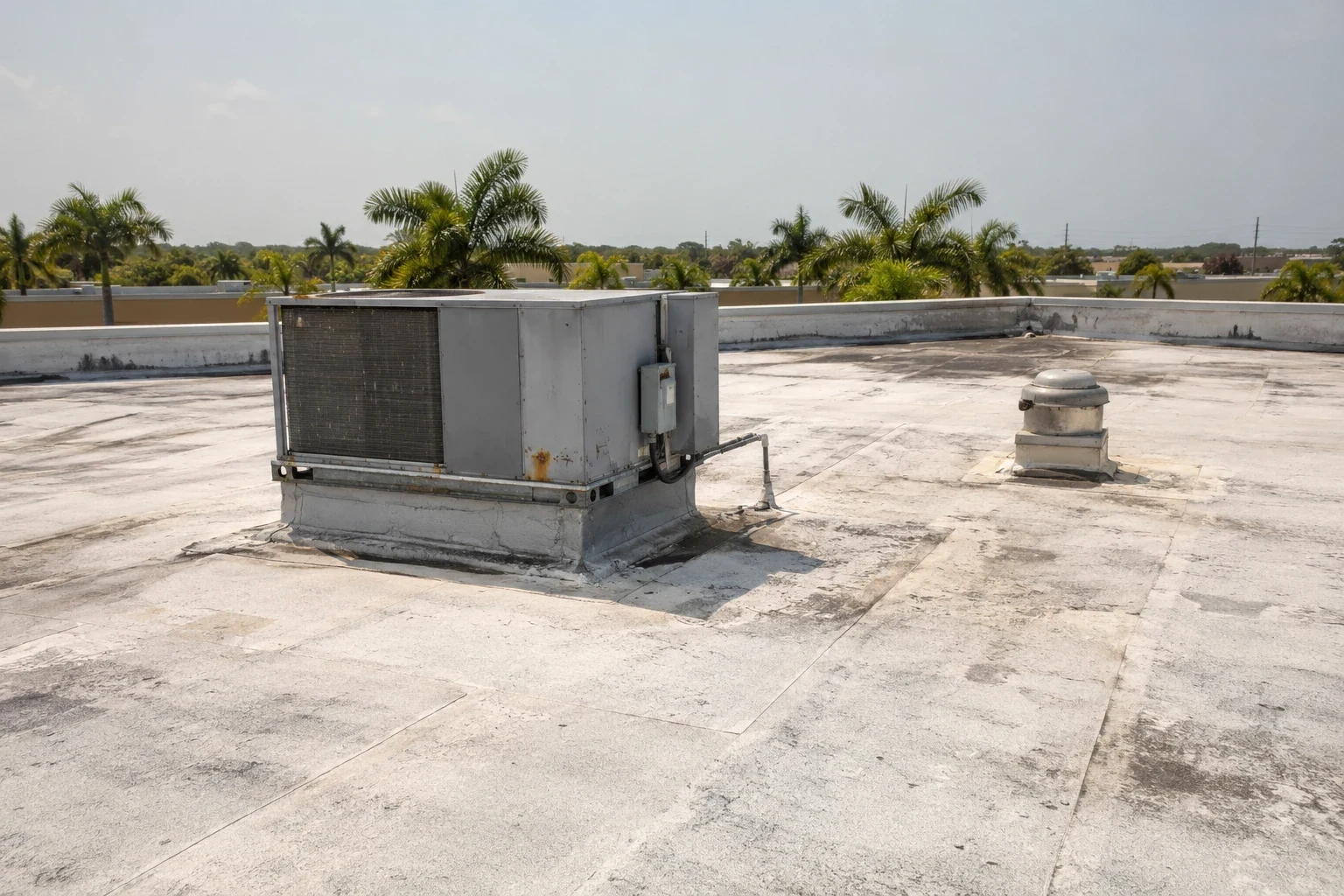
Sunrise commercial roof surveys for acquisition and refinancing. We document roof condition, records, test limits, likely repairs, and access needs.
Records: Compare documents with the roof in place
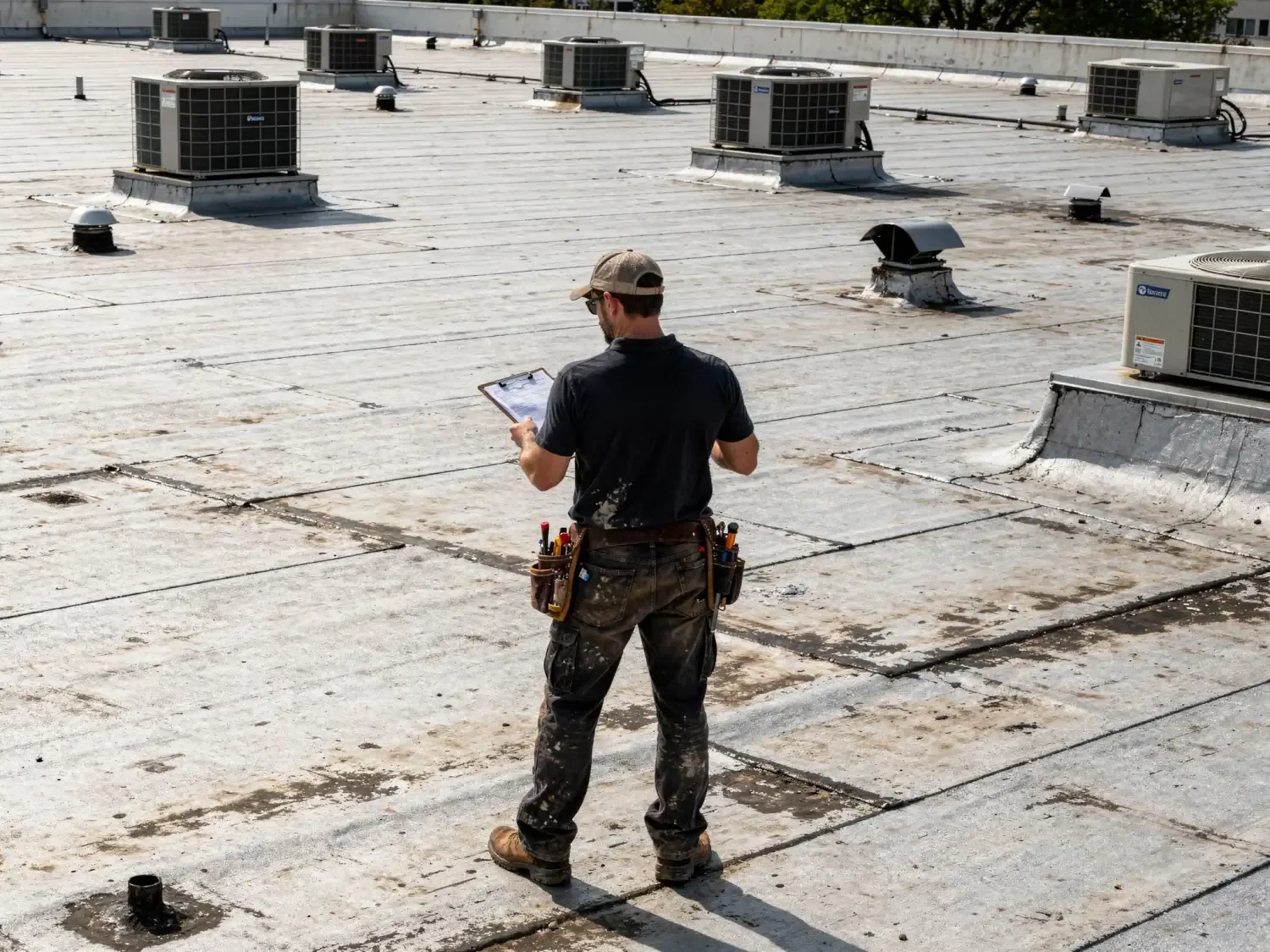
Before walking the roof, we review available plans, project closeouts, repair invoices, coating records, warranties, leak logs, and prior inspection reports. The documents can identify a reported system or replacement phase, but field inspection is needed to confirm what is accessible and visible. If a drawing omits an addition or labels a section differently, we record the discrepancy and mark what needs confirmation. A reported installation year remains a document fact until it is supported by reliable records.
Sunrise Commerce Park includes multi-tenant business, distribution, manufacturing, and office properties; Sawgrass International Corporate Park includes regional offices and corporate headquarters. Those commercial settings can produce multiple roof sections and project histories at one property. A roof asset record can preserve the building and section identifiers, while a warranty file review checks whether the available document matches the observed roof. A mismatch is reported as a question, not silently resolved by assumption.
Inspection route: Map access and visible condition
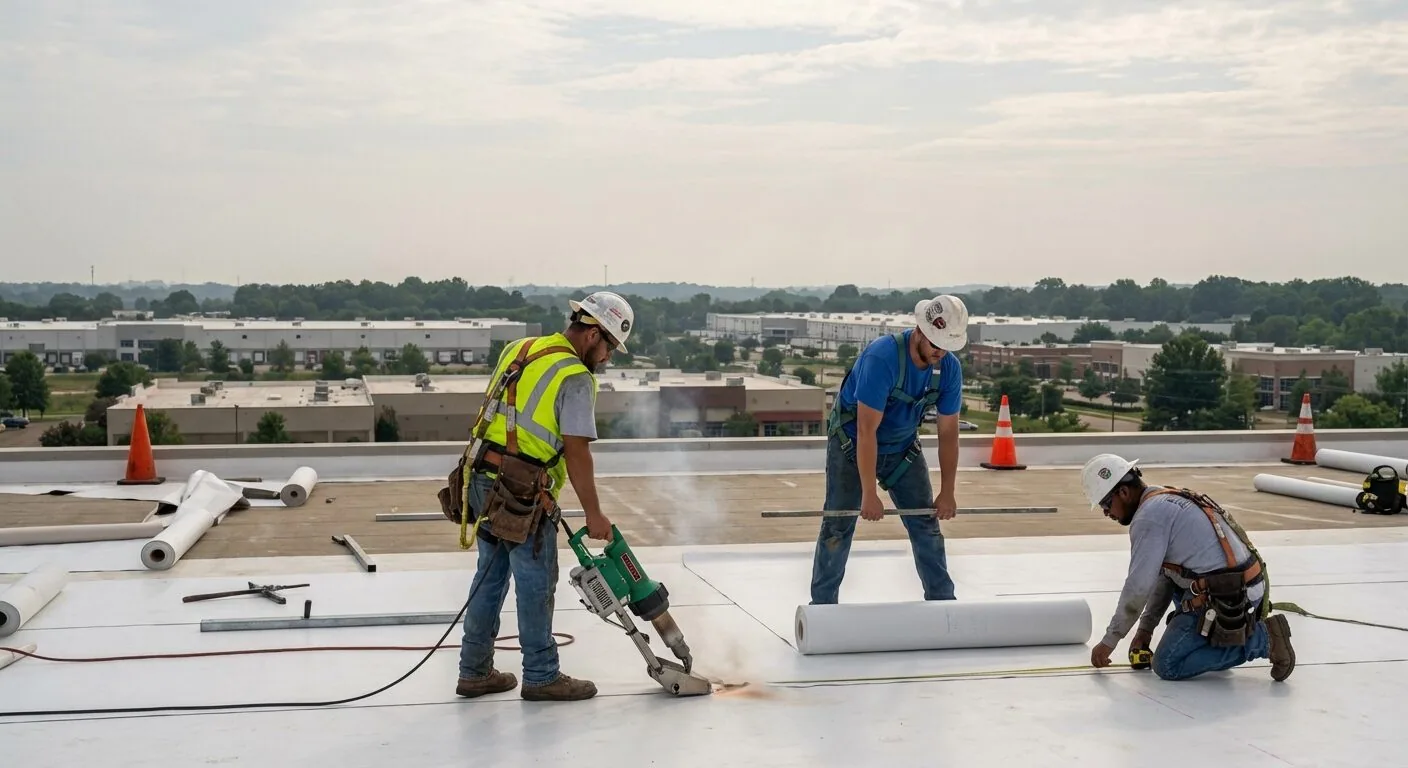
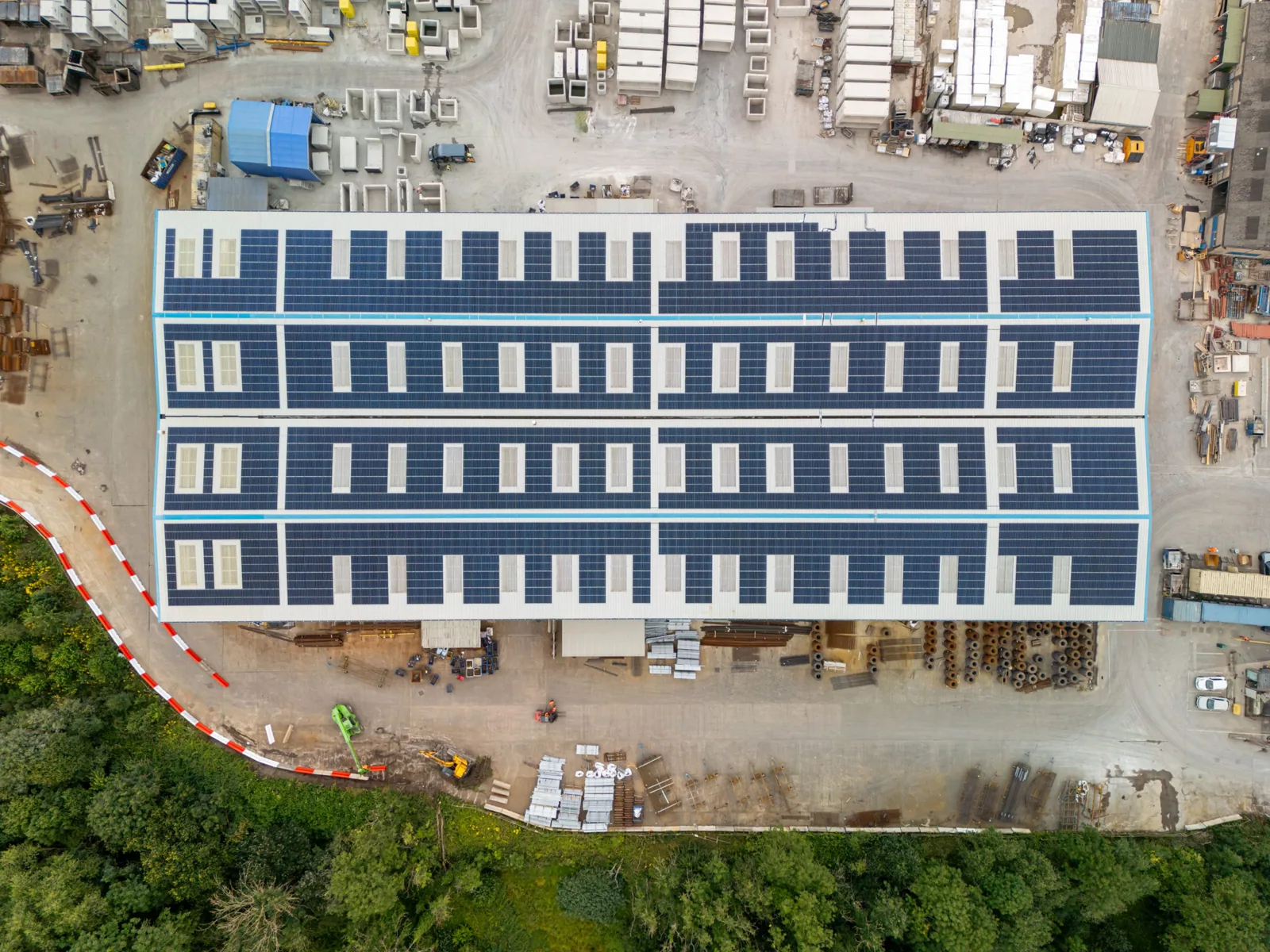
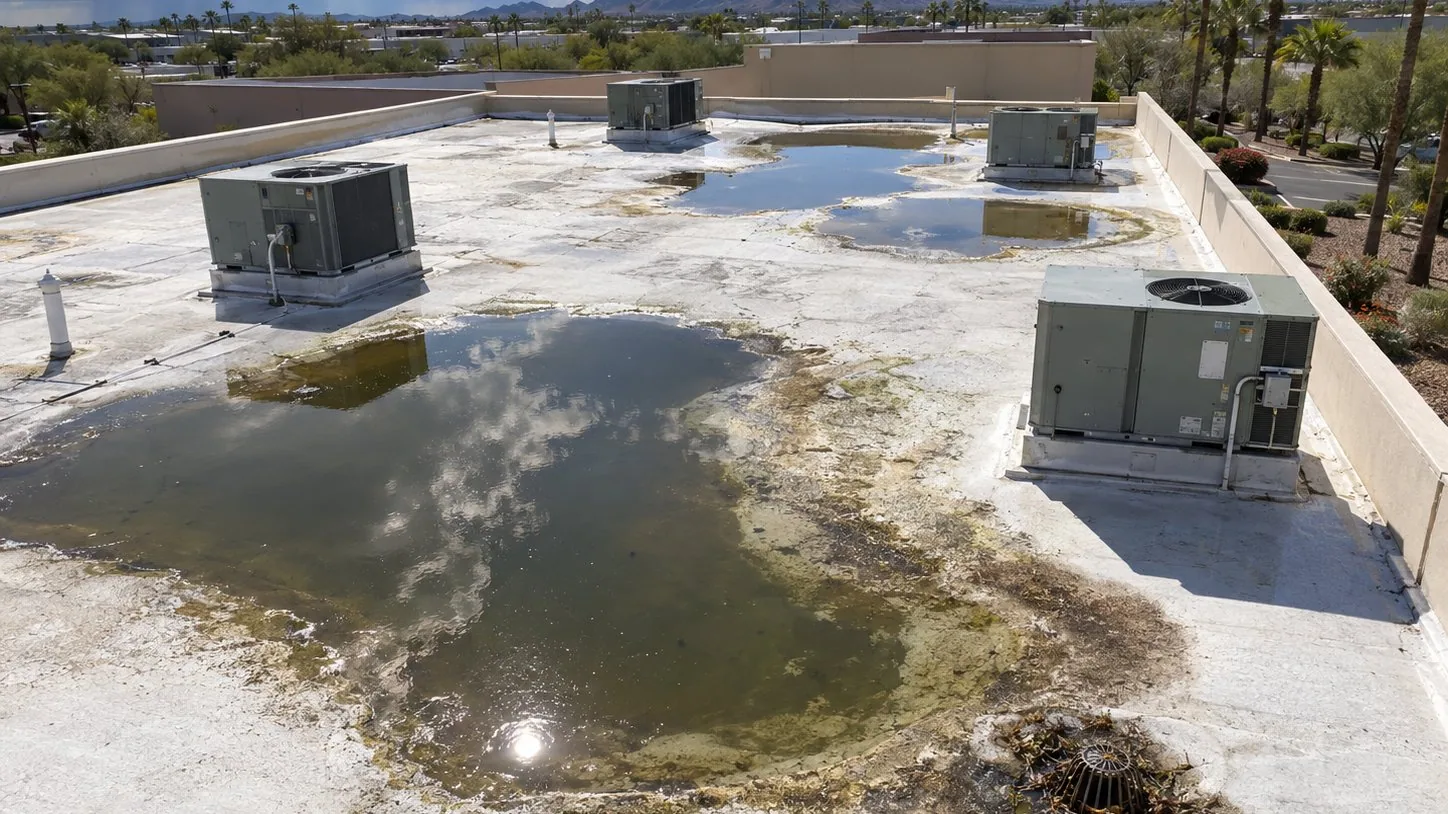
We inspect accessible sections for membrane condition, seams, flashings, attachment, drains, curbs, penetrations, metal edges, and signs of prior work. The route is recorded by roof zone with photos of representative details and any condition that may affect the transaction. We note areas hidden by equipment, standing water, locked enclosures, or safety limits. The report lists sections blocked by equipment, locked enclosures, or safety limits so the transaction team can arrange follow-up access.
The western Business and Entertainment District contains retail, offices, event uses, and mixed-use buildings, which can affect staging and roof entry during a transaction inspection. A property-specific contact confirms hatches, escorts, and active equipment. A drone survey may add broad surface context if weather and site rules permit, but close inspection is still needed to evaluate seams and penetrations. The report states the method used and the areas it reached.
We also note the surface and hardware that can affect access during the inspection, including loose aggregate, wet areas, exposed fasteners, or equipment service paths. The route may need a spotter or escort where roof entry crosses a controlled area. Those practical limits affect the completeness and timing of the survey, so they are listed with the areas reached rather than buried in a general note.
Testing: Identify concealed conditions that change the scope
Surface observations cannot confirm the full condition of insulation or deck. We recommend a test cut when hidden moisture or attachment could change the repair estimate, removal quantity, or choice between repair and replacement. The test location, materials found, moisture condition, and restoration of the opening are documented. If testing is not authorized before a transaction deadline, the report states what remains unverified and why it matters to the roof scope.
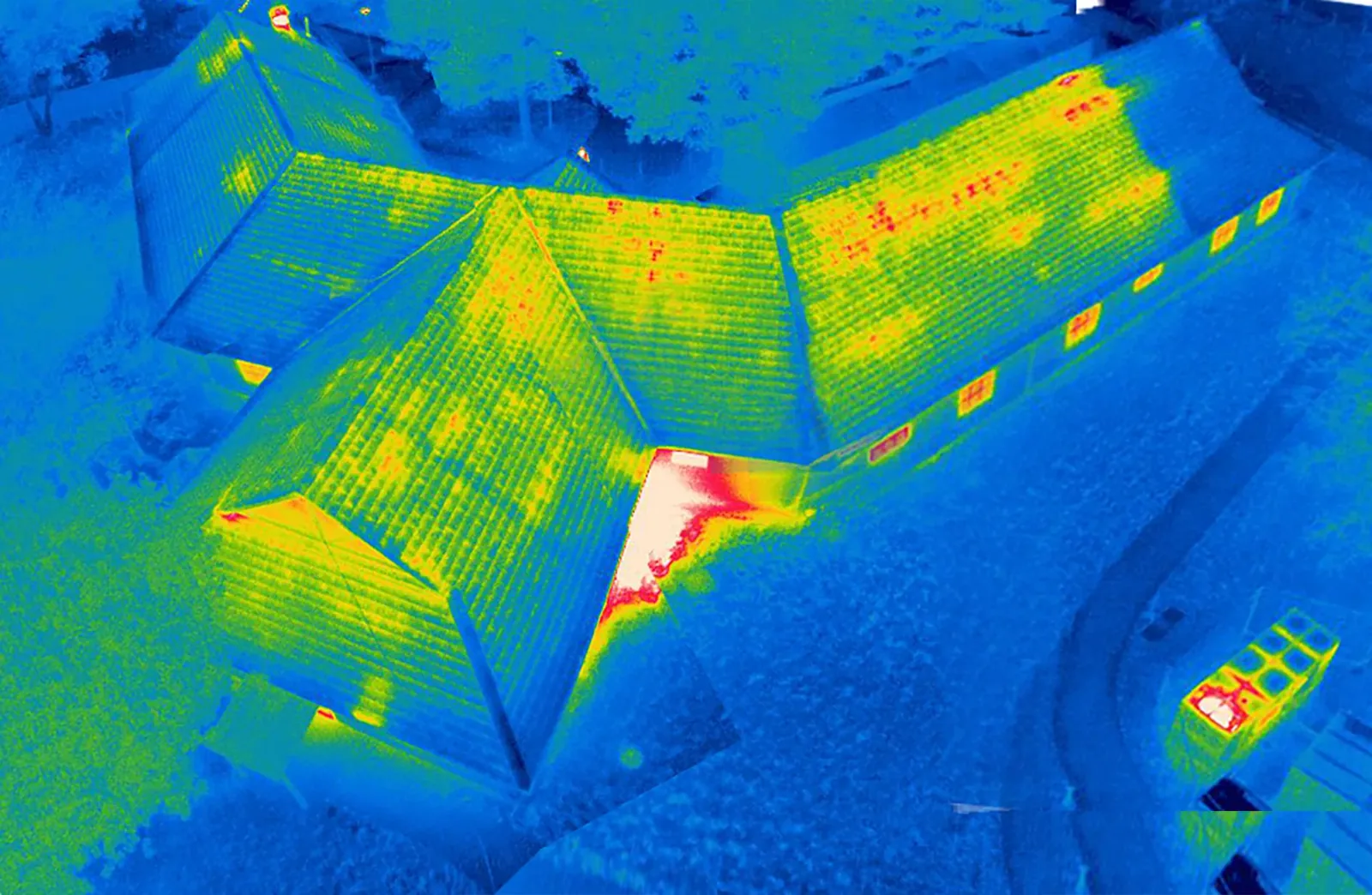
South Florida's wet season creates recurring demand on drains and overflow paths, so water at a low area should be considered with the outlet, slope, and assembly. A moisture survey can help select candidate test areas, while ponding repair evaluation addresses a persistent drainage problem. We mark moisture as confirmed only at tested locations and show untested zones separately, so the buyer, lender, and owner can see where follow-up may change the scope.
Testing should answer a transaction question, such as whether a suspected wet area changes the removal limit or whether existing insulation can remain beneath a proposed assembly. We agree on the opening location, interior protection, and restoration method before making a cut. If the buyer or seller cannot authorize testing during the review period, we can describe the potential scope as an assumption and show which decision remains unresolved.
Findings: Separate current repair from long-term planning
The survey summarizes active leaks, observed damage, maintenance needs, likely repairs, inaccessible areas, and test questions. Each finding includes its roof zone, supporting photographs, and a suggested next action. We distinguish a localized seam repair from widespread moisture or attachment concerns. If no failure was visible during the inspection, the report limits that statement to the date, access, and conditions of the visit.
Cost and schedule depend on access, removal depth, equipment, substrate, disposal, weather, and interior protection. A measured repair scope can be prepared for confirmed conditions; capital planning can compare broader options when the assembly warrants it. We do not create a dollar estimate from untested quantities or assign a remaining life without supporting evidence. The transaction team can decide whether to authorize more testing, carry a stated assumption, or plan the work after closing.
When a roof finding points to another discipline, the report identifies that need without extending beyond the roofing inspection. Deck movement may require a structural engineer, damaged electrical components need a qualified electrical review, and interior moisture can require a separate building assessment. Clear boundaries help the transaction team request the right follow-up without treating the roof survey as a complete building evaluation.
Deliverable: Give the transaction team a usable roof record
The report includes the inspection date, roof plan or zone map, access limits, photographs, records reviewed, observed conditions, tests, recommendations, and open questions. A summary can separate immediate safety or water-control needs from capital items that require further design. If a repair is performed before closing, we can add the completed area and closeout images to the record without revising findings for sections we did not inspect.
For a property in Sunrise, provide the transaction schedule, available roof plans, recent service files, access contacts, and any questions about a specific area. We will state what the inspection supports and where another test or professional review is needed. The purpose is to give the buyer, lender, and owner a reliable roof condition record for their decision process, not to replace their legal, structural, environmental, or financial review.
We can also provide a brief findings call with the transaction contact to clarify how photographs, tests, and exclusions relate to the roof map. Questions that remain unresolved are recorded for follow-up.
Frequently Asked Questions
Can a roof survey confirm the age of a roof?
Only reliable project or warranty records can support an installation date. We compare those documents with visible field conditions and identify any discrepancy. We list gaps that need confirmation before closing.
What if the seller cannot provide roof plans?
We map accessible sections during inspection and identify areas that cannot be tied to a plan. The report states the limits and any additional drawing work needed.
Do you inspect concealed insulation during due diligence?
A test cut can confirm layers and moisture at a selected location when authorized. Untested areas remain unverified in the report.
Can your survey provide a repair budget?
We can prepare measured work for confirmed conditions and identify factors that affect cost. Unverified quantities remain assumptions until tested or opened.
How quickly can a survey be completed?
Timing depends on access, document availability, roof size, safety controls, and whether testing is authorized. We confirm those limits before setting the inspection route. Identify the contact authorized to release roof access.
Review roof condition before the transaction closes
Share the transaction timeline, roof plans, service records, access details, and key questions. We will inspect accessible areas and document findings, tests, and remaining uncertainty.
Call 555-555-5555 or request a roof assessment.