
Commercial Roof Moisture Survey in Sunrise, FL
Commercial Roof Moisture Survey
On an office or distribution roof in Sunrise, FL, suspected moisture needs a mapped boundary before the owner chooses removal or recover. Infrared imaging records surface temperature patterns that may help locate areas for further investigation; it does not directly see water below the membrane. A selected core cut can confirm the layers and moisture at that point. We connect each image pattern and test opening to a roof zone, interior report, and proposed work boundary. Sunrise Commerce Park includes distribution and manufacturing buildings, while Broward Lakes Business Park has flex and office properties. Before scanning, we map each roof's construction, note recent weather, and select safe, representative test locations. The facility director receives the method, findings, limits, and next decision in writing.
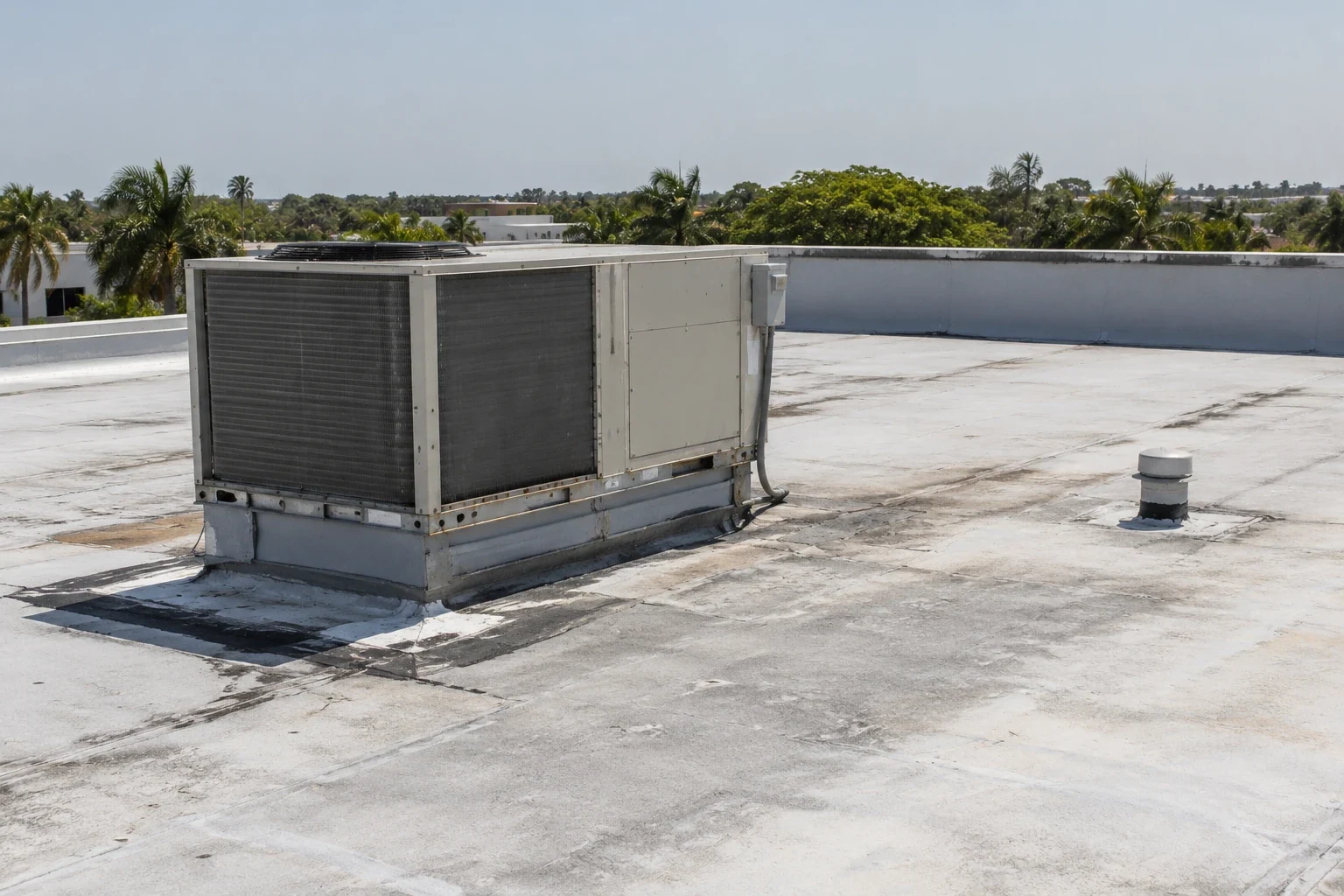
Commercial Roofing Services in Sunrise, FL
Use infrared and selective core-cut surveys in Sunrise, FL to map suspected roof moisture, verify assembly layers, and define repair boundaries from evidence.
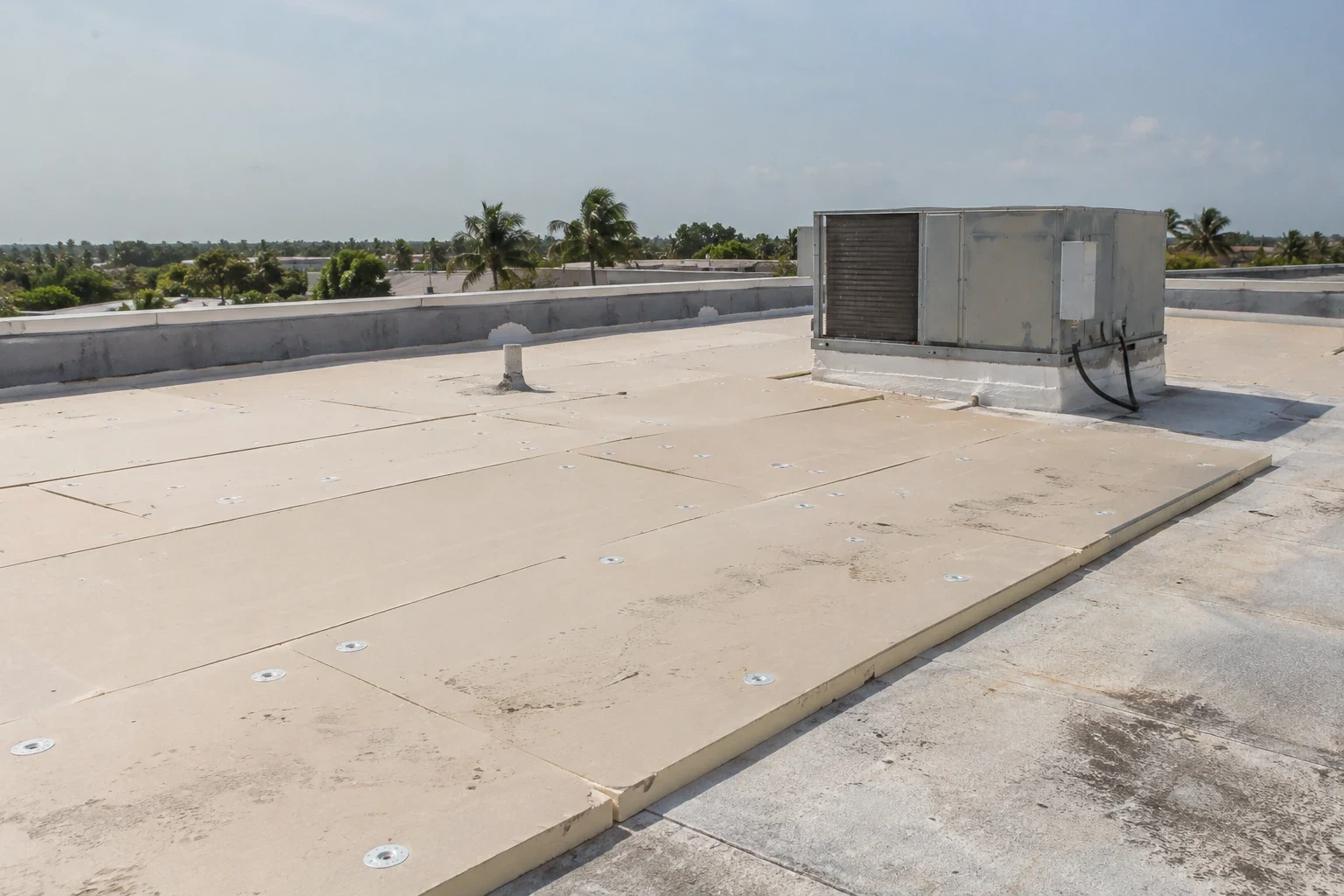
Method: Screen, then verify
Infrared readings depend on temperature differences at the roof surface. Sun exposure, shade, wind, surface color, recent rain, insulation type, and the time of day can alter the pattern. We review the conditions, collect comparable readings, and map anomalies as candidates for investigation rather than label them wet areas. A controlled survey should state which roof fields were scanned, where access was limited, and what environmental factors could affect interpretation.
Survey repeatability matters when an owner expects to compare conditions over time. We keep capture routes, orientation, and roof-zone labels consistent where the property layout allows it. Equipment exhaust, shade lines, reflective surfacing, and repairs can create local temperature shifts that need review before a test is chosen. The technician records these features alongside the thermal image so the reader can understand why one pattern was selected and another was not. A survey should make its reasoning visible, including the path from scan anomaly to proposed test location and the result that would change the recommended repair boundary.
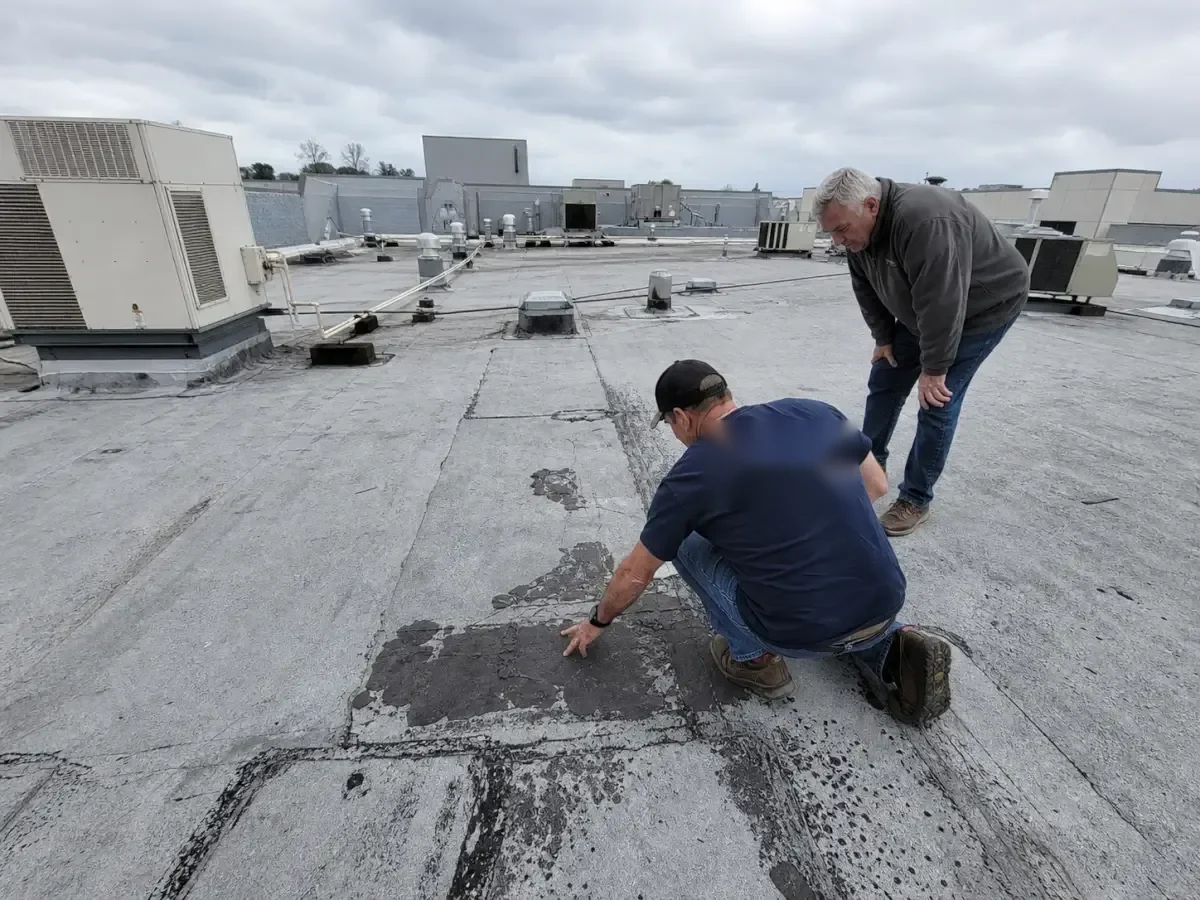
Core cuts add physical confirmation at selected points. They show the membrane, cover board, insulation layers, attachment clues, and moisture condition where opened. We compare test points across each section to determine how far confirmed moisture extends. We choose locations to test the edge of a suspected zone, an apparently dry comparison area, or a roof detail tied to an active leak report. A hands-on inspection adds visible assembly observations, and a mapped condition report keeps the evidence traceable.
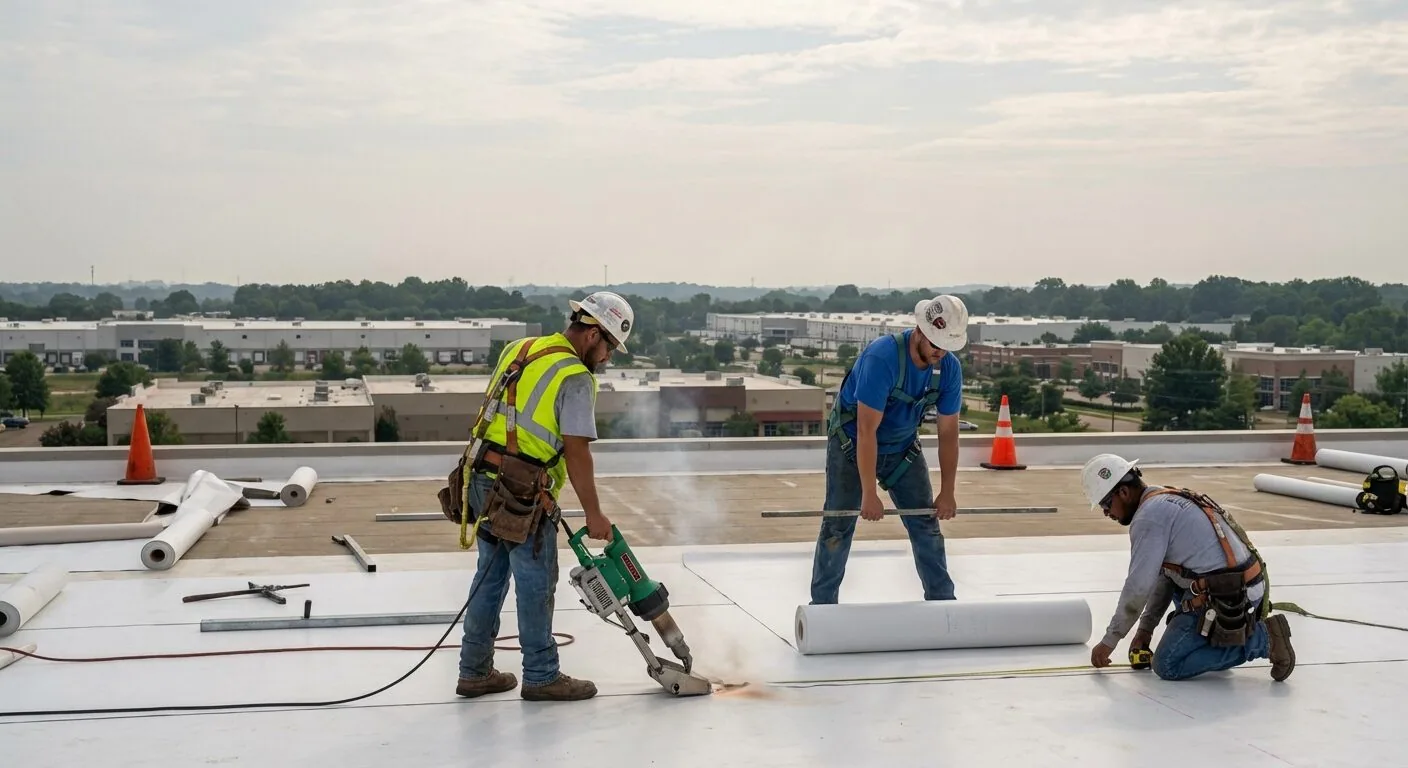
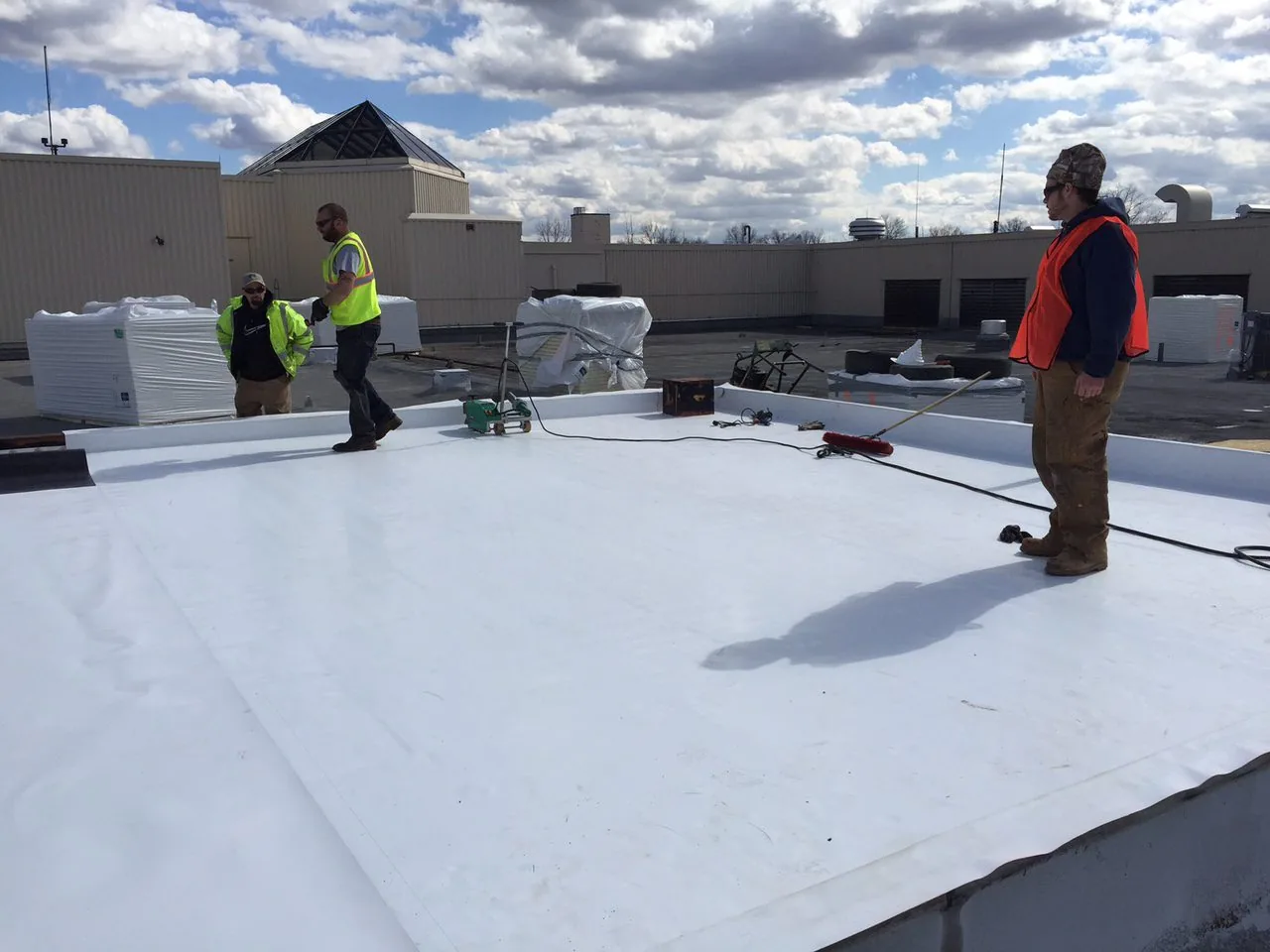
Survey plan: Define the question
Before scanning, agree on the decision the survey needs to support. The owner may need to know whether moisture reaches the cover board, whether a local repair can remain local, or whether a recover should be removed from consideration. We review roof plans, repair records, leak timing, and equipment access to locate useful transects. If the question is not defined, a heat map can produce many colors without resolving the scope.
Sawgrass Technology Park has multiple office and technology buildings, including corporate offices. For a portfolio, each building needs a separate map and test record. A multi-site roof program can standardize how those records are named, but the survey conclusions remain specific to the tested roof. In Broward Lakes Business Park, flex and office configurations can differ by structure; a roof plan or current field map keeps test points tied to the correct assembly.
Boundary: Read the wet area carefully
A wet boundary is the transition supported by the test results, not simply the edge of an infrared color pattern. We compare several openings with scan data and interior conditions, then label confirmed wet material, apparently dry comparison points, and areas without direct verification. If results conflict, we say so and identify another test that could resolve the difference. Removal plans can then use evidence-based zones and allowances rather than treating the whole field as uniformly wet. If multiple layers have different moisture conditions, the report lists them separately and notes the depth reached by each opening. A dry upper layer does not answer whether lower insulation or cover board is affected. We also record whether the deck was visible, whether the sample was limited, and what repair detail would be needed to close the test opening. That makes the test useful to the repair estimator and the facility director reviewing quantities.
Fort Lauderdale averages 60.95 inches of rain per year, including 37.49 inches during the South Florida rainy season. After a shower, stored heat and surface moisture can shift infrared patterns on a Sunrise roof, so we record capture conditions and use core cuts to confirm selected areas. A recover review can use confirmed moisture boundaries to test whether existing layers may remain, while a replacement scope can identify where removal and new insulation are supported.
Action: Connect findings to the repair
When a core shows wet insulation, the report should identify material type, layer depth, and location. The repair plan can then consider removal to dry material, replacement of affected insulation, deck inspection, and compatible tie-in details. If only the membrane is damaged and the substrate is dry, a smaller repair may be appropriate. We state what the survey establishes and leave installation quantities to the authorized scope once the boundary is accepted.
Sunrise's humid conditions, heat, and concentrated wet-season rain make careful moisture diagnosis useful, but the actual assembly controls the next step. If drainage is involved, a drain inspection checks the outlet and overflow detail. A leak investigation can relate interior symptoms to tested roof zones, and a cover-board assessment can evaluate the substrate that a repair or recover would meet. Each task answers a different part of the question.
Deliverable: Preserve the test record
The final package should include an oriented roof map, scan conditions, image legend, test locations, photographs of opened layers, moisture observations, and a summary of limitations. We label results as confirmed, candidate, or not tested so the reader does not confuse image interpretation with physical verification. The report also identifies whether repairs are urgent, whether another test is needed, and who can authorize access or removal.
For a large commercial roof, the owner may need to share findings with facilities, finance, and a construction manager. The report should make that review possible without overstating the certainty of a thermal pattern. Send the roof plan, prior repairs, known leak locations, access restrictions, and the specific decision you need the survey to support. A Sunrise roof survey is then planned around the building, tested zones, and safe access.
For a portfolio review, the final map should distinguish confirmed test results from areas that were screened but not opened. We identify the instrument conditions, surface limitations, and comparison points so a later inspection can repeat the same route or explain why the test area changed.
Frequently Asked Questions
Does infrared imaging directly measure water in a roof?
No. It records temperature patterns that can help identify candidate areas for testing. We interpret them with roof construction, surface conditions, weather, and physical confirmation at selected points.
How many core cuts are needed?
The number and location depend on roof size, construction, scan patterns, and the decision being made. We define test locations to sample suspected boundaries and comparison areas, then state which zones remain untested.
Can a moisture survey decide whether to replace the roof?
The survey supplies evidence about tested assembly layers. Replacement or recover decisions also consider attachment, deck, drainage, system compatibility, and the owner’s project requirements.
Can rain affect an infrared roof scan?
Recent rain and changing surface conditions can affect temperature patterns. We record the conditions during scanning and avoid treating an unverified pattern as a confirmed wet area.
What should be ready before the survey?
Provide roof plans, repair records, leak timing and locations, equipment restrictions, access details, and the decision the survey should answer. Those records help target scan routes and test cuts.
Set the moisture question
Send roof plans, repair history, leak locations, access limits, and the decision at hand. We will map scan coverage and identify where physical confirmation is needed.
Call 555-555-5555 or request a roof assessment.