Government Building Roofing in Sunrise, FL
Government Building Roofing
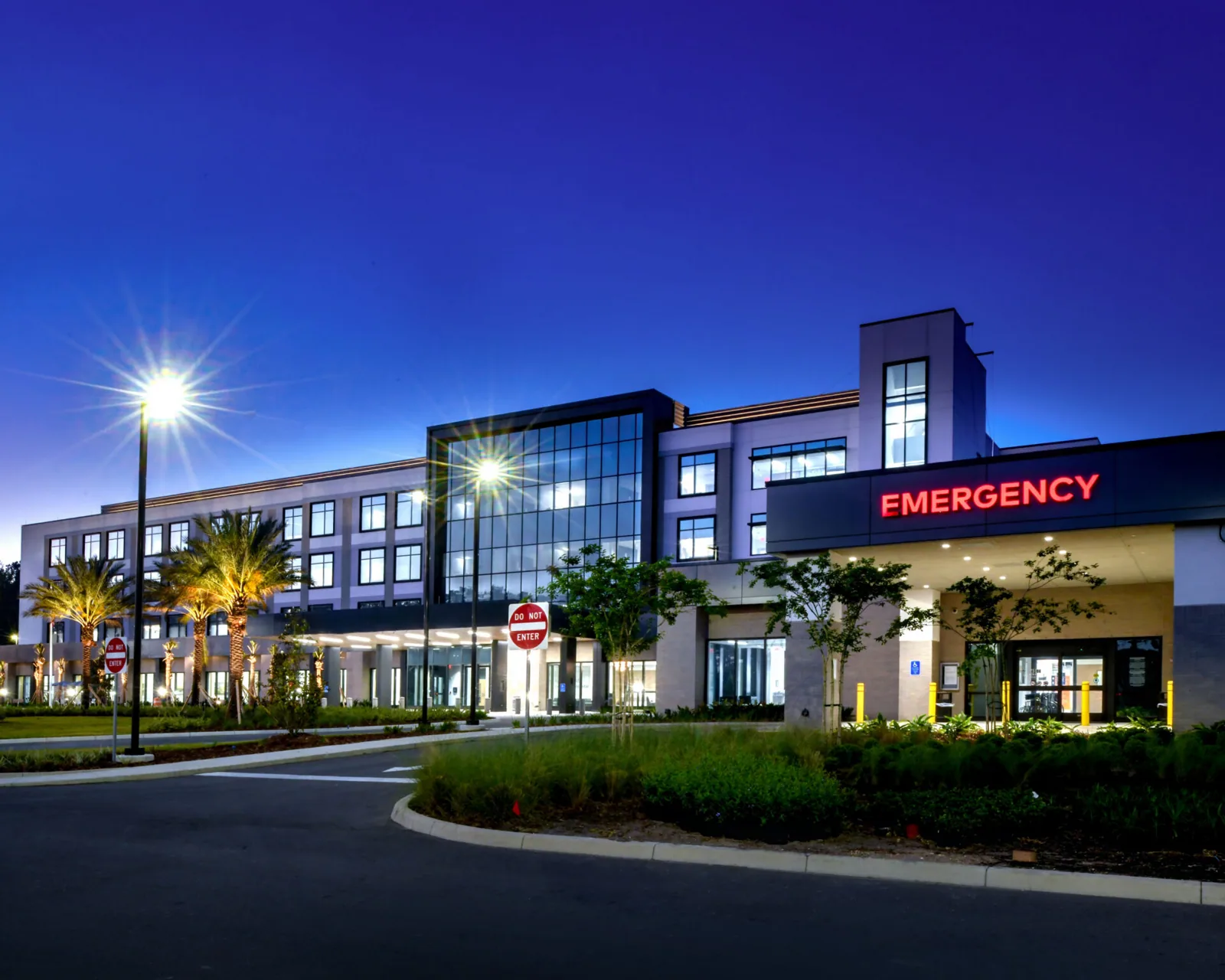
A public building roof has two boundaries to manage: the membrane repair and the occupied facility beneath it. In Sunrise, hot humid conditions and a concentrated rainy season make drainage, flashing, and edge attachment active maintenance concerns. We identify the roof zone, access controls, and interior spaces before opening the assembly. Nearby Sawgrass International Corporate Park and Plantation Midtown include corporate offices, healthcare, and retail uses, so operating requirements need to be confirmed building by building. A commercial inspection gives the facility team a documented condition baseline.
Property Types We Roof in Sunrise, FL
Government building roofing in Sunrise, FL plans around public access, records, drainage, and wind exposure. We document the roof assembly and repair limits.
Access: Keep public routes and secure areas clear
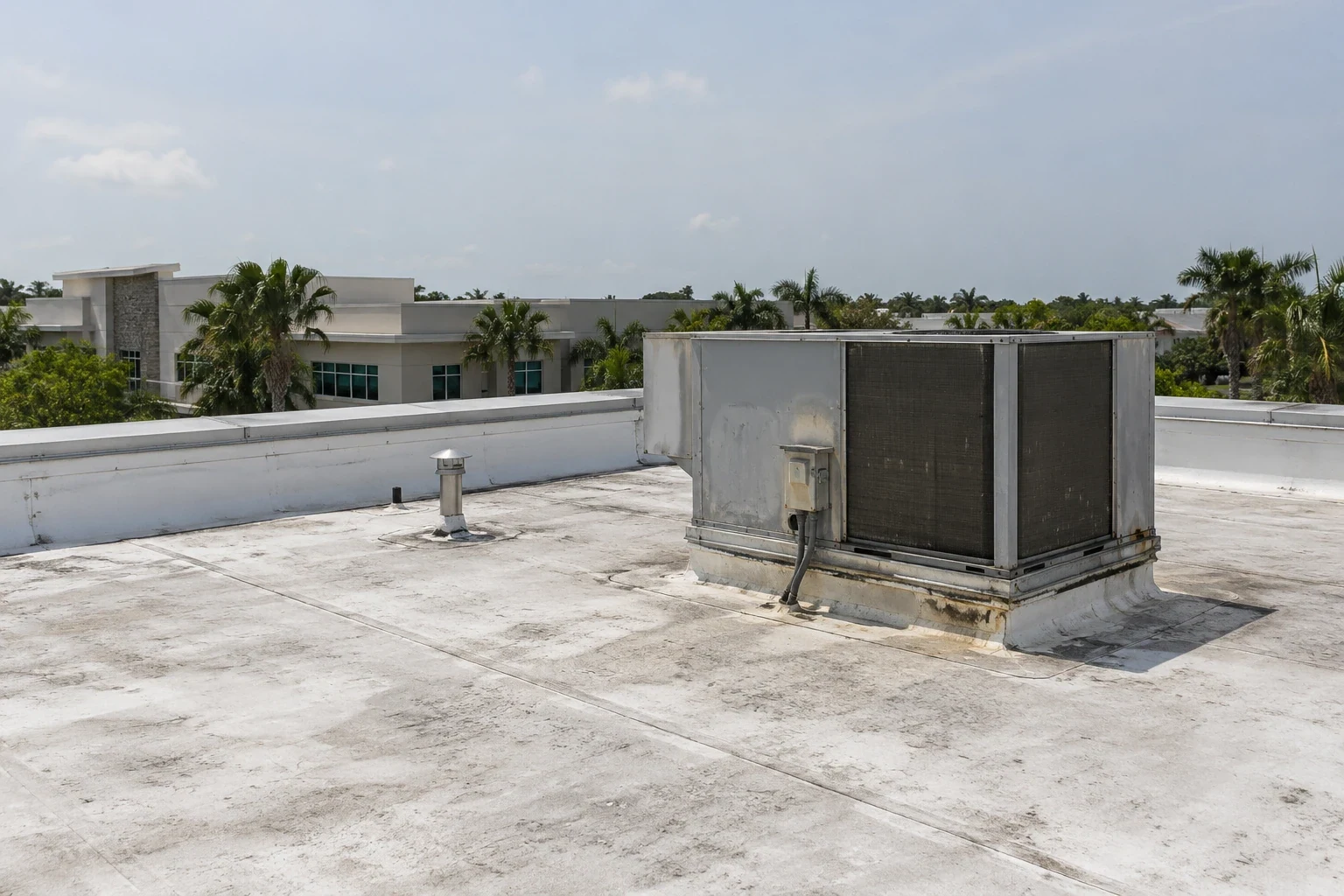
Roof access may cross public lobbies, staff-only corridors, secure offices, or rooms with records and equipment. We agree on the ladder or hatch route, escort requirements, staging area, and hours when a shutdown or noisy task can proceed. The work plan marks loading points and protected entrances so debris and materials do not move through public service areas. If access rules change by department, the daily contact list identifies who can release each roof section.
For multi-building operations, a roof map should pair each building name with a roof-zone code, drain locations, equipment, and previous repairs. We record which portions were inspected and any areas we could not reach. Sunrise's business parks include corporate offices, healthcare, distribution, and manufacturing. We confirm access and roof assembly at each public facility from its own records and inspection. The closeout record ties photographs, test points, and repair notes to that facility's own drawing set.
Evidence: Trace the leak to a repairable boundary
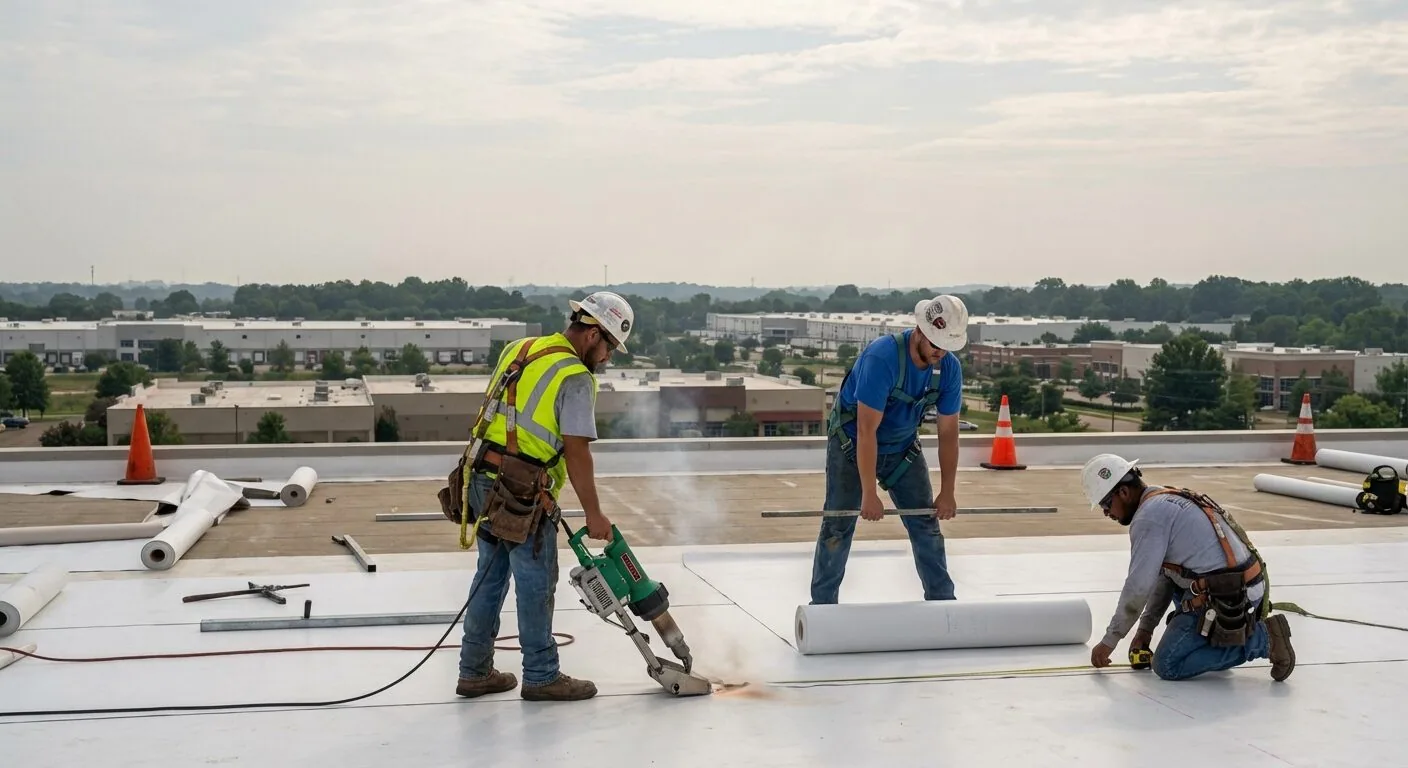
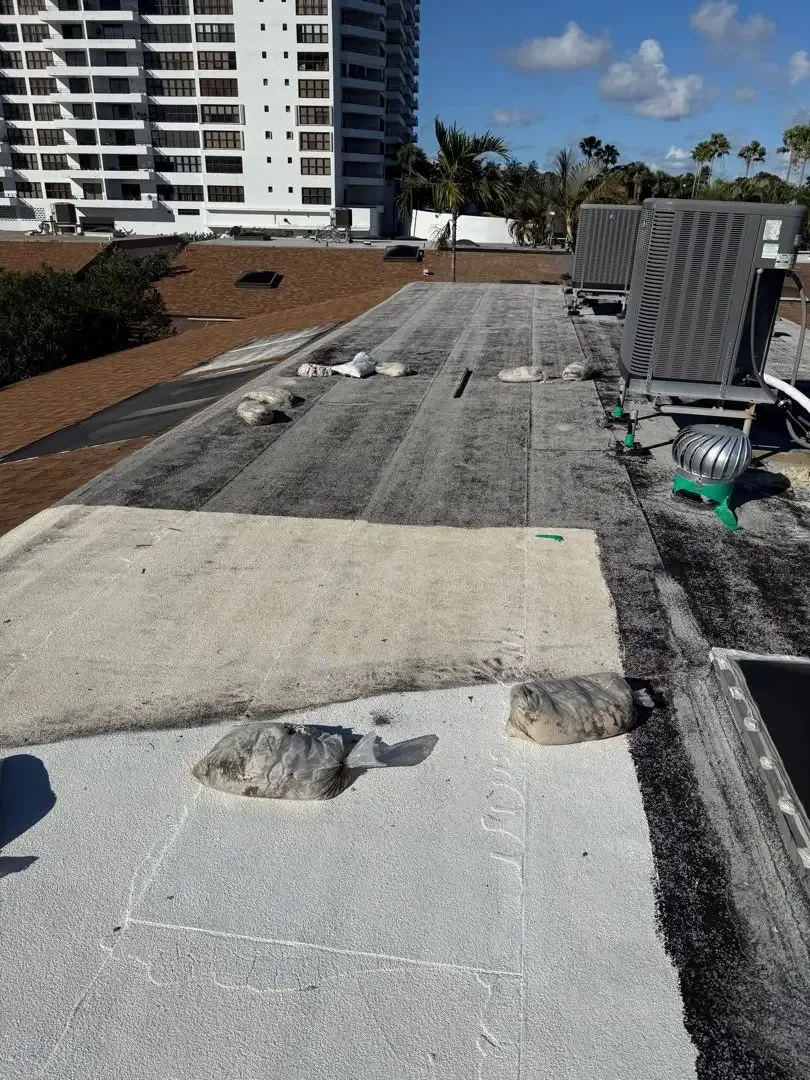
A ceiling stain in a public counter area or records room can be several feet from the roof defect. We compare the reported timing with seams, drains, penetrations, wall transitions, and the direction of drainage. A test cut may be needed to confirm insulation moisture, deck condition, and the roof layers before a larger quantity is approved. Thermal imaging can help identify candidate areas under suitable conditions, but direct testing determines what is wet and where the repair should stop.
Each finding should include location, observed condition, photograph, and a proposed action. We distinguish an immediate temporary cover from permanent membrane work, and separate the tested repair quantity from concealed-area allowance. The written inspection record lets procurement staff compare repair proposals against the same roof map. When an active leak threatens a service counter or operations room, emergency response can protect the opening while the facility arranges a permanent scope. We identify who receives the field photographs and who can authorize a change before work starts.
Drainage: Check the path beyond the roof outlet
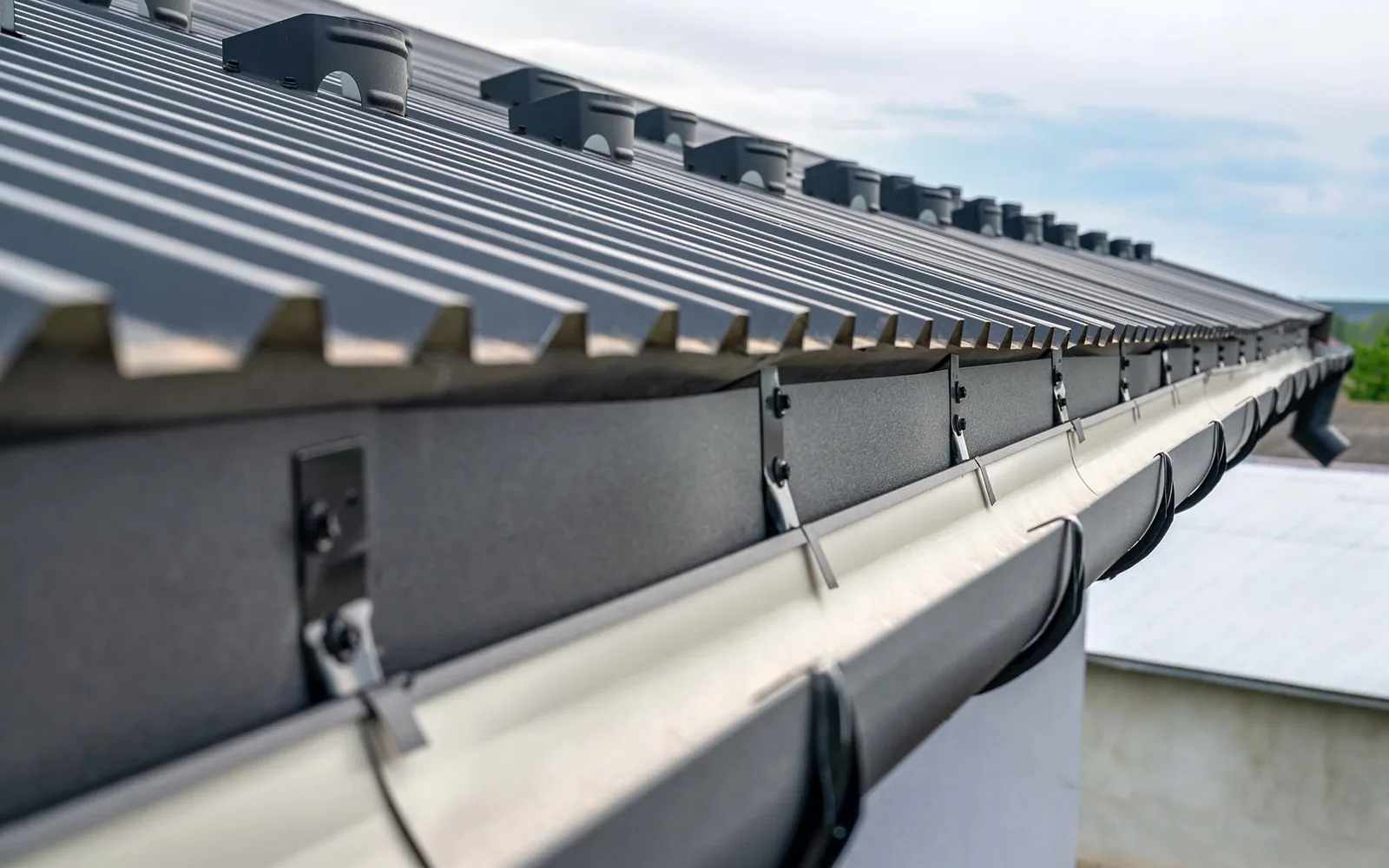
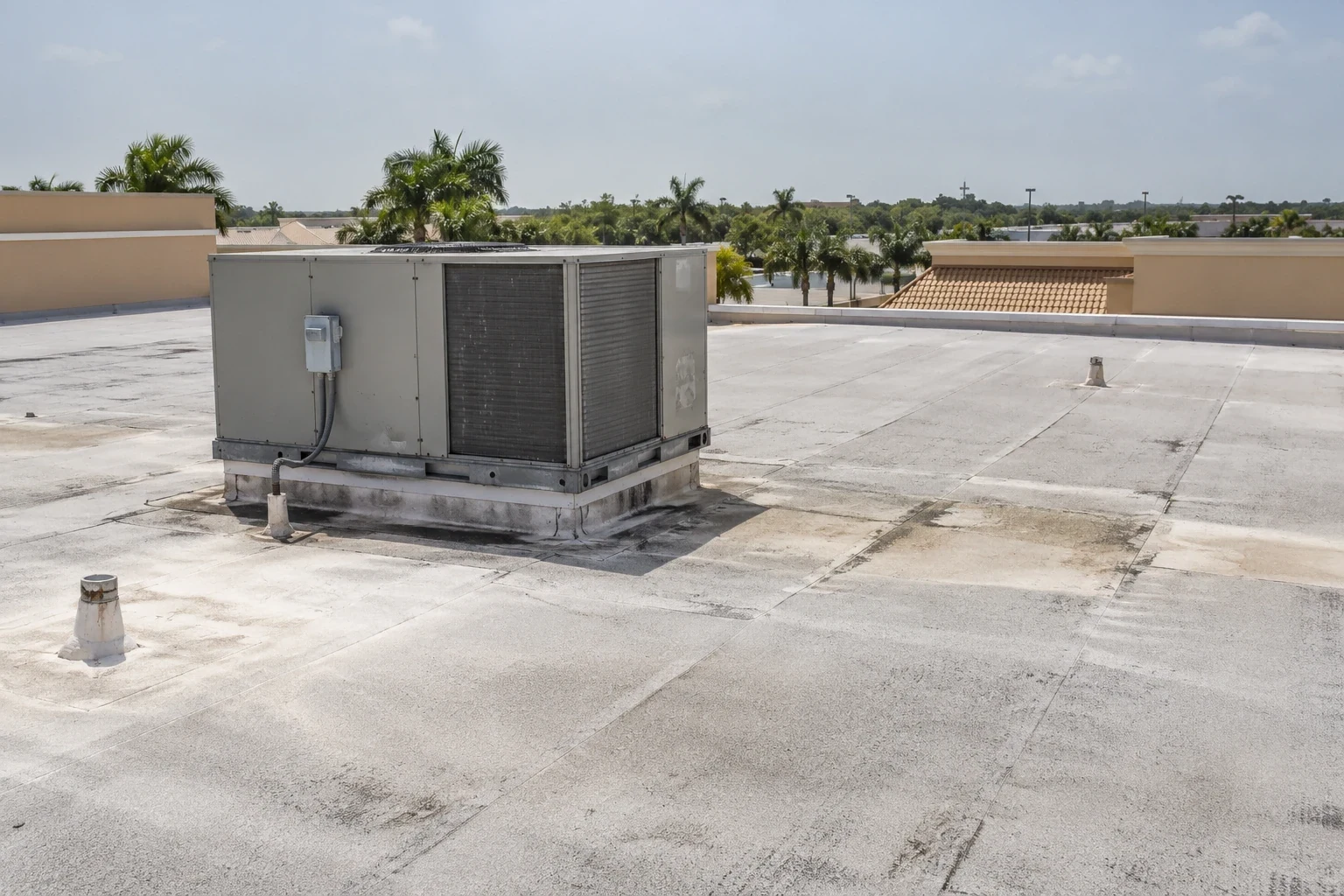
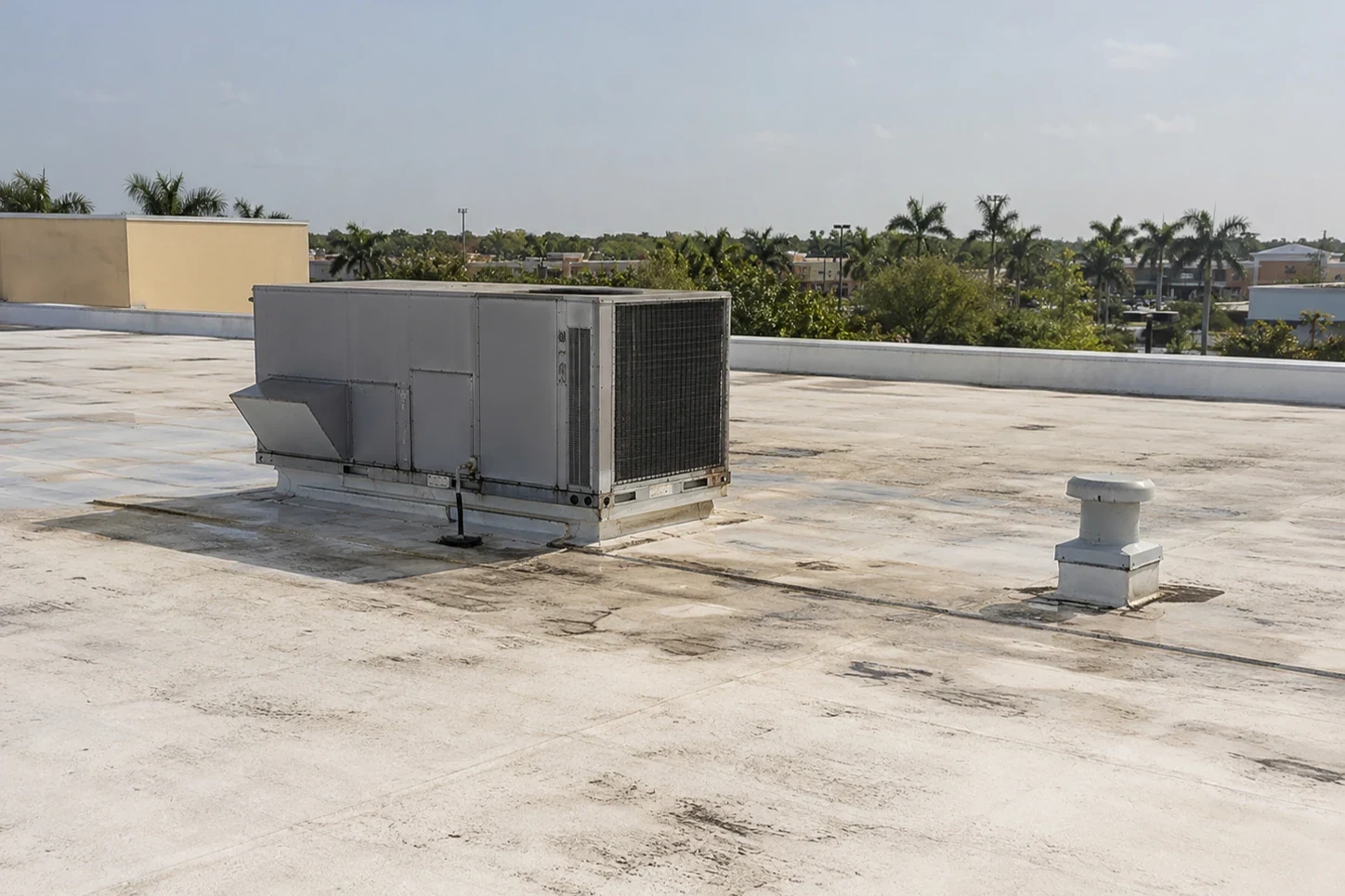
South Florida's rainy season concentrates roof drainage demand, and an outlet problem can affect several rooms before it is visible from the ground. We inspect strainers, drain bowls, scuppers, overflow routes, and the discharge connection where access permits. Water marks at parapets or around equipment curbs can show where a basin is retaining water. If a cleared strainer does not restore flow, we identify whether the downstream line or low roof area needs separate testing.
Public buildings may have access controls that limit when a drain can be cleared or a roof hatch opened. The maintenance record should note the date, outlets reached, debris removed, observed ponding, and any follow-up that remains. A drain and scupper inspection can establish the condition of accessible components and set a baseline for the next check before the heavier storm period. This is especially useful where multiple departments rely on one facility and a leak interruption affects public service.
Code and scope: Keep design assumptions explicit
Florida's 2023 Building Code is the statewide edition now in effect. A repair or replacement scope must still account for the actual existing roof, project conditions, and applicable review requirements. We document the assembly and proposed work so the owner and design team can resolve permit questions with the authority having jurisdiction. We compare the specification with exposed deck, insulation, attachment, and edge details before setting the scope.
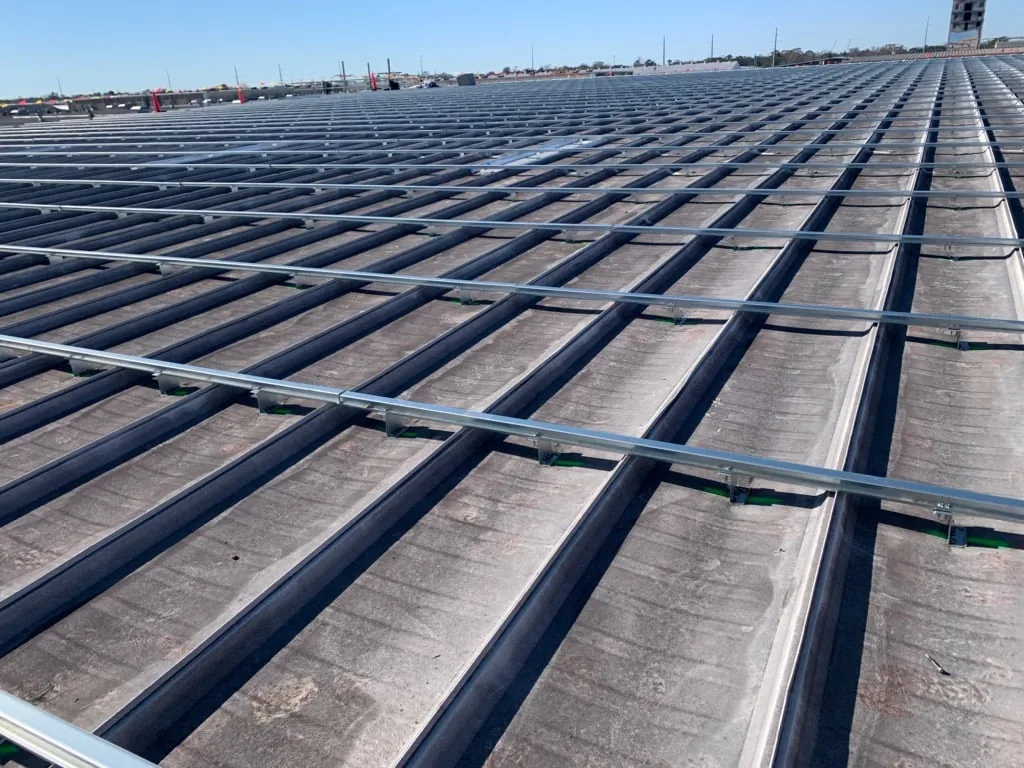
When a roof is near the end of service, the decision may involve local repair, recover, or full replacement. We compare confirmed wet areas, repeated detail failures, attachment, deck condition, and equipment penetrations. Replacement planning can define removal limits and phasing; a recover review tests whether the existing assembly can remain. If the facility is in Sunrise, provide prior scopes, roof plans, reported leaks, and access windows so the inspection focuses on the unresolved decision.
Work sequence: Preserve operations at each shift boundary
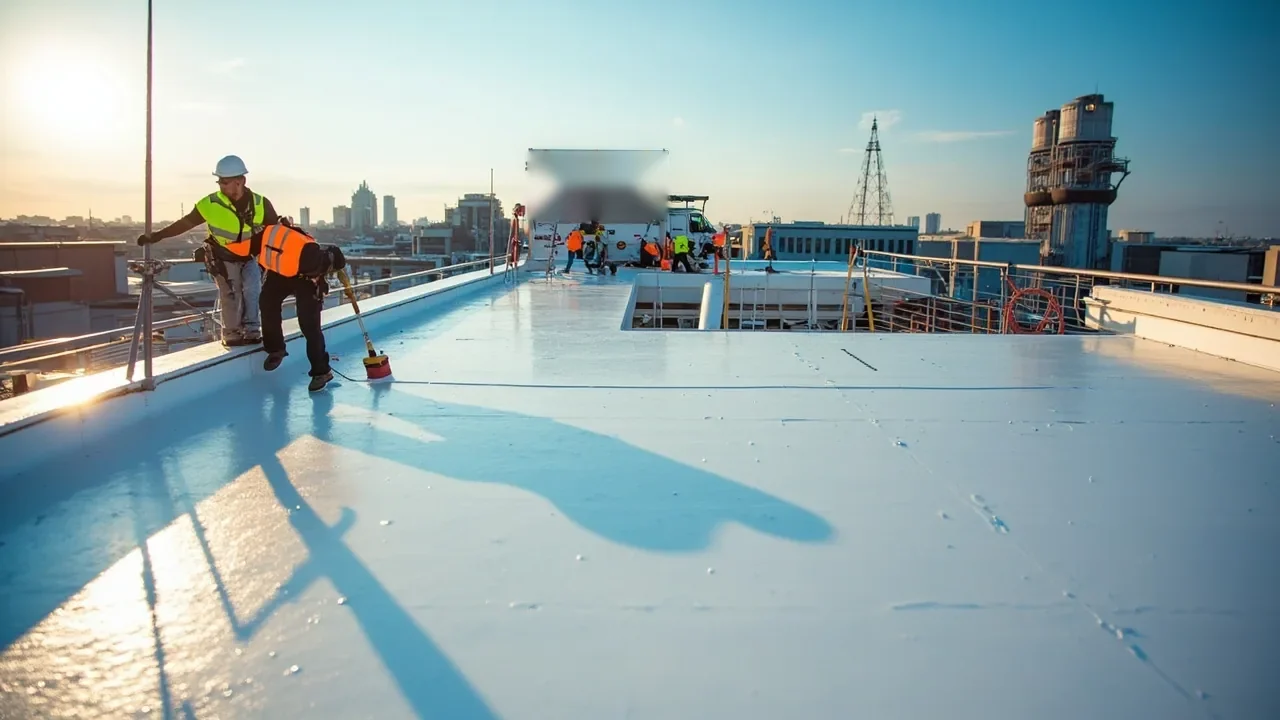
Before membrane removal, we define the area that can be opened, the temporary dry-in method, and the approval path if concealed conditions expand the work. Public entrances, emergency routes, and equipment access remain clear. The crew protects drains from debris, contains materials, and closes each section watertight at the end of the shift. A change in deck or insulation condition is photographed and reviewed before it becomes part of the permanent scope.
For phased work, a facility representative can release one roof zone at a time and confirm when it returns to service. A phased reroof sequence can coordinate access across departments. Roof assemblies differ: a school building review may focus on classroom schedules, while a hospital roof review accounts for clinical continuity. For either, the roof map, work hours, protected interior areas, and closeout condition should be agreed before the first opening.
Options: Compare repair, restoration, and replacement
A localized flashing split, puncture, or open seam may be repaired without disturbing an entire roof section. Widespread moisture, repeated failures in separate zones, weak attachment, or deteriorated deck can support broader work. We show which conditions are confirmed and which remain concealed, then compare the repair boundary with the cost and disruption drivers of larger alternatives. That evidence helps a public owner plan scope and procurement on the condition found, not a general roof age assumption.
A coating may extend a suitable assembly only after substrate, adhesion, moisture, drainage, and compatibility have been checked. It cannot correct wet insulation or failed attachment below the surface. We can test the roof and define a repair sequence before comparing coating or replacement. Share the asset record, prior leak history, inspection photographs, security rules, and operating hours; we will return a location-based scope that the facility can review alongside its maintenance priorities.
For a public facility, the final scope should make bid quantities, alternates, access restrictions, and change approvals easy to compare. We label each roof area on the drawing and identify the evidence behind the recommended work. The facilities lead can then align the roofing decision with procurement and service-continuity requirements.
Frequently Asked Questions
What should a public owner receive after a roof inspection?
A useful record identifies roof zones, observed conditions, photographs, test locations, repairs, and items that remain inaccessible. It should separate confirmed quantities from allowances for concealed work.
Can a leak repair proceed while a public building remains open?
Often the work can be isolated by roof zone, but access and interior protection depend on the opening and the spaces below. We agree on public routes, notices, and the dry-in condition before starting.
How do you handle unknown deck or insulation conditions?
We define a test area and stop at the confirmed boundary. If the test finds additional wet insulation or deck damage, we document it and review the changed scope before expanding the work.
Does the 2023 Florida Building Code apply to a Sunrise roof project?
The eighth edition took effect statewide. The project team should confirm the applicable requirements for its specific work and permitting path with the authority having jurisdiction.
When should an agency compare replacement with repair?
Repeated leaks, broad moisture, weak attachment, or deck concerns can change the economics and disruption of a local repair. We map those findings and compare alternatives against the facility's operating schedule.
Define the facility's roof decision
Share the roof plan, recent leak reports, prior scopes, access controls, department hours, and any open procurement question. We will inspect the assembly and return a documented repair boundary.
Call 555-555-5555 or request a roof assessment.