Cool Roof Installation in Sunrise, FL
Cool Roof Installation
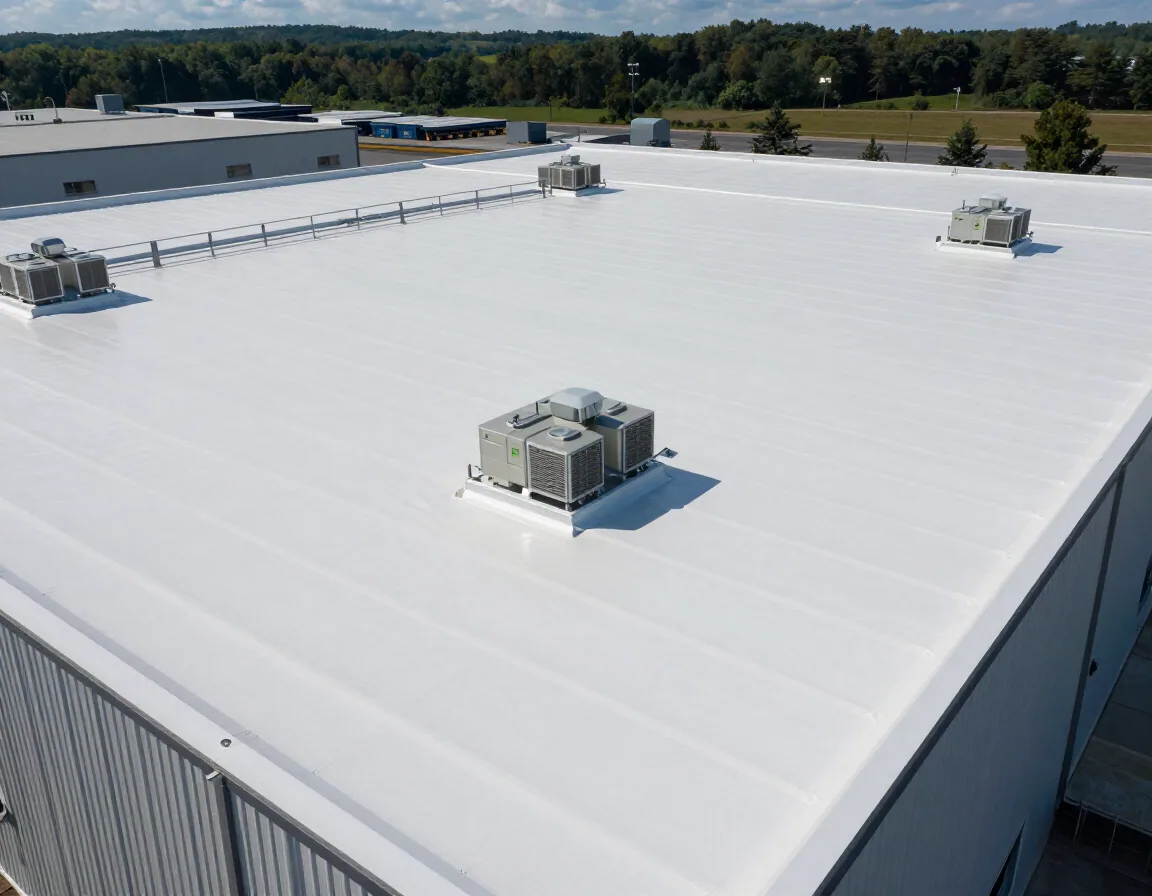
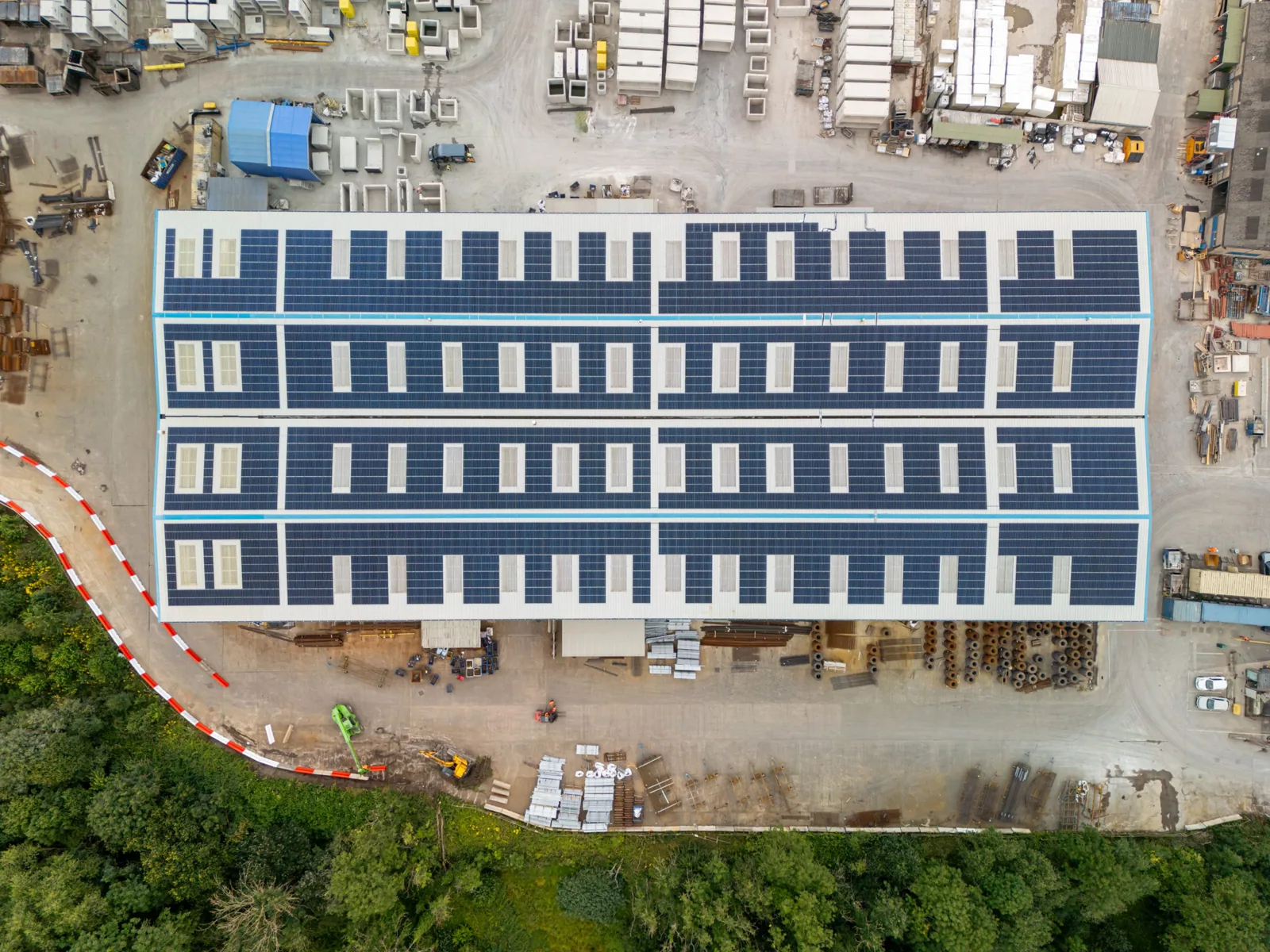
A reflective roof can reduce solar heat absorption at the surface, but its value depends on the existing assembly, insulation, ventilation, drainage, and how the building operates. For commercial properties in Sunrise, FL, we first inspect the membrane and substrate, then compare a reflective replacement, coating, or recover against the owner's objective. A coating over wet insulation or a weakly attached membrane does not correct those conditions. Sunrise’s business parks include distribution, manufacturing, flex space, corporate offices, research, and healthcare uses. Sawgrass International Corporate Park includes corporate offices and research uses; the western Business and Entertainment District combines regional retail, an arena, offices, and mixed-use development. These properties have different occupancy and equipment profiles. Our roof inspection documents the current assembly; a recover evaluation determines whether the existing surface can support the proposed work.
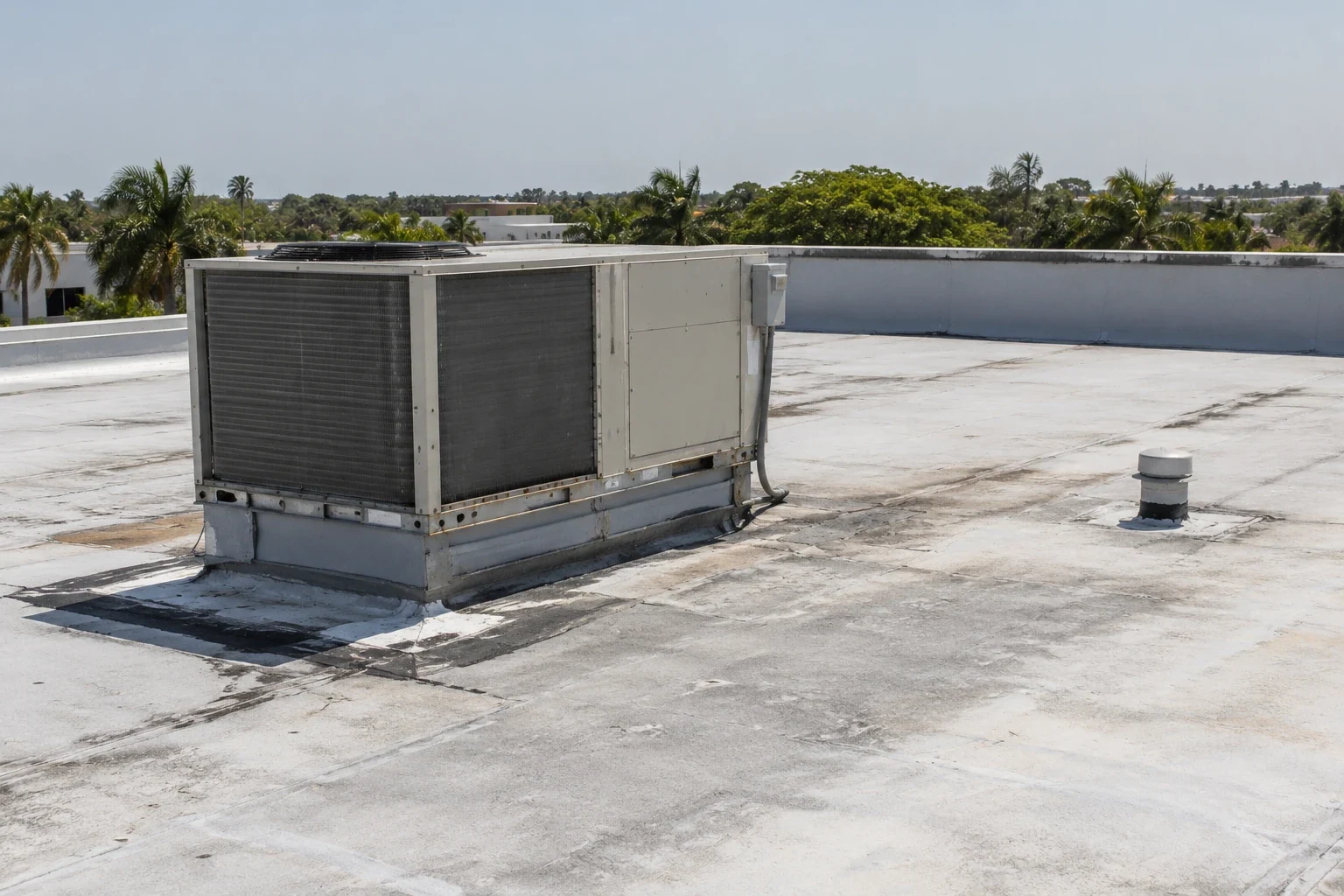
Commercial Roofing Services in Sunrise, FL
Evaluate reflective commercial roofing in Sunrise, FL with assembly condition, drainage, rooftop equipment, and energy-code details planned together.
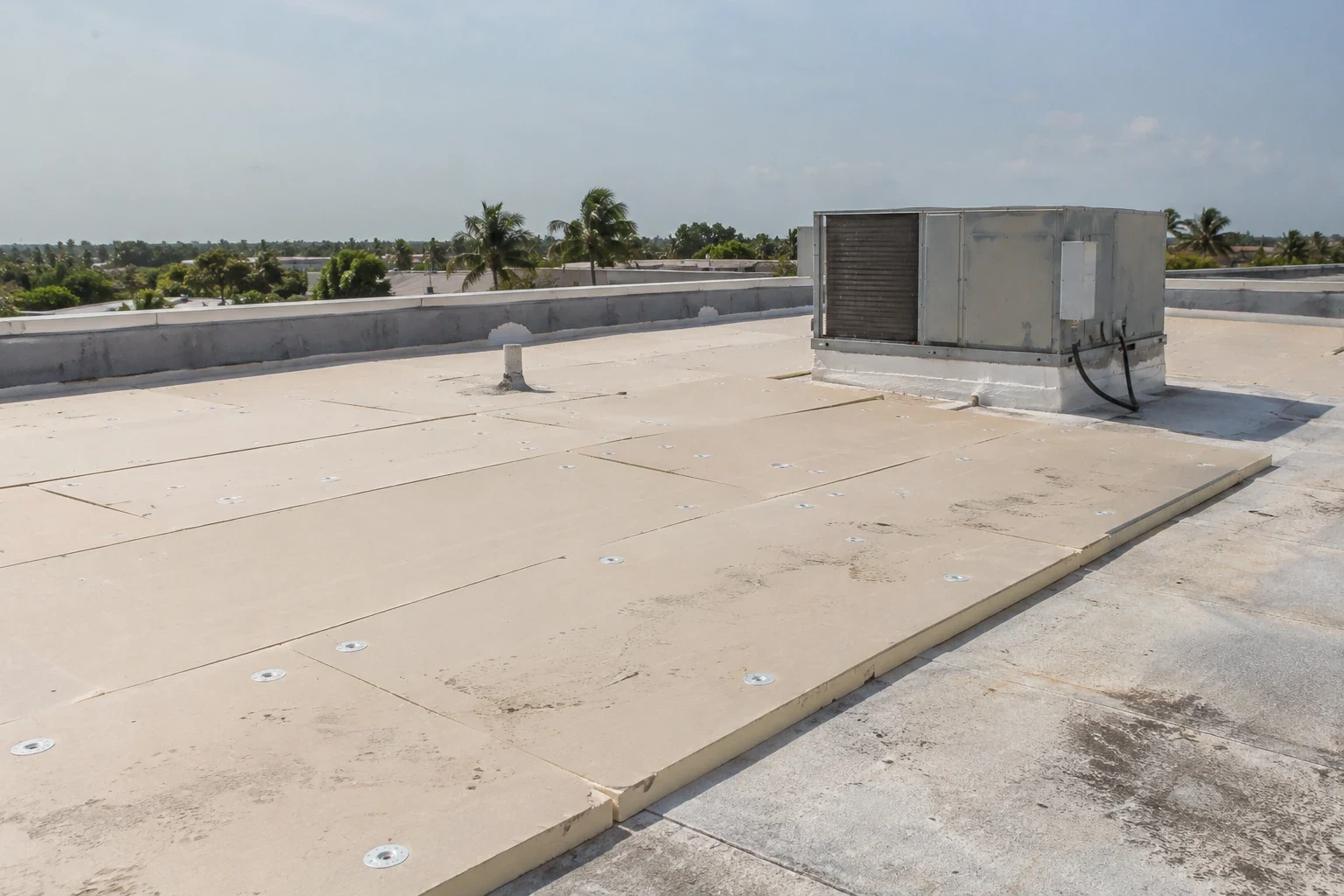
Surface: Choose a reflective system that can bond
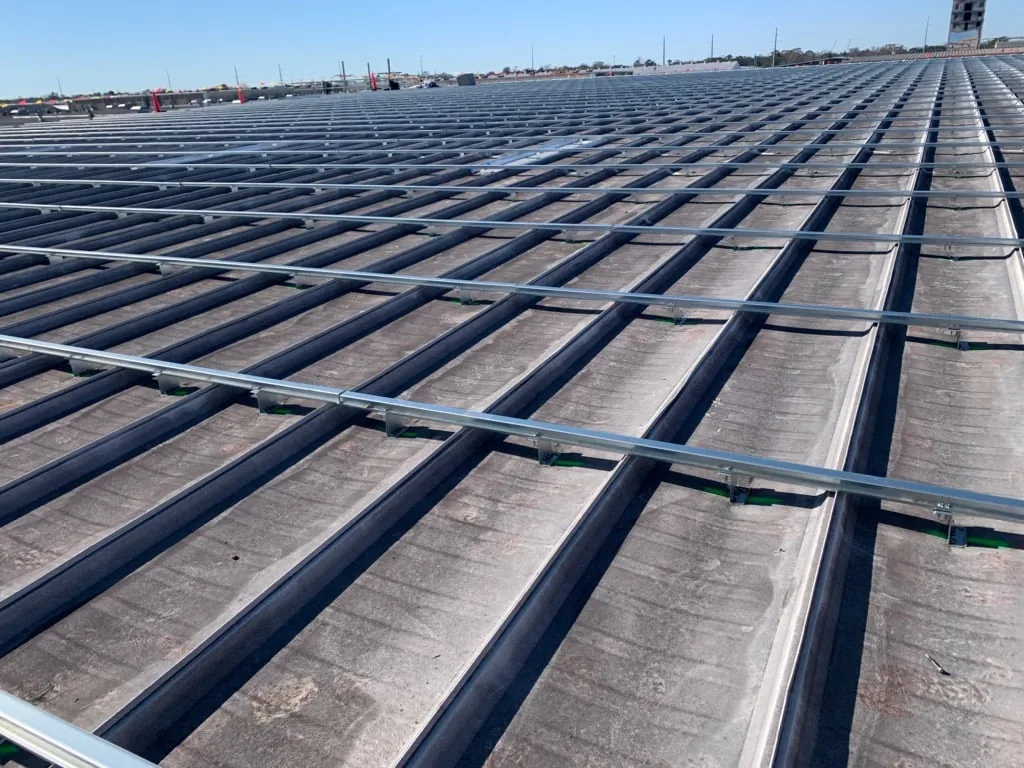
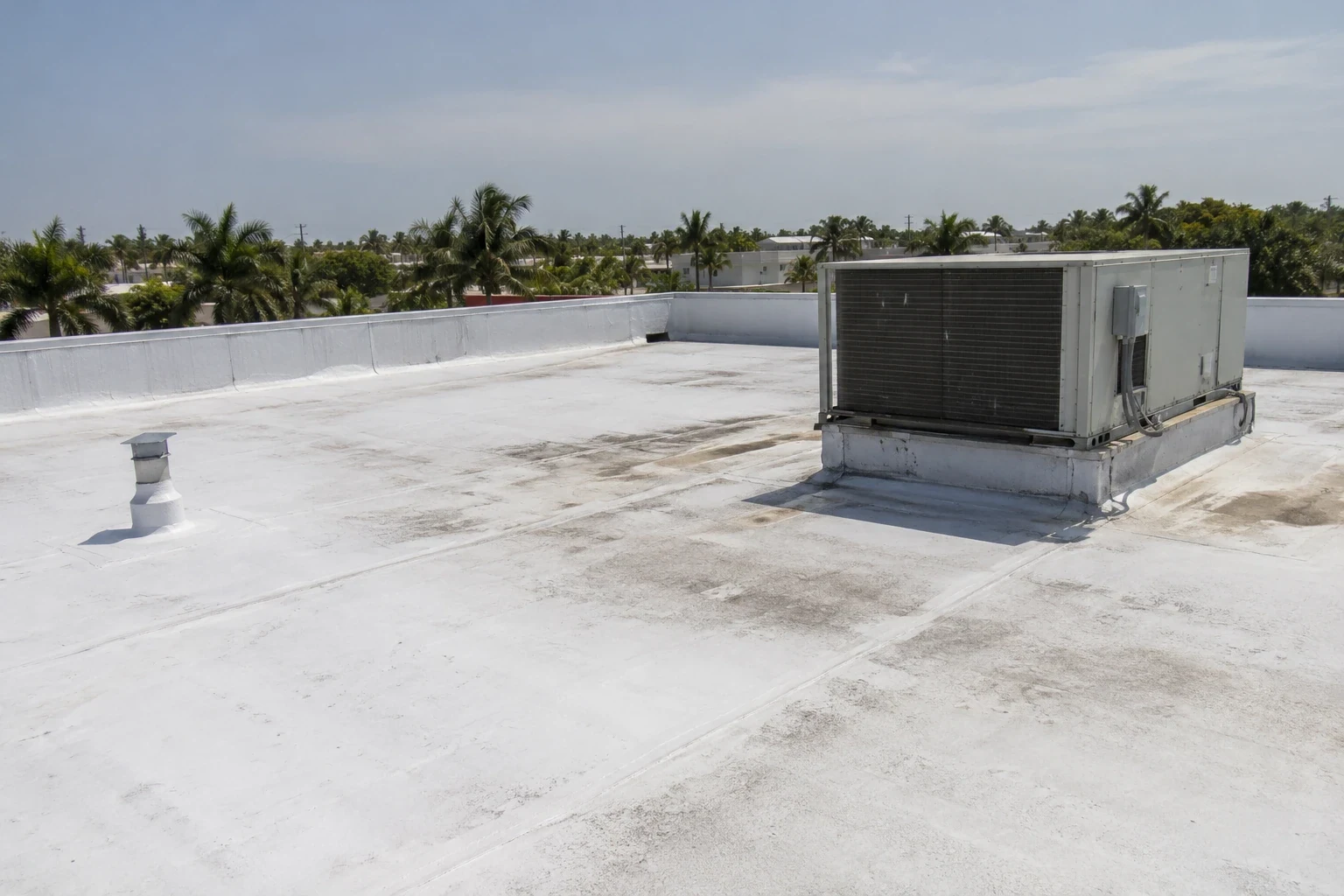
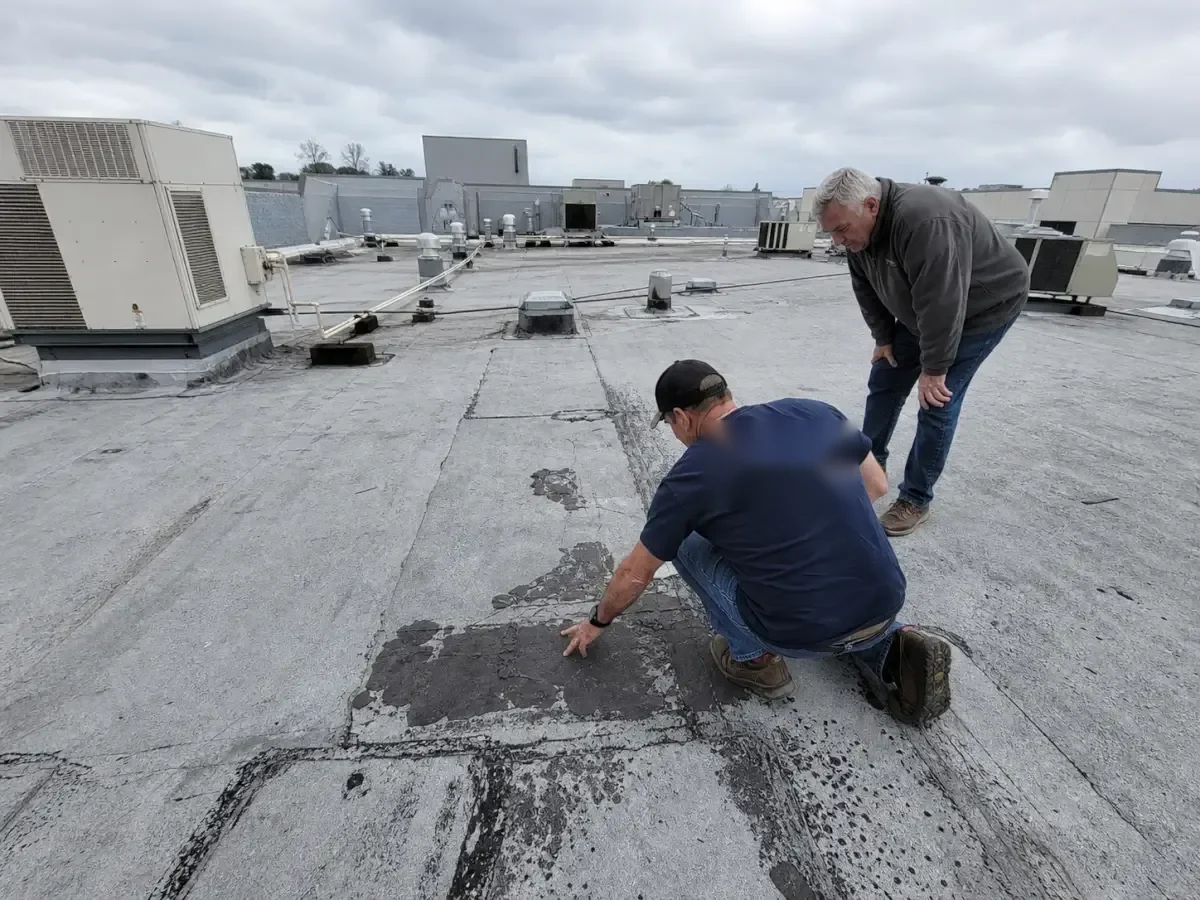
Reflective options include factory-colored membranes and compatible roof coatings. We identify the existing roof type, surface condition, previous coatings, repairs, and locations where water remains after rainfall. Adhesion testing or sample preparation may be needed to confirm that a proposed coating will bond. The roof must be clean and dry enough for the selected system, and seams, penetrations, drains, and perimeter edges need repair before the surface layer is applied. Product color alone does not show whether the assembly is ready.
If the membrane is split, loose, blistered, or holding moisture below, the project may need localized replacement or a larger assembly correction. A coating restoration review can compare surface preparation and coating suitability, while a TPO system assessment can evaluate membrane options. We document the test area, preparation, and any excluded section before pricing the work. Where the owner expects the roof to remain accessible, we also identify foot traffic and service paths that can abrade a new reflective finish.
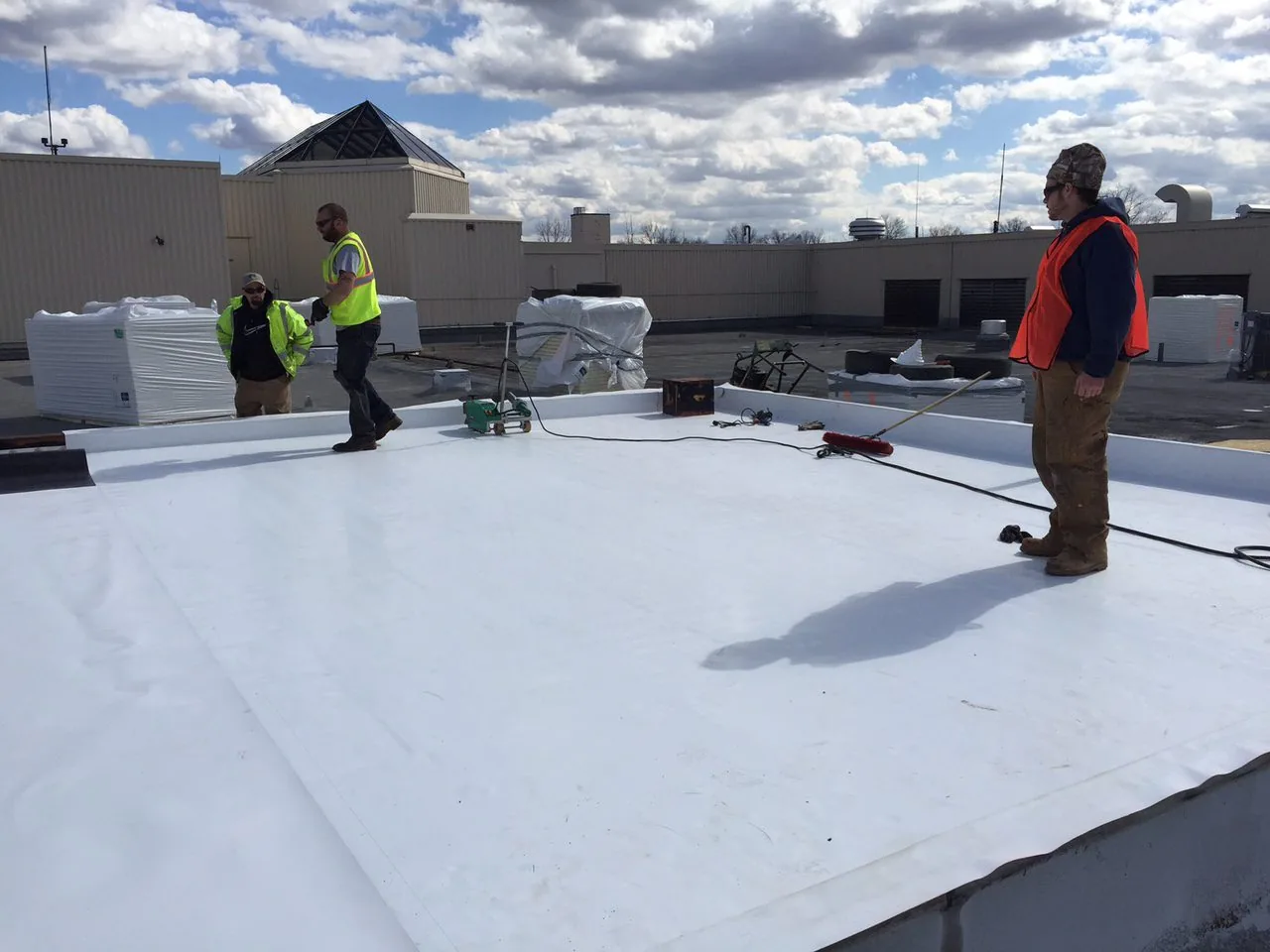
Thermal performance: Separate surface and insulation
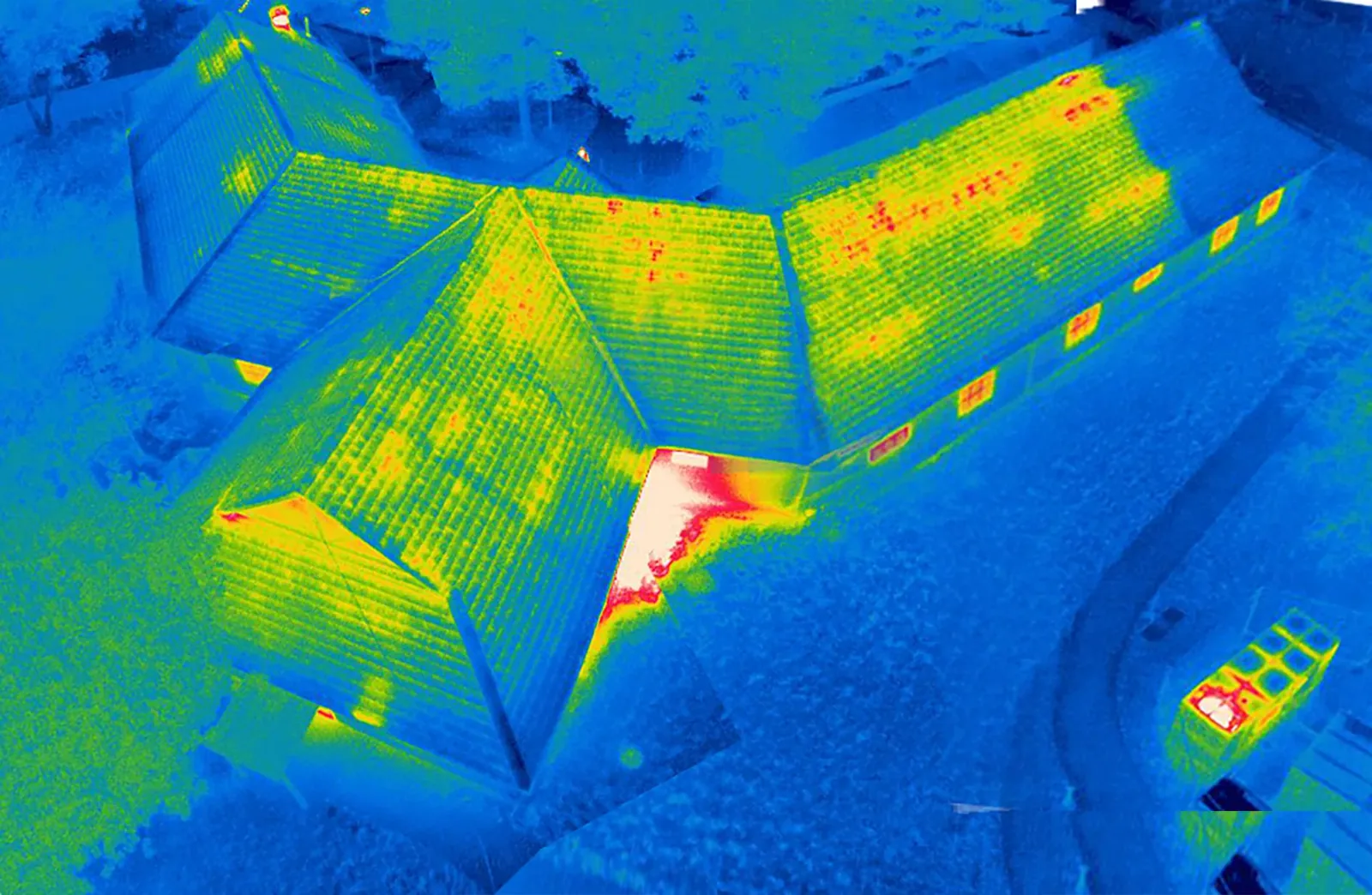
A cool roof changes the solar properties of the outer surface; it does not replace the thermal role of insulation. We review the board type, thickness, moisture condition, attachment, and continuity at curbs or parapets. If wet or crushed insulation is present, adding a reflective layer above it may leave the thermal weakness in place. The design can consider cover board, tapered insulation, or removal where findings support a change to the build-up.
Sunrise has a warm, humid climate with year-round rainfall. Fort Lauderdale's 1991 to 2020 normals show a mean annual temperature of 77.2°F. We compare surface reflectance and insulation condition with utility use and operating hours before estimating any energy effect for a facility. A roof insulation plan can address the thermal layer and finished height together.
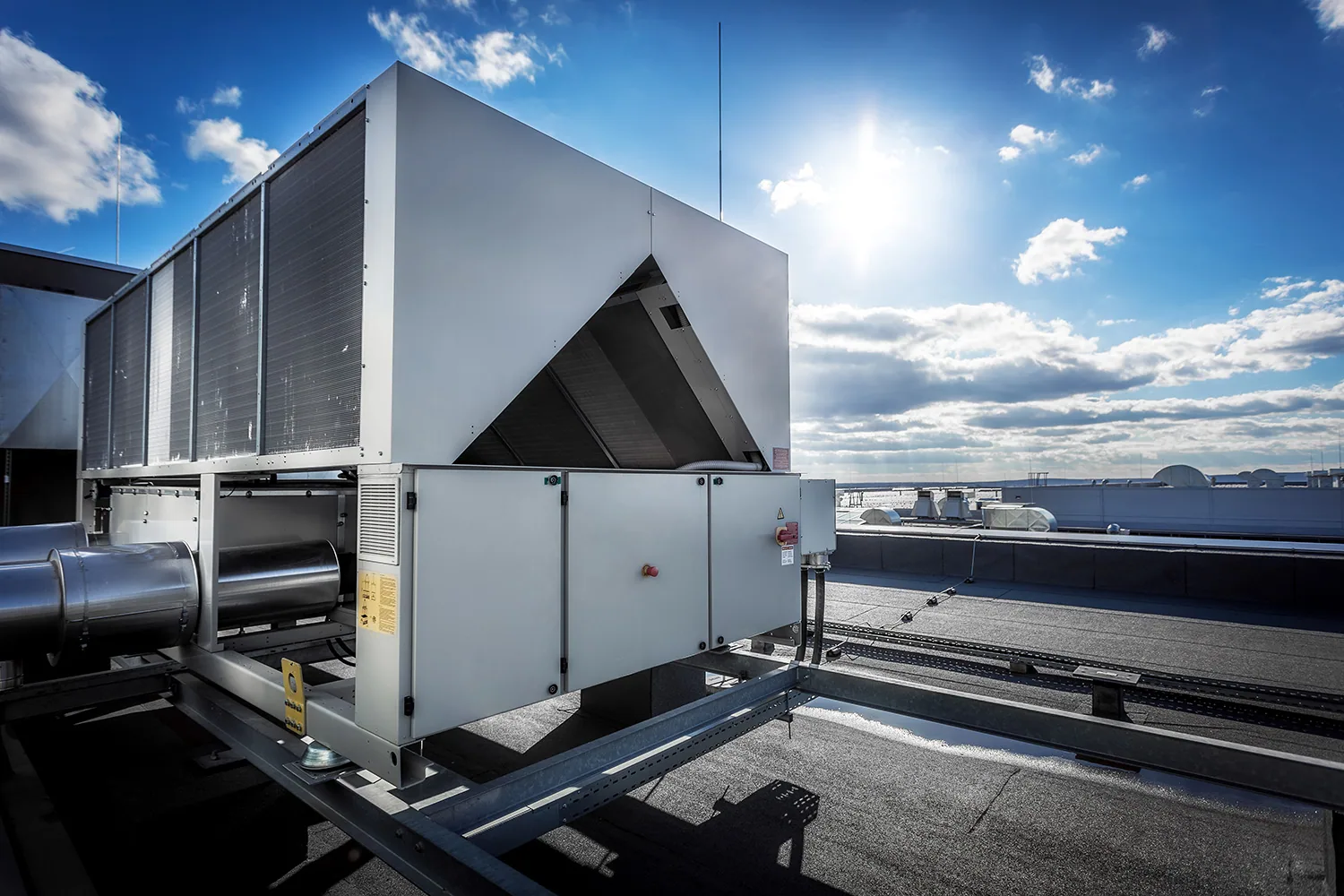
Details: Keep reflective work out of the water path
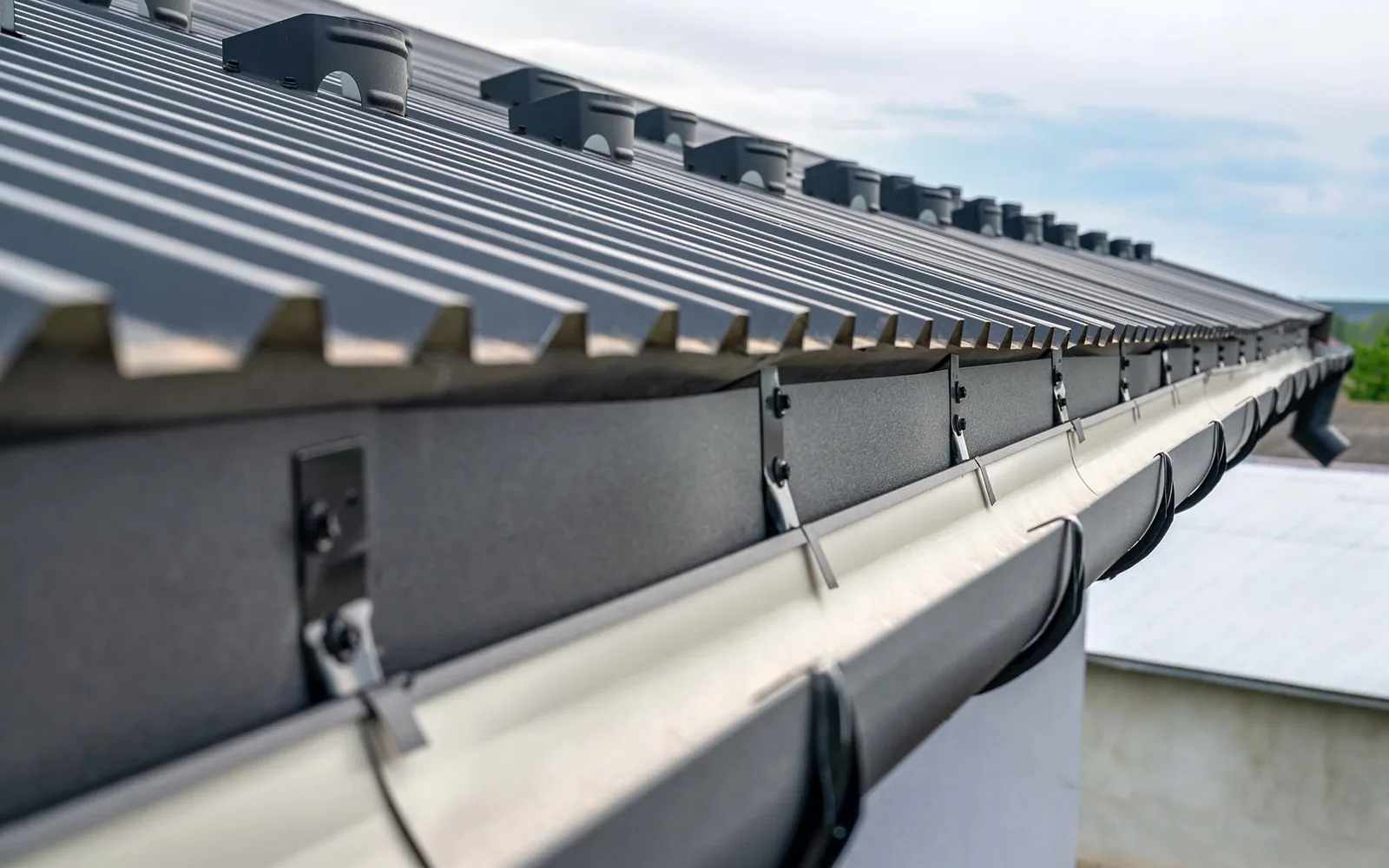
Before surface work, we map drains, scuppers, expansion joints, equipment bases, skylights, and the perimeter. Coating must not bridge a moving joint, cover a blocked outlet, or bury loose metal. Membrane transitions and flashing need to remain visible and serviceable. We mask or protect mechanical equipment, walkway pads, sensors, and other components that should not receive the new finish. The scope identifies repairs and preparation separately from the field coating so the crew can confirm each stage.
Fort Lauderdale receives 37.49 inches of normal rainfall during the South Florida rainy season. Sunrise roof design should send that runoff toward functioning outlets while retaining the specified overflow path. We confirm the coating or membrane will not reduce drain access or obscure the edge detail. A drainage review can address outlet function, and edge-metal work can correct a separate perimeter condition. For properties with several roof heights, we inspect transitions where runoff can move from one section onto another.
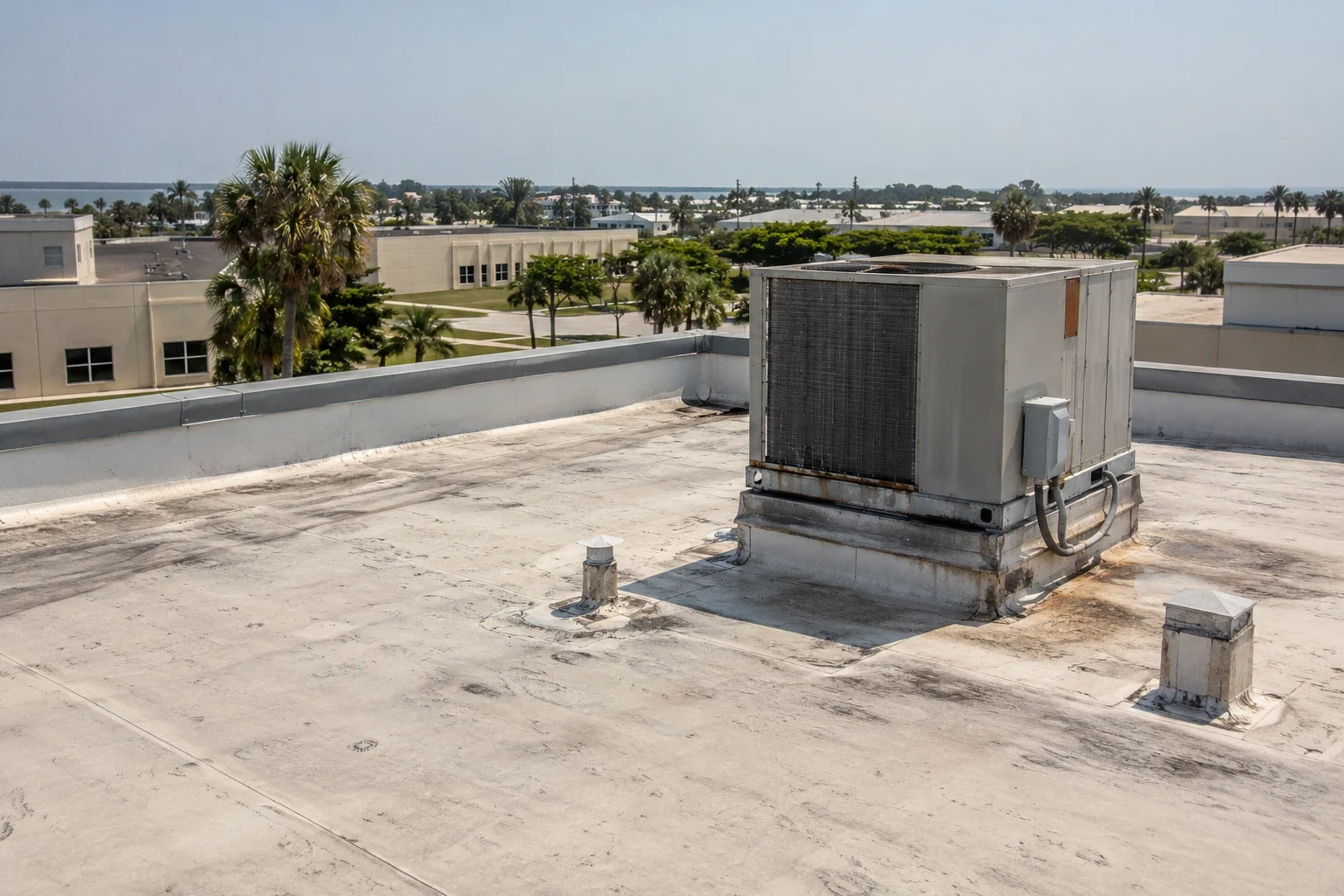
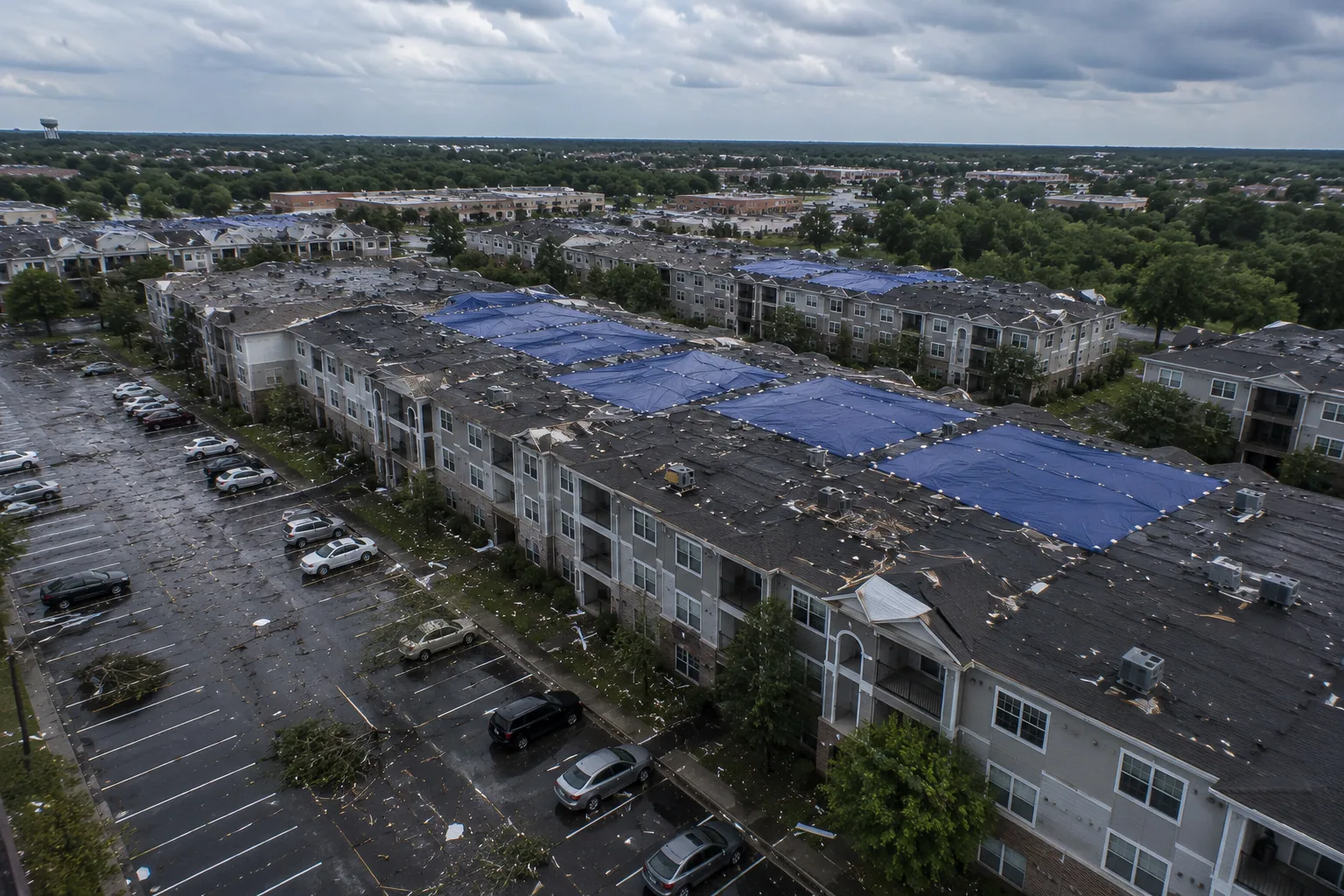
Equipment: Protect access and service clearances
Cooling equipment, exhaust fans, conduit, and pipe supports can interrupt a reflective roof surface and constrain maintenance access. We label each unit and check curb flashing, condensate discharge, support stability, and the path technicians use to reach service panels. A coating cannot stabilize a loose base or replace a missing curb transition. If equipment needs to be lifted or disconnected, the proposal names the responsible trade and how the roof opening will be kept weather-tight.
Sunrise Commerce Park includes manufacturing and distribution as well as offices; Sawgrass Technology Park is a multi-building office and technology campus. Roof access, equipment schedules, and operating hours can vary across these settings. A curb and support inspection can identify related base work before a reflective system is installed. The facility contact should provide unit tags, roof plans, shutdown requirements, and any restricted service route so the installation does not block equipment operation.
Project fit: Match the installation to the building
A coating may suit a sound, compatible membrane with limited deterioration; a new membrane or replacement can be more appropriate when seams, attachment, or substrate need broader correction. We compare the supported options by preparation, expected repair boundary, access, warranty requirements, and the work needed at each transition. If the existing roof has multiple repair layers, we identify the areas that require test openings before a final specification. No reflective surface should be presented as a substitute for correcting active leaks or drainage failure.
In Sunrise's western Business and Entertainment District, public-facing retail, event, office, and mixed-use properties may need a work schedule that avoids peak occupancy or deliveries. Sawgrass International Corporate Park also includes healthcare and research uses with sensitive operating areas. A condition report can preserve inspection findings and test limits, while a roof asset record can retain system and maintenance history. We state what the selected work does and what remains outside the approved roof scope.
Installation: Verify preparation, coverage, and access
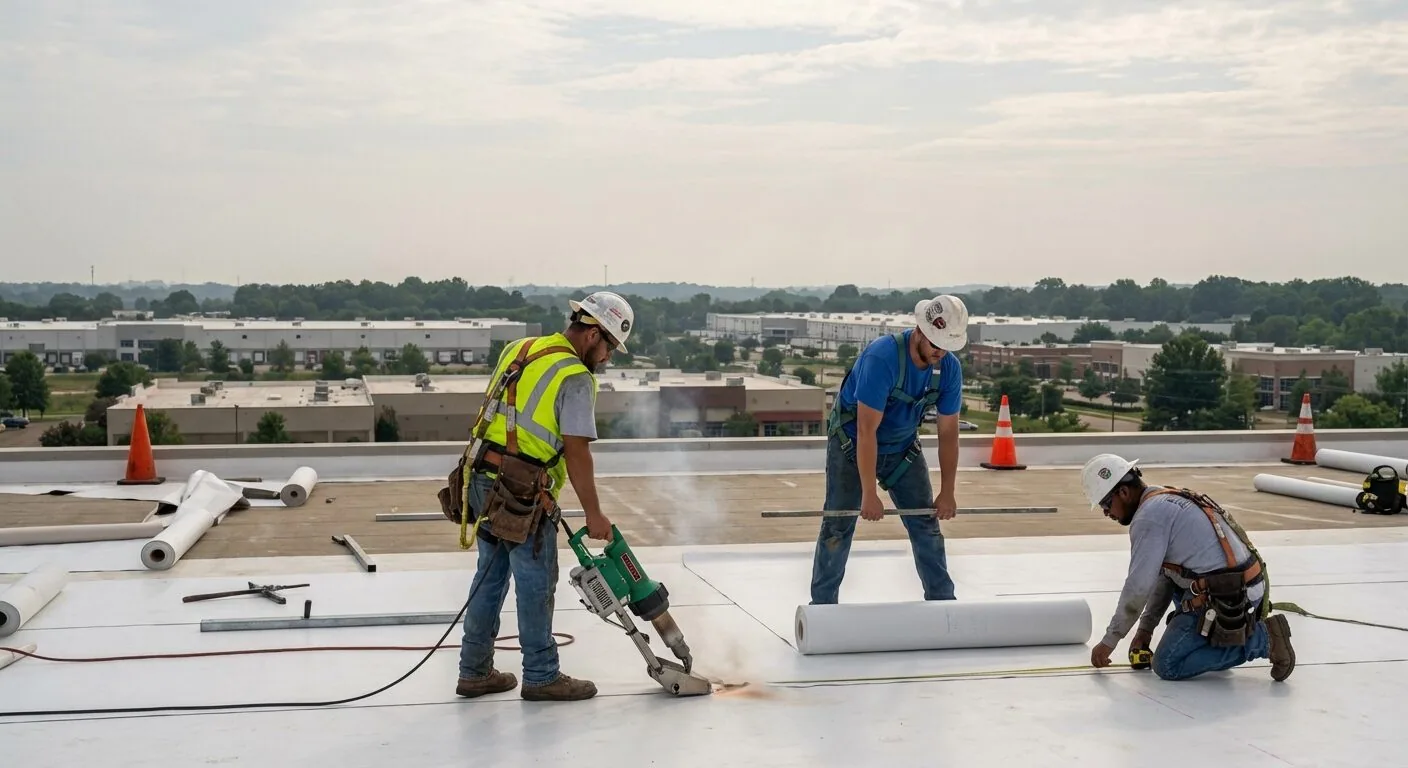
The work sequence begins with weather checks, surface cleaning, repairs, and confirmation that the substrate is suitable. We protect drains and equipment, apply or install material at the specified coverage, and record the roof zones completed during each shift. If moisture, loose membrane, or poor adhesion appears during preparation, work stops at that boundary for review. The closeout identifies the changed condition and the approval required before the crew expands the scope.
At completion, we photograph representative seams, penetrations, edges, drains, and finish areas. The owner receives material details, test results where performed, any excluded location, and the maintenance instructions needed to protect the system. A scheduled maintenance visit can check outlets and repairs after installation. For a Sunrise roof assessment, share the current roof plan, system history, energy objective, utility data, equipment schedule, and access limits so the recommendation starts with the building's actual condition.
Frequently Asked Questions
Will a cool roof lower our energy bills?
No specific savings can be promised from roof color alone. Results depend on insulation, HVAC efficiency, controls, occupancy, and utility rates. We can document the roof assembly and help compare the proposed surface with your facility data.
Can a reflective coating go over any commercial roof?
No. The membrane, prior coatings, moisture condition, adhesion, and drainage have to suit the selected product. Testing and preparation may be needed, and a damaged or wet assembly may require repair before a coating is considered.
What is the difference between a cool roof and added insulation?
A reflective finish changes how the roof surface absorbs solar energy. Insulation affects heat transfer through the roof assembly. Both can be evaluated, but they solve different design questions and should be specified as separate layers.
Will coating cover existing roof drains or flashing?
It should not block outlets or hide a defective transition. We map drains, scuppers, seams, curbs, and metal edges before work, then protect components that must remain clear and repair failing details within the approved scope.
How should we compare a coating with a new membrane?
Start with the existing assembly, test findings, roof history, attachment, drainage, and project requirements. We can define preparation and repair limits for a coating option alongside the removal and transition work involved in replacement.
Compare reflective roof options
Share roof records, leak history, utility data, equipment schedules, and the outcome you want from the project. We will inspect the assembly and define which reflective options are supportable.
Call 555-555-5555 or request a roof assessment.