
Commercial Roof Heat and UV Damage Repair in Sunrise, FL
Commercial Roof Heat and UV Damage Repair
Sunlight and heat act on a roof assembly over time, changing exposed surfaces, sealants, and details where different materials meet. The visible color of a membrane does not show whether it has become brittle, lost bond, or retained moisture below. We inspect condition by roof zone, test where concealed layers could change the scope, and separate weathering from an active leak path. Sunrise's office, research, manufacturing, and distribution buildings carry varied equipment and access patterns. A roof condition inspection connects the surface change to the membrane, insulation, and drainage plane beneath it.
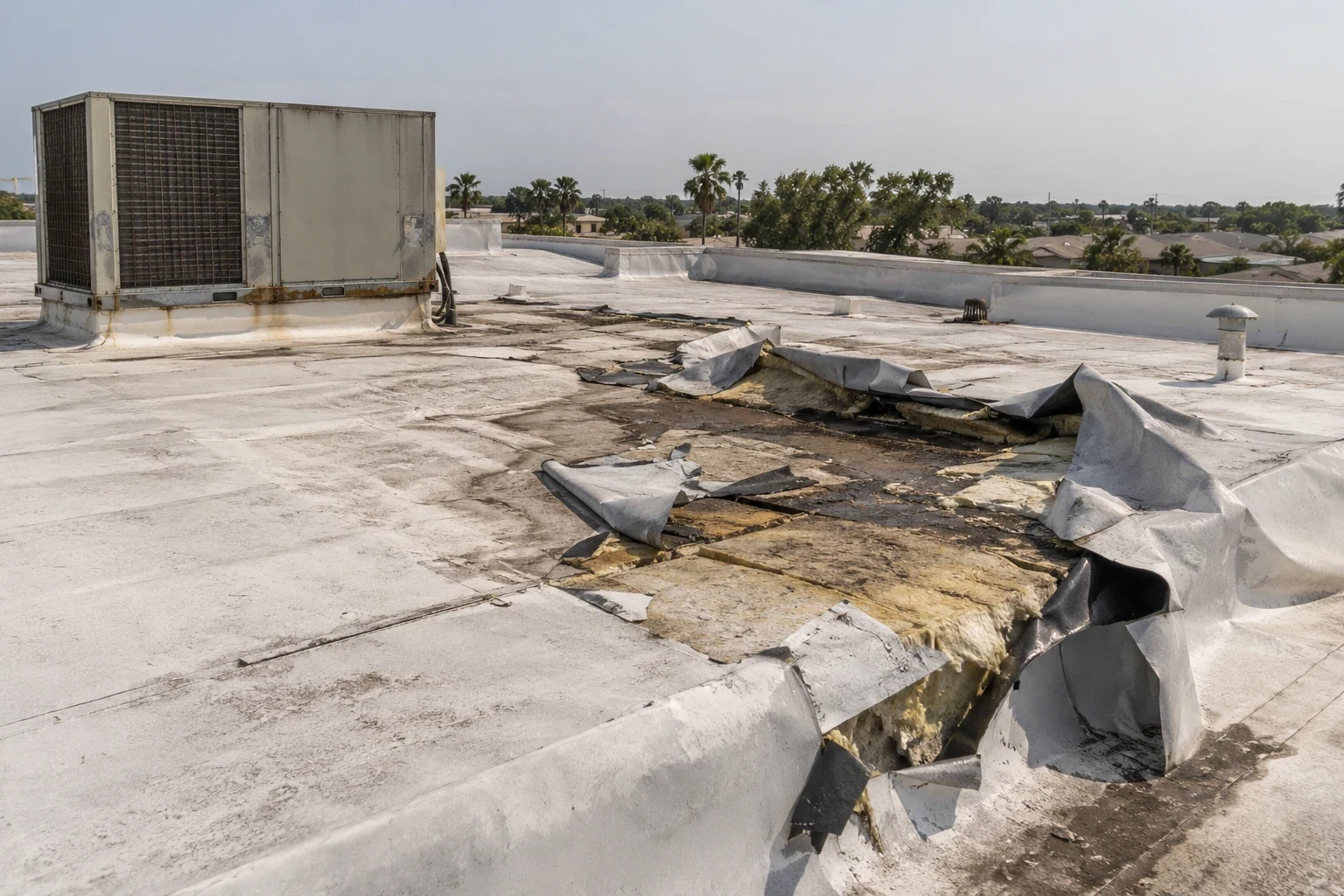
Roof Damage Repair in Sunrise, FL
Commercial heat and UV roof repair in Sunrise, FL. We inspect membrane aging, seams, coatings, attachment, and moisture before selecting repairs.
Surface condition: Look for change that affects roof function
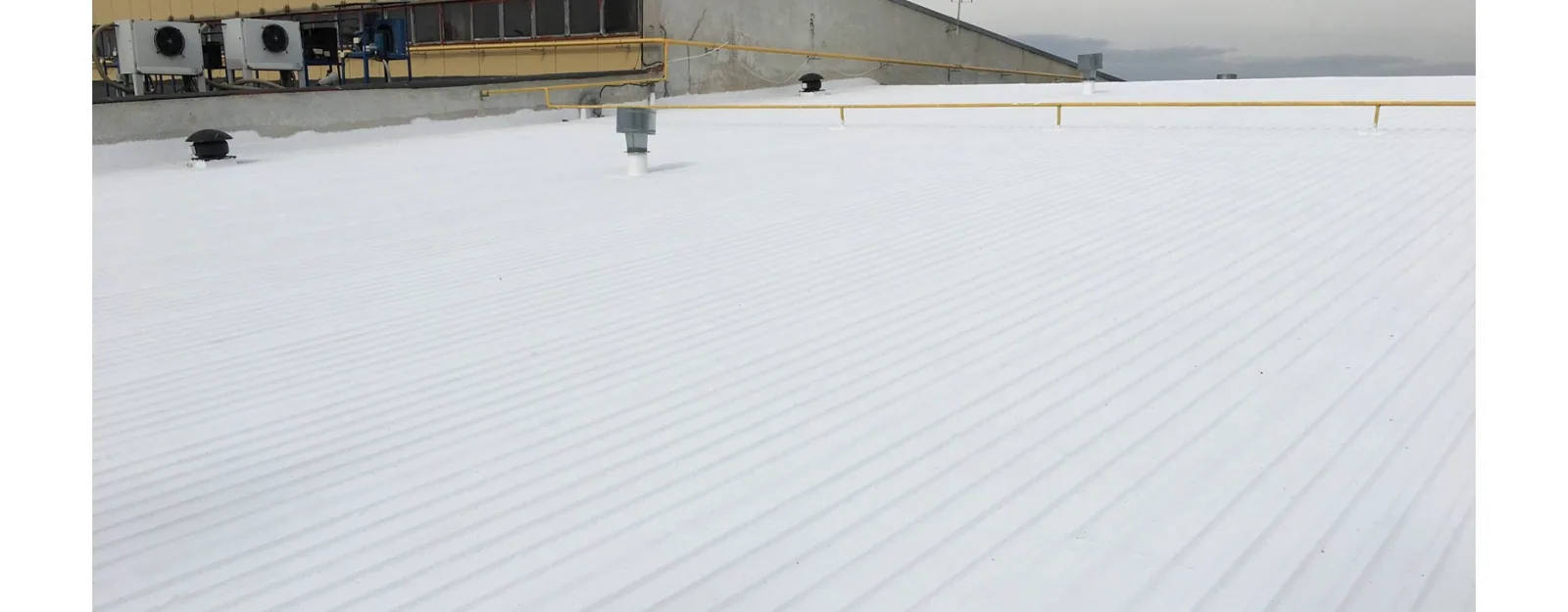
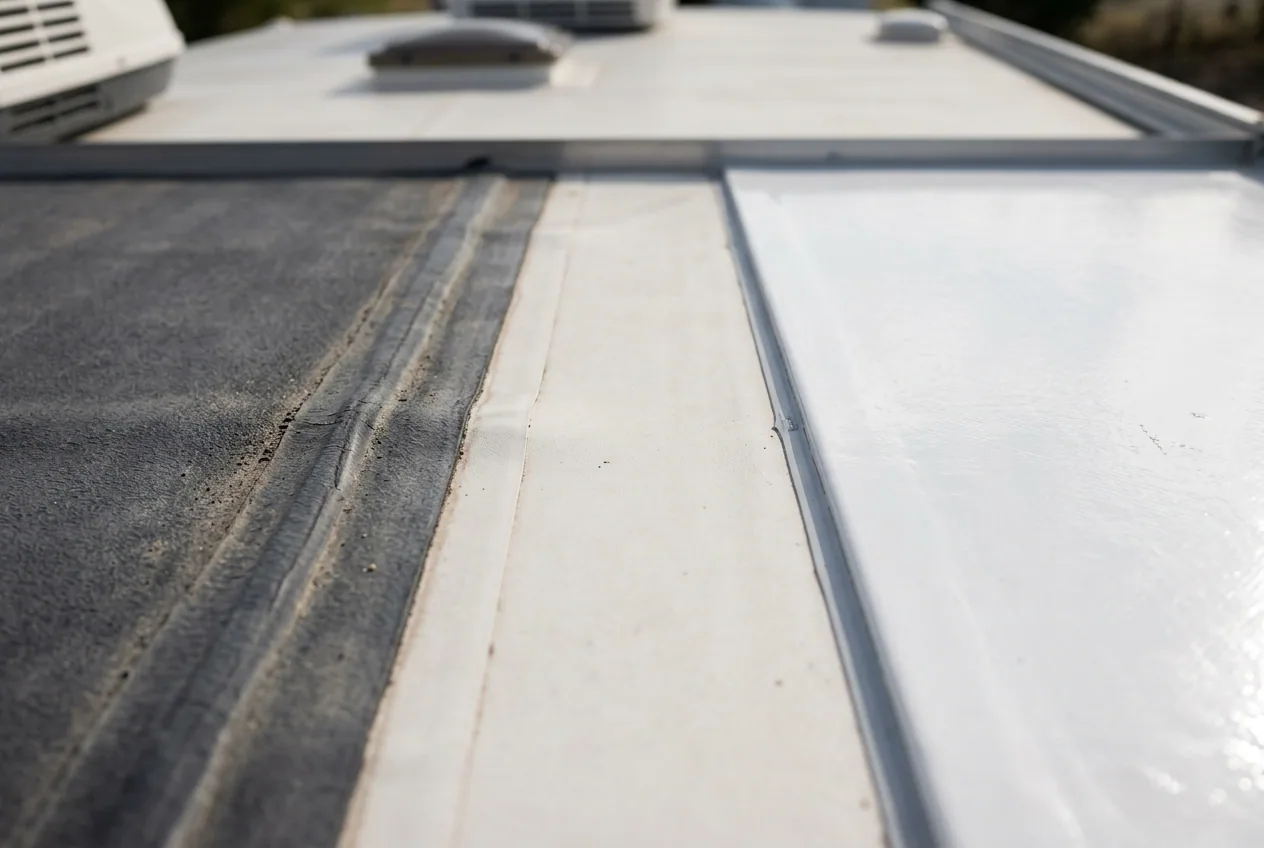
Heat and ultraviolet exposure can age sealants, embrittle some materials, reduce coating flexibility, or accelerate shrinkage at membrane edges. We check surface texture, cracks, exposed reinforcement, open laps, worn walk paths, and changes near penetrations. A color shift by itself does not define failure; the question is whether the waterproofing layer remains continuous and attached. We photograph the condition and compare areas with different exposure, shade, drainage, or maintenance history.
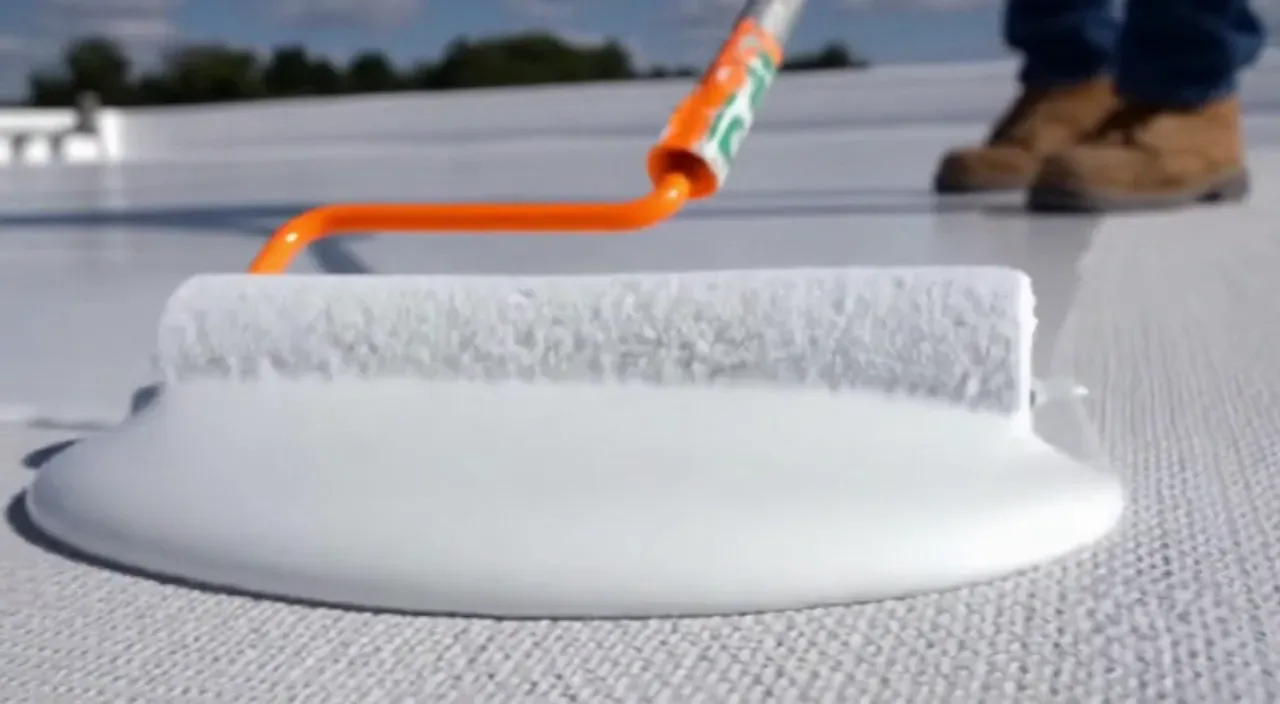
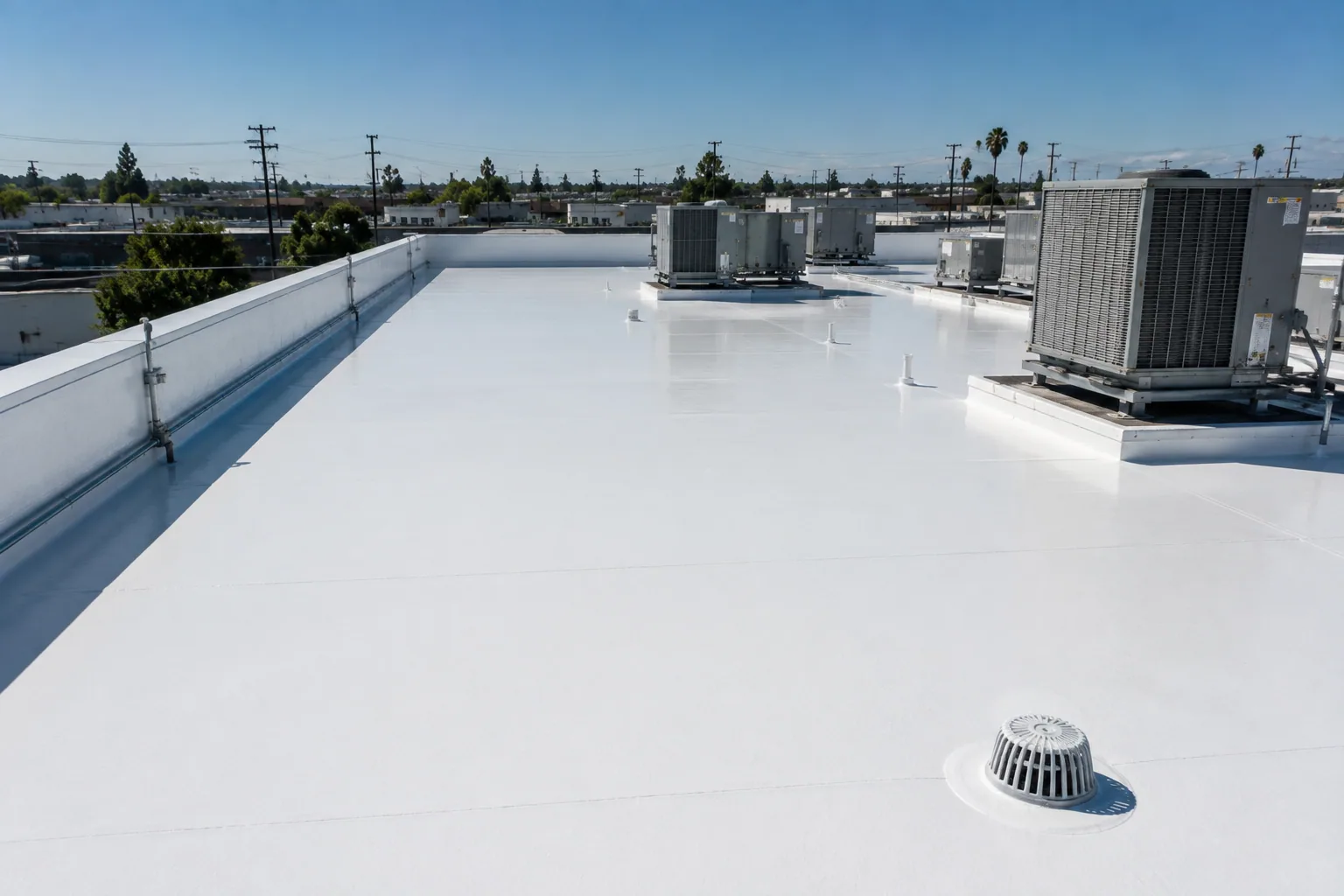
Long periods of sun can make roof surfaces hot enough to affect when work can be performed and how materials are handled. A repair plan accounts for substrate temperature, preparation, and the product's application requirements. Silicone coatings and acrylic coatings have different properties and need suitable substrate and moisture conditions. We test adhesion and inspect the existing surface before recommending another coating layer.
We look for cracking around fastener plates, loss of granules on modified bitumen, surface checking, and edges that have begun to pull back from a curb. The extent is measured by roof zone and checked against the maintenance file. If the same condition appears only on exposed faces, the pattern may help explain the stress; if it follows a seam or repair edge, the joint needs separate testing.
Thermal movement: Inspect joints and material transitions
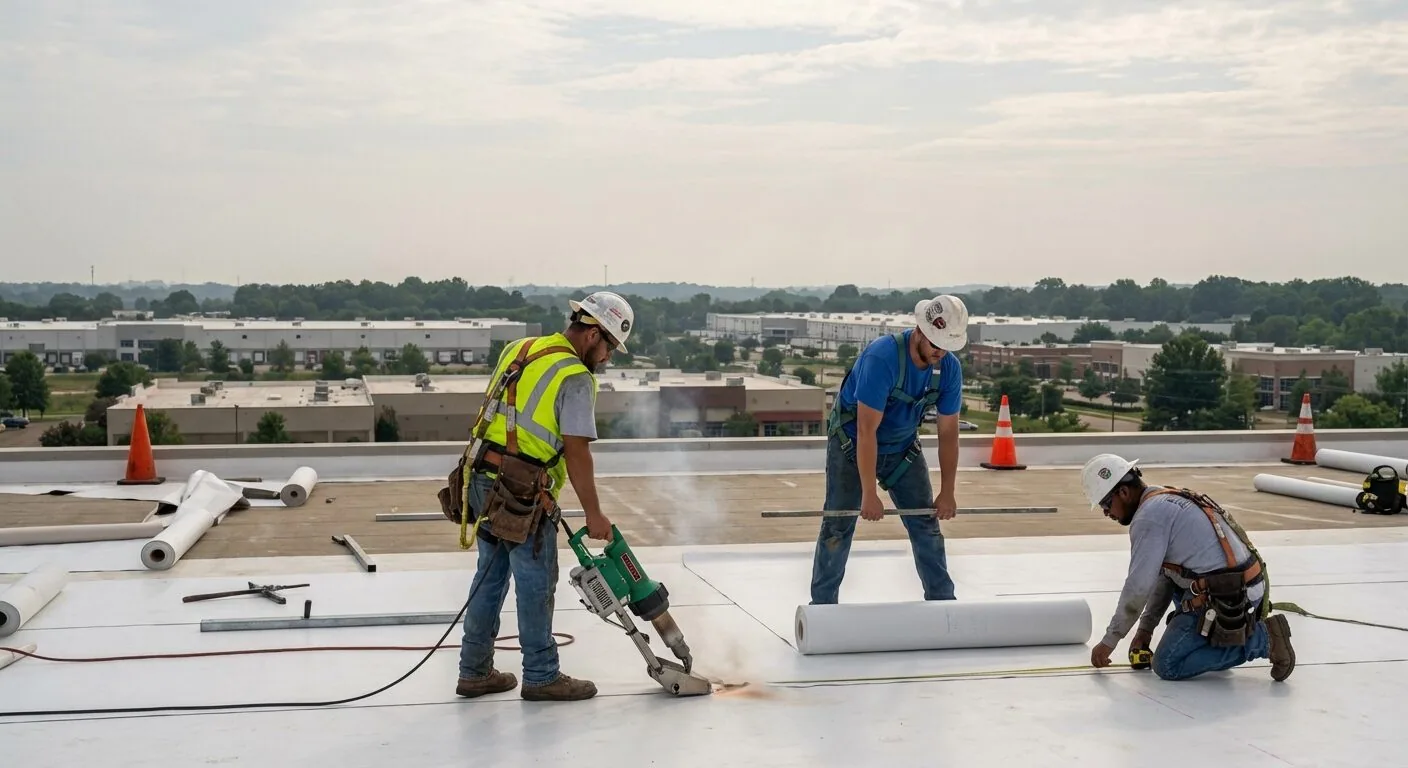
Daily heating and cooling can move roof components at different rates. Metal panels, curbs, pipes, and membrane fields expand and contract, loading fasteners, sealant joints, and flashing terminations. We inspect those connections for elongated holes, pulled screws, split sealant, metal distortion, and membrane stress. If movement has opened a joint, the repair must allow the component to move while maintaining a watertight connection.
Sunrise's business parks include multi-building office, flex, distribution, manufacturing, and technology uses. Equipment density and roof geometry vary, so we identify the affected system before naming a movement detail. A flashing repair may address a failed transition, while a seam inspection checks whether the membrane field has released. We also check supports and attachments rather than applying sealant to a moving component that needs a new connection.
Thermal cycling can also affect rooftop supports and walkway connections. We inspect base plates, fasteners, pipe boots, and counterflashing for movement, then note where mechanical work could load the membrane. Sawgrass International Corporate Park contains office and regional operations, while Sunrise Commerce Park includes distribution and manufacturing uses; equipment density varies, so we record the actual rooftop components rather than infer them from the district.
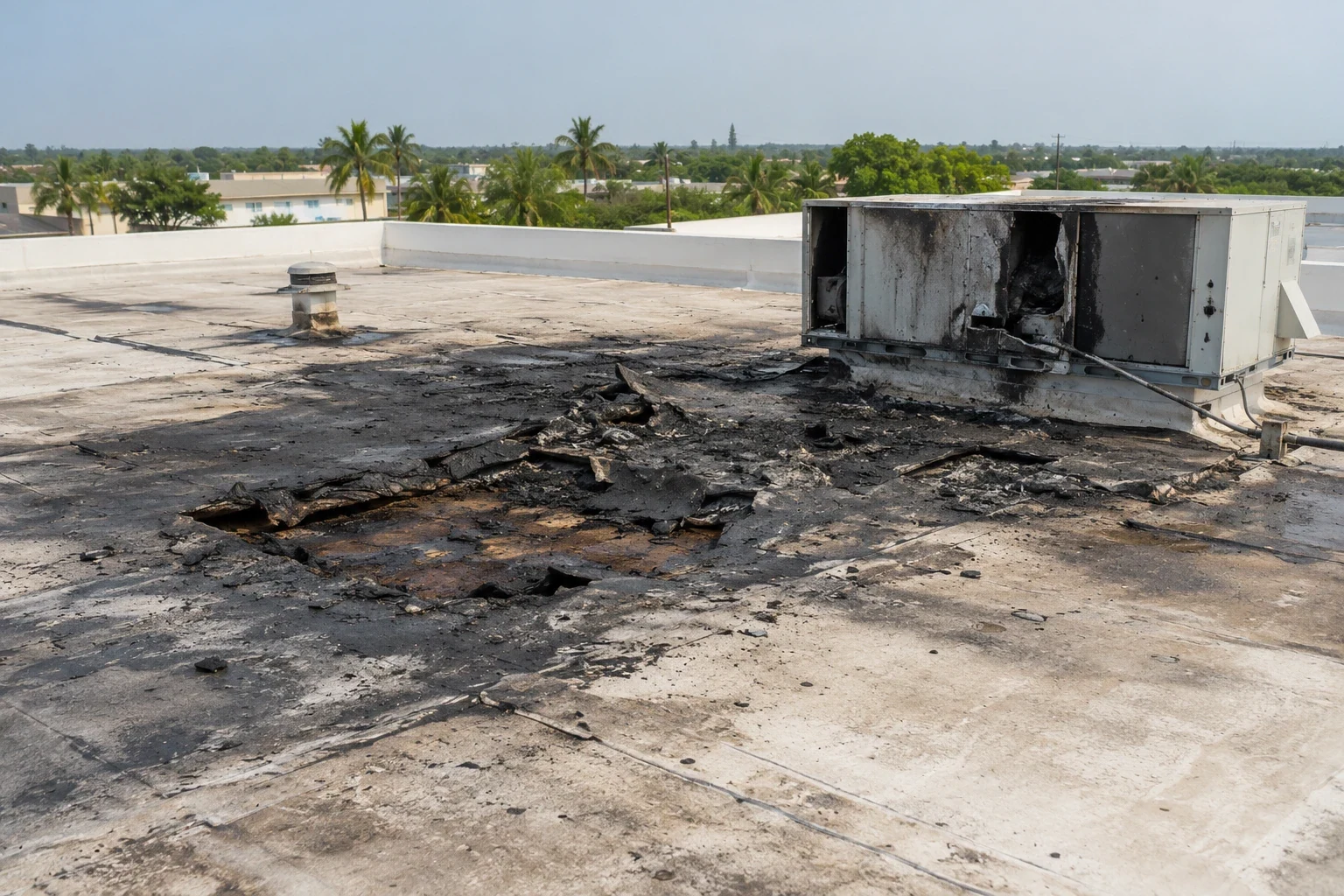
Moisture and vapor: Check the layers below the surface
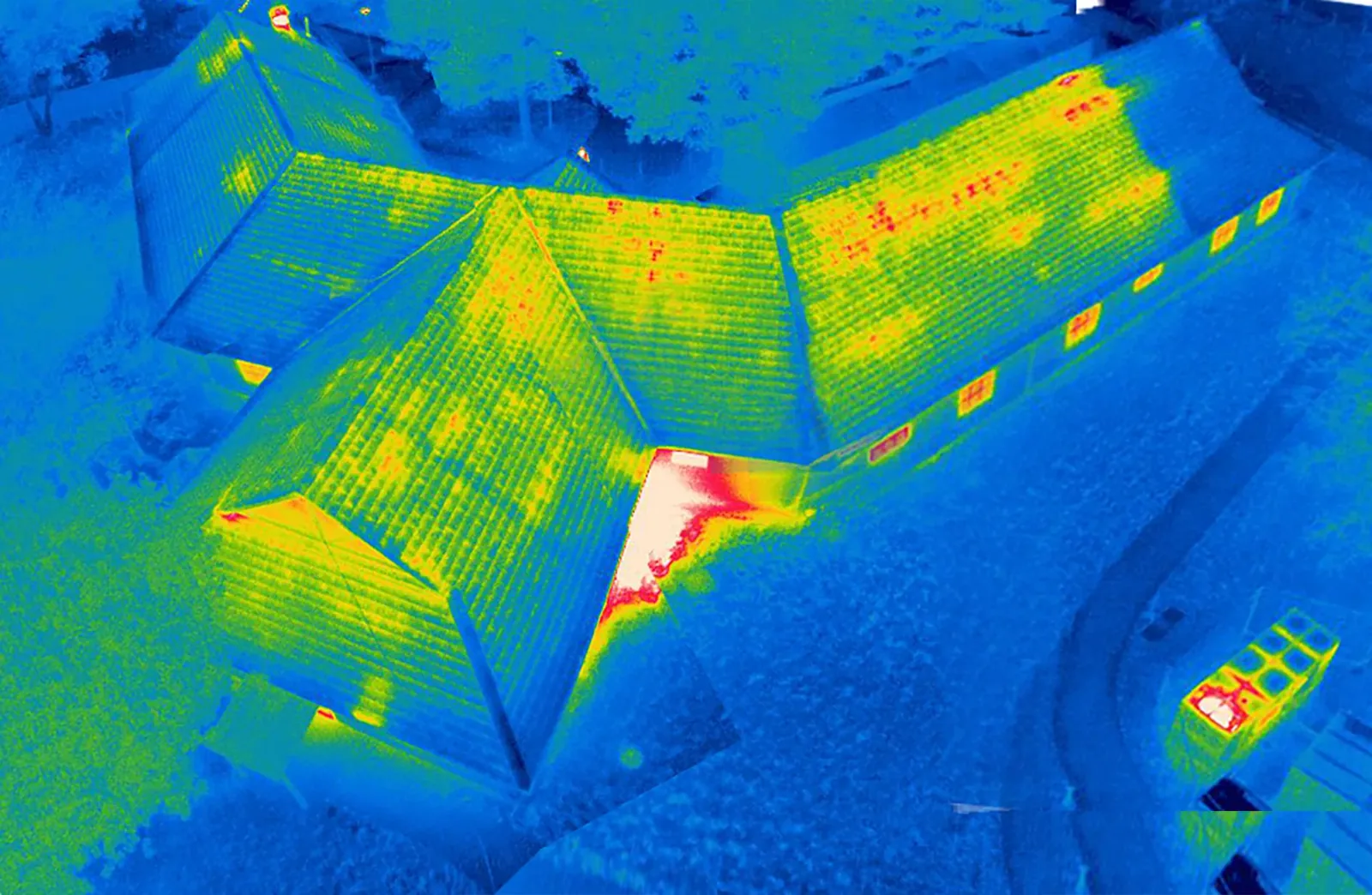
Heat can drive vapor through a layered roof, while rain or a small opening can add liquid moisture from above. Blisters, soft insulation, wet deck, and interior marks have different causes and require inspection before repair. We compare the roof surface with leak reports, drainage, and equipment locations. If the membrane is breached or a restoration decision depends on hidden material, a test cut confirms the layers and condition at that point.
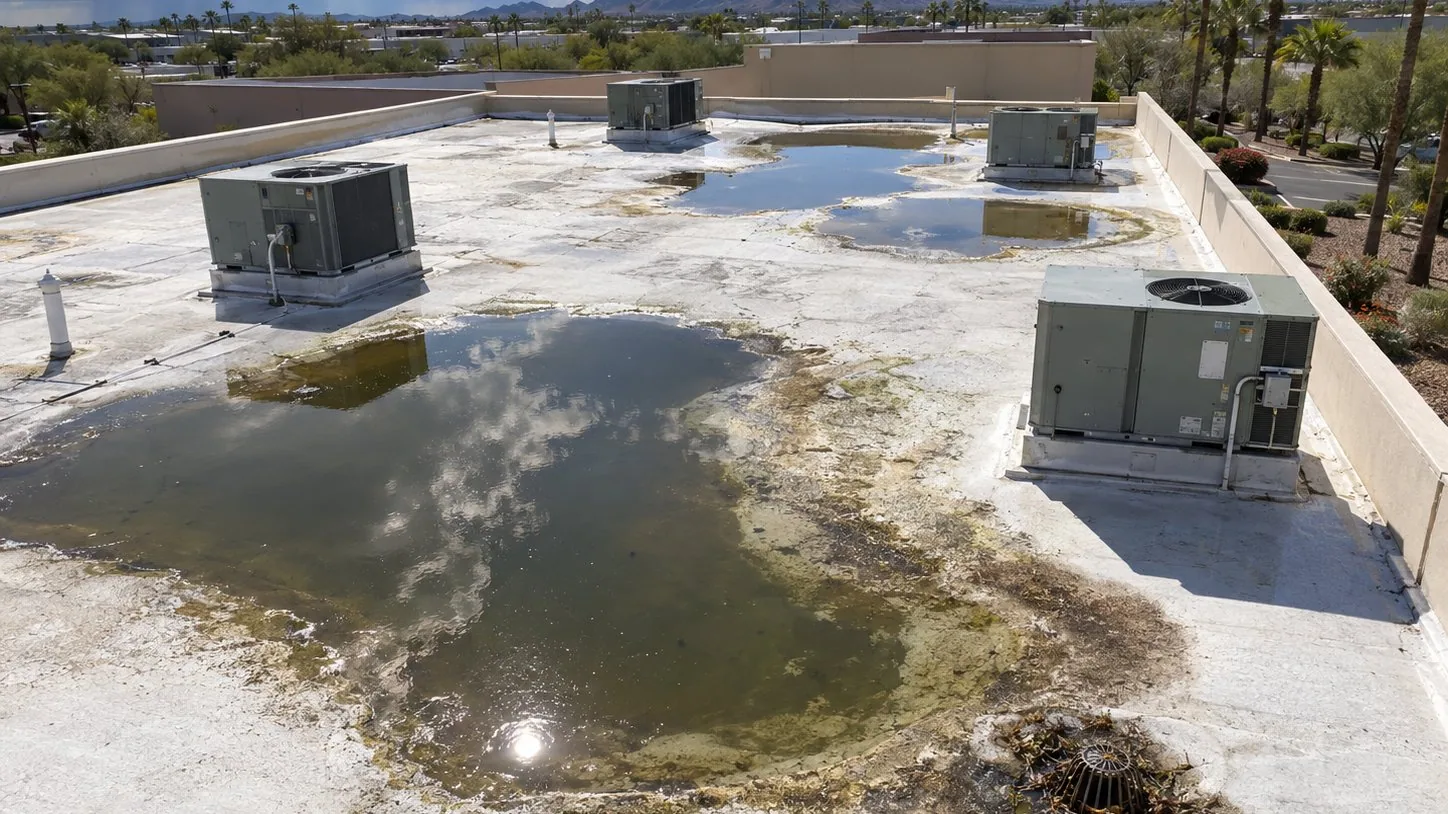
Fort Lauderdale's long-record climate normals describe a warm South Florida setting with substantial rainfall, and the local wet season concentrates drainage demand. We use those regional conditions to plan inspection and maintenance timing, then rely on the building itself to determine whether insulation is wet or a seam has failed. A moisture survey can identify areas for testing; a drain inspection checks water removal. The report states where the test occurred and what remains unconfirmed.
When a leak returns only during prolonged rain, we check both the surface opening and the route water follows across the drainage plane. That comparison can distinguish a worn coating from a hidden seam or flashing failure.
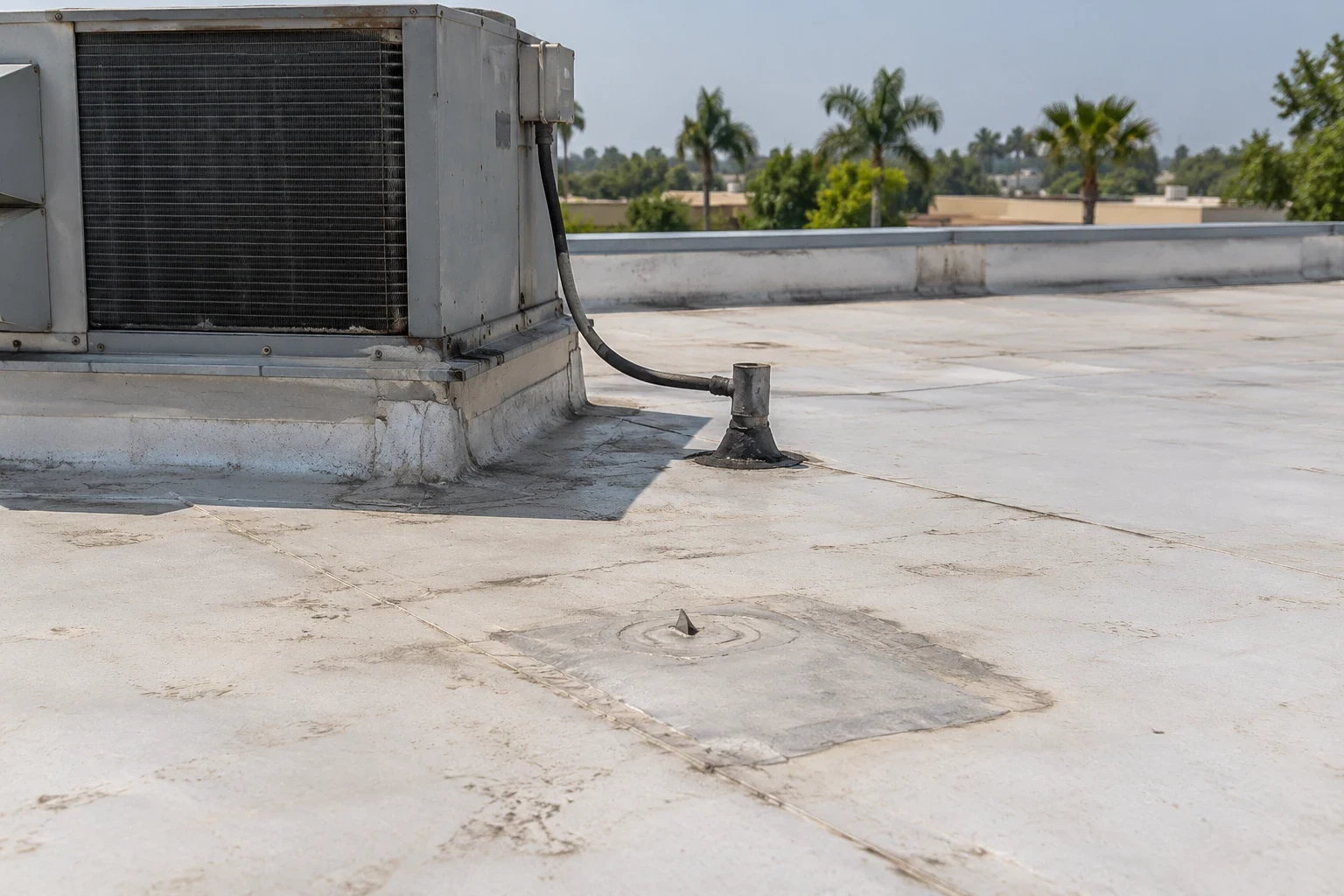
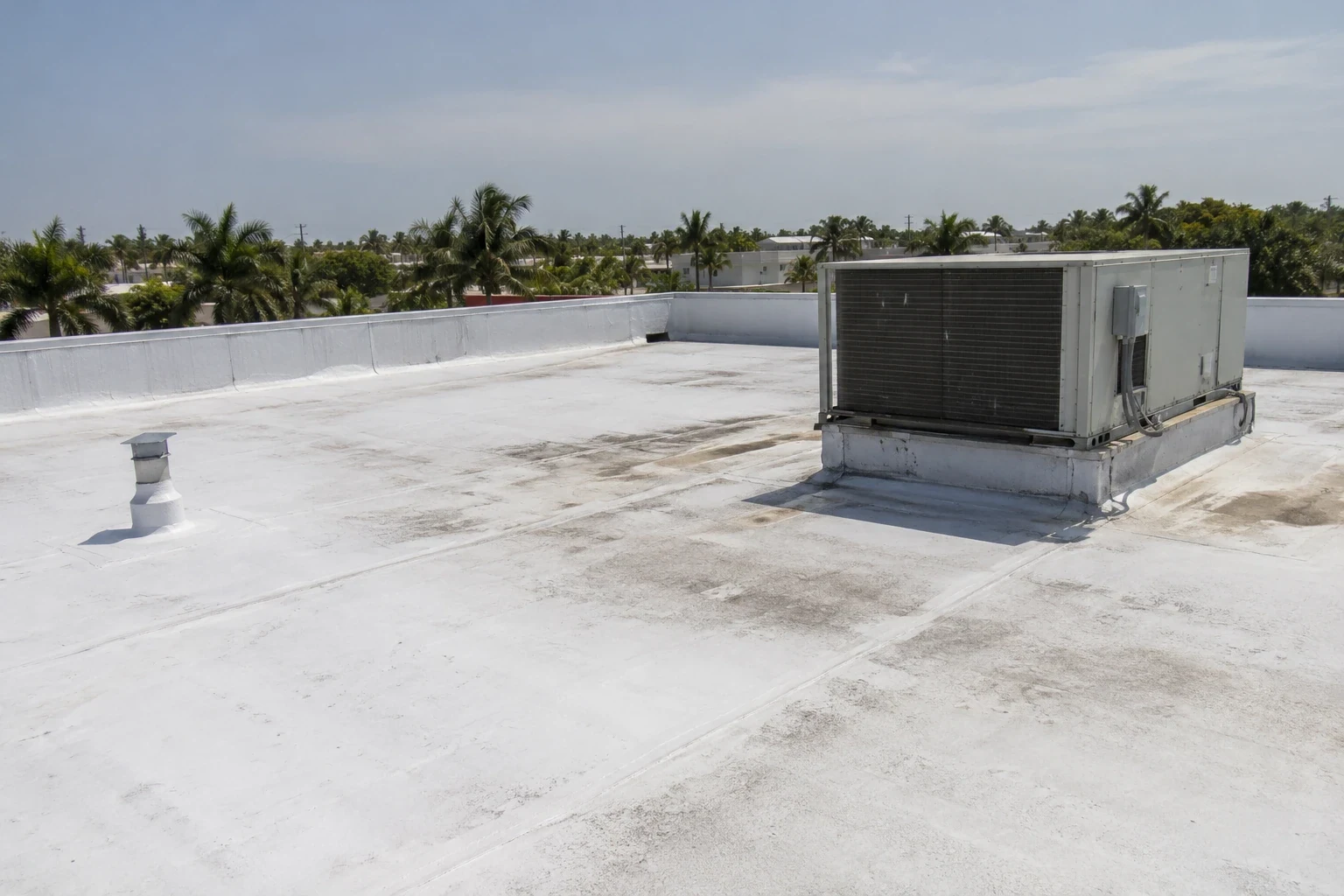
Repair boundary: Choose maintenance, restoration, or replacement
Some aging details can be repaired locally if the membrane remains sound around them. A coating may fit when the existing surface is compatible, dry, and well attached. Recover or replacement becomes more relevant when moisture is widespread, attachment has weakened, or deterioration continues across the roof field. We identify the condition and extent that support each option, with test results, removal limits, and any unresolved areas listed separately.
Cost and timing depend on roof access, substrate preparation, moisture removal, equipment, insulation, fasteners, and weather windows. A restoration evaluation checks whether the surface can accept a coating, while a replacement scope defines removal and tie-ins when the assembly cannot be restored. We specify coatings only when the substrate is dry, stable, compatible, and properly prepared. The selected system must bond to the prepared substrate, drain properly, and accommodate movement at curbs, walls, and roof edges.
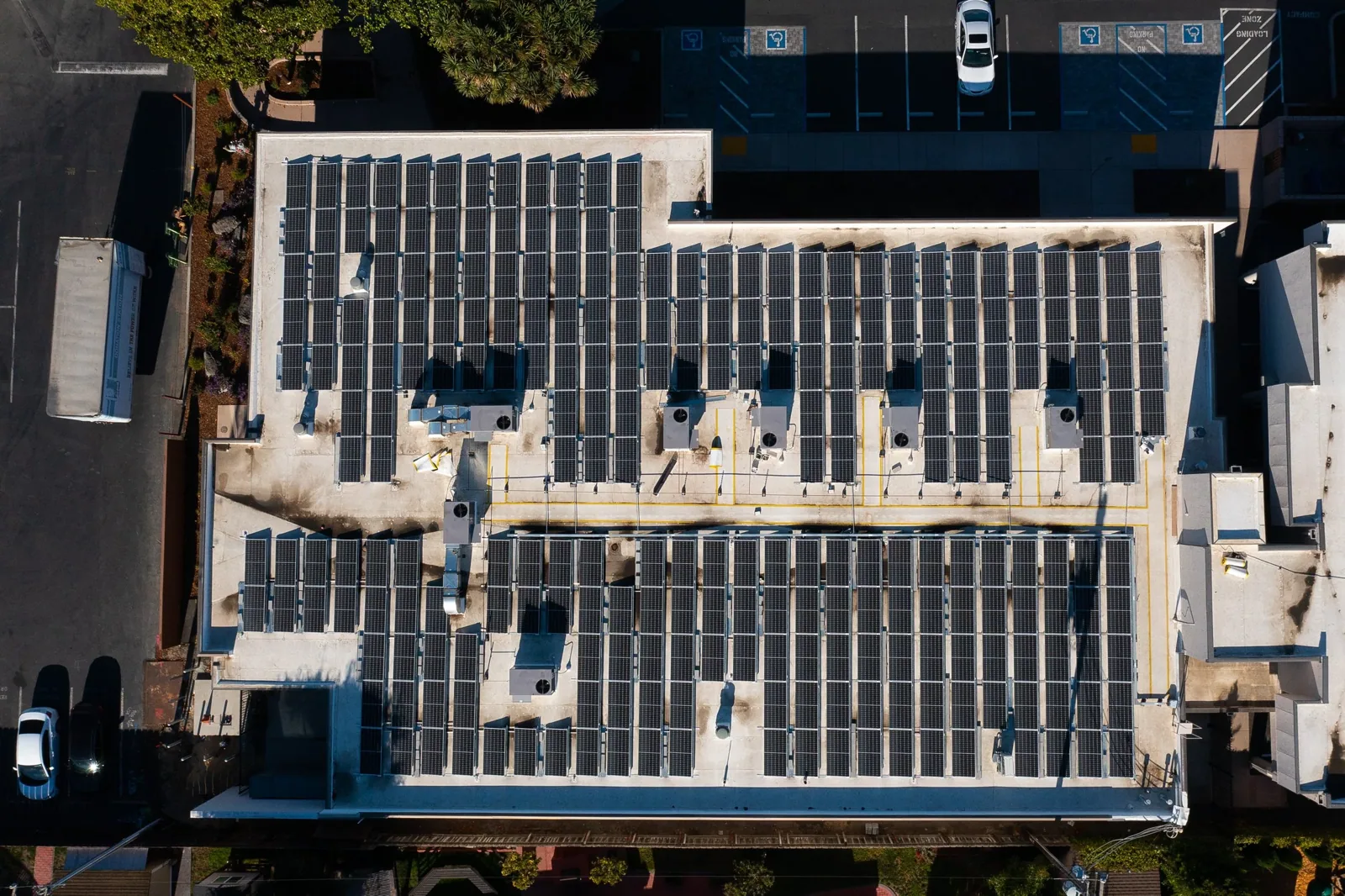
If the owner plans new equipment, solar work, or a tenant fit-out, that schedule may change which roof sections should be repaired first. We identify the dependencies, including access, substrate testing, and a completed flashing detail, so upcoming work does not reopen a finished area.
Maintenance timing: Track degradation before leaks spread
Routine roof records can show whether a crack, exposed lap, or coating wear is stable or changing. We photograph the same detail and zone on repeat visits, note repairs, and check outlets and transitions that can hold water against an aged surface. This supports targeted maintenance before a small discontinuity reaches insulation or deck. A written record also helps facilities prioritize sections without treating every weathered surface as an immediate replacement.
Sunrise's major road connections bring access to commercial and industrial districts, while each site still sets its own roof entry and work schedule. We coordinate service around equipment operation and occupied areas, then leave a map of completed items and remaining conditions. A maintenance program can revisit seams, sealant joints, and drains before heavy rains. For a property in Sunrise, provide roof plans, coating records, installation history, leak dates, and any planned equipment changes. We will inspect the assembly and recommend work tied to observed condition.
Repeated photographs should use a consistent view and include the adjacent detail, not only the weathered center. That context helps compare crack growth, seam movement, or coating loss from one visit to the next.
Frequently Asked Questions
Does a faded membrane mean the roof has failed?
Not by itself. We inspect flexibility, attachment, seams, penetrations, moisture, and substrate before deciding whether maintenance or replacement is appropriate.
Can heat make roof seams open?
Thermal movement can stress laps and terminations, especially where materials meet. We inspect attachment and joint condition to identify the failure mechanism.
When is a coating appropriate for an aged roof?
The surface must be compatible, dry, and sufficiently attached. We check moisture, adhesion, drainage, and detail condition before specifying a coating.
How do you distinguish weathering from a leak source?
We map interior reports to seams, penetrations, drains, and surface defects, then test concealed layers when needed. Weathered material may remain watertight, while a small detail can admit water.
What records help evaluate an older roof?
Share installation and coating records, roof plans, maintenance photos, leak history, and equipment changes. Repeat observations help measure whether conditions are progressing.
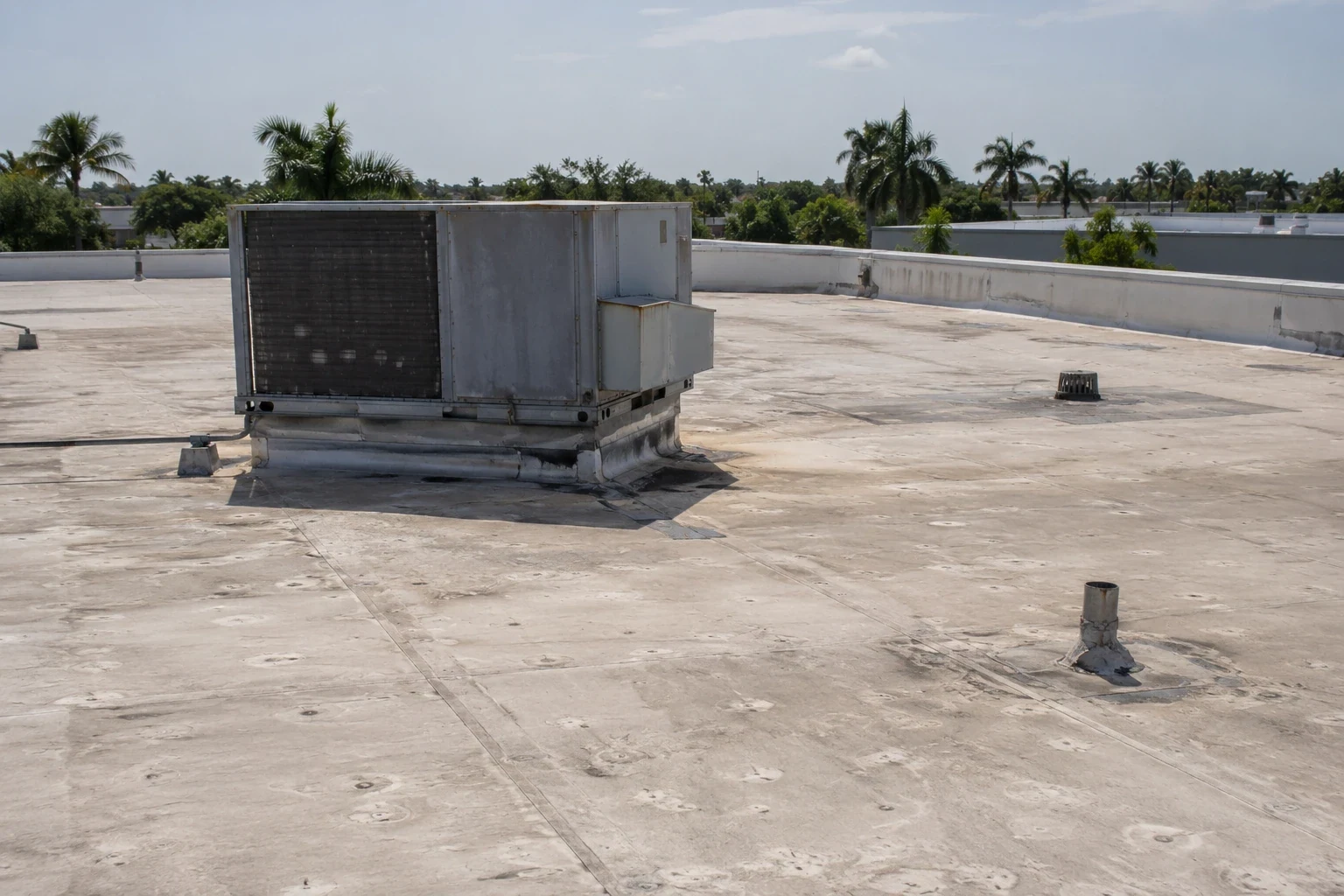
Inspect the aged surface and the layers below it
Provide roof plans, system and coating records, leak history, prior inspections, and equipment schedules. We will map surface conditions and test concealed layers where they affect the repair decision.
Call 555-555-5555 or request a roof assessment.