
Commercial Tornado Damage Roof Repair in Sunrise, FL
Commercial Tornado Damage Roof Repair
A concentrated wind path can displace edge metal, lift membrane, damage rooftop equipment, and carry debris across a commercial roof. South Florida severe-weather hazards include occasional tornadoes, so an inspection in Sunrise should begin with safe access and the building's actual damage pattern. We document openings and movement by roof zone, protect exposed areas where permitted, and test concealed layers when water could have entered. A roof emergency response can stabilize an opening, while the inspection establishes what permanent work the assembly needs.
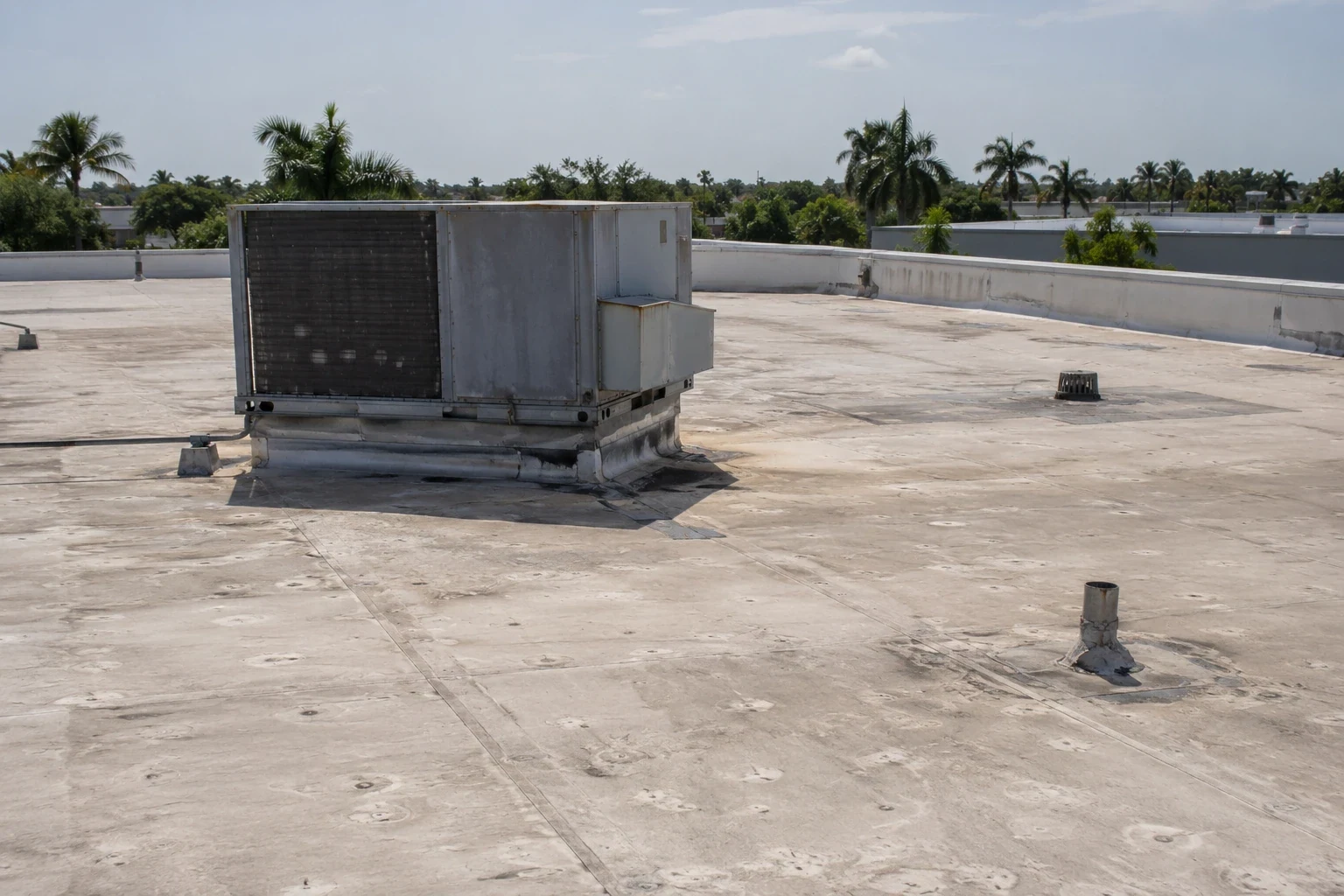
Roof Damage Repair in Sunrise, FL
Commercial tornado roof damage inspection in Sunrise, FL. We map openings, displaced materials, impact, and water exposure after safe access returns.
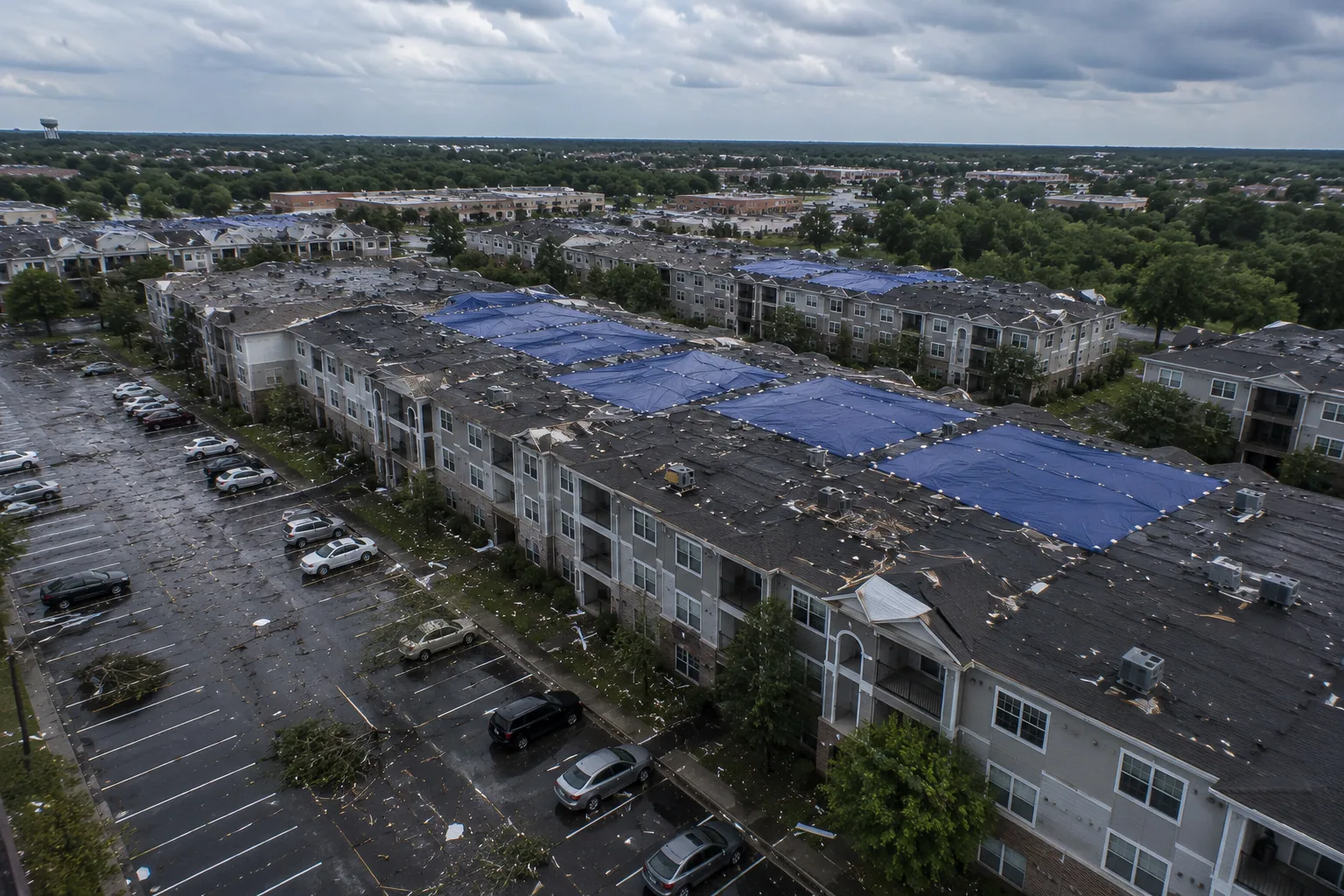
Access check: Clear hazards before crossing the roof
After a tornado warning or damaging wind, fallen debris, loose metal, broken skylights, exposed wiring, and unstable rooftop equipment can make access unsafe. We coordinate with the site contact to confirm which doors, hatches, and roof sections are released. If the deck has visibly shifted or a large opening exposes the interior, inspection begins from a safe vantage point until the route is cleared. Any restriction is logged so the owner knows which roof area remains unreviewed.
Once access is authorized, we photograph the scene before moving loose material that could matter to the incident record. The first pass identifies open edges, punctures, displaced screens, equipment movement, and areas where water is entering. A wind damage review checks attachment and perimeter details; a tropical-system inspection may address wider wind and rain effects on the same roof. The findings remain tied to the building and date of inspection.
If interior ceilings or insulation have fallen, we confirm that debris below is stable before using that location to inspect the roof. The building contact identifies hazards and restricted rooms, while our roof record focuses on openings, attachment, and drainage. No repair starts across an area that has not been cleared.
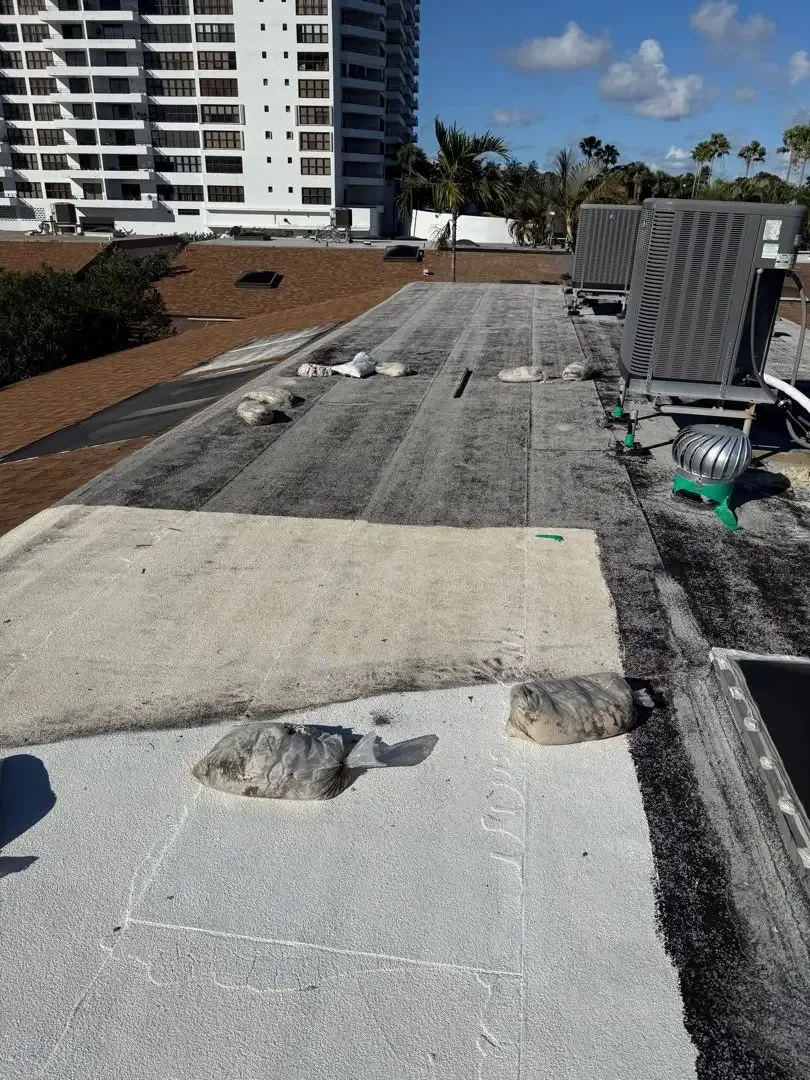
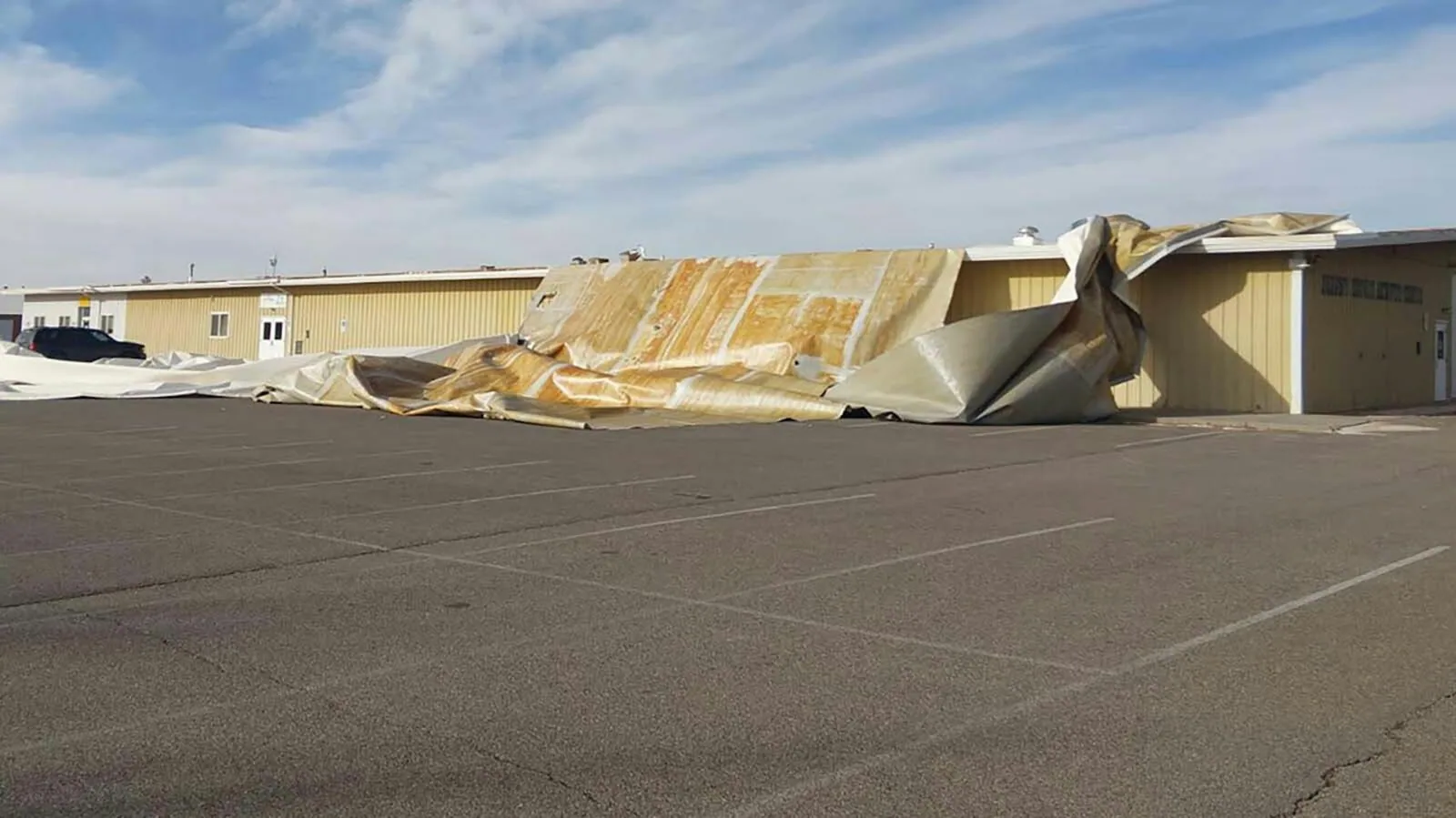
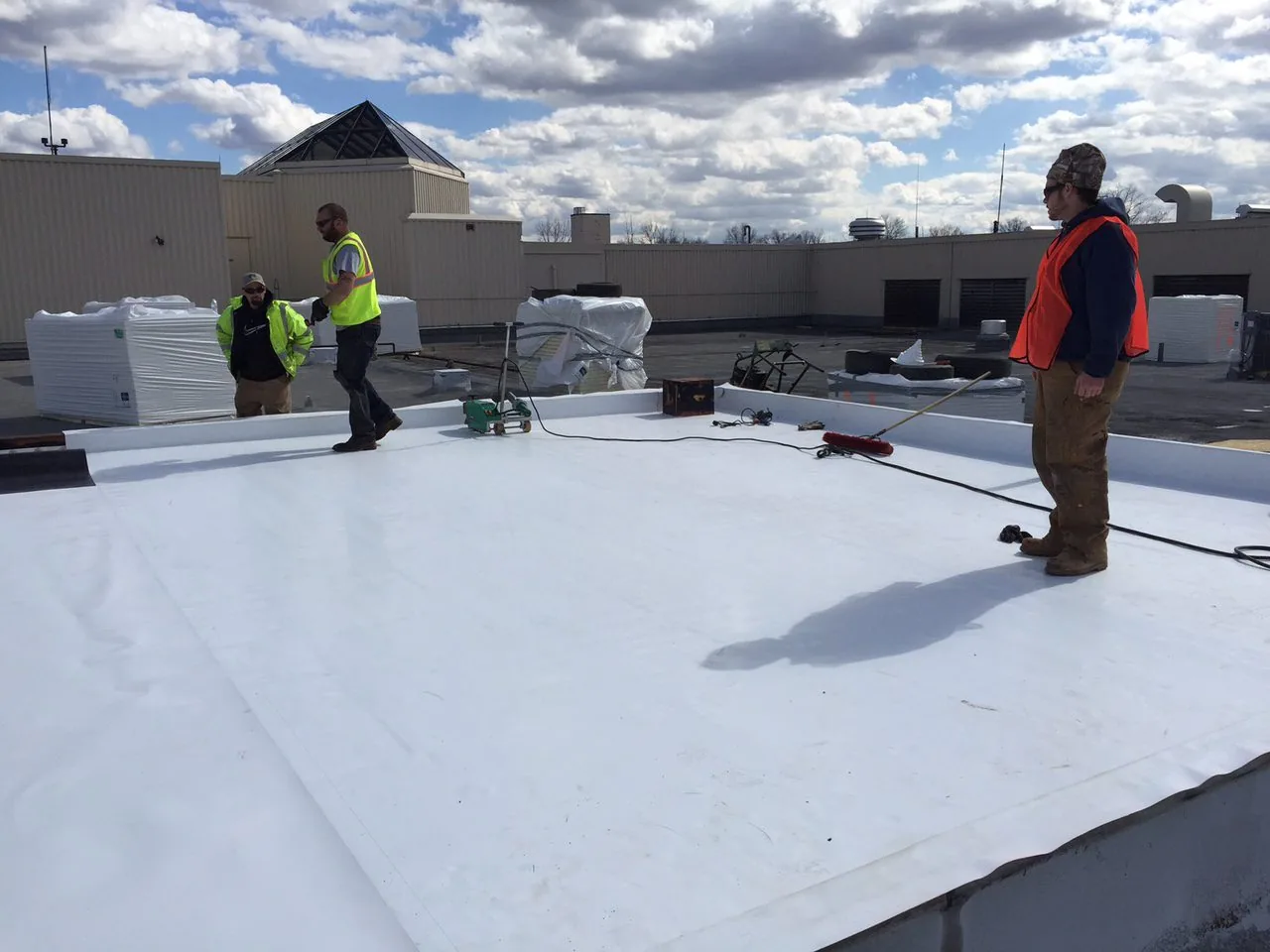
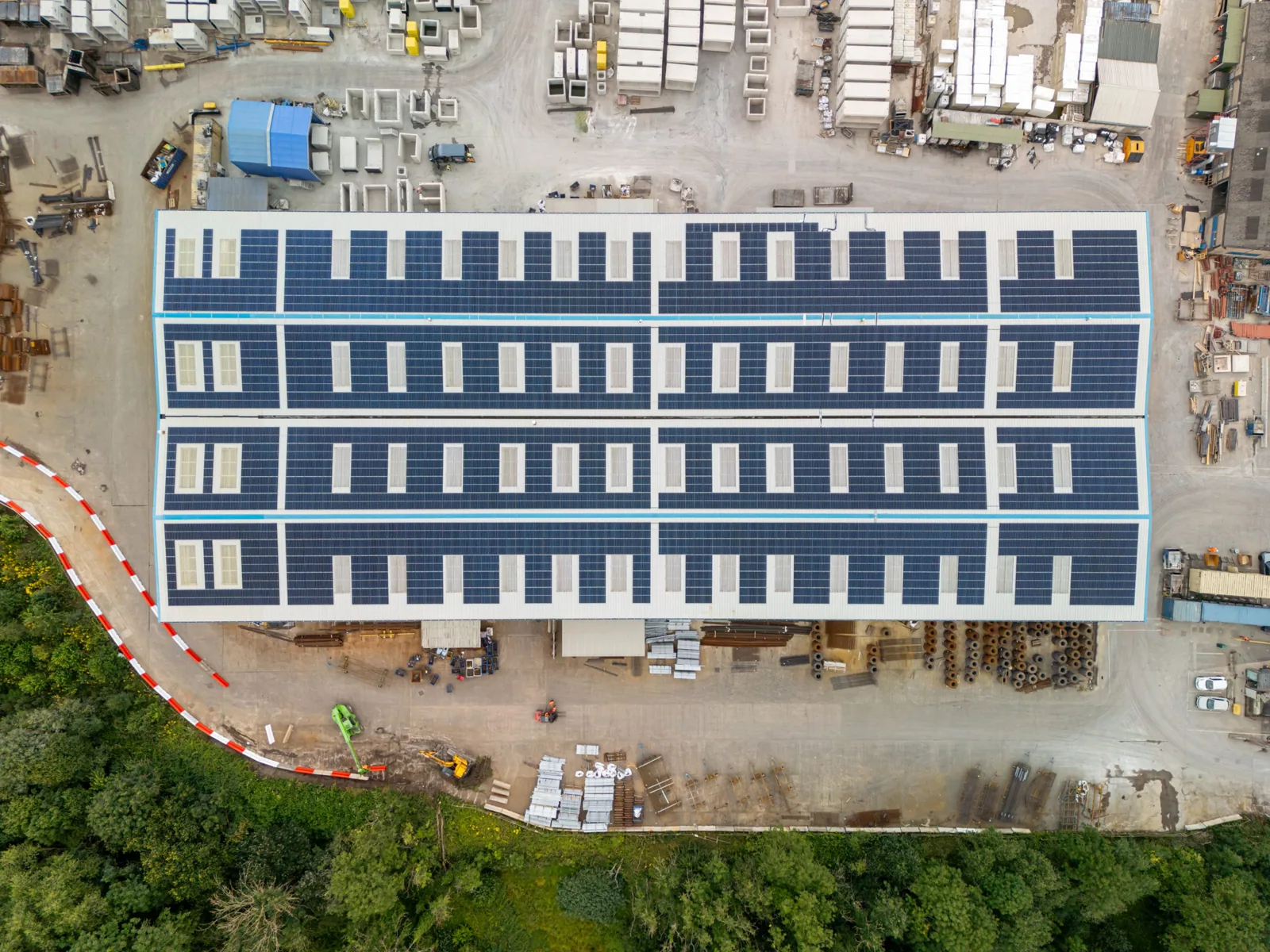
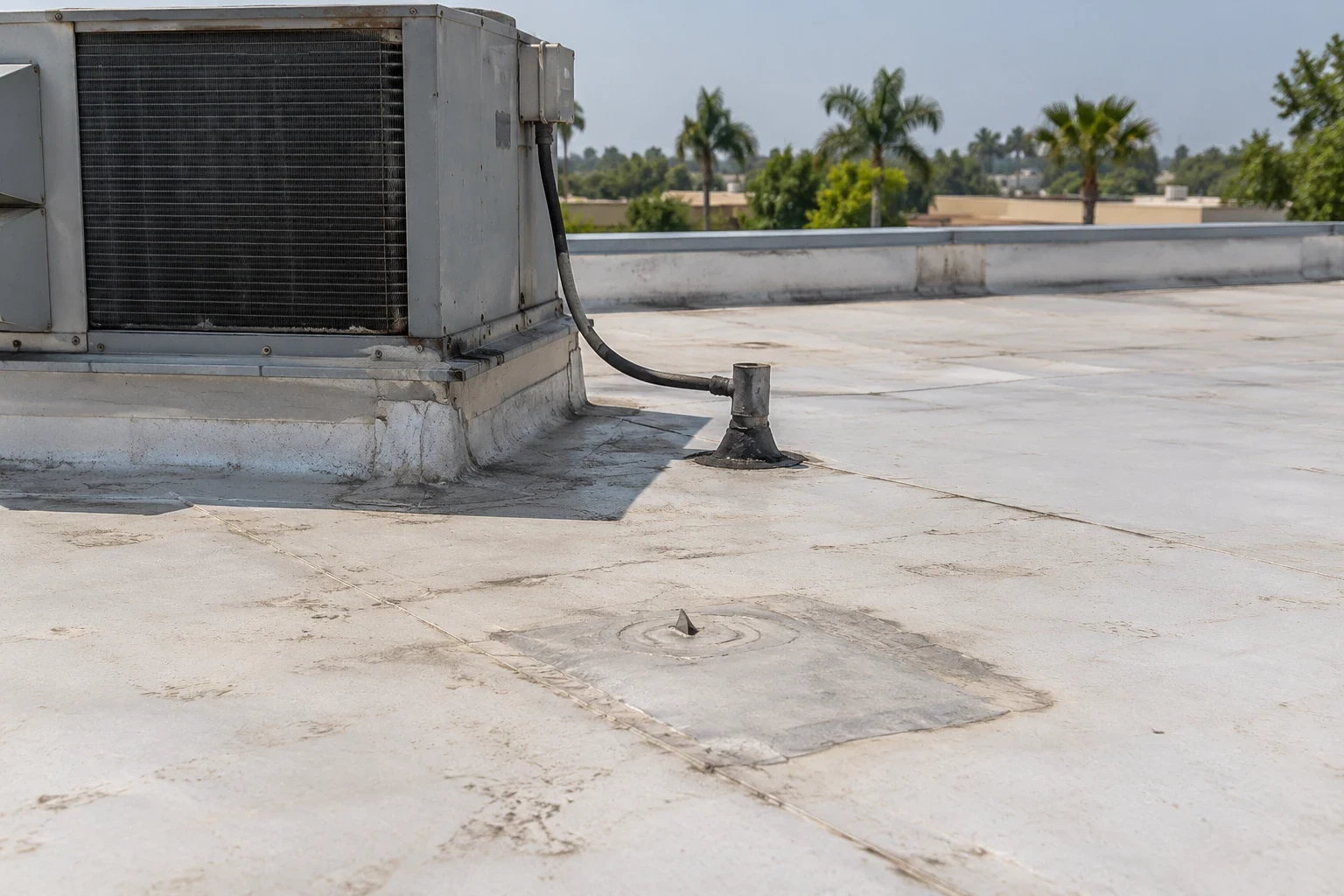
Impact map: Follow the roof's damage pattern
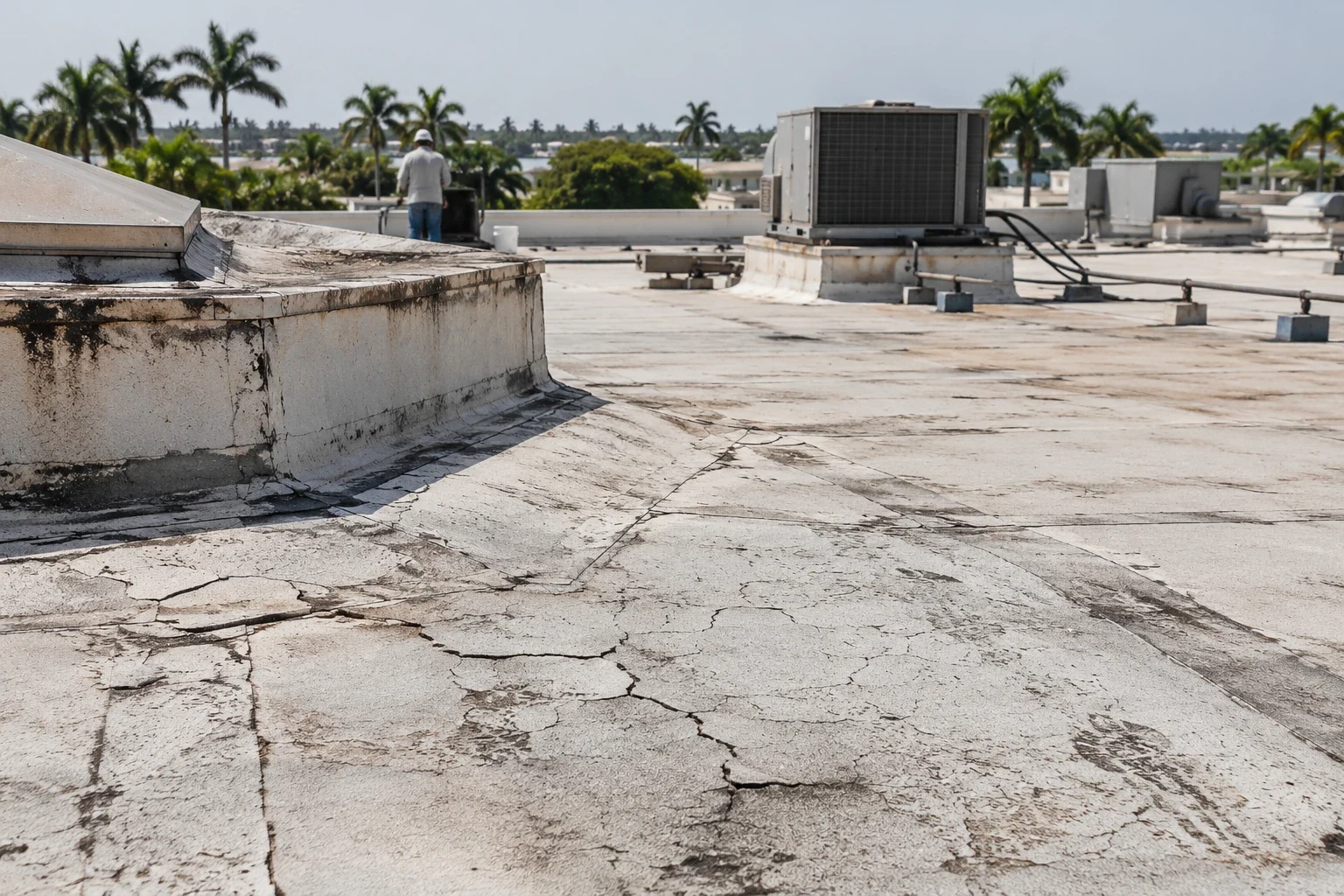
Unlike a single seam failure, a tornado-related inspection may find impact marks and displaced components in several roof zones. We map the affected sections, record the direction of movement when it can be established, and identify damage at corners, ridges, perimeters, and rooftop units. The map also records areas that appear intact or could not be accessed. Those distinctions prevent one damaged section from defining the condition of the entire building.
Sunrise Commerce Park includes distribution, manufacturing, office, and multi-tenant buildings, each with different equipment layouts and roof access. Sawgrass Technology Park adds office and technology properties with their own rooftop components. We inspect each roof system rather than infer its assembly from the use. A condition report organizes the photographs and repairs by zone, and a drone survey can document broad areas when weather and site rules permit. Close inspection is still needed at seams, penetrations, and concealed attachment points.
We note whether debris scraped, pierced, or only marked the roof, and whether a component landed near the point from which it may have come. Orientation is recorded only when the site layout or available evidence supports it. This helps the owner decide whether a guard, screen, or attachment needs follow-up in addition to the membrane repair. We avoid combining scattered surface marks with an opening unless inspection shows they connect.
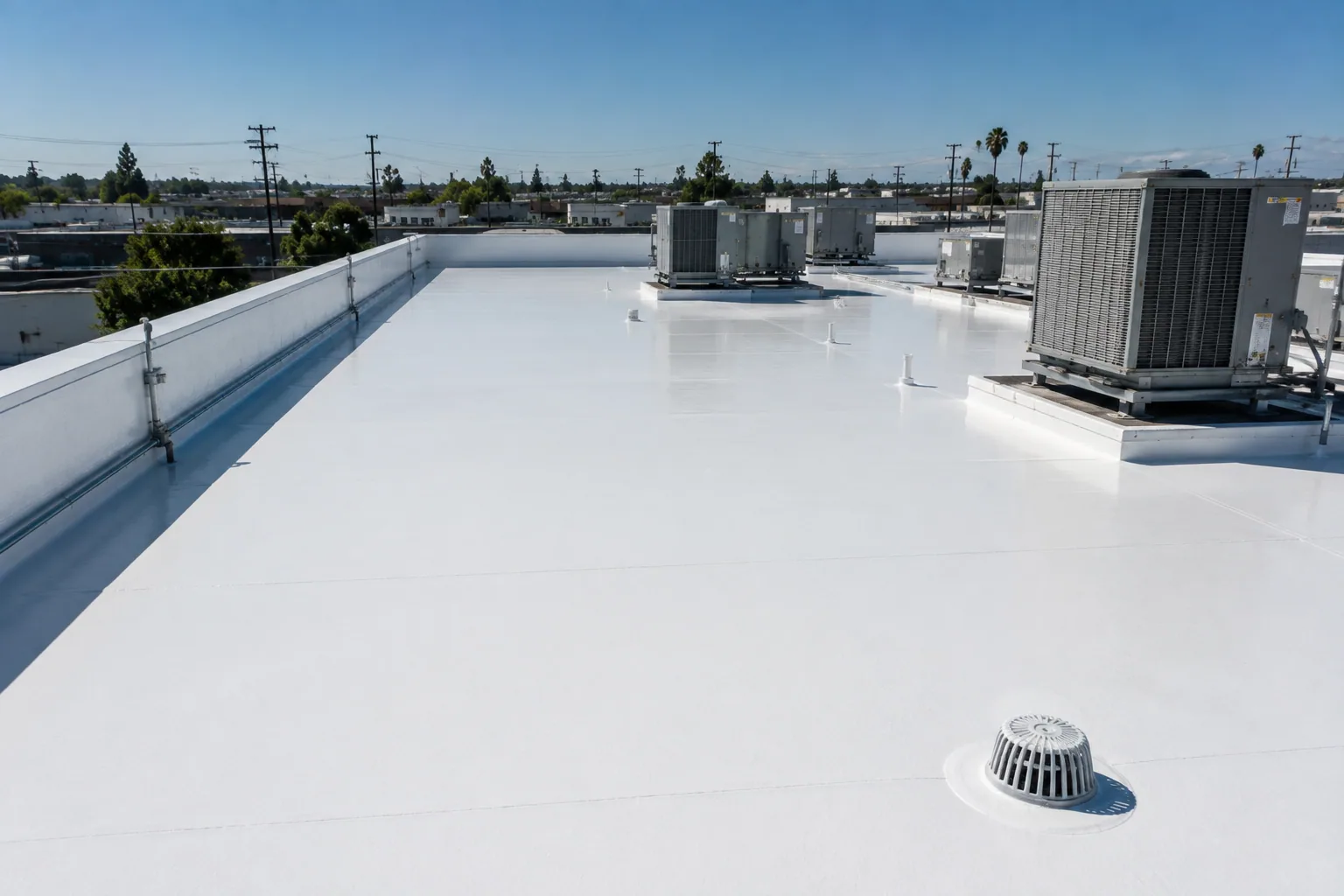
Enclosure: Protect openings and exposed interior areas
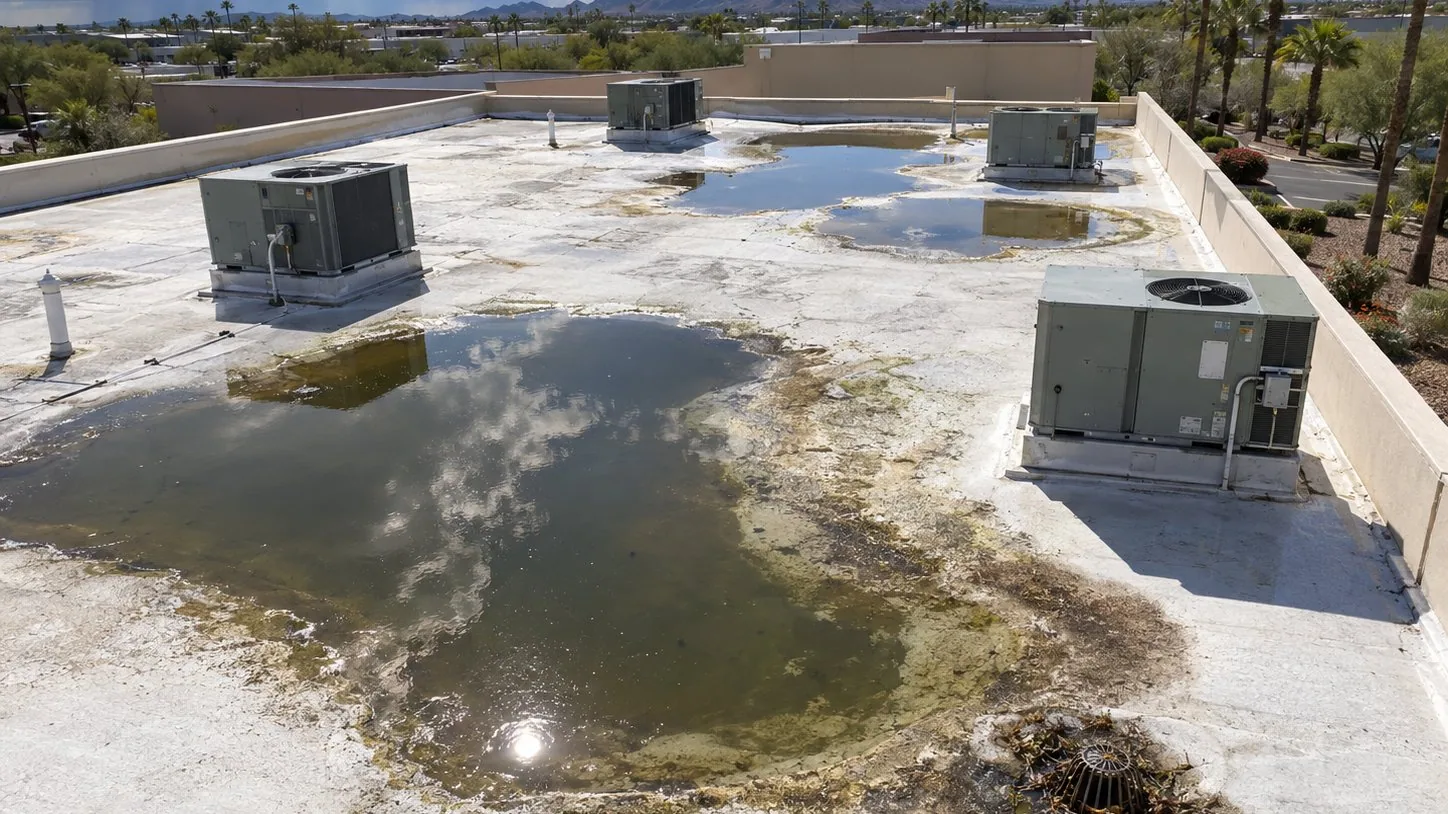
Water entering through a displaced edge or puncture may reach equipment, inventory, or occupied areas before a permanent scope is ready. We identify the opening, the interior area below, and the amount of roof that can be safely dried in during the shift. Temporary protection is photographed and described by extent, material, and any remaining exposure. The record also notes whether drains remain functional and whether debris could block runoff.
We coordinate interior barriers and equipment isolation with the facility contact before bringing materials onto the roof. A puncture repair addresses a confirmed breach, while drain service can restore a blocked outlet. Temporary cover does not establish the final moisture boundary. If water reached insulation or deck, testing determines whether removal must extend beyond the visible opening. The permanent repair follows the roof layers and the limits of the tested condition.
Assembly test: Define what must be removed and rebuilt
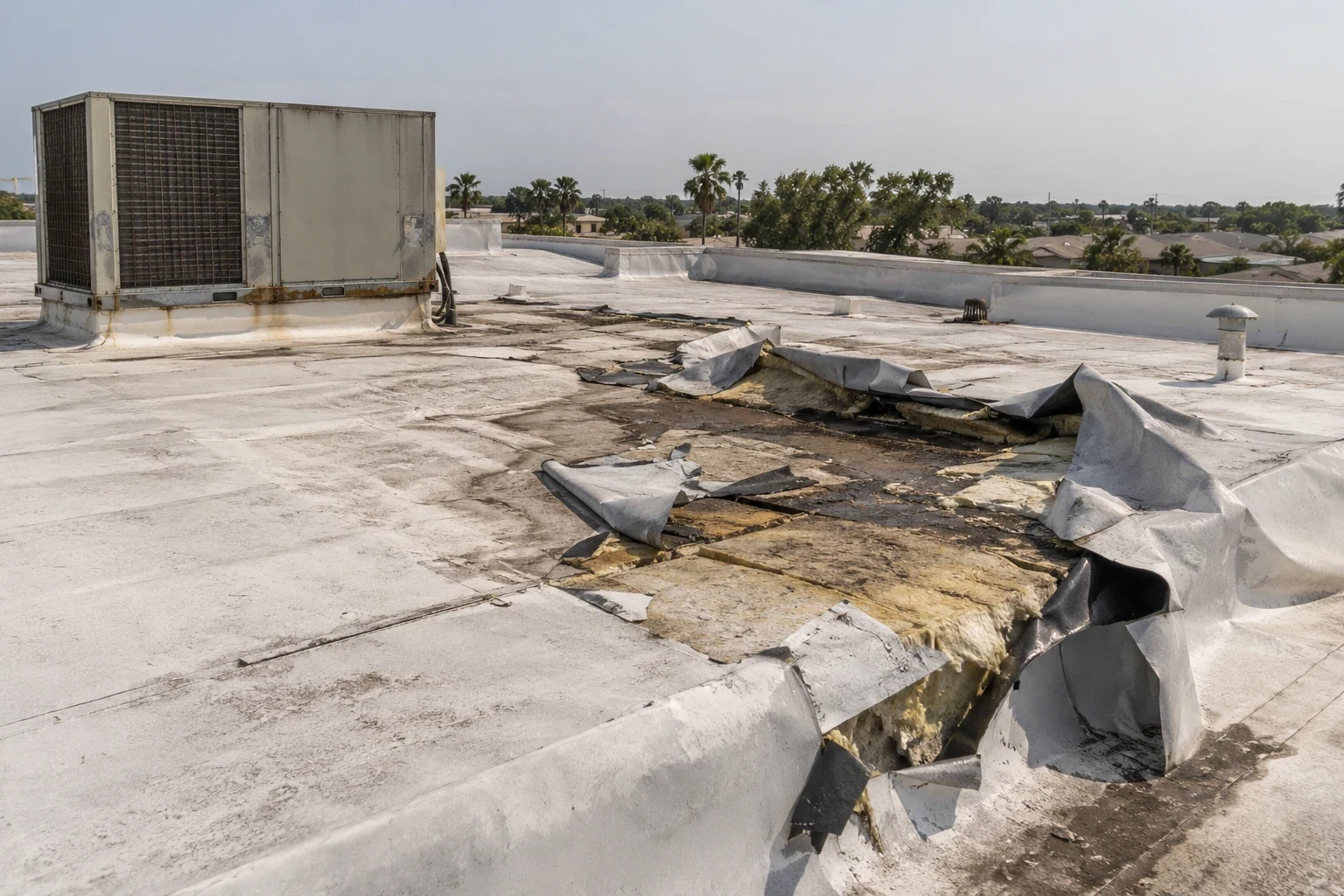
A wind-created opening can damage membrane, insulation, cover board, and deck in different ways. We identify visible materials, inspect seams and transitions, and use test cuts where concealed layers affect the repair. The opening is protected from the interior below, documented, and closed in a compatible way after examination. We mark the tested boundary and show which areas remain untested, rather than treating every roof section as damaged.
Localized damage may support a tie-in repair if the surrounding assembly remains sound. Widespread attachment failure, wet insulation, or structural movement calls for a broader review with the appropriate building professional. A flashing inspection can define a damaged curb or wall transition; a seam review follows a lap that has opened. We record the material installed where confirmed, fastener or adhesive requirements, and any deferred structural question. That gives the owner a clear scope boundary and a next action for areas outside the roofing repair.
Where a parapet or roof edge has shifted, we check the supporting joint and adjoining flashing instead of replacing only the visible metal. If a rooftop unit or screen has moved, the equipment support may need review before the membrane can be tied back in. The report identifies that interface as a separate decision so structural and roofing scopes can be coordinated.
Recovery sequence: Coordinate repair with building operations
Sunrise's western commercial area includes retail, offices, event uses, and mixed-use development. The building's operating schedule and site access plan determine where lifts, deliveries, and temporary barriers can go after a regional event. We coordinate with the property team on occupied areas, equipment shutdowns, and any route that must remain open. Daily work limits are set so the crew can close the roof before leaving.
Cost and timing depend on access, removal depth, equipment repair, interior protection, material availability, and weather. The estimate separates emergency stabilization, testing, permanent work, and any condition outside the roofing scope. For facilities in Sunrise, share roof drawings, event timing, interior reports, equipment inventories, and site restrictions. We will map the affected areas, repair the confirmed roof damage, and leave records that show both completed work and sections awaiting access or additional review.
At closeout, the record identifies which zones were repaired, which were protected temporarily, and which remain inaccessible. The owner can assign a return visit when the site has released those areas.
Frequently Asked Questions
What should happen before anyone accesses the roof after a tornado?
The site contact should clear the route and confirm hazards are controlled. We record any restricted section and begin only where access is safe and authorized. Any area not released stays off the route.
Can one impact area show the extent of roof damage?
No. We map each affected zone, inspect adjoining components, and note areas that appear intact or remain inaccessible.
How do you protect a large opening before permanent repairs?
Where conditions allow, we install temporary protection sized to the safe work area and record what it covers and what remains exposed.
When do you test insulation and deck?
Testing is useful when water entry or movement below the membrane could change removal depth or the repair choice. We document the opening and its boundary.
What details help plan post-storm work?
Provide roof plans, equipment inventories, incident timing, interior reports, access restrictions, and prior repair records so work can be sequenced by zone. Include the building contact for any areas awaiting a safety release.
Map the damage after safe access is confirmed
Send the roof plan, incident timeline, interior reports, equipment list, and site restrictions. We will document open areas, protect exposure where possible, and define permanent repair quantities.
Call 555-555-5555 or request a roof assessment.