
Commercial Wind Damage Roof Repair in Sunrise, FL
Commercial Wind Damage Roof Repair
Wind can lift a roof edge, open a seam, or shift equipment flashing before water appears inside. For Sunrise commercial buildings, the repair decision starts with safe access and a record of what moved, what stayed attached, and which roof zones remain exposed. We inspect perimeter metal, membrane laps, fasteners, curbs, and drains, then distinguish immediate dry-in from permanent work. Sawgrass International Corporate Park contains corporate and regional offices, while Sunrise Commerce Park includes distribution and manufacturing uses with different rooftop equipment. A storm damage inspection should follow the physical condition at each property rather than assume one event affected every roof the same way.
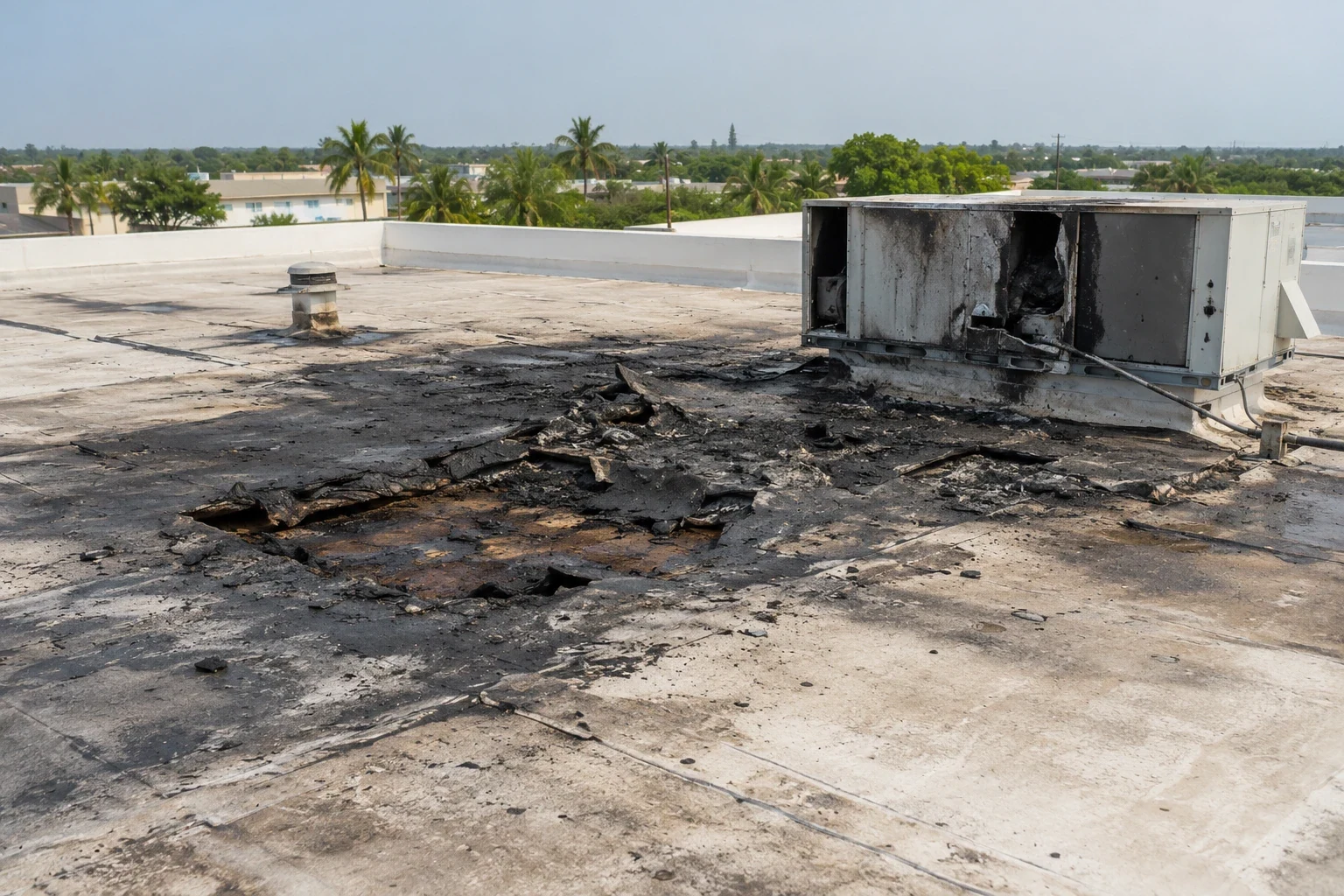
Roof Damage Repair in Sunrise, FL
Commercial roof wind damage inspection and repair in Sunrise, FL. We check perimeter attachment, seams, penetrations, drainage, and exposed roof areas.
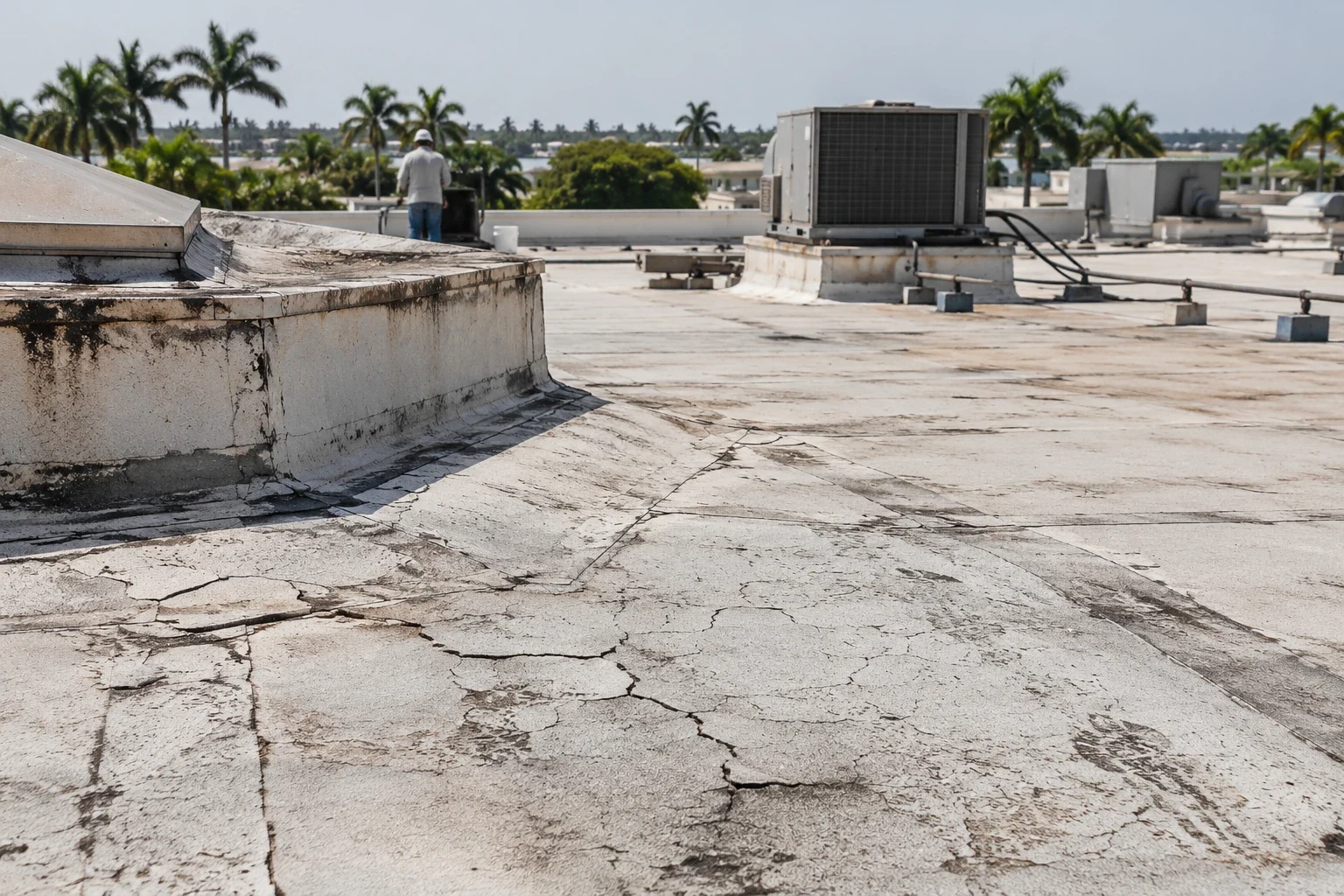
Safe access: Confirm the roof can be inspected
Loose metal, saturated insulation, unstable equipment screens, or a slick membrane can make a roof unsafe immediately after a storm. We check conditions from an approved access point and use ground or interior observations until the roof can be reached safely. The facility contact identifies electrical hazards, damaged skylights, active work zones, and areas where interior operations cannot stop. If a roof hatch, ladder, or guardrail has shifted, the inspection route changes before anyone crosses the roof.
After access is cleared, we divide the assembly into roof zones and record the first visible changes. A rapid response can secure a loose edge or exposed opening, while a full roof inspection can check the surrounding laps, attachment, and drainage. Temporary measures are photographed and identified as temporary. They do not substitute for checking the substrate or the fastener pattern when movement may extend beneath the membrane.
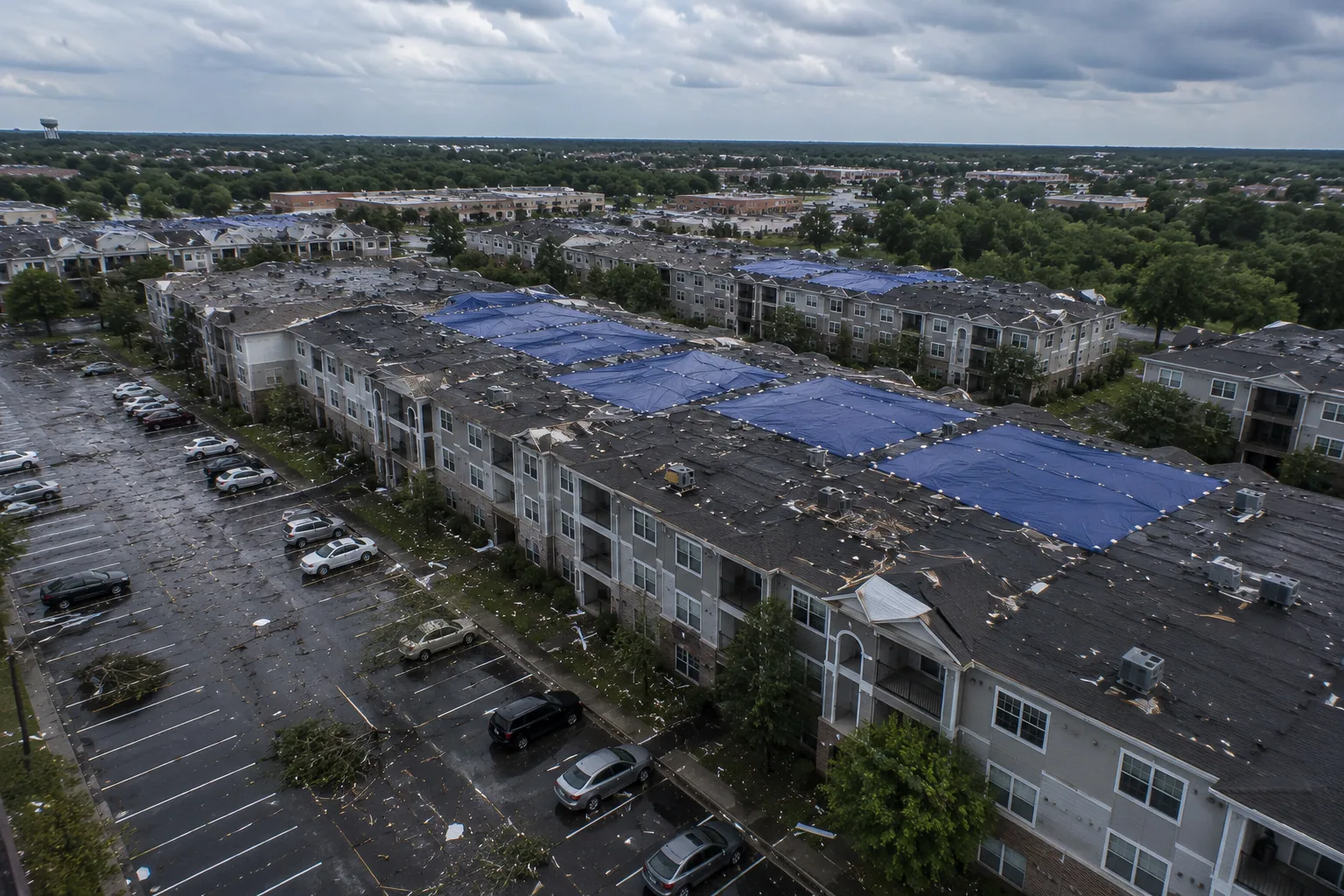
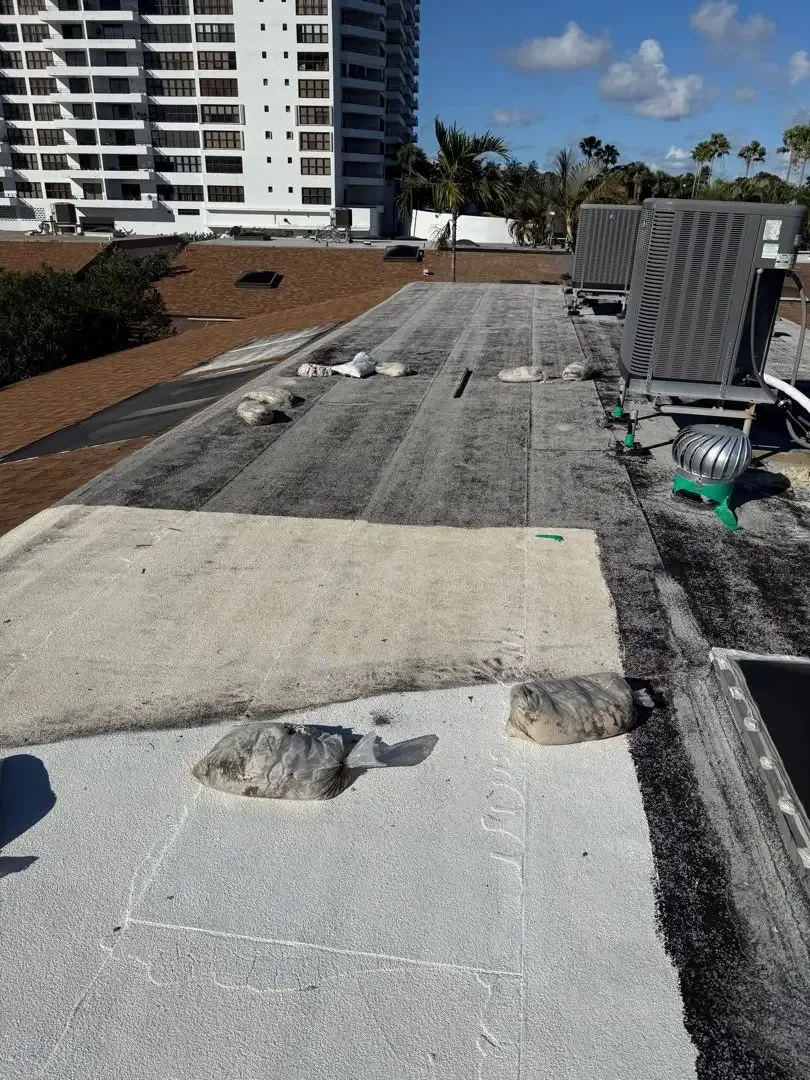
Perimeter: Find where uplift acted on the assembly
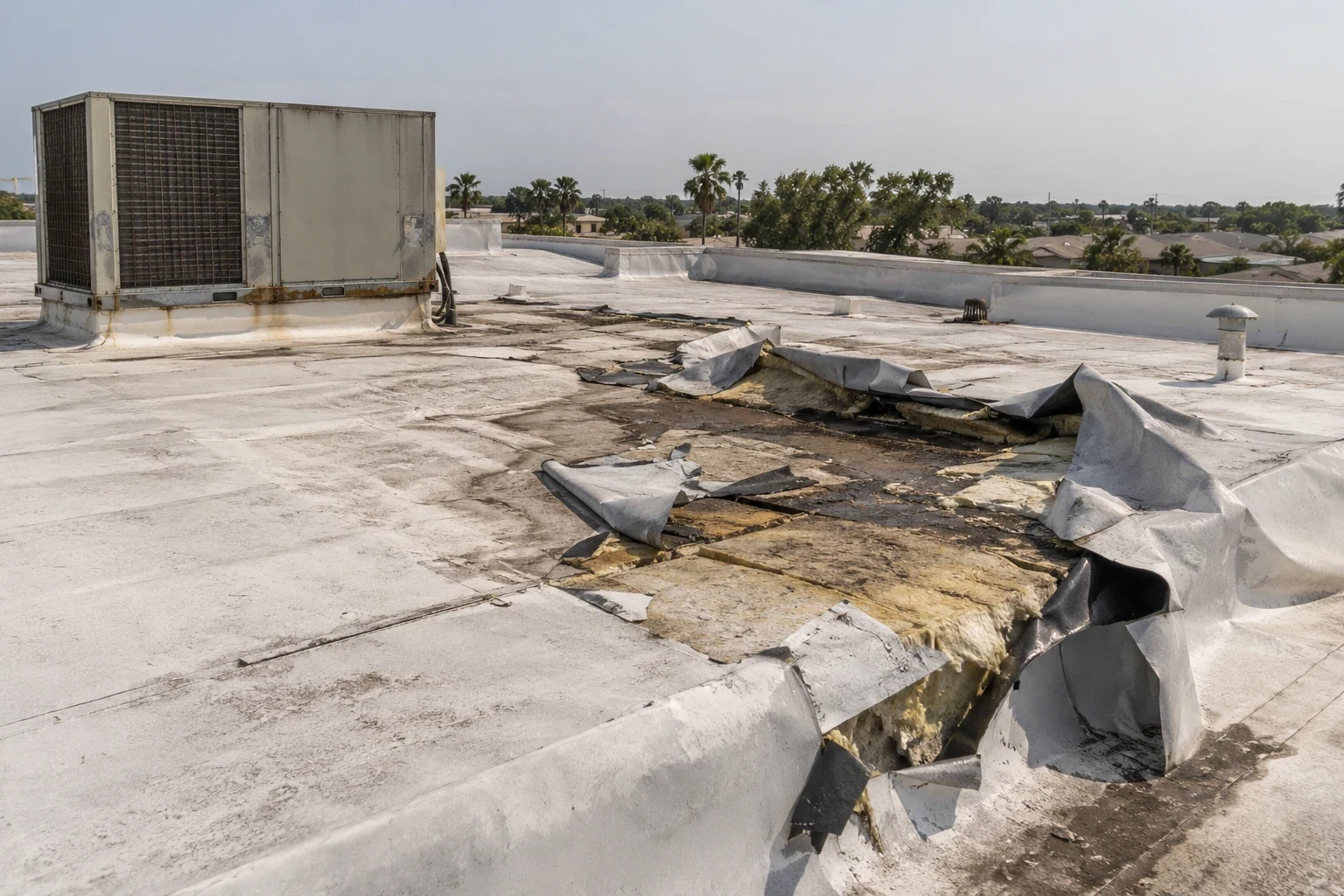
Wind pressure is often greatest near corners, roof edges, and transitions, so those details deserve close inspection. We look for displaced coping, loosened edge metal, lifted membrane, pulled fasteners, open terminations, and sealant that has separated from the substrate. A local opening can admit water and allow pressure beneath adjacent material. We photograph the direction and extent of movement, then check the adjoining roof field to see whether the failure ends at one detail or continues through a larger section.
Sunrise borders I-595, I-75, and the Sawgrass Expressway. At each building, we inspect edge securement, fastener rows, and panel attachment to identify the roof's actual wind resistance. We verify the installed assembly and accessible details on site. If fastener rows are exposed, we compare spacing and pullout condition; if the edge is concealed, a controlled opening may be needed to see the securement. A hurricane roof review can address broader wind exposure, while failed-flashing repair focuses on panel clips, seams, and terminations.
Water path: Trace entry beyond the interior stain
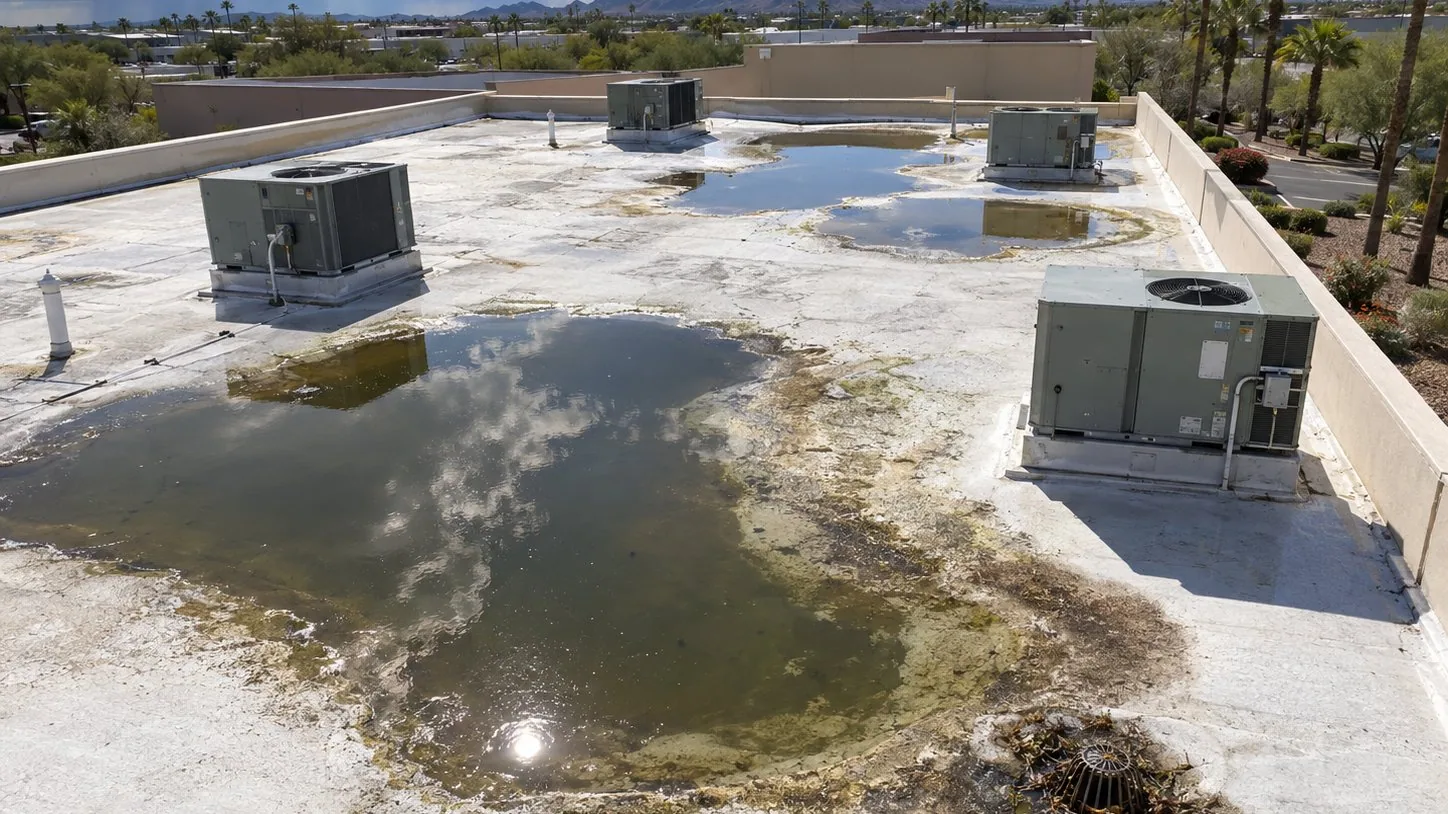
A ceiling mark may sit several feet from the roof opening because water can follow insulation joints, deck flutes, framing, or conduit. We compare the report location and timing with the roof map, then inspect upslope areas, drains, curbs, and wall transitions. The objective is to find a plausible route and test it, not to patch directly above the stain without checking the assembly. Interior protection and roof observations are recorded separately so a later visit can confirm whether the same path remains active.
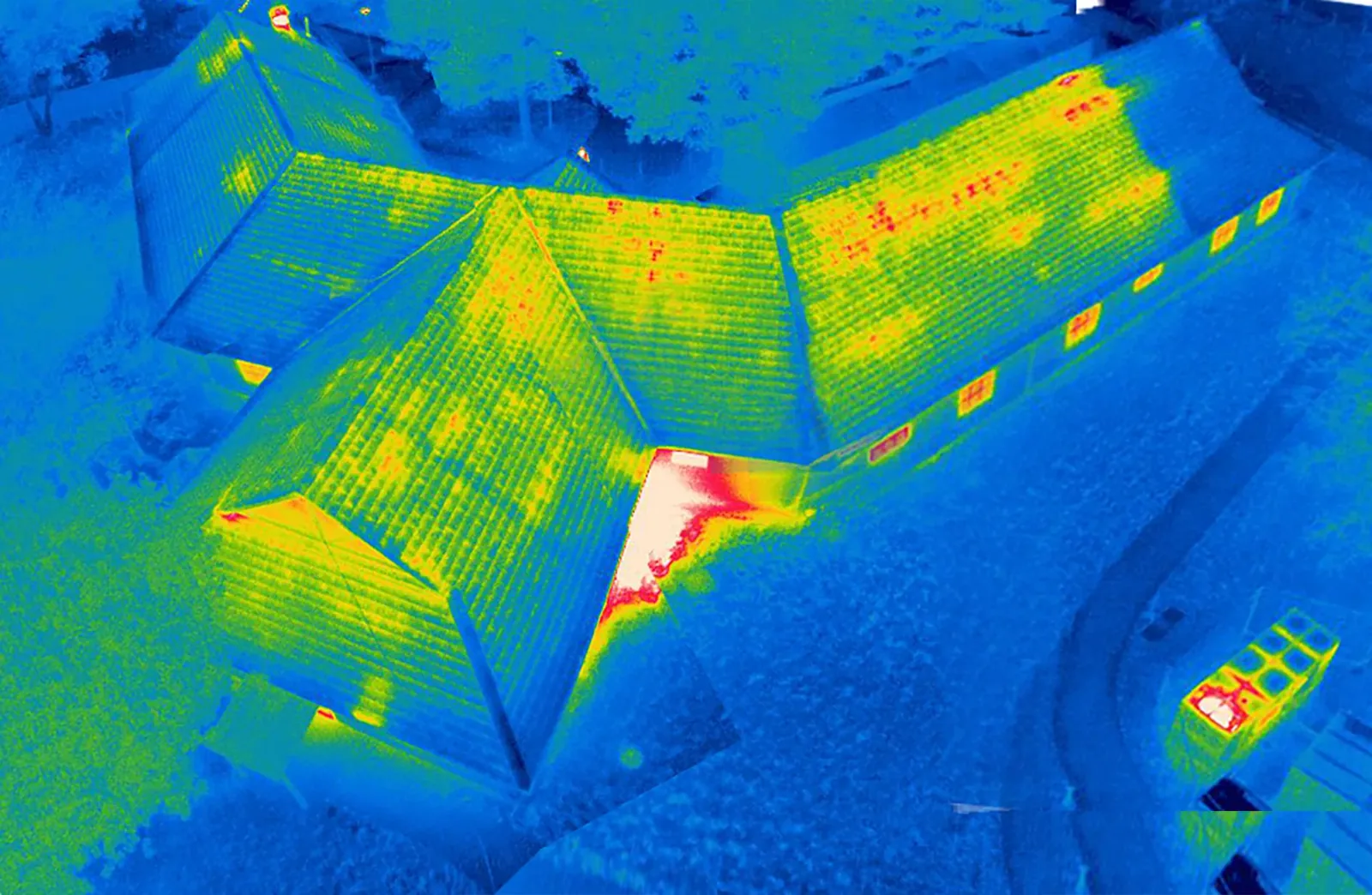
Where water has reached the insulation, we determine whether removal is needed and map the wet boundary supported by testing. A moisture survey may identify candidate areas for test cuts, while a photo condition report preserves the findings by zone. For a building in Sunrise, the report can also note the roof access and equipment constraints that affect a return visit. The repair quantity follows what testing establishes, with untested areas listed separately. We also check whether the indoor report aligns with a roof seam, wall joint, equipment curb, or a path that could carry water downslope. Where several reports occur in one building, their timing and position can show whether they share a drainage basin or point to separate openings. That comparison keeps the repair tied to a likely route and prevents unrelated ceiling marks from being added to one scope.
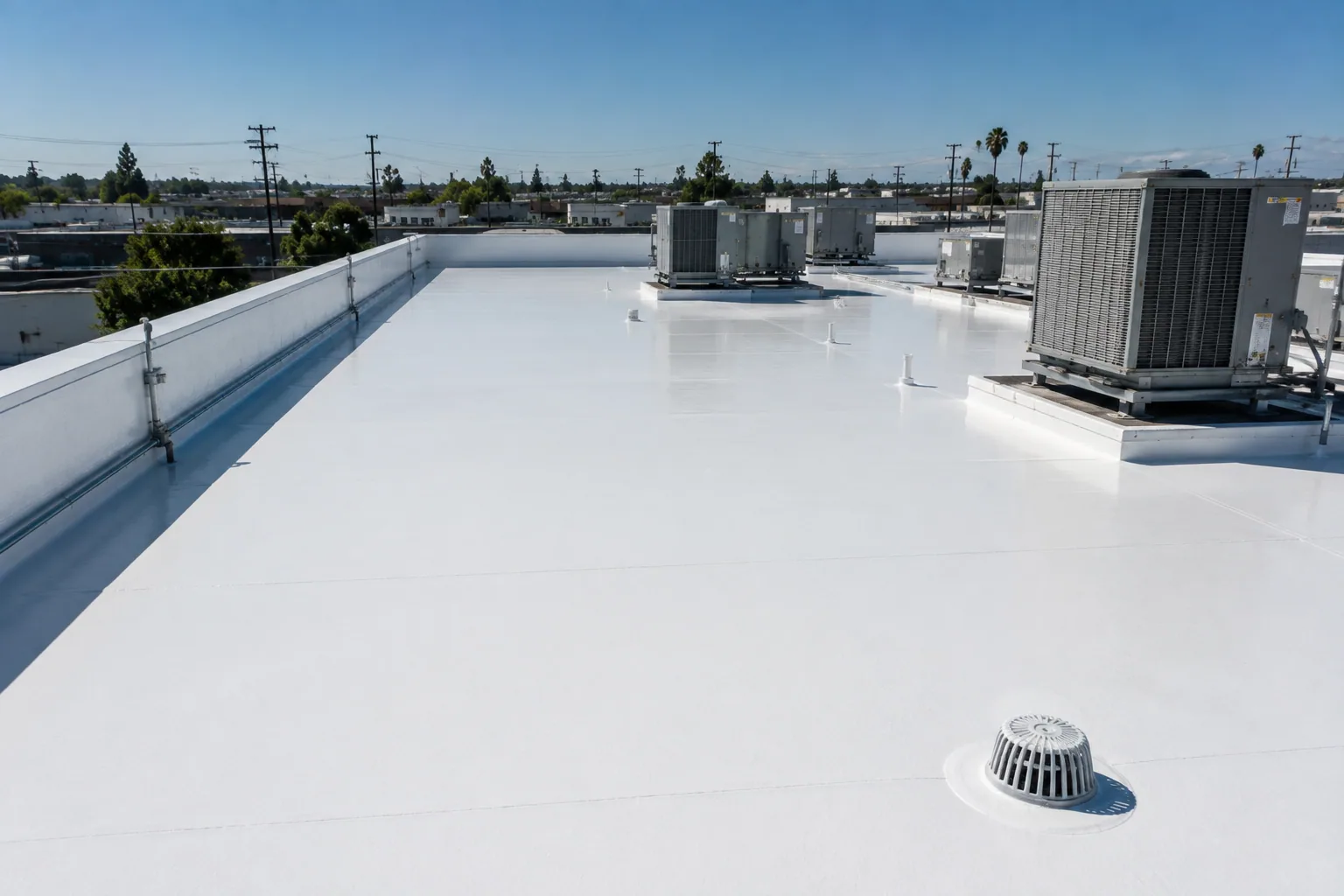
Repair scope: Match the work to the confirmed movement
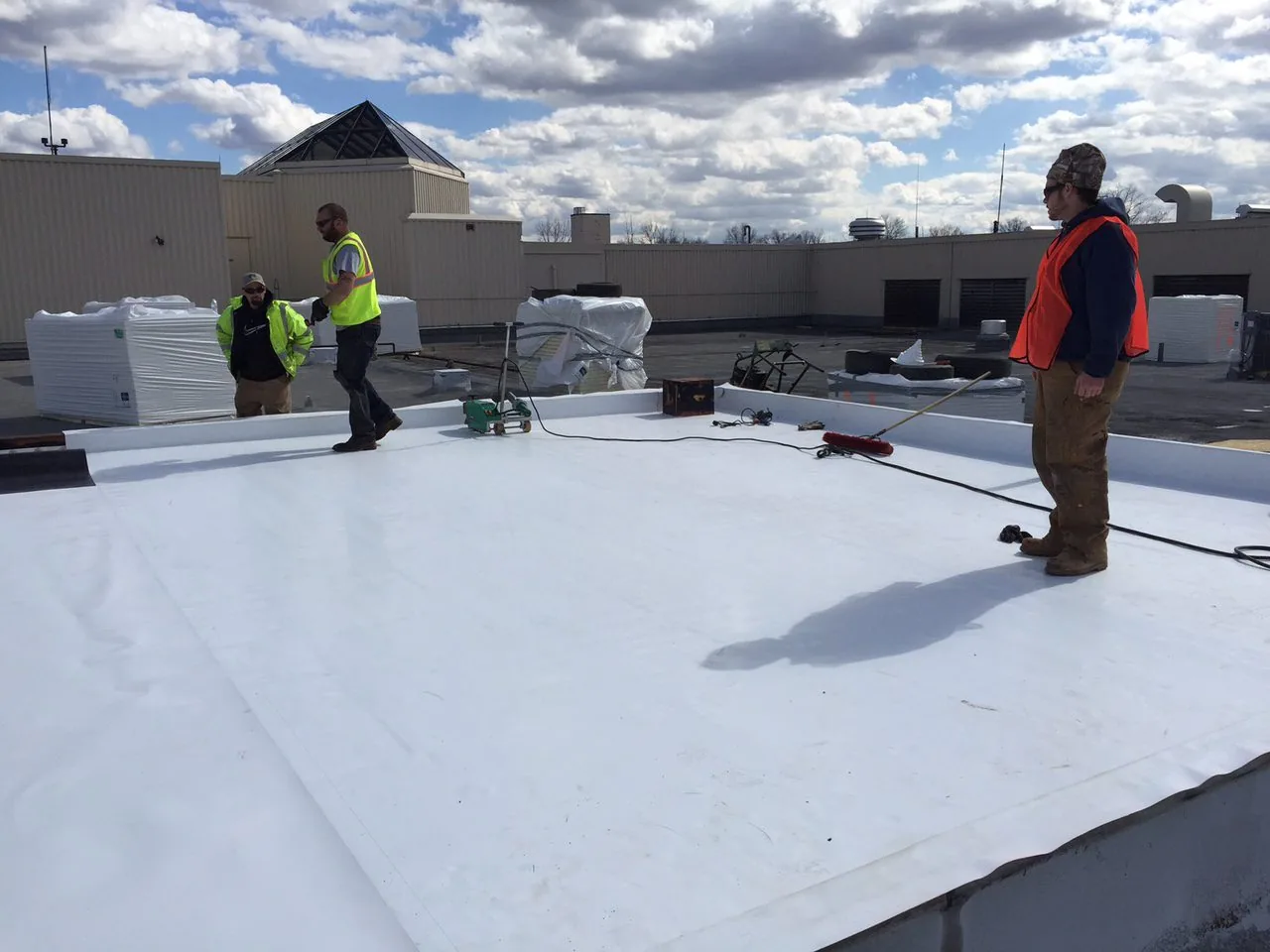
A limited edge opening may need securement and compatible membrane flashing; a broader attachment failure can require removal and reconstruction of the perimeter assembly. We identify the membrane, cover board, insulation, substrate, and existing edge detail before specifying a tie-in. If the deck is damaged or the fastening has released across a larger zone, the scope should say how far removal extends and what support will receive the new attachment. Sealant over a moving or wet joint does not correct a failed connection.
Cost and schedule depend on roof height, access, material compatibility, removal depth, equipment, interior protection, and weather. We state temporary protection separately from permanent repair, include photographs and quantities, and identify any concealed condition that could change the work. A localized roof repair may be suitable when the surrounding membrane and securement remain sound. Repeated releases or widespread wet insulation can point toward a larger restoration or replacement decision, which we compare only after inspection evidence supports it. Where the edge detail meets a wall, canopy, or rooftop screen, we check that adjoining flashing and termination as part of the same water-control path. If new fastening will penetrate the deck, we identify the substrate and required attachment instead of relying on sealant to hold moving metal. The completed scope notes which edge segments were rebuilt, which were checked and found sound, and whether other roof zones remain outside the repair.
Follow-up: Check the repaired boundary after weather returns
After repair, we inspect the tie-in, adjacent fasteners or edge metal, and nearby drainage before closing the work record. The closeout identifies the roof zone, material installed where confirmed, photographs, and any item that remains outside the completed scope. If temporary cover was used, we note its removal or continued status. A post-storm check is especially useful when the first visit could not reach an exposed area or when water remained in the assembly.
Long humid summers and frequent rainy-season storms keep drainage and attachment relevant after the immediate event. We record open maintenance items rather than treating them as wind damage without evidence. A scheduled maintenance visit can revisit loose metal, open sealant joints, clogged outlets, or prior patches before another storm. Share roof plans, the event timeline, prior repair records, interior leak locations, and operating limits; we will map the affected zones and define the next inspection or repair step. If a second inspection follows another storm, comparison photographs should use the same roof-zone labels and viewing direction. That makes new displacement easier to distinguish from the repair completed earlier and helps the facilities team keep temporary and permanent items separate.
Frequently Asked Questions
Which roof areas do you inspect first after strong wind?
We start with safe access, then check corners, perimeters, edge metal, seams, rooftop equipment, and any location tied to an interior report. The building assembly determines the rest of the route.
Does a lifted edge mean the full roof needs replacement?
The extent of movement, attachment condition, adjacent moisture, and substrate decide. We test the boundary and compare a local reconstruction with broader work when evidence warrants it.
Can you cover an opening before the permanent scope is ready?
Yes. We can install suitable temporary protection when access and conditions allow, then document its limits and inspect the assembly before pricing permanent work.
Why is water showing far from the wind opening?
Water can travel through insulation joints, deck flutes, or framing. We compare the interior location with roof details and test the likely path before setting repair quantities.
What records help after a wind event?
Provide the roof plan, event and leak timeline, prior repairs, equipment changes, and access rules. Photos and zone labels help connect observed movement with the work completed.
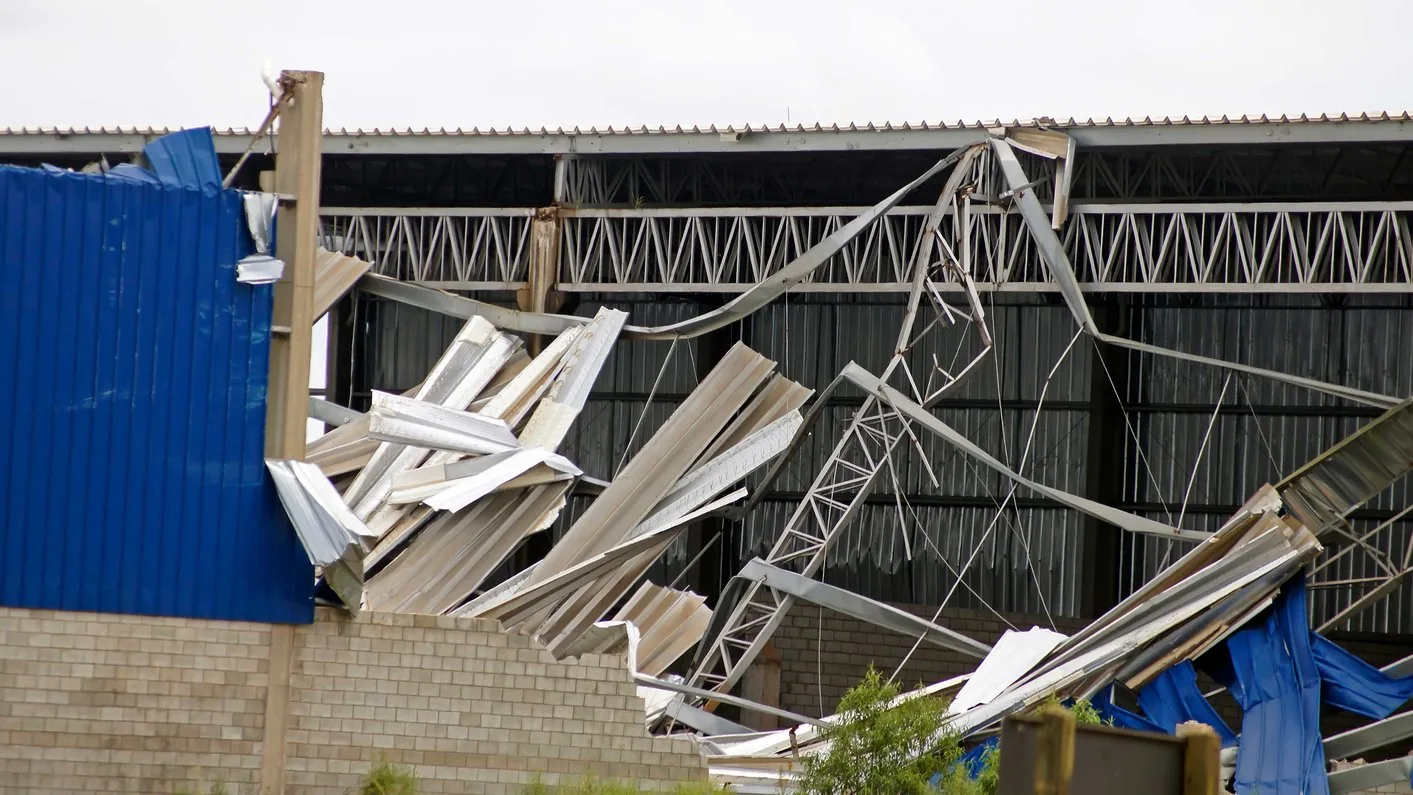
Map the roof movement before setting the repair
Share roof plans, event timing, interior reports, prior repairs, and access limits. We will inspect attachment and drainage, secure exposed areas where appropriate, and document the permanent scope.
Call 555-555-5555 or request a roof assessment.