
Commercial Roofing for Insurance Restoration in Sunrise, FL
Insurance Restoration
A commercial roof claim turns on the condition that can be observed, tested, and tied to a specific roof area. In Sunrise, humid heat, intense sun, seasonal downpours, and tropical wind put drains, edge metal, seams, and equipment flashings under recurring stress. We inspect the roof assembly, record visible impact, and separate immediate protection from permanent repair. The Sawgrass business parks include corporate, distribution, manufacturing, and research uses, each with different roof access and operating limits. A claim inspection gives the owner a clear field record to use with the restoration team.
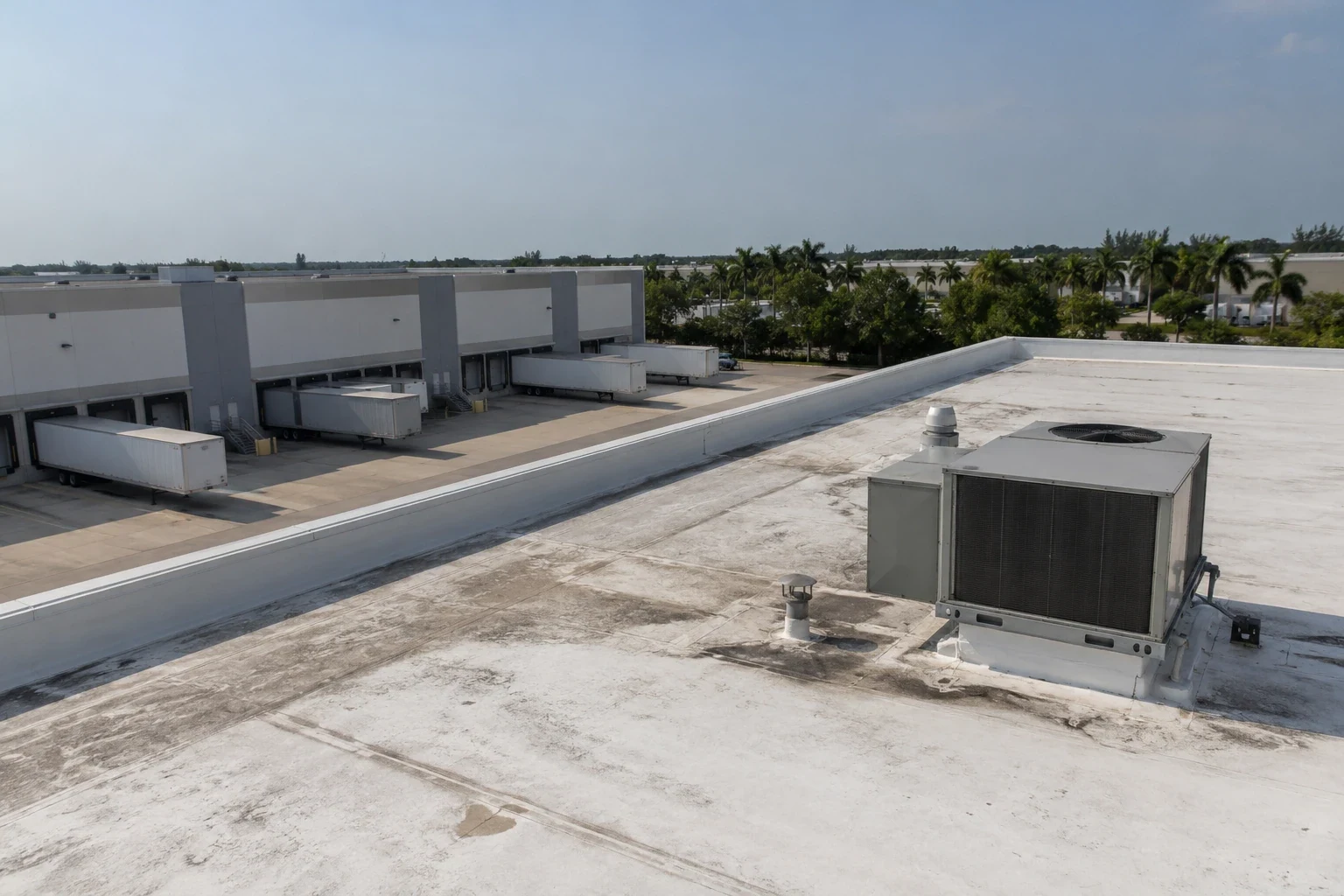
Industries We Serve in Sunrise, FL
Sunrise commercial roof inspections document storm impact, repair boundaries, photographs, and temporary protection for insurance restoration work.
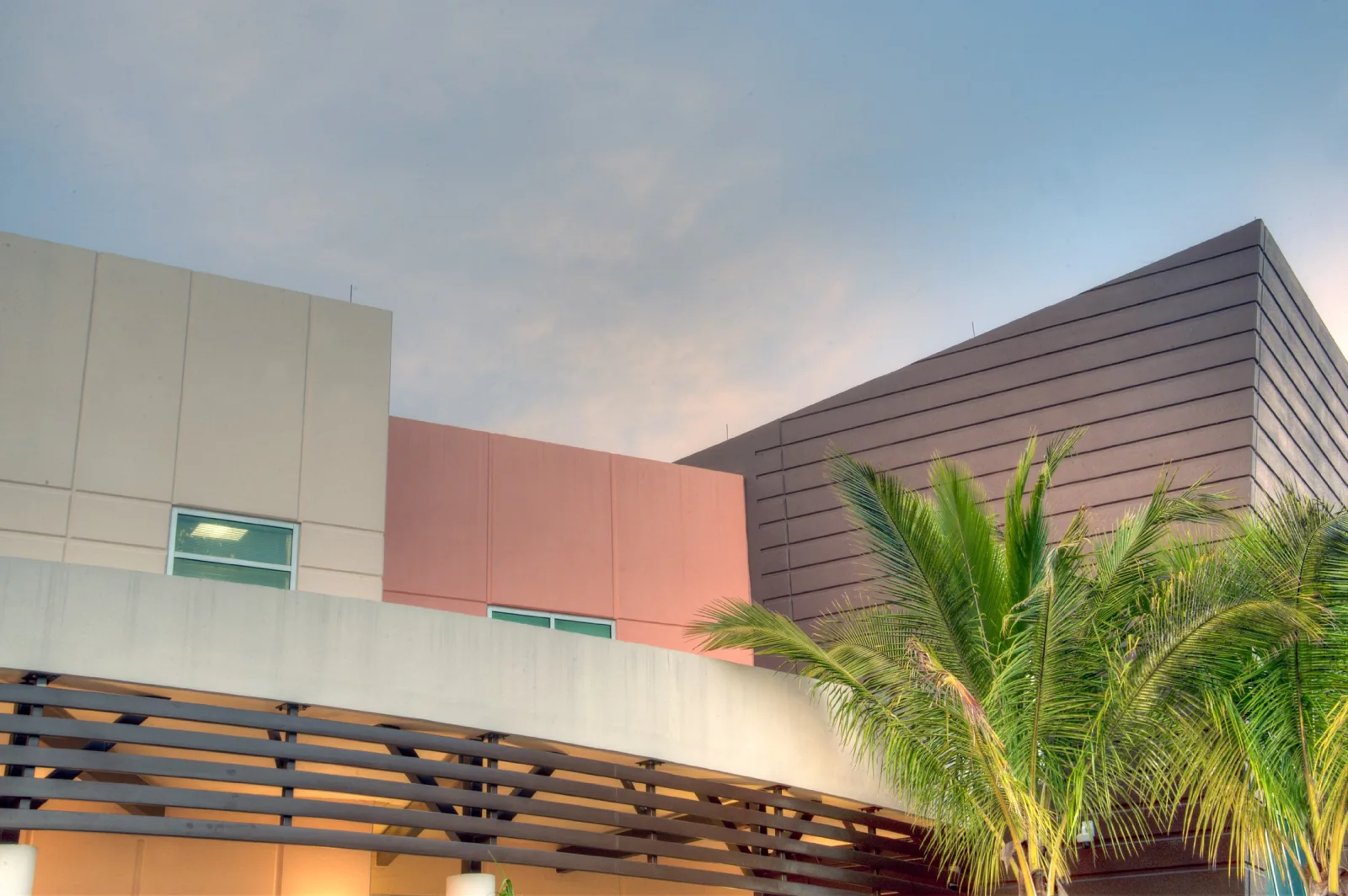
First response: Secure exposure, then define the roof condition
Active water entry needs a prompt response, but a tarp or temporary patch does not establish the permanent repair boundary. We locate the affected roof zone, protect exposed openings where conditions allow, and note the remaining risk before leaving. The record identifies the material used for temporary protection, the area covered, and any part still vulnerable to rain. If electrical equipment, occupied rooms, or sensitive inventory sit below the opening, the building contact helps prioritize safe access and interior protection.
We then inspect the roof above and upslope from the interior report. Water may travel along insulation joints, deck flutes, or framing before reaching a ceiling, so the visible stain is a starting point rather than a roof map. We check seams, fasteners, curbs, wall transitions, drain basins, and earlier patches near the likely path. A rapid roof response can limit exposure while a condition inspection establishes what should be repaired permanently.
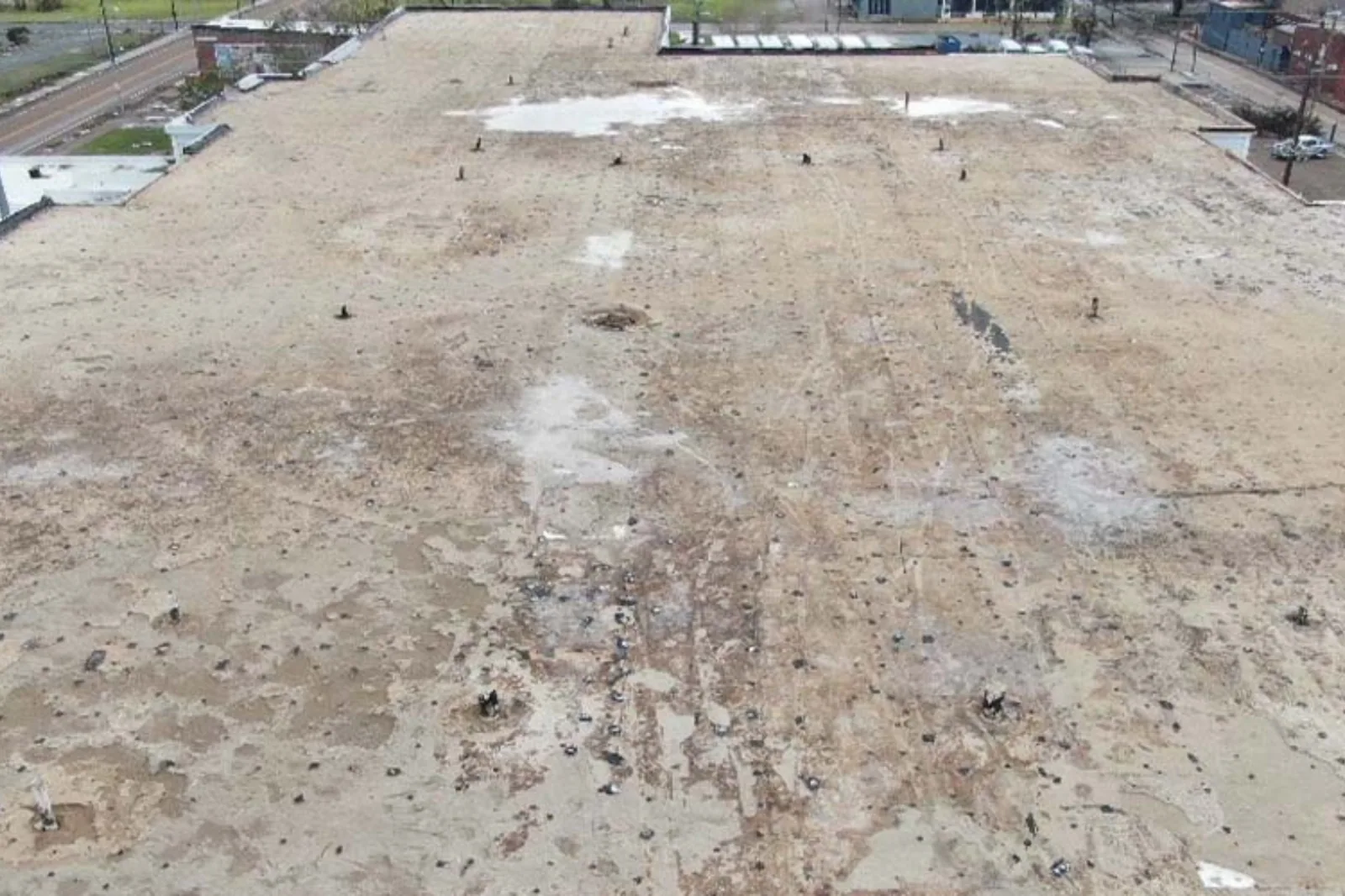
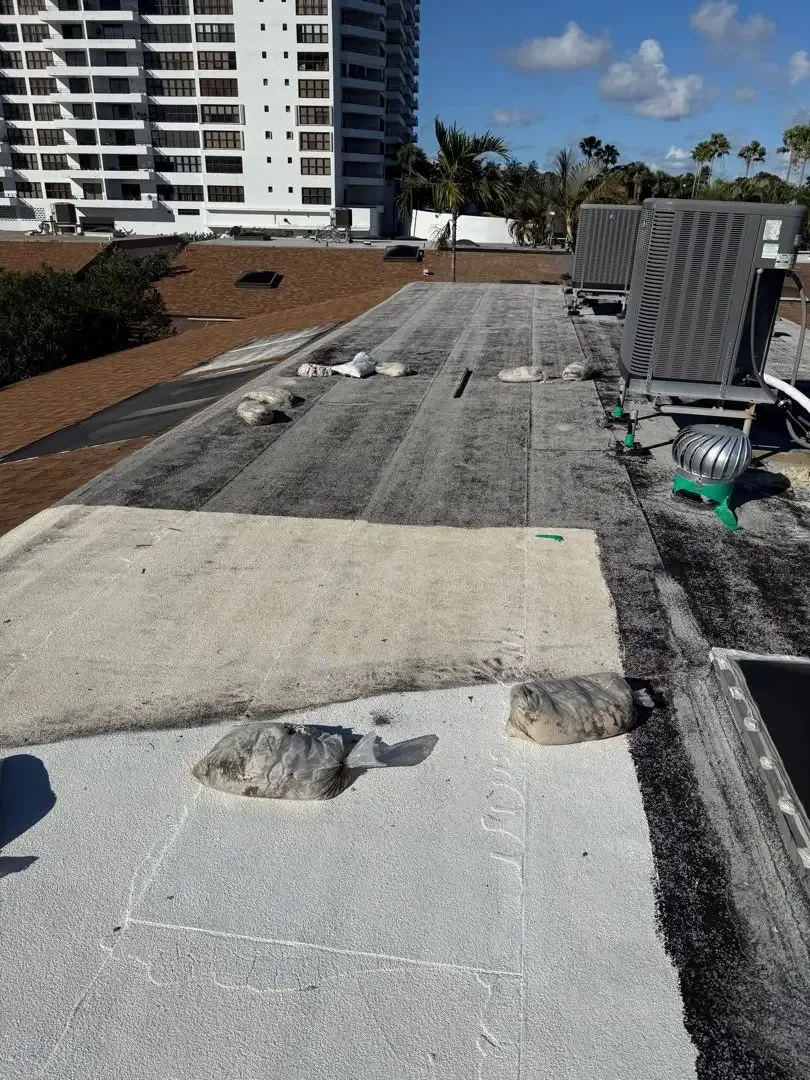
Impact record: Link each observation to a roof zone
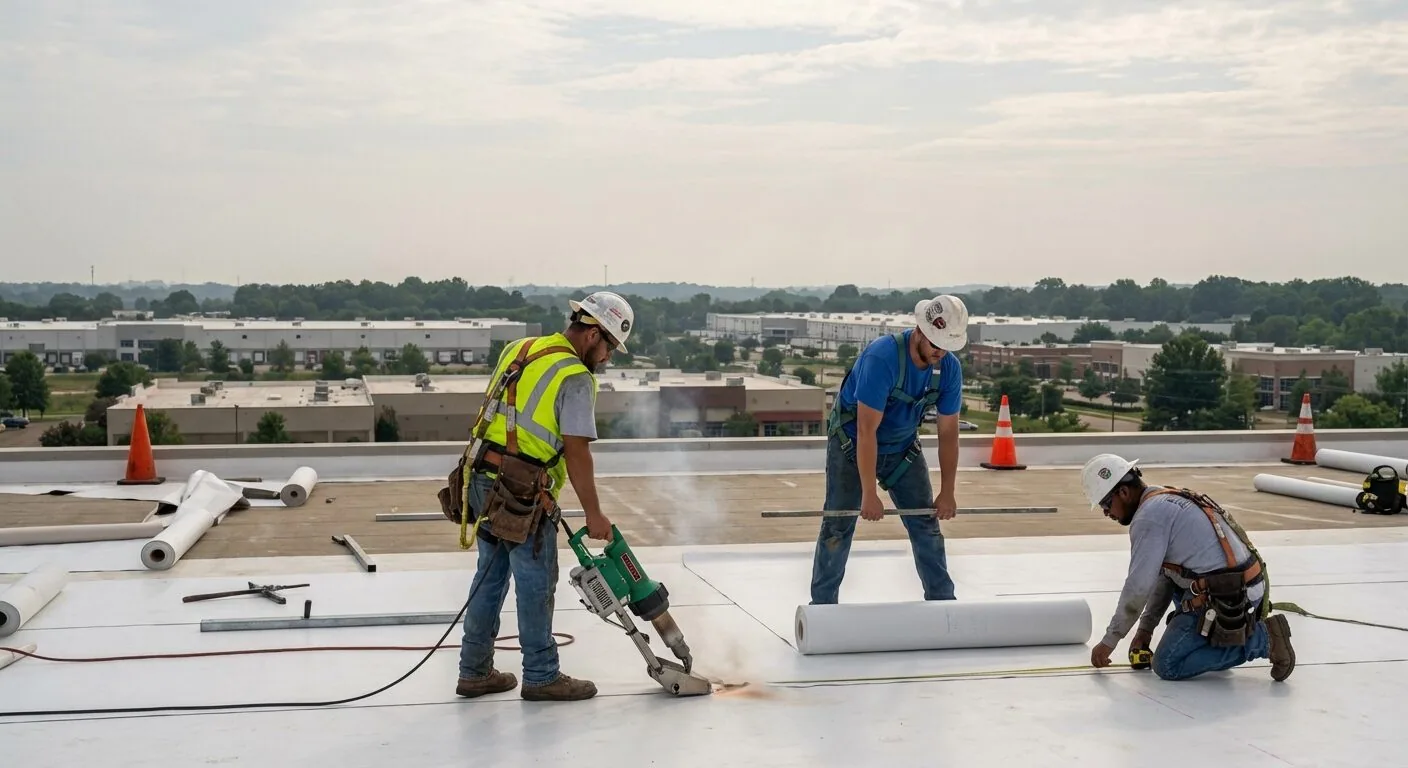
Useful claim documentation identifies where an observation occurred and what evidence supports it. We label roof sections, photograph the detail from useful distances, and record visible seam separation, displaced edge metal, punctures, crushed curbs, blocked drainage, or wet insulation found through testing. Images include orientation and a roof-zone reference so an adjuster or restoration manager can compare them with the building plan. We distinguish observed damage from wear, prior repairs, and conditions that need further testing.
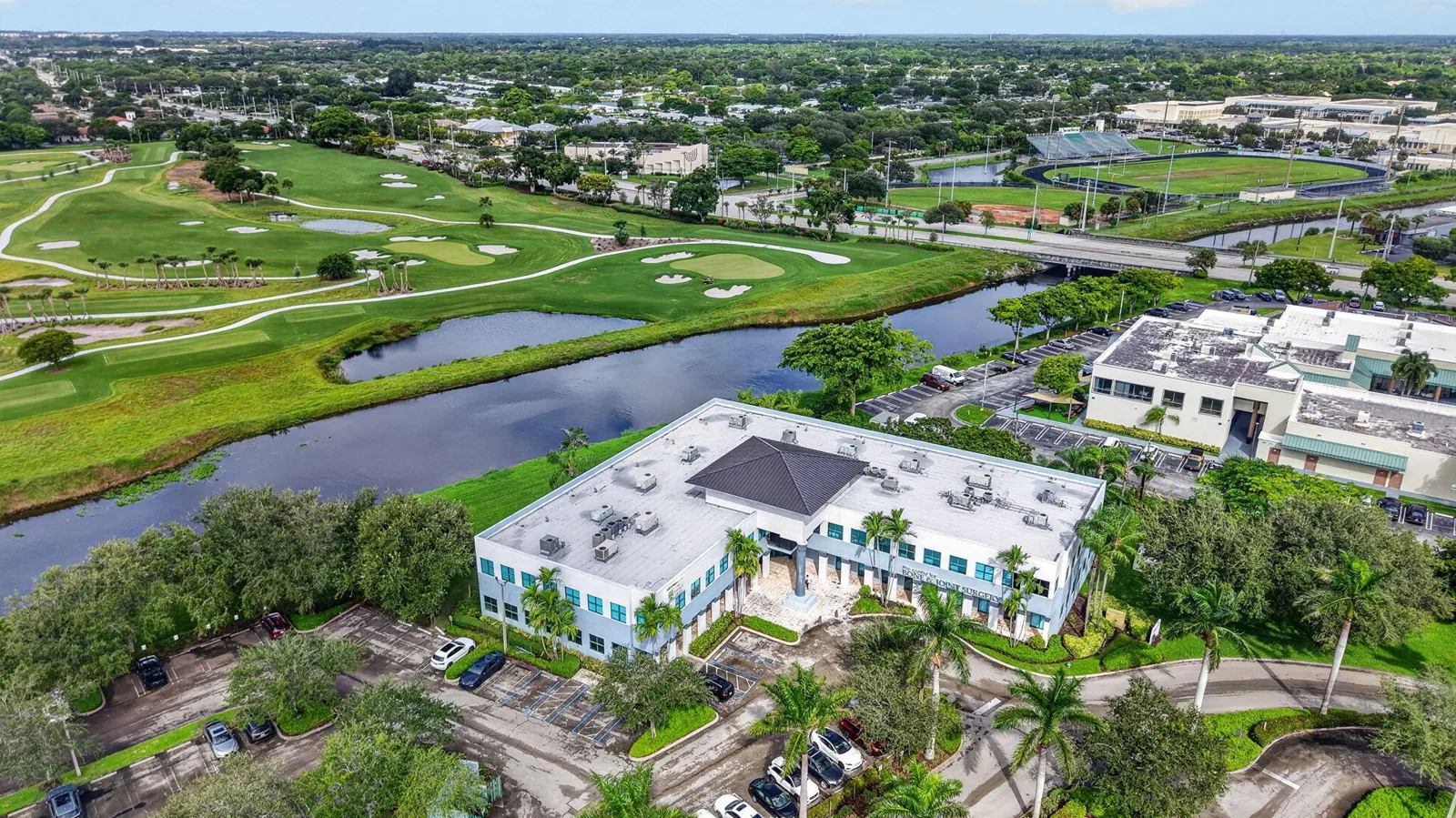
Sunrise's western Business and Entertainment District brings retail, arena, office, and mixed-use properties into one active commercial area. That variety makes building-specific evidence important: access, rooftop equipment, and the assembly under review can differ from one address to another. Sawgrass Technology Park and Sunrise Commerce Park add office, distribution, and industrial settings with different roof penetrations and work routes. A property management team may coordinate the records across those assets, while each roof still needs its own condition map. A photo-based condition report organizes findings by zone, while a wind-impact review focuses on edge, attachment, and flashing evidence.
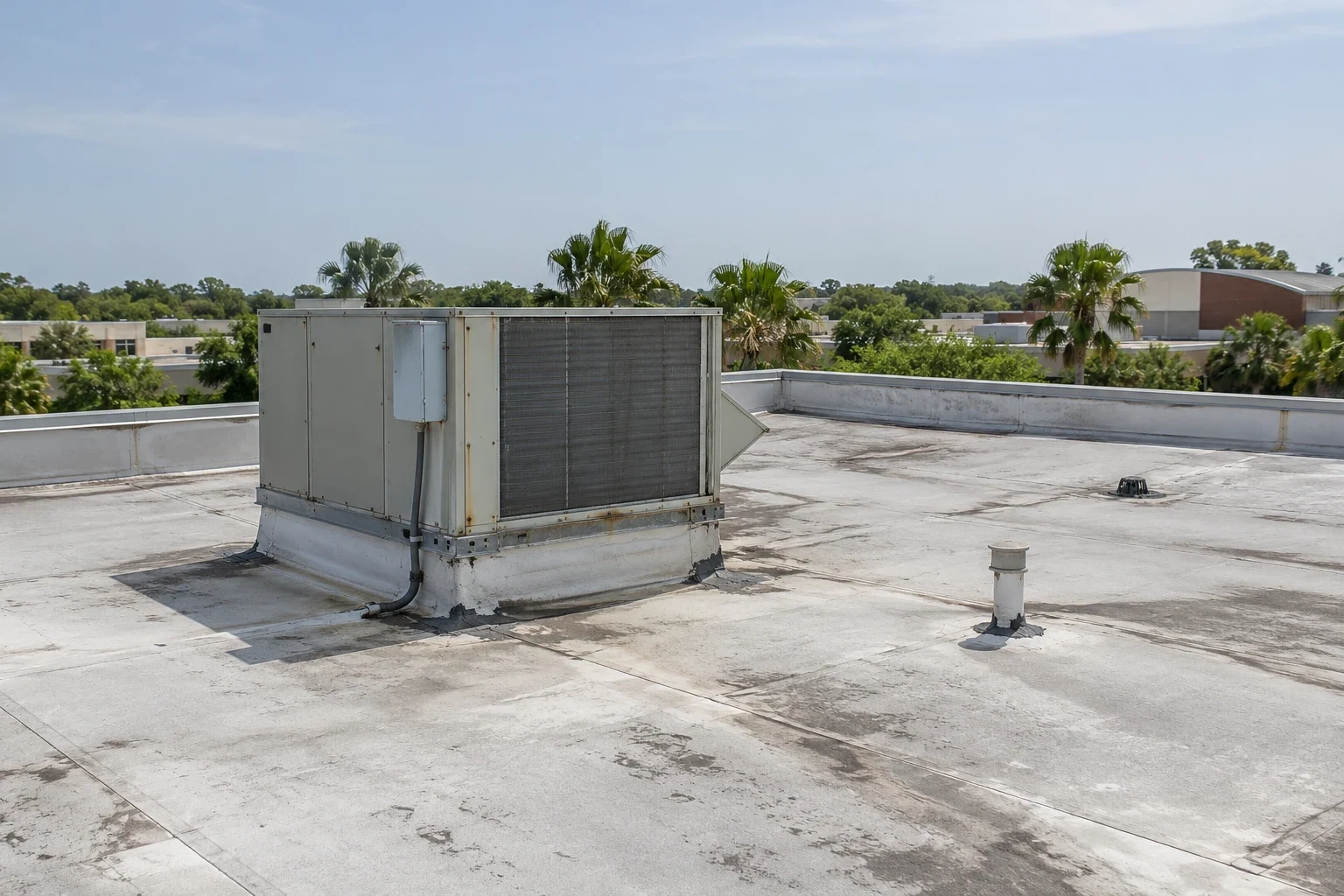
Test boundary: Confirm concealed moisture before pricing
A surface mark does not show how far moisture has moved beneath the membrane. When the repair choice depends on concealed layers, we identify an appropriate test location, protect the occupied space below, and document the materials found. The test cut can reveal membrane, cover board, insulation, adhesive or fasteners, and deck condition at that point. We mark the wet boundary supported by the opening and keep untested sections separate instead of extending a quantity across the roof without evidence.
If moisture has spread beyond a local detail, the repair may need additional removal, drying, or deck work before a sound tie-in can be made. If the substrate remains serviceable and damage is isolated, a targeted repair may be more appropriate. A moisture survey can help identify areas for follow-up testing, and a recover evaluation checks whether an existing assembly can accept another layer. The report states which findings are tested and which remain an allowance, giving the owner and restoration team a defined basis for the next decision.
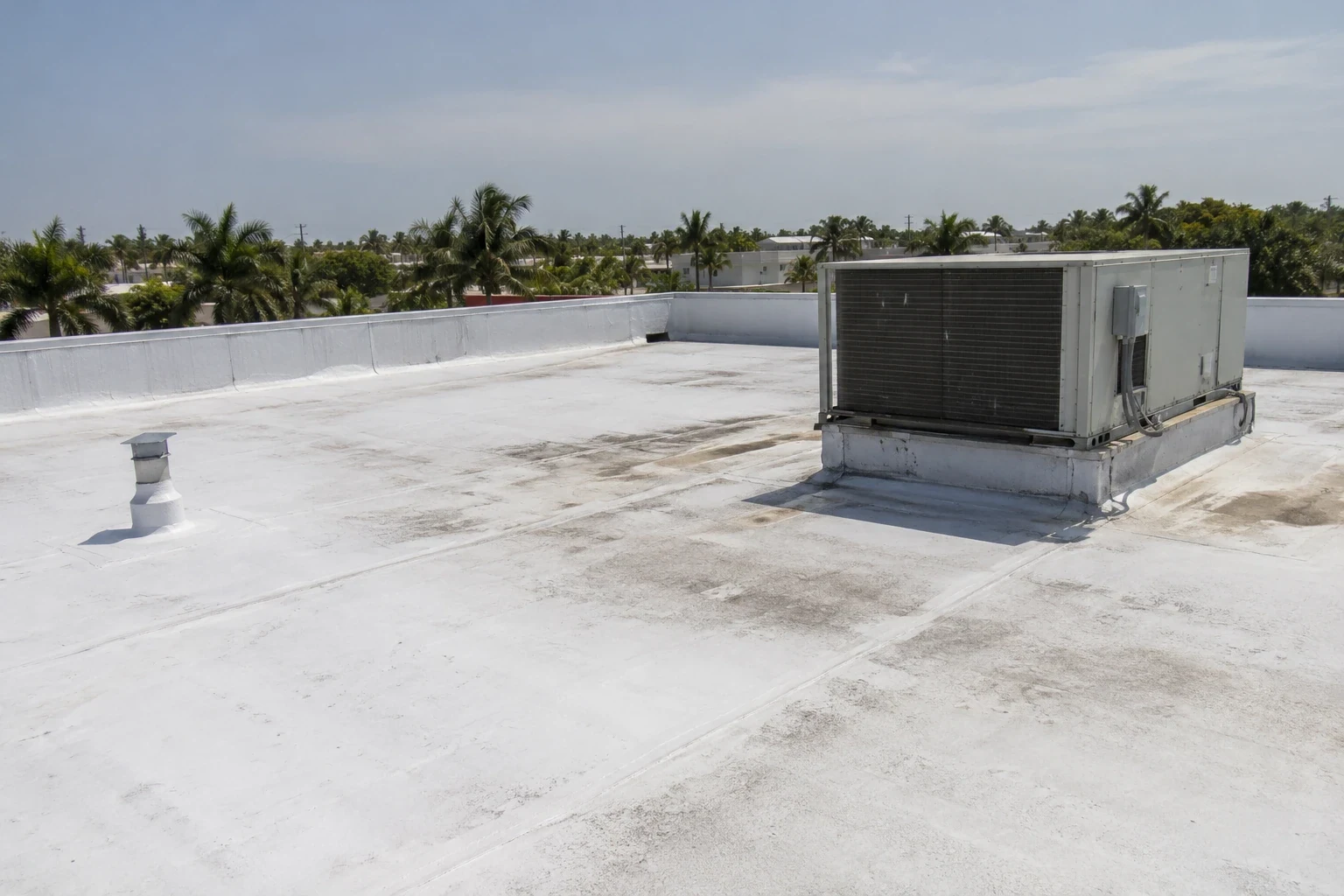

Cause review: Compare storm impact with existing roof details
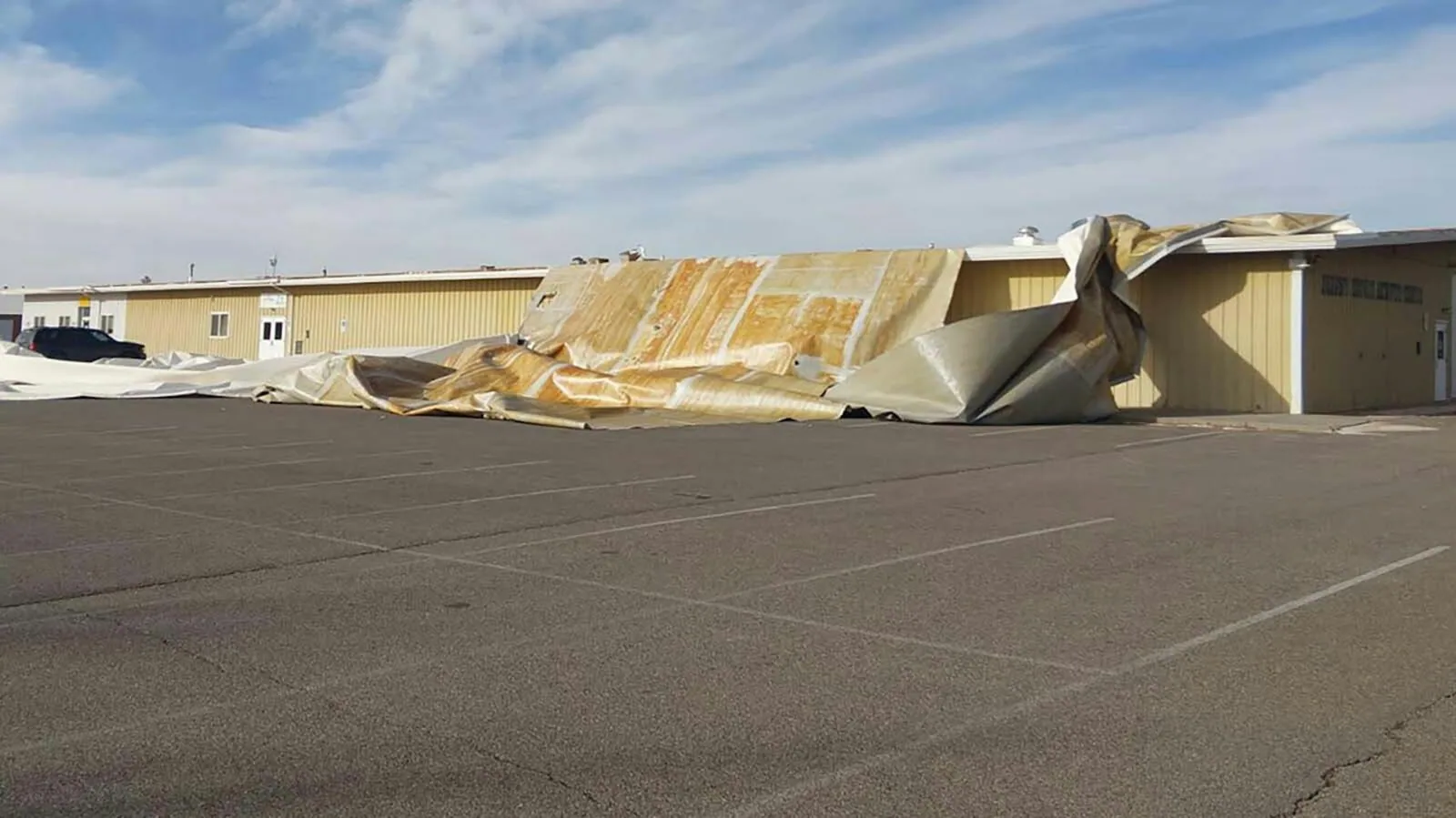
Rainy-season storms in South Florida can bring damaging wind, hail, flooding, and occasional tornadoes. A tropical system can also leave loose materials or openings that require attention before the next weather window. We inspect perimeter attachment, coping, membrane seams, equipment supports, penetrations, and drainage after safe access is available. Hail marks or impact evidence should be recorded with the affected material and location, while any underlying moisture is checked separately. A hail inspection or tropical-storm roof review can focus the field work on those mechanisms.
South Florida heat and ultraviolet exposure also age exposed sealants and roof surfaces over time. That context may help explain an existing condition, but the file should distinguish deterioration from sudden physical damage. We note prior patches, open laps, corrosion, clogged outlets, and maintenance items without assigning a cause that the inspection cannot support. Fort Lauderdale normally receives 37.49 inches of rain during South Florida’s rainy season, making clear drainage paths and a secure daily dry-in important parts of the repair plan. A clear chronology from the owner, paired with dated roof photographs and zone labels, helps keep the technical record aligned with the reported event.
Scope and estimate: Separate temporary work from permanent repair
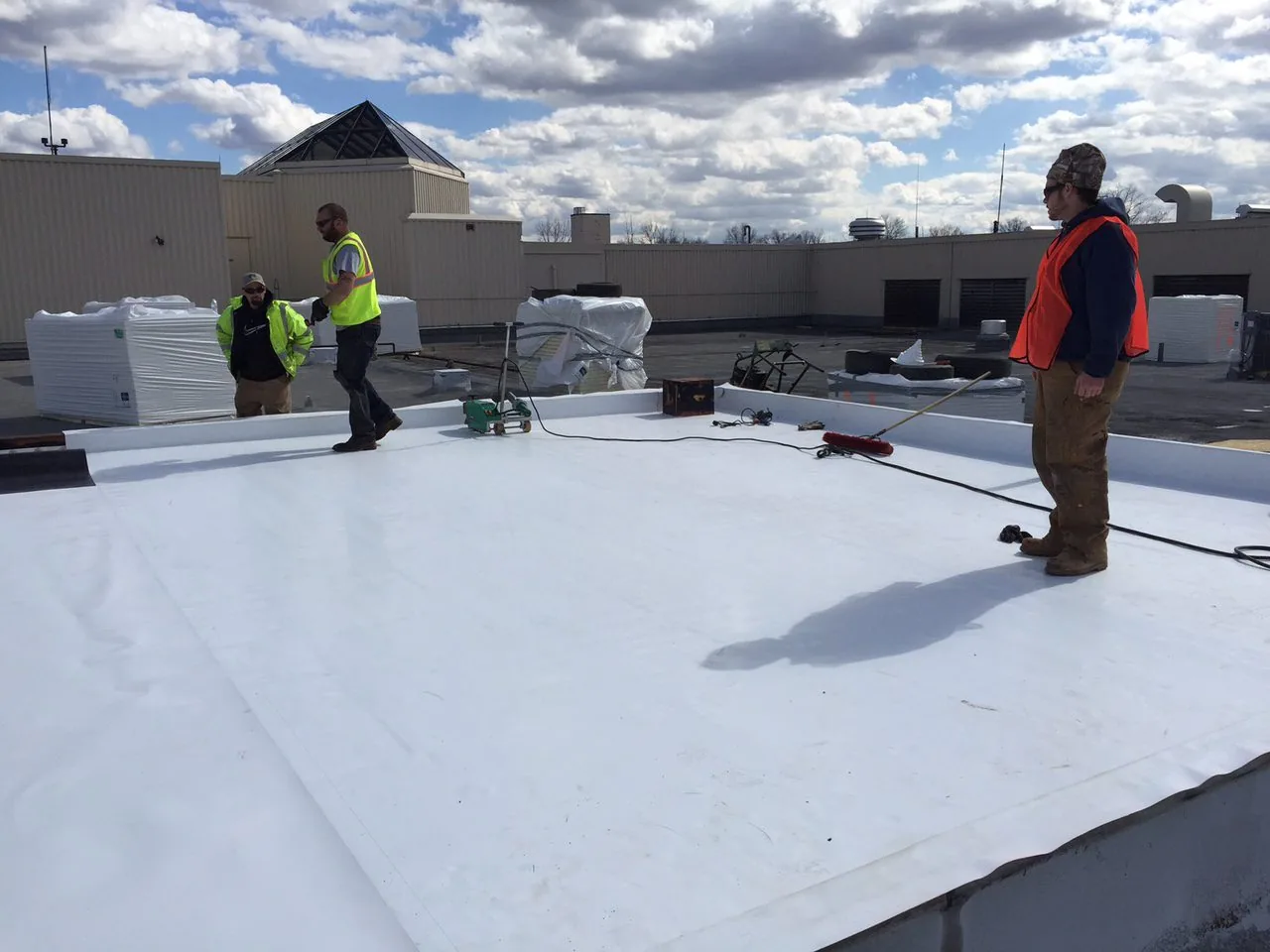
A restoration estimate should state the work area, removal depth, replacement materials, preparation, flashing, disposal, access, and closeout. If the deck or insulation condition is concealed, we identify the quantity basis and the condition that would change it. Temporary protection, emergency labor, testing, and permanent construction should appear as distinct tasks so the owner can review what has already been done and what remains. Photographs, measured quantities, and the roof-zone map should correspond to the same scope.
Cost and schedule can change with substrate repairs, occupied-space protection, equipment relocation, material availability, and weather. During South Florida’s rainy season, crews need a defined daily dry-in limit before opening a roof area. We set the removal area to match the crew's ability to close the assembly that shift, protect drains from debris, and leave a watertight edge. A localized repair scope differs from a replacement project in removal, material quantities, staging, and duration. Those differences should remain visible in the estimate rather than hidden inside one broad line item. A general contractor can use the same roof-zone quantities to coordinate other trades and track approved changes.
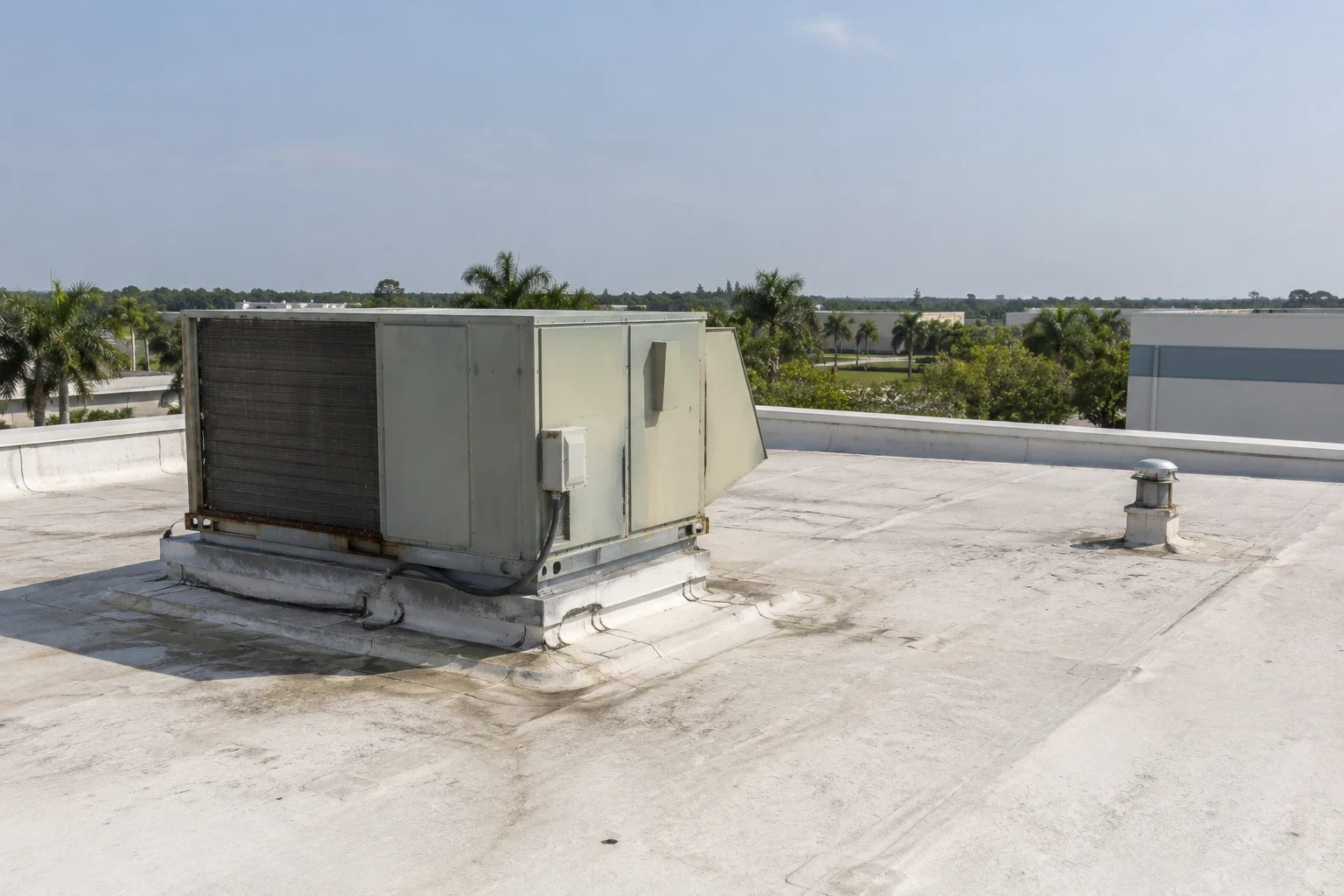
Closeout: Leave a record for the next inspection
After work, we photograph completed repairs and identify the system and materials where confirmed. The closeout record notes the roof zones addressed, test openings closed, drainage details checked, and any maintenance item left for another visit. If temporary protection remains, its location and follow-up need are stated plainly. The owner can retain the map and images with prior inspection records, giving the next reviewer a way to distinguish repaired details from new findings.
A multi-property group should keep each building's claim file separate, even when several roofs were exposed to the same regional weather. One property's damage does not establish another property's condition. Broward Lakes Business Park and Sawgrass International Corporate Park contain multiple commercial uses, but the assembly and event-related damage must still be checked at each building. For properties in Sunrise, share the roof plan, leak timeline, prior repair files, and access rules. We will inspect the affected assembly and document the work boundary so facilities and restoration teams can coordinate the next step.
Frequently Asked Questions
What should the first roof inspection document after a storm?
We record roof zones, visible impact, interior reports, photographs, temporary protection, and any test needed to define concealed damage. Each observation stays tied to its location.
Can a temporary patch establish the final repair scope?
No. Temporary protection limits exposure. We inspect the assembly and test concealed layers when needed before setting the permanent repair quantity.
How do you distinguish storm damage from existing wear?
Dated photos, prior records, material condition, and the physical failure pattern help separate recent impact from older deterioration. We report what the roof evidence supports.
When is a test cut useful for a claim?
A test cut helps when the repair decision depends on insulation, cover board, or deck condition beneath the membrane. We record its location and findings.
What information helps price restoration work?
Provide roof plans, event and leak dates, prior repairs, access limits, and operating hours. These details help us define testing, protection, quantities, and sequencing.
Document the roof before setting the permanent scope
Share the roof plan, leak timeline, prior repair records, event information, and access requirements. We will inspect the assembly and map the work supported by the field evidence.
Call 555-555-5555 or request a roof assessment.