
Apartment and Multifamily Roofing in Sunrise, FL
Apartment and Multifamily Roofing
Apartment roofing in Sunrise, FL has to connect each reported ceiling mark with the roof over the correct building, stairwell, or unit group. Water can travel along deck, insulation, or framing before it appears indoors. We inspect seams, penetrations, drains, edges, and prior repairs, then map the likely path and affected zone. Plantation Midtown is an 860-acre mixed-use district that includes housing, offices, medical facilities, and retail. Sunrise’s commercial parks include multi-tenant office and flex buildings. A roof inspection gives the property manager a record that can guide repair scope and tenant communication.
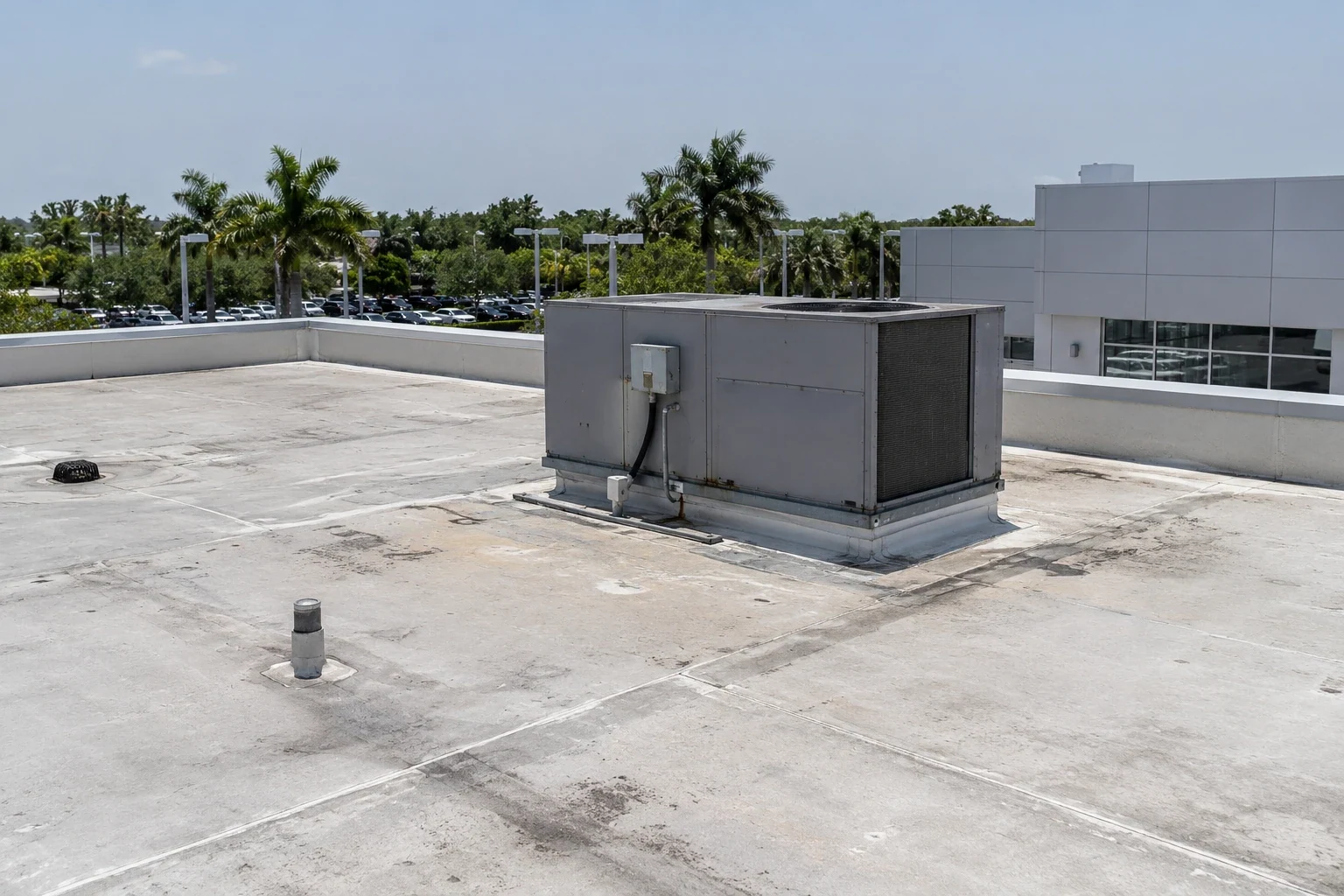
Property Types We Roof in Sunrise, FL
Apartment roof repair in Sunrise, FL maps leaks by building and roof zone, with tenant notices, access, drainage, and daily closure planned.
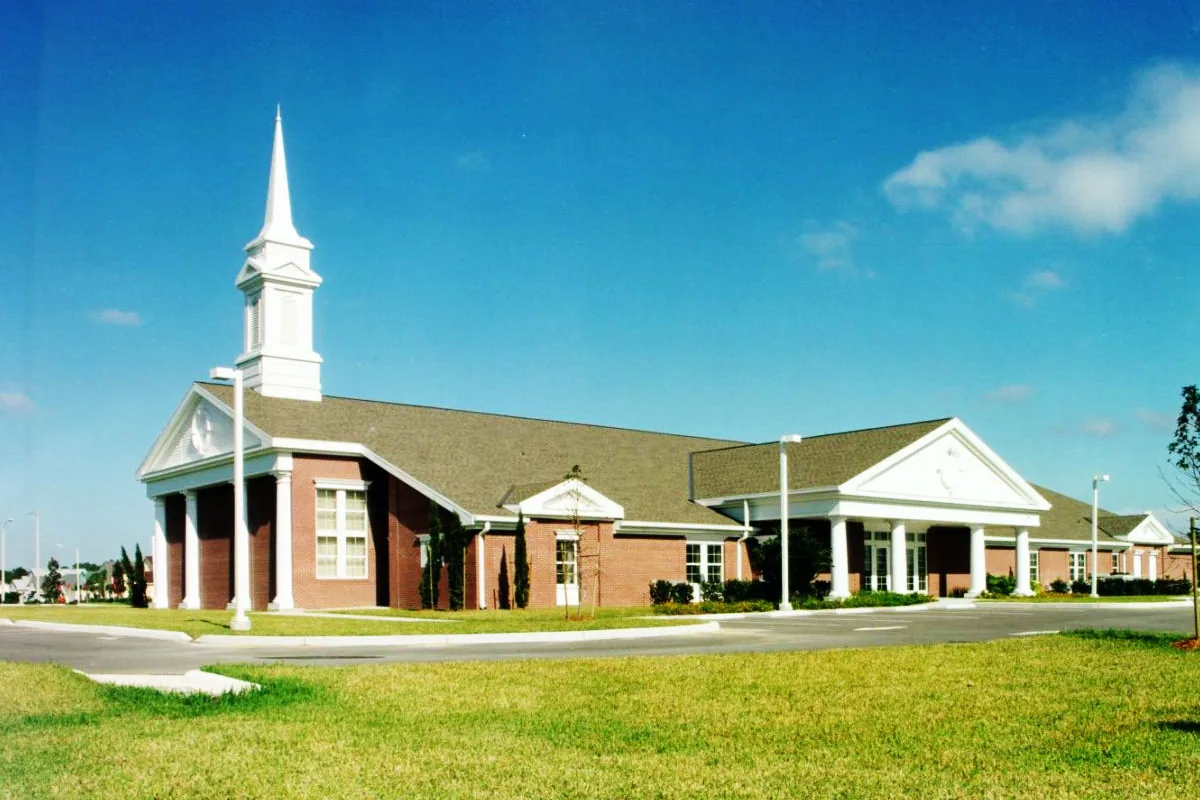
Tenant access: Plan notices and roof entry
Roof work may affect residents through noise, roof access, parking, balconies, air intakes, or short-term work near a building entrance. We coordinate the work window with property management and identify the affected building and unit area without placing personal resident details on roof plans. The schedule lists which entrances or service routes may be affected and how staff can report a new ceiling mark. Tools and materials need a controlled path that keeps required access open.
A multi-building property may need separate notices and work zones for each structure. We identify the ladder or hatch access, staging location, delivery route, and temporary protection before removal begins. A phased multifamily work plan can sequence repairs by building or wing and define the end-of-shift closure. If residents remain in units below the work, the manager can arrange coverings or temporary room access based on the specific roof zone.
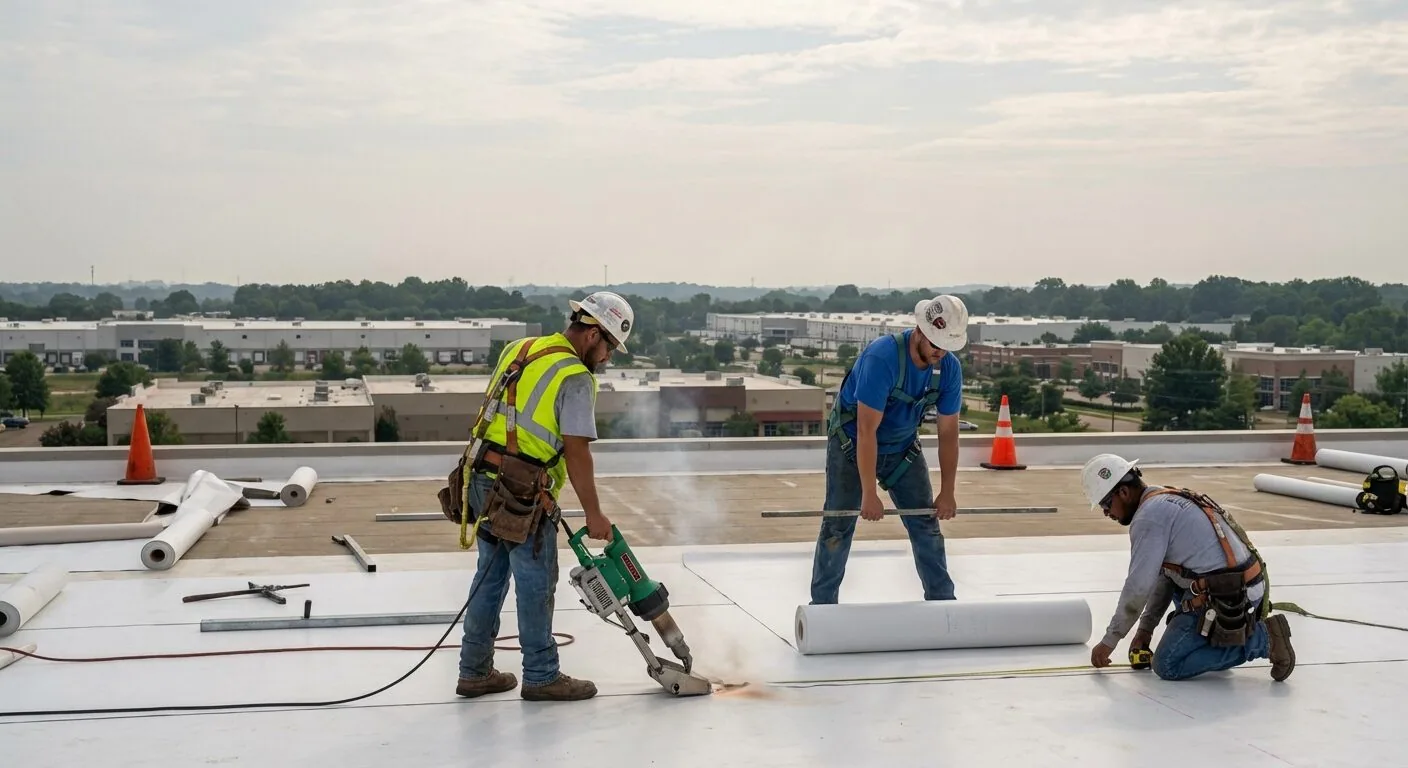
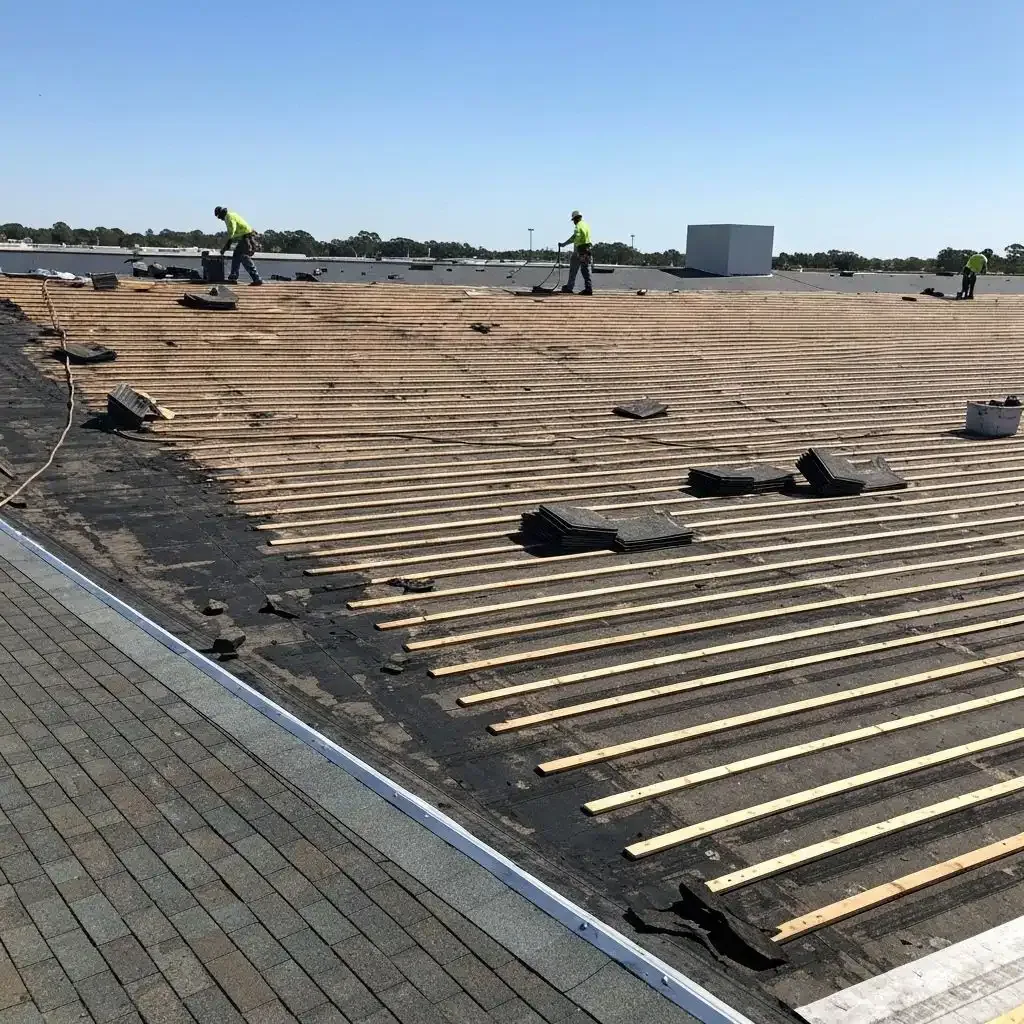

Leak reports: Connect interior symptoms to roof zones
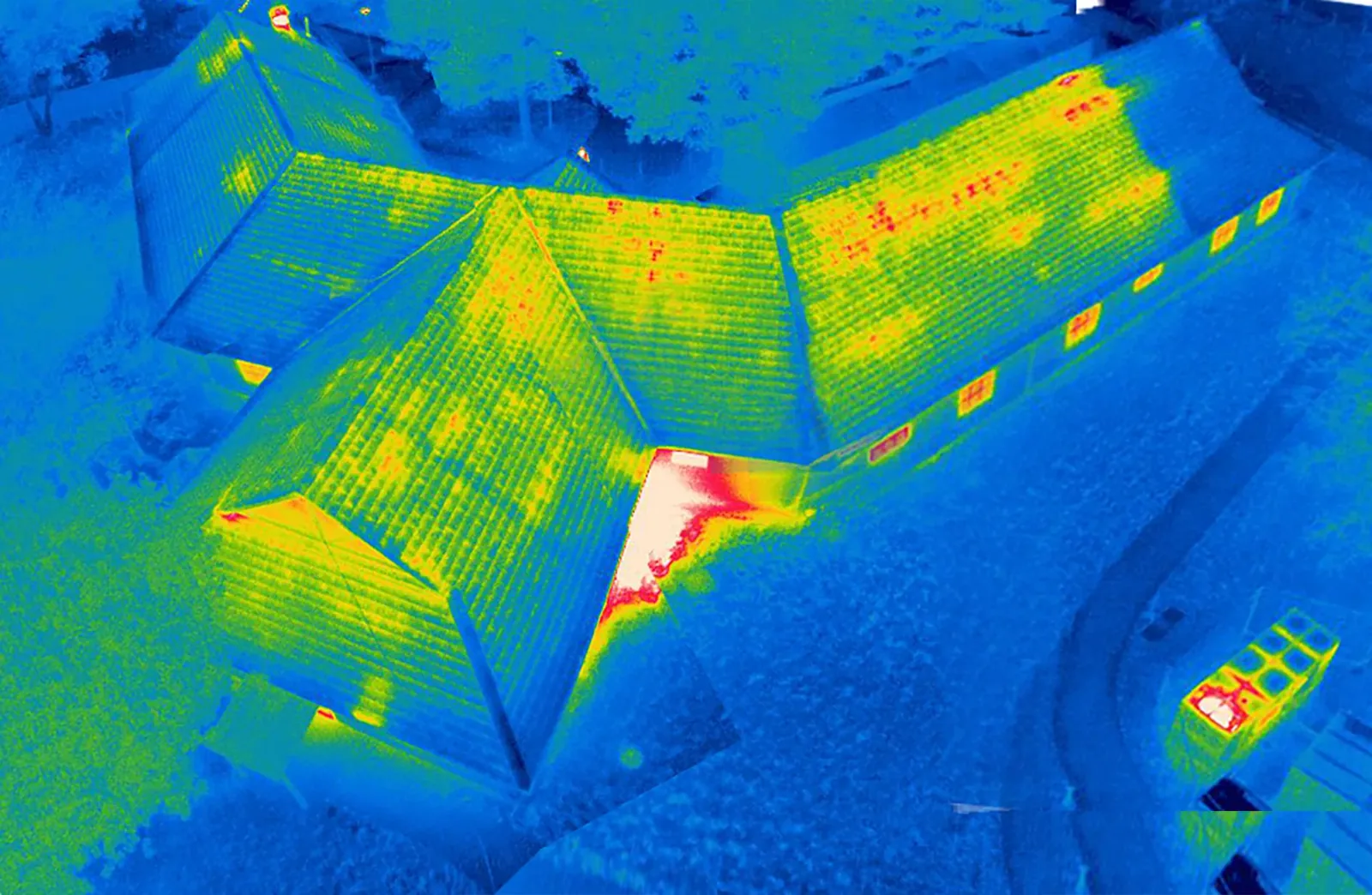
A leak over an upper-floor unit may start at a curb, wall, seam, or drain basin located away from the interior stain. We use the report's time and location to guide inspection, then look at roof slope, deck joints, penetrations, parapets, and prior patch lines. If a building has additions, we identify each roof section and any change in system before deciding which repair materials apply. A test opening can confirm whether insulation is wet below the membrane.
We document the opening, layers observed, and repair before closing it. When a second unit reports water, we compare both locations with roof zones, drainage paths, and the timing of the leak reports. Photos and a zone map help the manager avoid mixing confirmed conditions with unverified reports. A moisture survey can help select test locations where conditions support it; direct testing determines whether material removal should extend beyond the first symptom.
Drainage: Protect the building perimeter
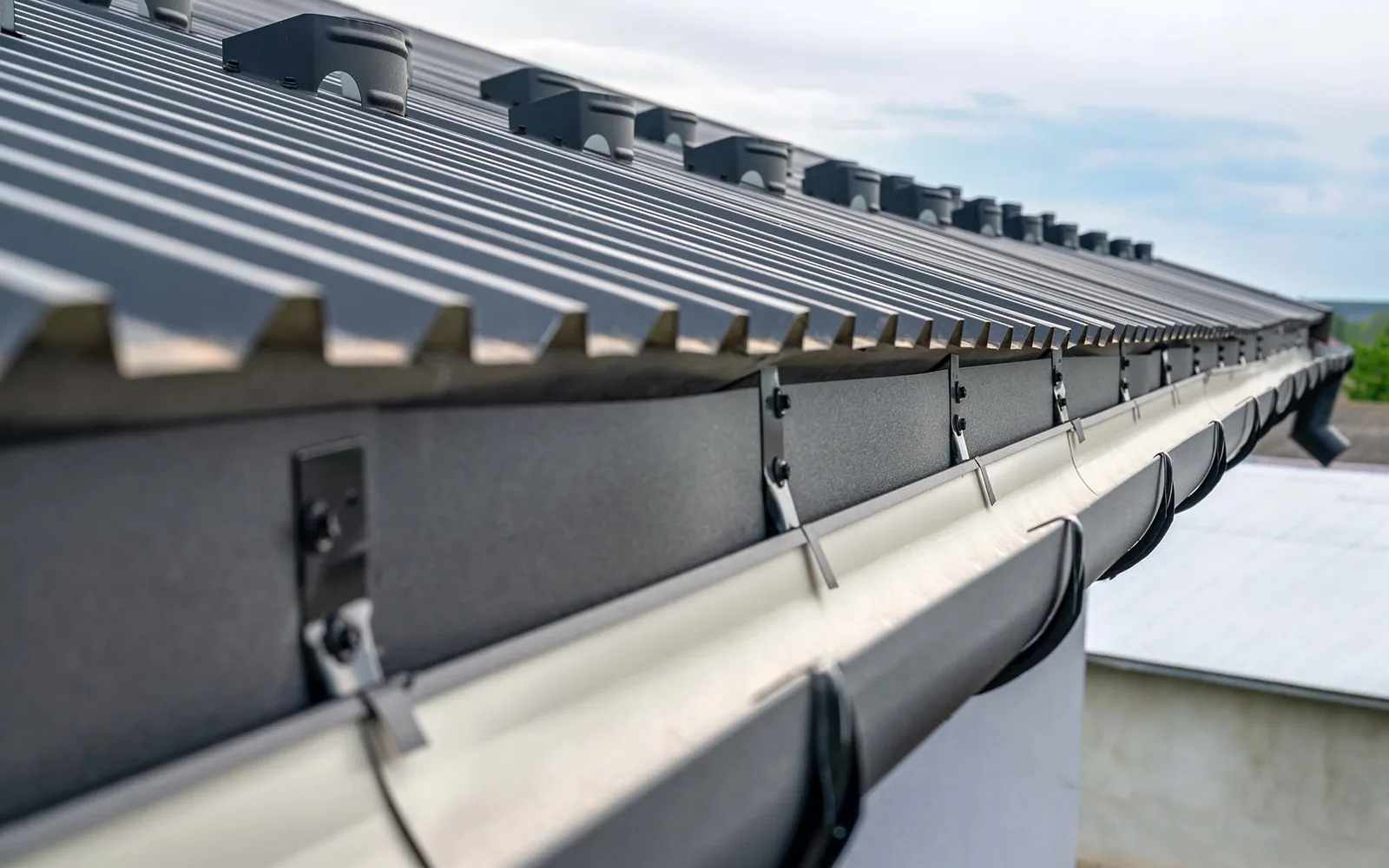
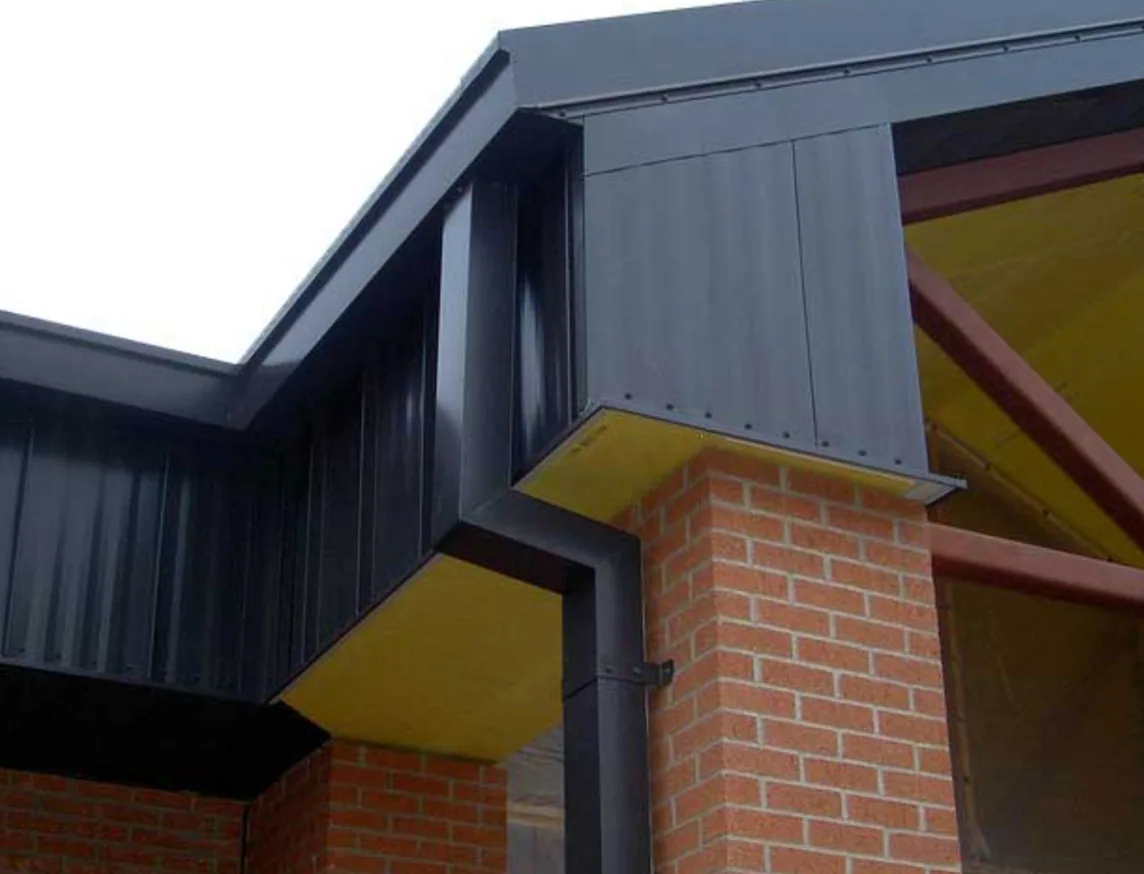
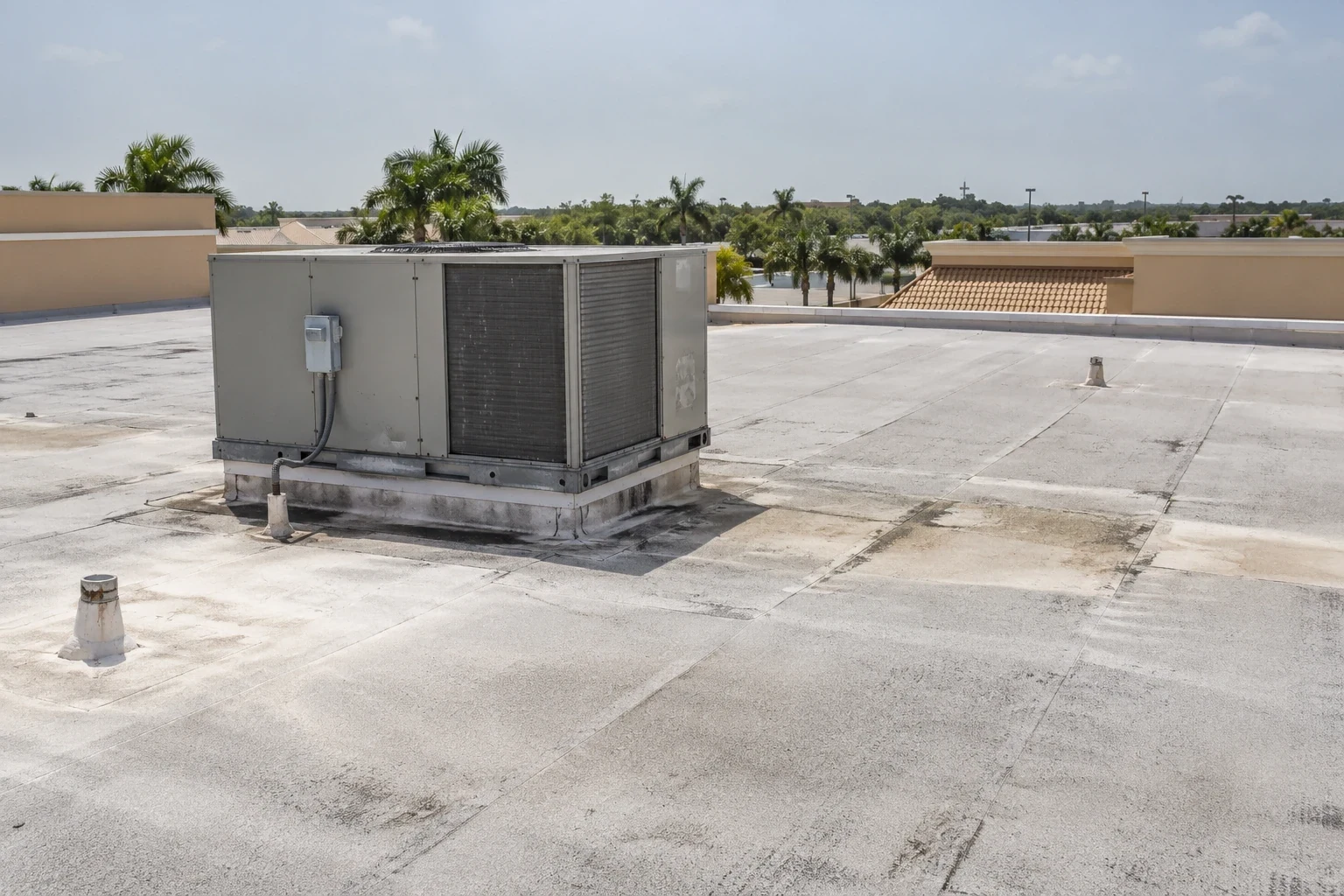
Apartment roofs often direct water to internal drains, scuppers, or gutters near occupied walls. We check each outlet, overflow, basin, and discharge route for debris, standing water, and separation at the surrounding membrane. Water held near a parapet can travel into a wall assembly before a resident sees a mark. A gutter or downspout that has pulled away may be a separate exterior repair and should be included in the scope.
The Fort Lauderdale climate record allocates 37.49 inches to the region's rainy-season block. Property staff can check which drains serve each building and whether overflow routes remain clear ahead of that period. A drain and scupper service can identify restrictions; edge work may need to coordinate with coping and gutter repairs. We record any area where water persists after outlet service because deck movement or wet insulation may require a different investigation.
Roof assembly: Verify the system on each building
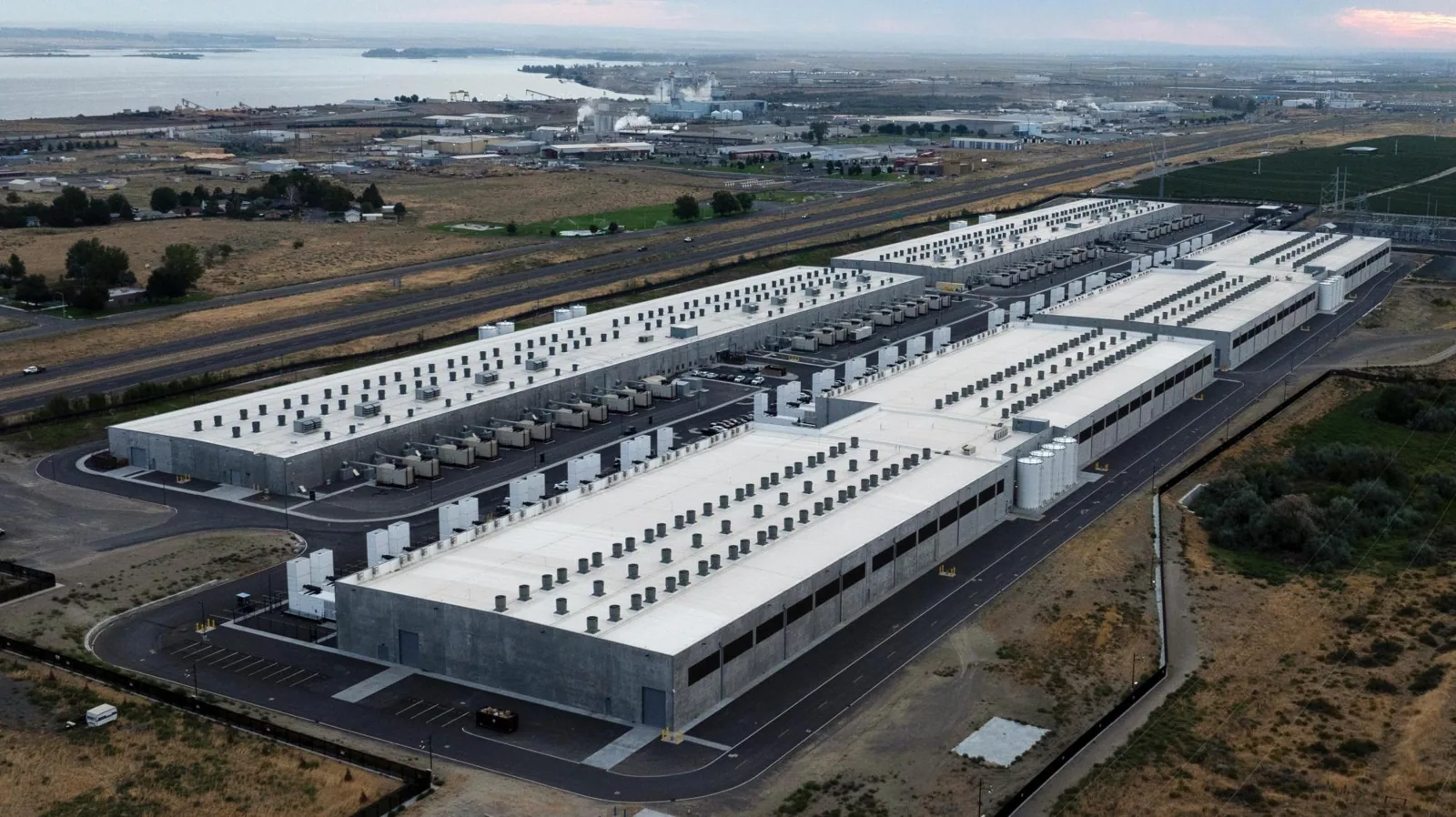
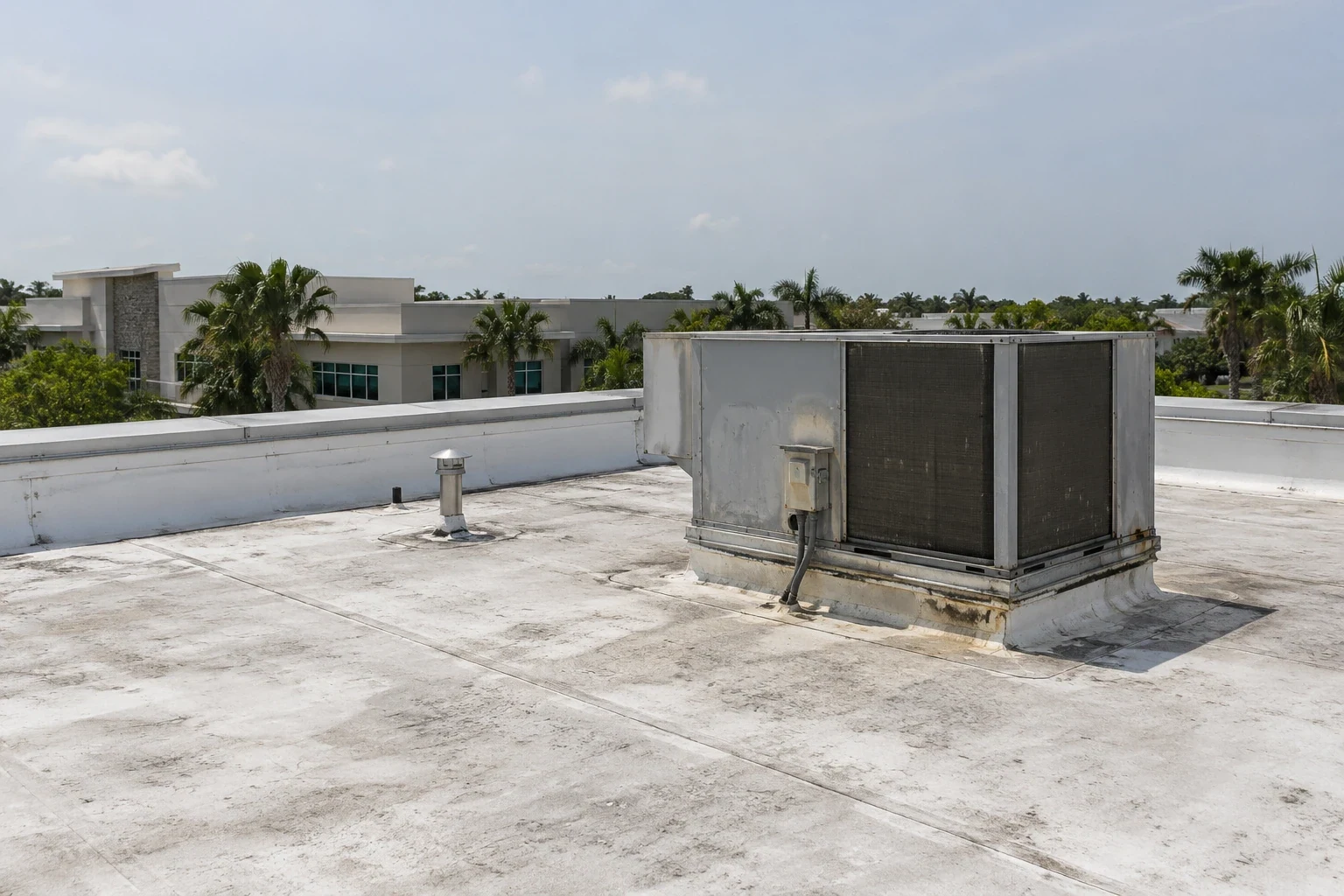
A multifamily property may have a different roof system over a clubhouse, parking structure, or later building addition. We confirm whether the surface is a membrane, built-up system, metal, or coating and check attachment, seams, insulation, and edge details. A repair material needs a compatible bond with the actual assembly. If plans identify a product but the field shows multiple layers, the estimate states what was confirmed and where a sample may be needed.
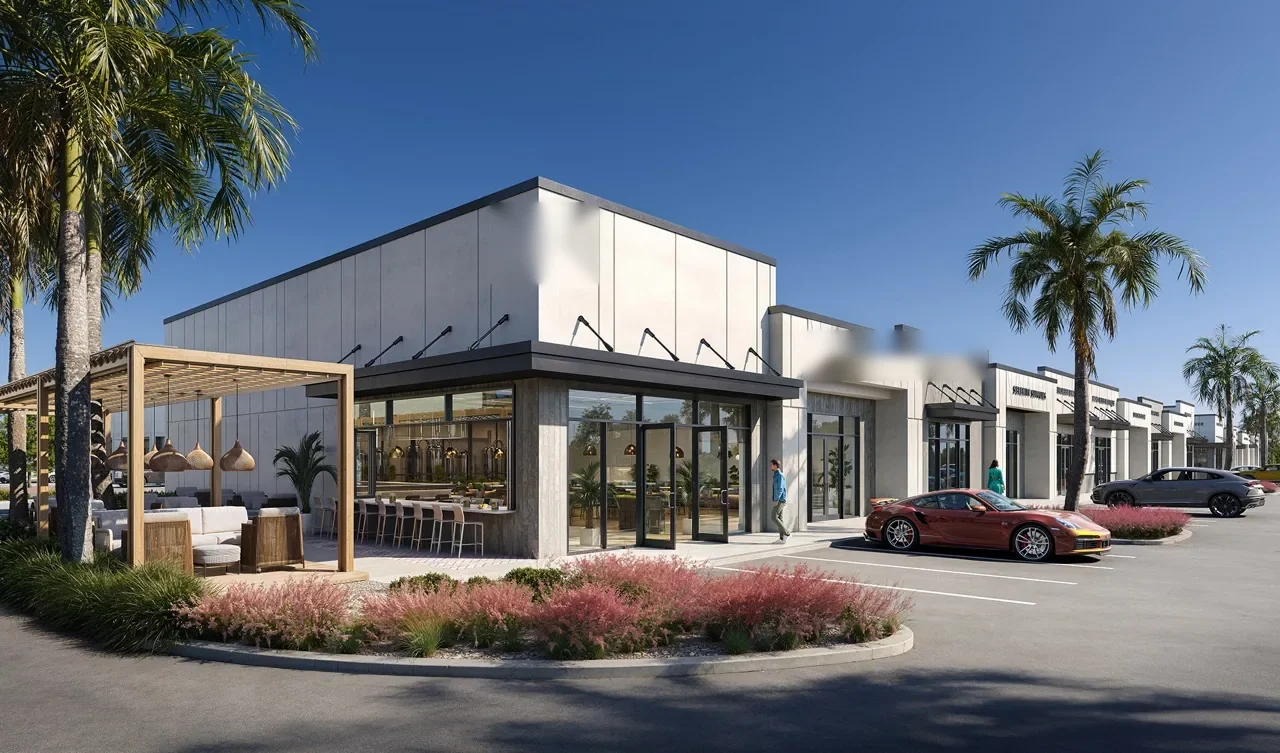
Plantation Midtown combines housing, office, medical, and retail uses across an 860-acre district, while Sunrise's commercial parks include flex and office buildings. We identify the membrane, drain layout, and access limits at the apartment property before setting repair scope. The property map and field inspection control. A hotel roof review may share occupied-building sequencing, while a medical-office inspection may involve intake controls. For membrane work, EPDM repair and coating restoration use different preparation and seam details, so the system is confirmed first.
Work sequence: Keep entrances and occupied rooms protected
Before work, we identify the exposed roof area, protective covering below, material route, and dry-in method. If removal reveals a soft deck or wet insulation, the repair crew pauses at the agreed point so management can review the evidence. The daily report lists which roof zone opened, what was installed, and whether an interior area needs another check. This gives property staff an operational update without relying on a crew member to remember which building changed.
For a multifamily roof project in Sunrise, provide building labels, unit or common-area reports, roof plans, access rules, delivery periods, and prior repairs. We coordinate notices and work phasing with management; resident schedules and emergency access stay visible throughout. A different building may use another membrane or drain route, so each phase receives its own closeout rather than a single portfolio-wide note.

Property record: Keep unit reports tied to repair evidence
The roof file should identify each building, system where confirmed, drains and overflows, penetrations, repair zones, test openings, photographs, and any inaccessible area. Unit reports can reference a building and roof zone while personal details remain in property-management records. That helps a future inspector compare the roof-side finding with the area where water was reported without exposing resident information on the roof plan.
Broward Lakes Business Park contains multi-tenant flex and office buildings, while Plantation Midtown mixes housing with medical and retail uses. Roof access and tenant notices differ by property. Multifamily maintenance still follows the actual property and assembly. Keep repair invoices, roof maps, leak dates, and any equipment change together by building. Before the next rainy period, the manager can revisit outlets and previous leak details with a clear list of completed repairs and remaining concerns. The file should distinguish a closed repair from an unresolved moisture test or wall condition.
Frequently Asked Questions
How do you trace a leak reported from one apartment unit?
We start with the building and interior location, then inspect the roof zone above and nearby seams, drains, penetrations, and walls. Water can move within the assembly before appearing indoors. Targeted testing confirms wet insulation if that result affects repair scope.
Can roof repairs happen while residents are home?
They can often be phased, depending on access, noise, the roof opening, and protection below. We coordinate notices and work zones with management and leave a defined daily closure. Any unit access or temporary interruption is identified before the crew reaches that area.
What should a property manager include in an apartment roof report?
Record the building, roof zone, interior location, leak timing, weather, and any recent equipment work. Keep personal resident information in the property record, not on the roof plan. We match those reports with observed roof conditions and test locations.
Can one roof repair cover several buildings in a complex?
Only when the same confirmed condition and assembly apply. We inspect each structure and label system, drainage, repair quantity, and access separately. Similar-looking roofs can have different layers or attachment, particularly after later additions.
When should an apartment roof be replaced instead of patched?
Broad wet insulation, repeated failures across separate zones, weak attachment, or deck problems may justify a larger scope. We test the assembly and document the boundary, then compare a repair with replacement based on confirmed findings.
Map the repair by building and roof zone
Send roof plans, building labels, leak reports, access rules, tenant hours, and previous repair records. We will inspect the assembly and coordinate a clear work sequence with management.
Call 555-555-5555 or request a roof assessment.